Hello.
Magok Seoul Dia Dental Clinic is here to turn everyday discomfort into comfort.
This is already Part 4 of the series!
In the previous installment, we talked about the moment when a resin filling is not enough and an inlay is needed.
Today, we’ll move on to the next step,
and answer the question that many people find confusing—
"Inlay and onlay sound similar, but what exactly is the difference?"
The names differ by just one letter,
but the situations they are used in are quite different. Haha.
Today, Seoul Dia Dental Clinic will clearly explain that difference
and help you understand the criteria.
What is an onlay?
In the previous post,
we explained that an inlay is from "in" + "lay"
—literally, a treatment that fits snugly inside the tooth.
On the other hand, an onlay is from
"on" + "lay"
It fills the inside as well,
but goes one step further by also covering the cusps
(the raised parts) of the tooth’s chewing surface.
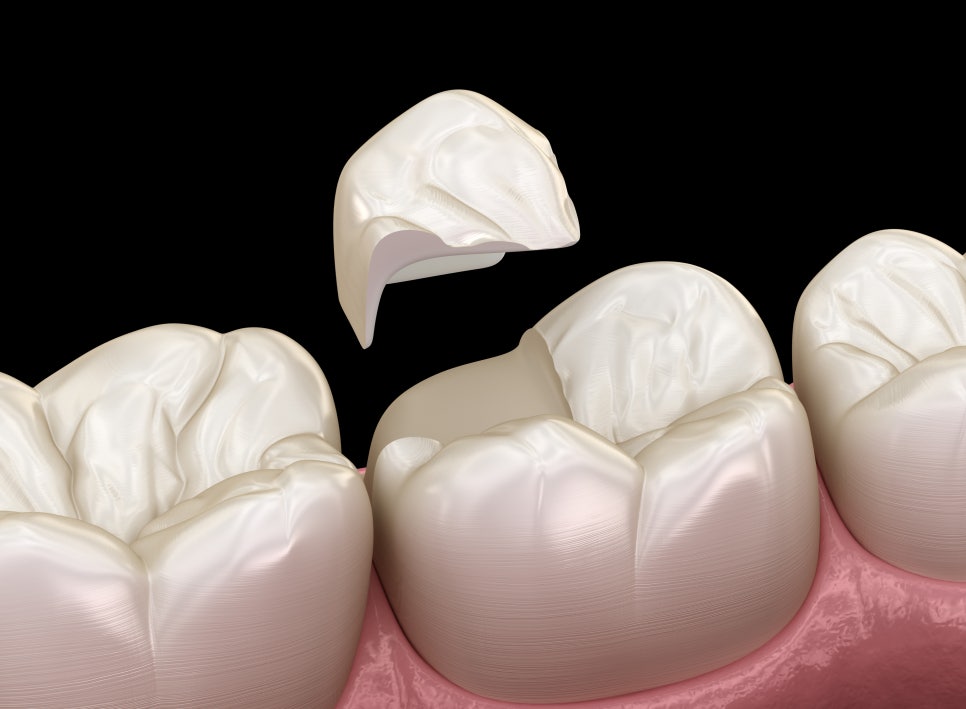 Magok Station Dental Clinic_Onlay
In simple terms:
-
Inlay → fills only the inside of the tooth
-
Onlay → covers the inside + the cusps
-
Crown → covers the entire tooth
You can think of an onlay as the middle stage
between an inlay and a crown.
When is an onlay needed?
So in what cases is an onlay necessary?
- When tooth decay has spread to the cusps (the raised parts)
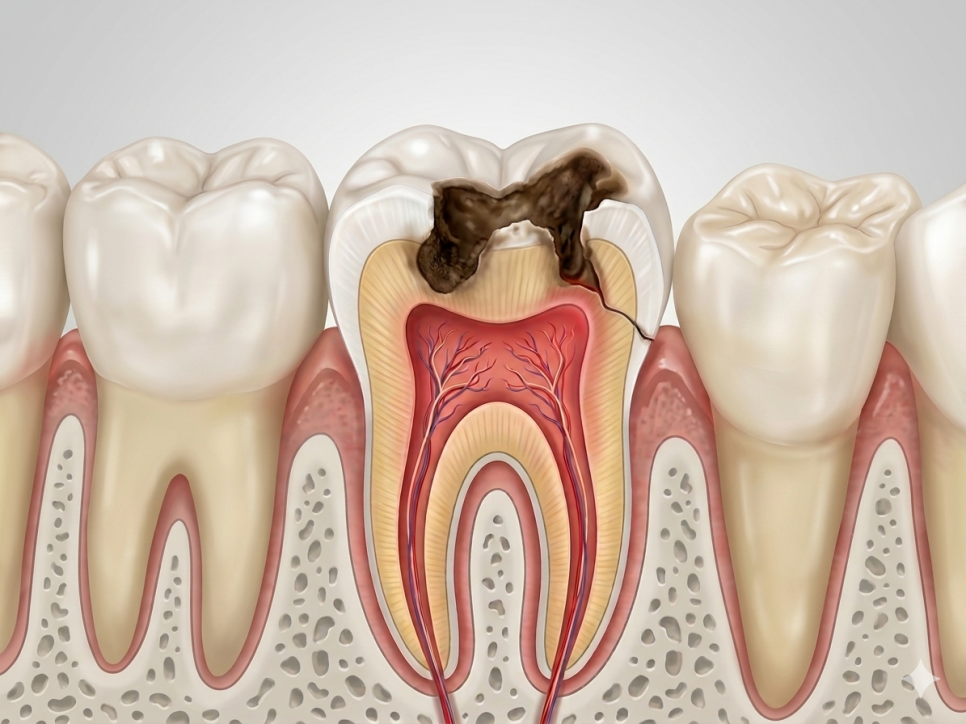 Magok Station Dental Clinic_Cusp decay
The cusps are the parts that play a key role
in chewing and crushing food.
If decay has spread to this area,
an inlay alone cannot adequately protect the cusps.
You need an onlay to properly restore chewing function.
- When the tooth walls have become thin
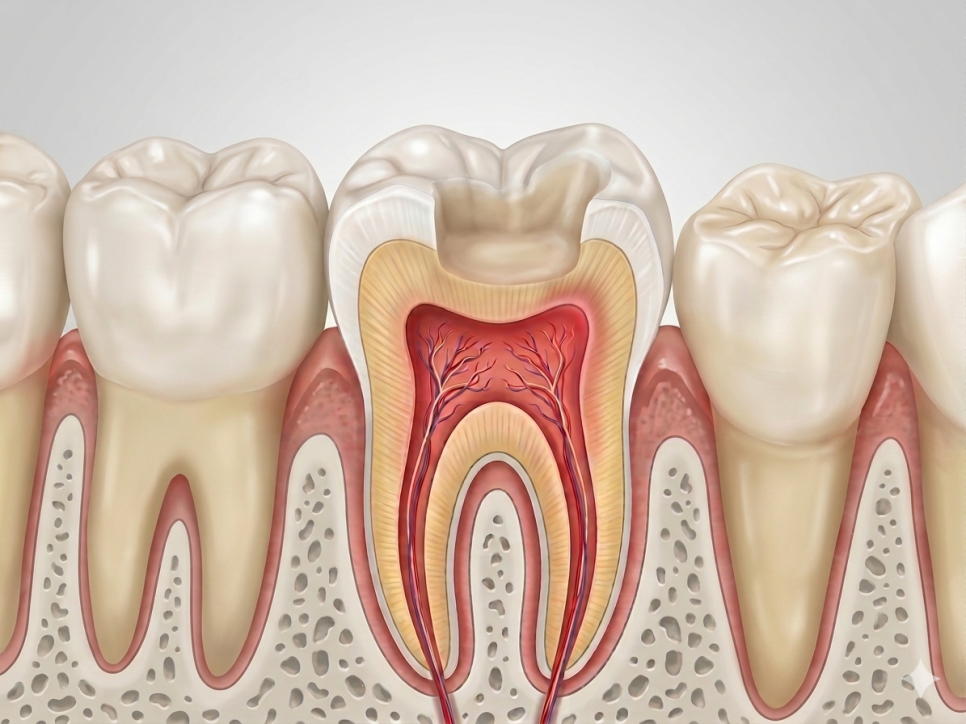 Magok Station Dental Clinic_Thin tooth wall
This is when the remaining tooth wall becomes too thin
after the decayed area has been removed.
A thin wall may not withstand chewing force
and can crack or break.
Covering it with an onlay
and protecting the entire tooth is much safer.
- When the decay is too extensive to be covered by an inlay
An inlay only fills the inside of the tooth,
so there are limits to the area it can cover.
When decay has spread too widely for a single inlay to handle,
an onlay can cover a broader area at once.
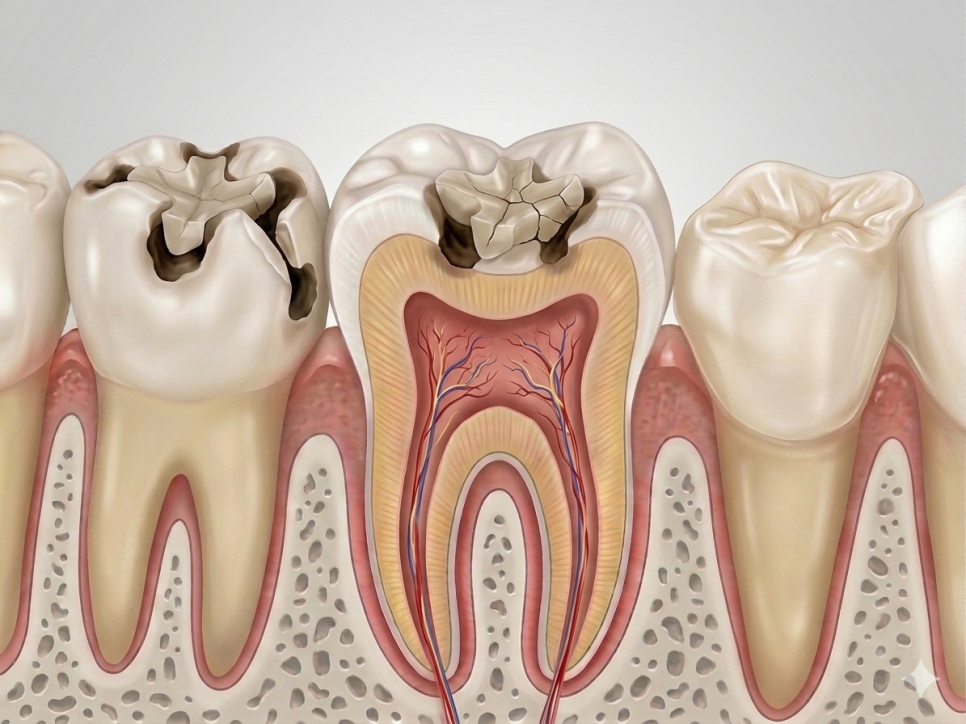 Magok Station Dental Clinic_Damaged inlay
- When an old inlay has been damaged
This is when decay has recurred around an existing inlay
or the inlay has broken, damaging the cusps as well.
In this case, it is often more effective to widen the treatment area with an onlay
rather than doing another inlay.
Why not just get a crown?
"If they’re similar anyway, why not just get a crown?"
Of course, a crown can also be a good treatment.
But a crown requires removing and covering the entire tooth,
so healthy tooth structure must also be shaved down.
Once tooth structure is removed, it cannot be restored.
If the problem can be solved with an onlay,
the right approach is to preserve as much healthy tooth as possible.
To put it simply:
- If decay has spread to the cusps
- If the tooth walls are thin
- If it goes beyond the inlay range
this is not a situation where you should wonder,
"Should I just get a crown...?"
It is a situation where an onlay is the right way to preserve the tooth.
If you delay an onlay, it becomes a crown.
If you miss the timing for an onlay,
the cusps will be damaged further and the tooth walls will become even thinner.
Eventually, you may need to move on to crown treatment,
which covers the entire tooth.
That means a much larger treatment area, cost, and treatment period.
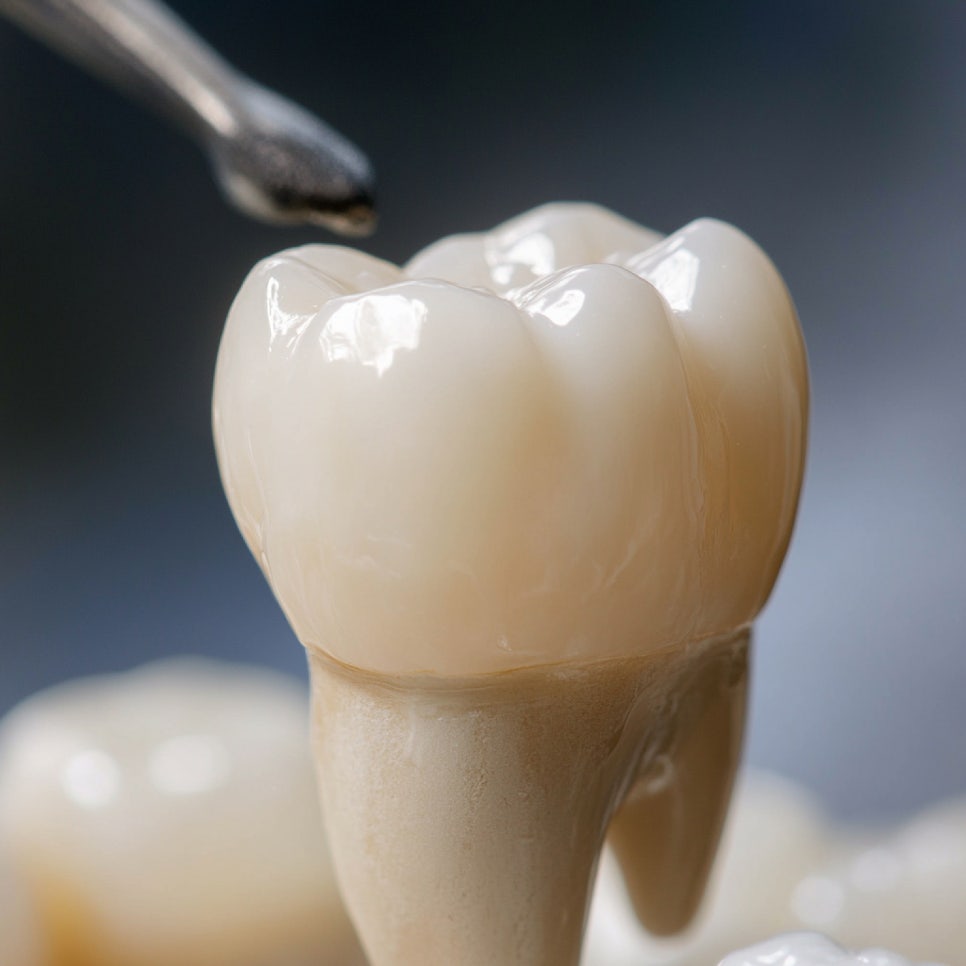 Magok Station Dental Clinic_Crown
At Seoul Dia Dental Clinic,
we carefully check the extent and depth of the decay,
as well as whether the cusps are damaged,
before guiding you on the treatment direction.
We do not recommend crowns unnecessarily.
With a focus on preserving the tooth as much as possible,
we explain only the treatments that are truly needed.
Now, shall we wrap up today’s discussion with a quick summary?
- An onlay is an intermediate treatment between an inlay and a crown
- It is needed when decay has spread to the cusps
- The key point is that it preserves as much healthy tooth as possible
- If the timing is missed, it can lead to a crown
- The decision should be based on an accurate examination, not a feeling
Do not rely only on what is visible on the surface; the most reliable method is to confirm it properly through a detailed examination.
 Magok Seoul Dia Dental Clinic
Magok Seoul Dia Dental Clinic offers consultation conveniently via Naver TalkTalk / reservations.
Feel free to check in without any 부담.
We hope you enjoy your meals and have a day filled with cheerful smiles. ^^
[ This post has been written for the purpose of providing accurate information about dental surgery and procedures in accordance with the Medical Service Act. Since infection and side effects may occur after surgery, you should make your decision about surgery (procedure) only after sufficient consultation with a skilled medical professional. ]
[Magok Station Dia Dental Clinic Step-by-Step Caries Series]
-
Tooth decay: What happens if you leave it untreated? A complete guide to treatment stages from resin to crown
-
If the decay is in its early stage, is resin enough? Summary of suitable cases and limitations
-
If resin is not enough, when is an inlay needed? Timing and selection criteria
-
Tooth decay that is too advanced for an inlay: In what cases is an onlay chosen?
-
Resin vs inlay vs onlay vs crown: a side-by-side comparison of cost and lifespan
-
Why tooth decay returns after treatment, and what to follow to prevent recurrence