Hello.
This is Mutuel Plastic Surgery.
As you get older, the area under the eyes may gradually look sunken or puffy.
Many people think this is simply due to accumulated fatigue or lack of sleep.
However, as time passes and the fat under the eyes sags and the surrounding skin becomes thinner, you may look older than you actually are.
In particular, when the lower area becomes severely sunken or swollen after middle age, people often hear comments like, "You look tired" or "You look angry."
For concerns like these, "lower blepharoplasty" can be one effective solution.
It is a surgery that goes beyond simple cosmetic purposes and also helps with functional recovery, so interest in it is increasing.
However, if you do not look into it carefully, you may be exposed to various side effects.
Today, at Mutuel, we will take an overall detailed look at this topic and explain the important points you should know in order to make a good decision.

What kind of surgery is it?
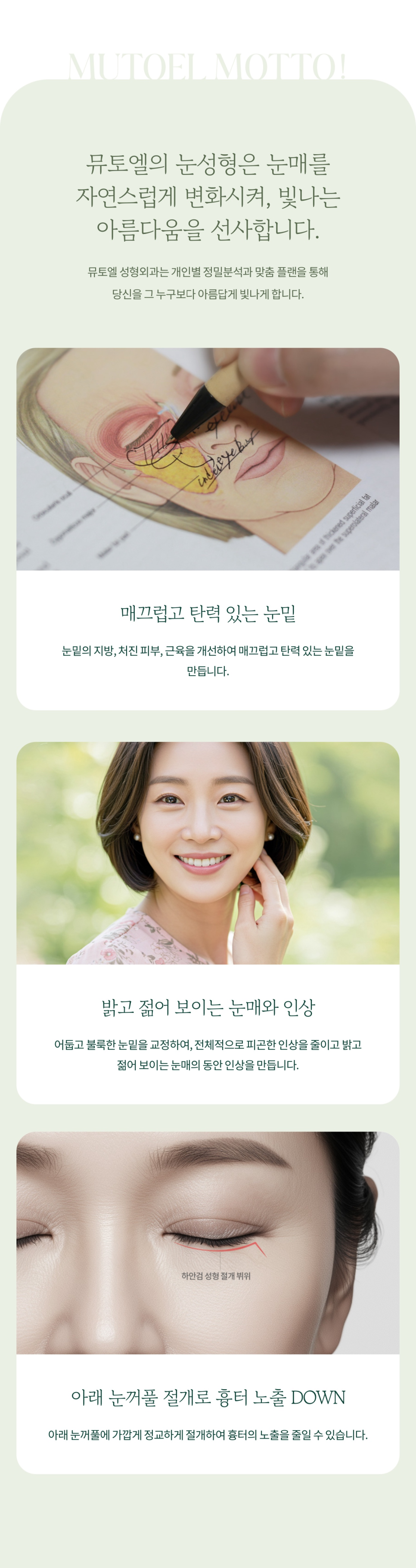
It is a surgery that partially addresses sagging skin under the eyes, protruding fat, and weakened or stretched muscles.
It is mainly performed to resolve complex aging concerns such as under-eye fat protrusion, sagging skin, wrinkles, and dark circles.
The procedure involves making an incision in the skin, repositioning or partially removing the fat, and tightening the loosened muscles.
After that, any excess skin can also be removed if needed.
Difference from under-eye fat repositioning
Many people confuse these two surgeries, so I’d like to briefly explain the difference.
In the case of fat repositioning, it is usually performed when skin sagging itself is mild or when there are no complex issues.
It is done by making an incision on the inside of the eye to adjust the fat position and remove a small amount of excess tissue.
On the other hand, lower blepharoplasty is a more detailed surgery that improves not only the fat but also the skin and even the muscles under the eyes more comprehensively.
If skin sagging is severe or there are many wrinkles under the eyes, we recommend lower blepharoplasty as the more suitable option.

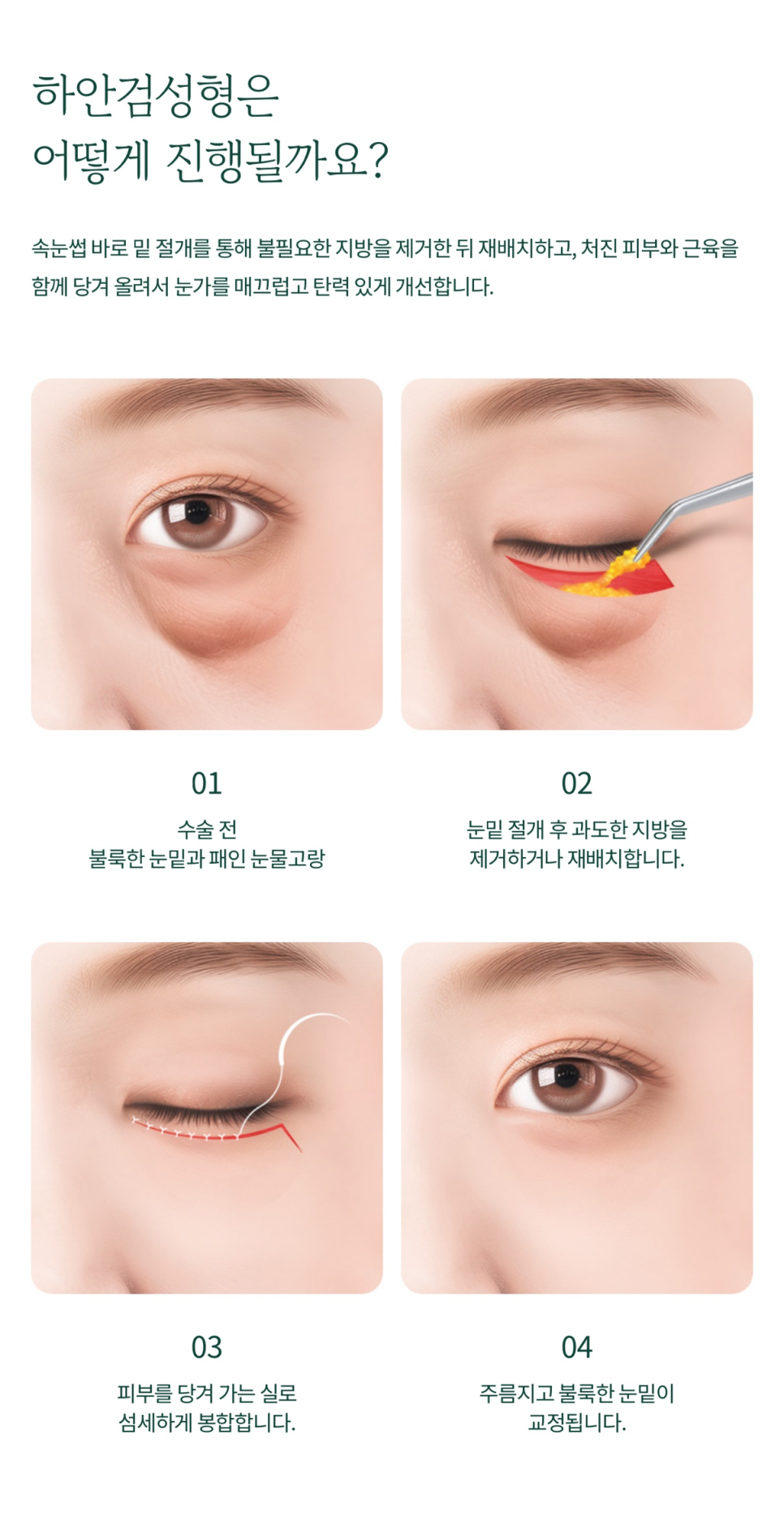
How is the surgery performed?
In most cases, an incision is made just below the eyelashes.
The fat inside is repositioned or removed, and the stretched muscles and skin are refined.
Although an incision is made, it is placed along the wrinkle line below the eyelashes,
so over time the scar becomes hardly noticeable.
The procedure takes about 1.5 to 2 hours, and one of its major advantages is that same-day discharge is possible.
Afterward, two follow-up visits are usually enough.
Swelling and bruising are usually worst on the third day after surgery and then begin to subside quickly.
Stitches are typically removed after 7 to 9 days, and makeup can be applied after stitch removal.
During recovery, you should strictly follow cold compresses, avoid alcohol, and avoid smoking so that recovery is faster and scarring can also be reduced.
Please keep this in mind.
Combining it with anti-aging procedures can create greater synergy
Lower blepharoplasty can be highly effective on its own,
but in some cases, combining it with full-face filler, brow lift, lifting, or upper blepharoplasty can make the overall impression much softer and more natural.
For example, even if the area under the eyes looks neat, if the eyebrows or eyelids on the upper face are sagging, you may still look tired and heavy.
That is why, if you set the treatment direction with the harmony of the entire face in mind,
you are sure to feel satisfaction that exceeds your expectations.
Are there any precautions after the procedure?
First of all, it is best to avoid rubbing your eyes or applying pressure to them as much as possible.
The same goes for sleeping face down.
During the early recovery period, strenuous exercise or sauna use can also affect the results and increase the risk of side effects, so we strongly recommend avoiding them.
In some cases, temporary conjunctival redness or a foreign-body sensation may occur, but in most cases these improve over time, so there is no need for major concern.
In rare cases, side effects such as eyelid tightness or ectropion due to overcorrection may occur,
so I believe receiving surgery from an experienced specialist is most important above all else.

A choice for a natural, youthful impression
This is not simply about flattening the area around the eyes.
Since it is a procedure that greatly affects the overall impression of the face, balance between design and restraint is important.
Sometimes it needs to be performed more boldly, and in some cases more fat must be removed,
but removing as much as possible does not always produce the best result.
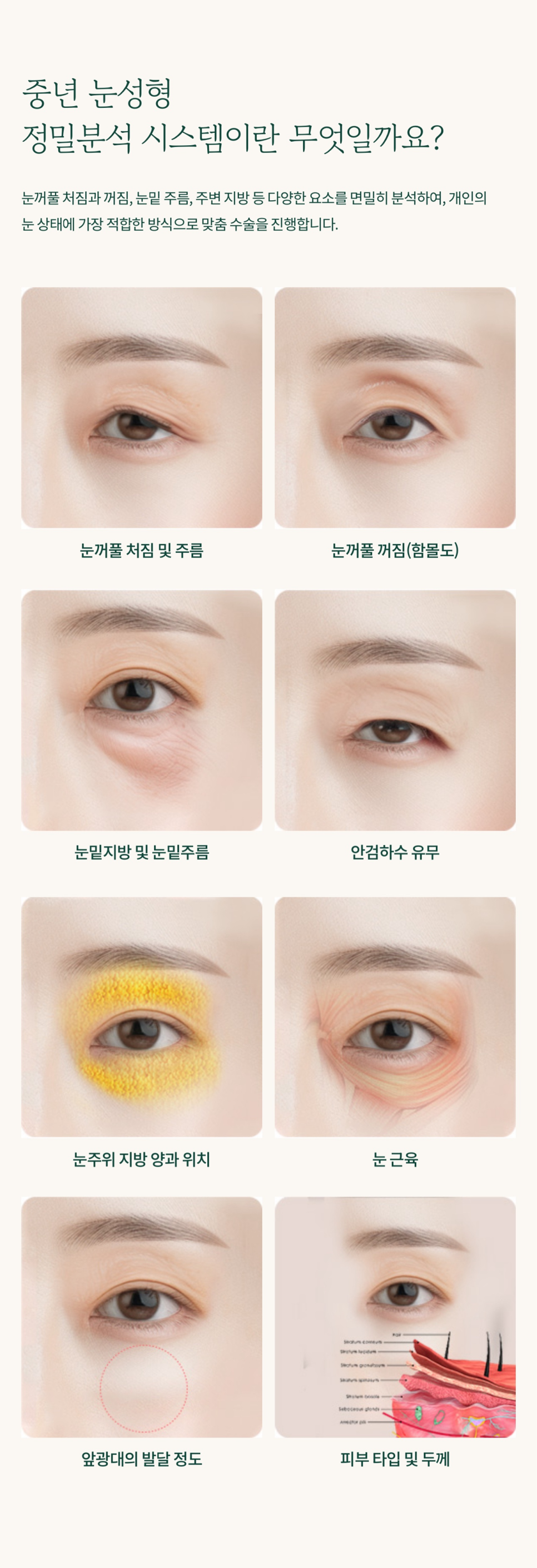
For the best outcome within the proper range, sufficient consultation with a plastic surgery specialist before surgery and a precise analysis are necessary,
and the procedure should be carried out with personalized goals according to the degree of aging.
These days, more and more people prefer natural-looking, subtle improvements rather than surgeries that drastically change their appearance,
so delicate technique has become even more important than before.

In closing...
The eye area is one of the first places where aging becomes visible.
Lower blepharoplasty is an effective method that can improve sagging, fat protrusion, and dark circles at the same time.
It effectively improves a tired-looking appearance,
and in some cases, when combined with lifting,
it can also significantly rejuvenate the overall facial impression.
However, more important than these combined procedures or results is making sure you do not become concerned about side effects.
For that reason, I believe it is most important to proceed with a skilled plastic surgery specialist who has extensive experience, has handled many different cases firsthand, understands patients well, and can provide diagnosis and a plan suited to the situation.
That is all for today’s post,
and I will return next time with even better information.
This has been Mutuel Plastic Surgery.
Thank you.