Hello.
This is MUTOEL Plastic Surgery.
If your lips look especially pale or dull every time you look in the mirror,
it’s something many people have experienced at least once.
In particular, many people feel they only look lively after applying lipstick or tint every morning.
However, as makeup fades over time,
many people also find repeated touch-ups inconvenient.
For people like this, lip semi-permanent makeup
can be a very good option.
That’s because it corrects the natural lip color
while creating a naturally healthy-looking impression,
and helps maintain a neat appearance
even without applying lip products every day.
Today, we’ll explain what this semi-permanent makeup procedure is,
how the process works, and how to care for it afterward,
one by one.
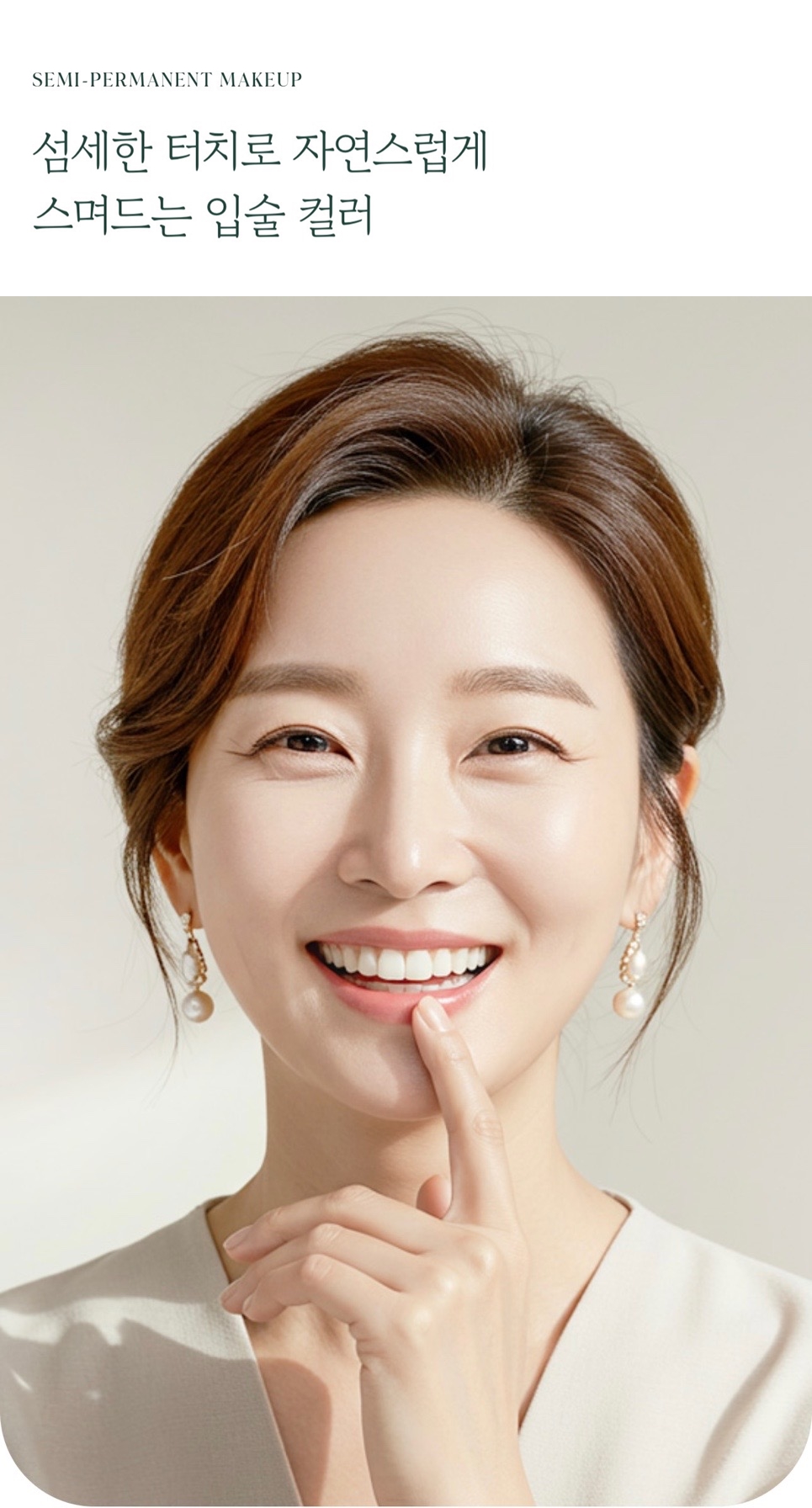
What is lip semi-permanent makeup?
It is a procedure that injects pigment into the lip mucosa
using a fine device.
Because the treatment is generally performed on the mucosal area,
which is thinner than the skin’s epidermal layer,
it can correct the lips’ natural redness
and help the lips look more vibrant.
It is not simply about adding color.
It can also help define blurred lip borders more clearly
and visually improve and correct asymmetry.
How long does the process take?
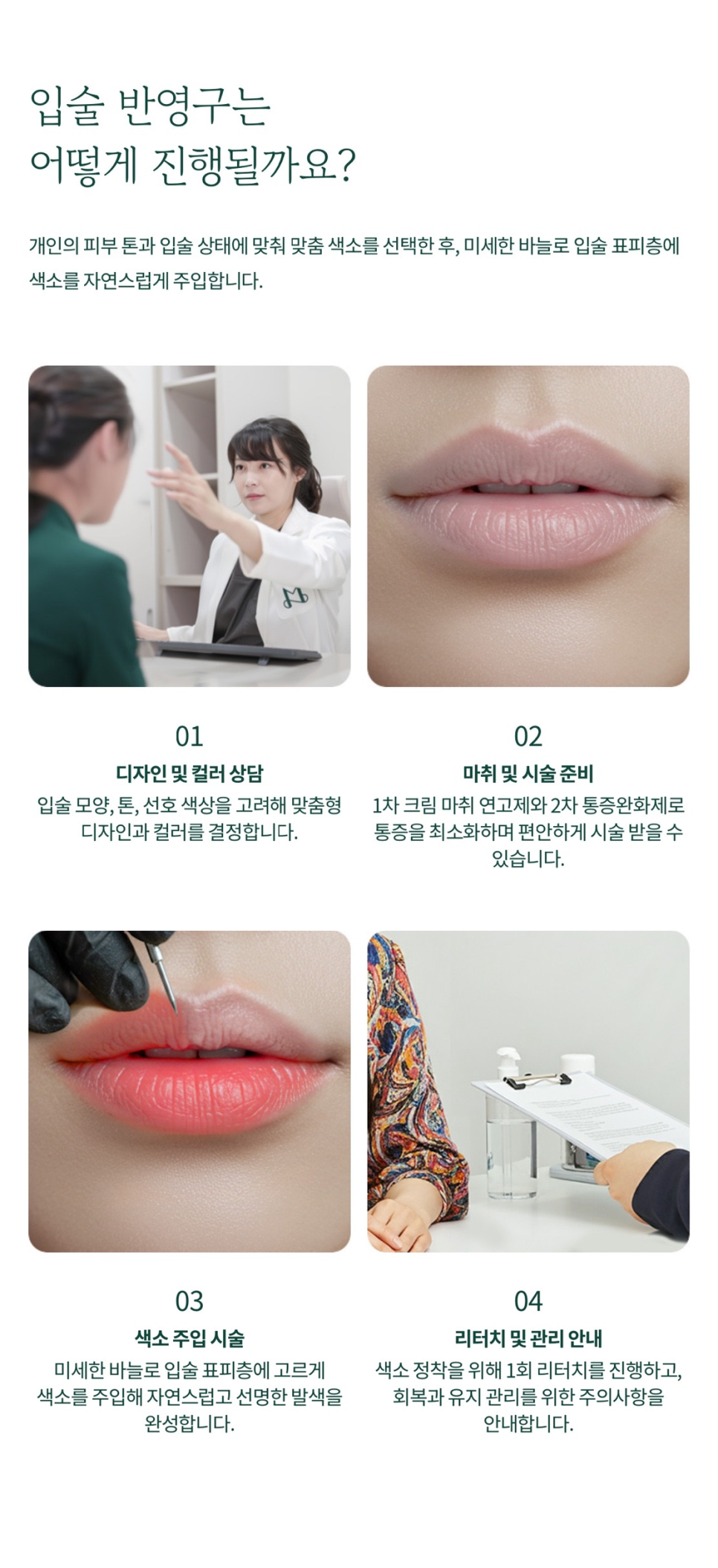
First, the process begins with sufficient pre-consultation
to determine a shade that suits the client.
The color is matched according to the desired image,
and because factors such as the cheekbones, jawline, lip line, and symmetry
all need to be considered for good results,
more satisfying results can be achieved when the careful planning of a plastic surgery specialist is added.
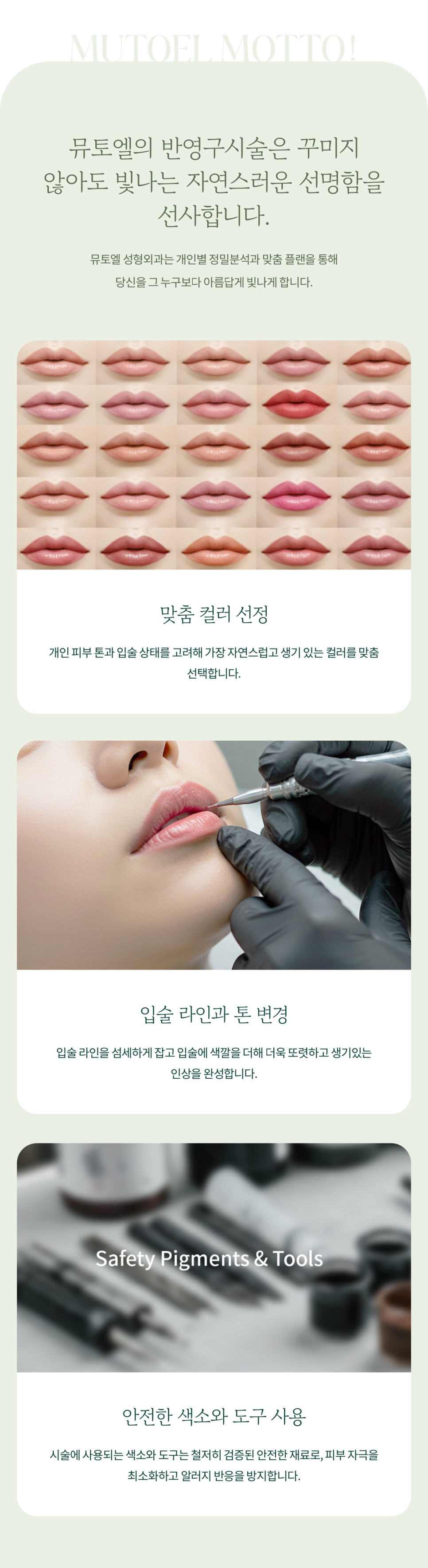
When it comes to the color used,
the process starts with selecting a shade that suits the client.
Depending on skin tone, the existing lip color, and the desired image,
a natural tone that enhances healthy-looking color is generally used rather than something too dark or artificial.
After applying anesthesia cream, pigment is injected into the lip mucosa
using fine needles.
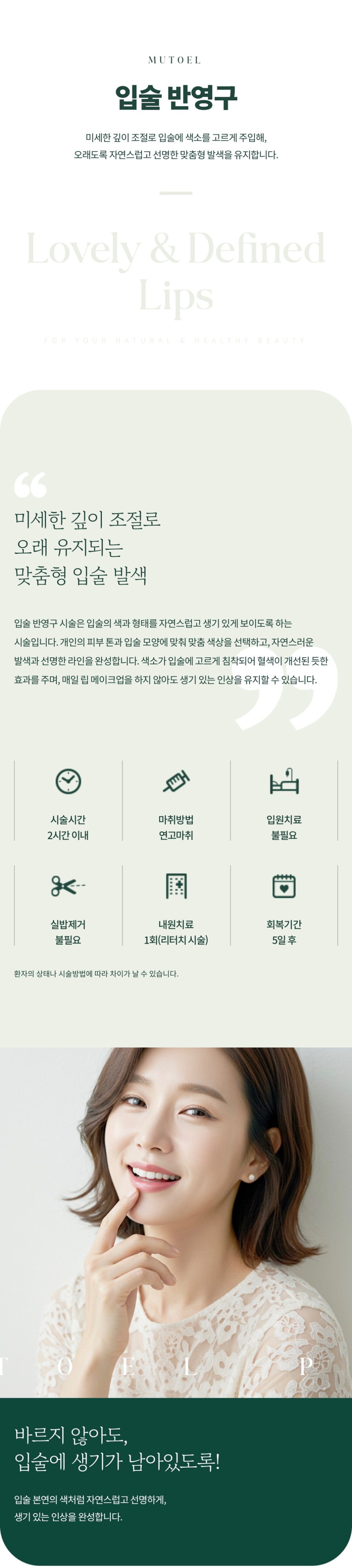
It usually takes about 1 hour and 30 minutes to 2 hours,
and depending on the situation,
1 to 2 touch-up sessions may be needed.
If touch-ups are performed, the color afterward
can remain much more stable and last longer.
What are the advantages?
Lip semi-permanent makeup is not something that can simply
be seen as a procedure that "replaces lipstick."
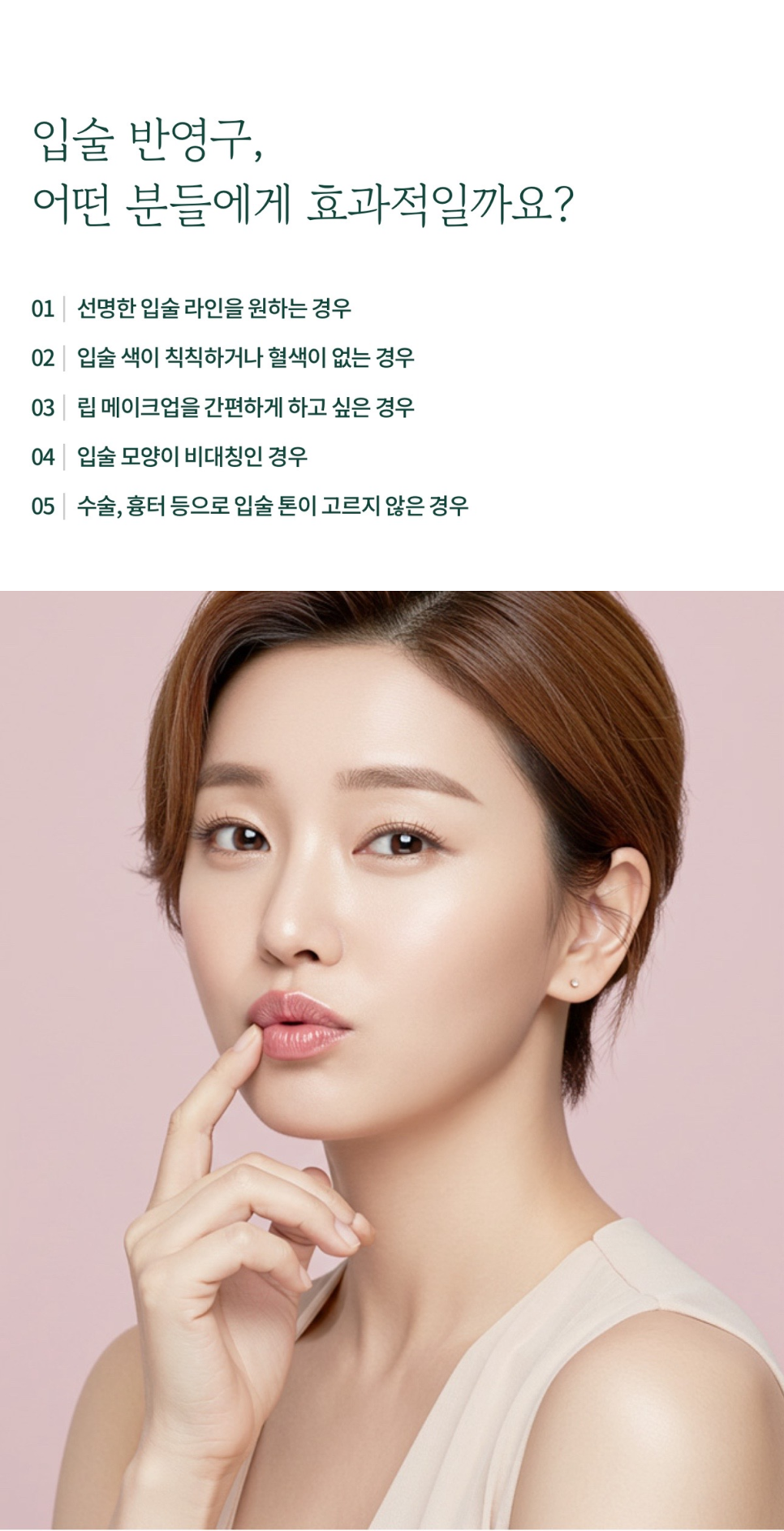
First, it can create a lively impression at all times,
which can give confidence even without makeup.
Second, in cases where the lip line is blurry
or the two sides are different and asymmetrical,
it defines the border, helping improve symmetry and proportions
for overall harmony.
In addition, by reducing the irritation caused by applying lipstick every day,
it can help maintain healthy lips.
After the procedure, it settles naturally to match your own complexion,
so it can create a clear and bright image
even without makeup.
It is also a versatile procedure that can make the lips look much more youthful
even in cases where the skin at the corners of the lips becomes darkly pigmented with age.
What should you be careful about?
If performed safely, lip semi-permanent makeup is a highly satisfying procedure,
but it must always be done professionally at a medical institution.
Because the lips are an area made up of mucous membrane,
they are vulnerable to bacterial infection,
so if the procedure is carried out at non-medical shops that are not strict about hygiene,
you cannot be free from the risk of inflammation or infection.
And even if infection or inflammation occurs,
because they are not professional medical staff,
aftercare is inevitably insufficient.
Also, rather than designing the line and shade while considering the surrounding skin tone,
the result is made only to match the lips.
So even if there does not seem to be much difference at first,
differences in clarity or color development can appear later during the peeling process.
Therefore, collaboration among various specialists is most important:
a pathology specialist who can quickly respond to situations such as infection and inflammation,
a plastic surgery specialist who can design an accurate layout by reviewing various cases,
and a dermatology specialist who can provide professional treatment if skin problems arise during the procedure.

How long does it last?
As the word "semi-permanent" suggests,
it is not a permanent procedure,
so the color gradually fades over time.
On average, it lasts about 2 to 3 years,
though this can vary depending on an individual’s skin condition and lifestyle habits.
Smoking, frequent drinking, and strong exfoliation
have the greatest impact on pigment retention,
and when the color has faded after a certain period,
it is best to maintain the clarity through maintenance treatments.
Natural improvement in appearance and restored confidence
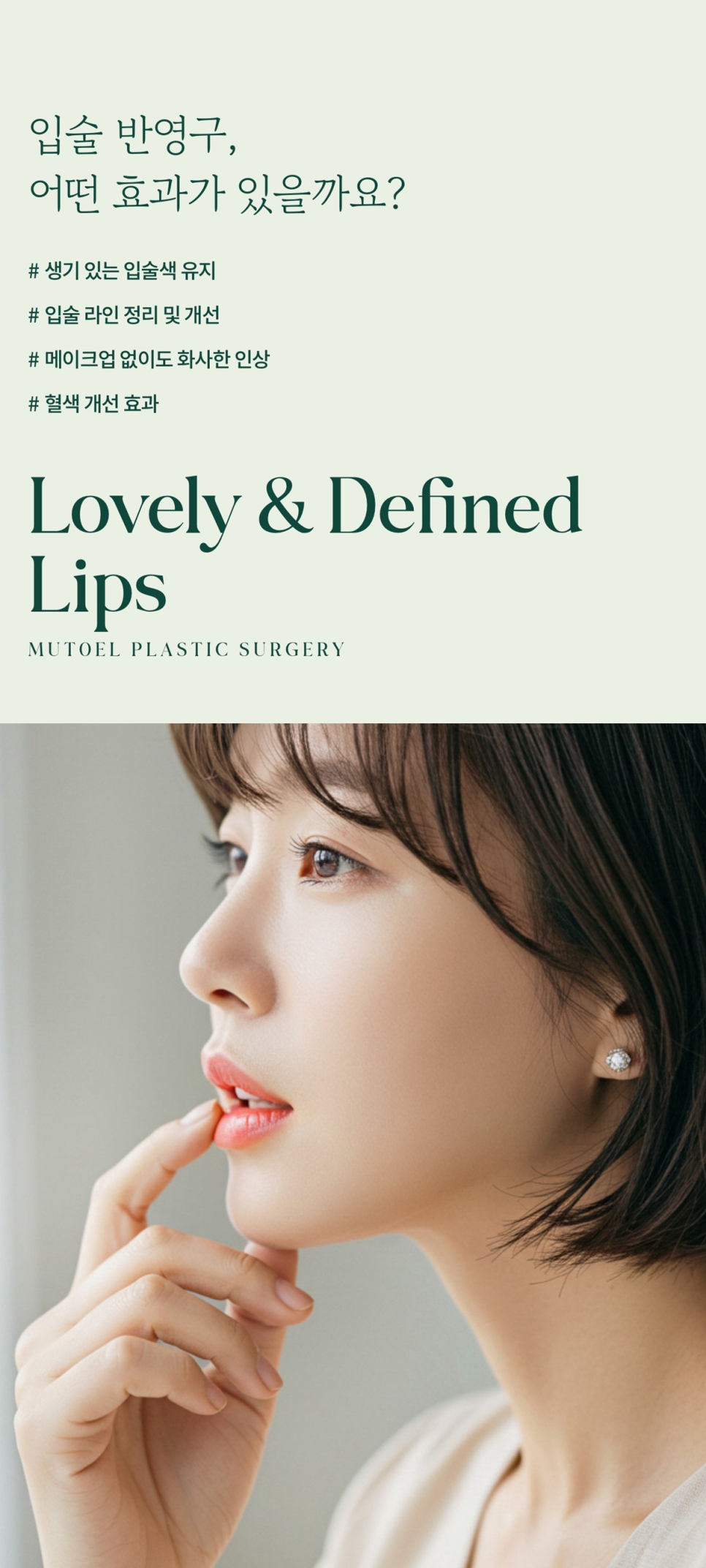
I think the lips are a very important area that determines the impression of the face
from the center of the face.
If the color looks dull or the borders are blurred,
the whole face can look tired
or older.
Also, because asymmetry is very noticeable when the borders are clearly defined,
even though it is a relatively simple procedure,
the improvement it creates can be quite significant.
Especially for bare-faced looks, going to work, or going out,
it allows you to maintain a naturally tidy appearance
even without carrying lipstick every time,
which adds convenience to daily life.
In closing...
Lip semi-permanent makeup is a very good choice
for people who feel inconvenienced by wearing makeup every day,
or for those who want natural-looking color and a clear lip line.
However, because the lips are a sensitive and delicate area,
satisfactory results can only be expected when the procedure is performed in a medical environment
that is hygienic, safe, and able to respond quickly and responsibly to unexpected situations.
If the procedure and care are done properly,
I believe it can be a way to provide a lively and natural impression for a long time.
This concludes the post from Yongsan Plastic Surgery,
and we will come back next time with even better information.
This was MUTOEL Plastic Surgery.
Thank you.