헤어라인 반영구를 통해서 동안 외모를
Hello.
This is Mutoel Plastic Surgery.
When your hair volume decreases or your forehead line becomes wider,
there are times when you look in the mirror and think,
'I somehow look older.'
For those with these concerns,
the easiest method to try is the 'hairline semi-permanent makeup'
we will introduce today.
This procedure is not the same as hair transplantation,
where actual hair is implanted into the forehead line.
Instead, it is performed in a way that adjusts the visible density of the hair
and the overall facial proportions,
so that it looks as if hair is growing by using
faint shading and very small dots,
creating a visually fuller effect.
Today, we will explain in detail everything from what this semi-permanent procedure is,
who it is recommended for, and the techniques used.
What kind of procedure is it?
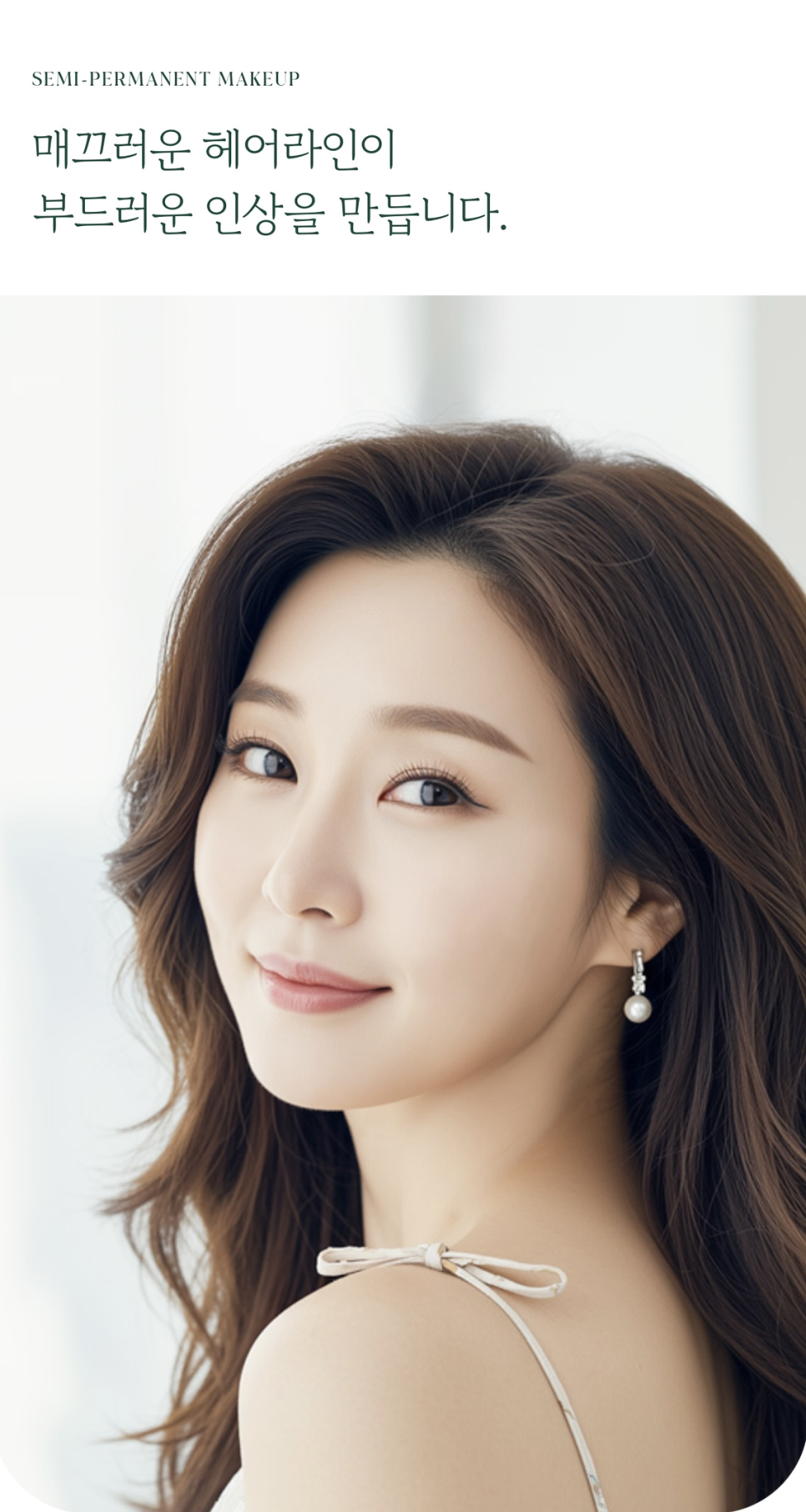
Simply put,
it is a procedure that very finely injects special pigment into the skin
to create the 'shadow of a hair follicle' or
'fine strands of hair.'
It is similar to what is commonly seen on the street as a 'hair tattoo,'
but technically, it uses various techniques such as dotting to imitate each individual follicle
or adding shading like powder to create a natural gradient,
choosing the method that best fits each situation.
As a result, the forehead line appears lower,
and areas with sparse density, such as the crown or part line,
can be filled in with more fullness.
Who is it recommended for?
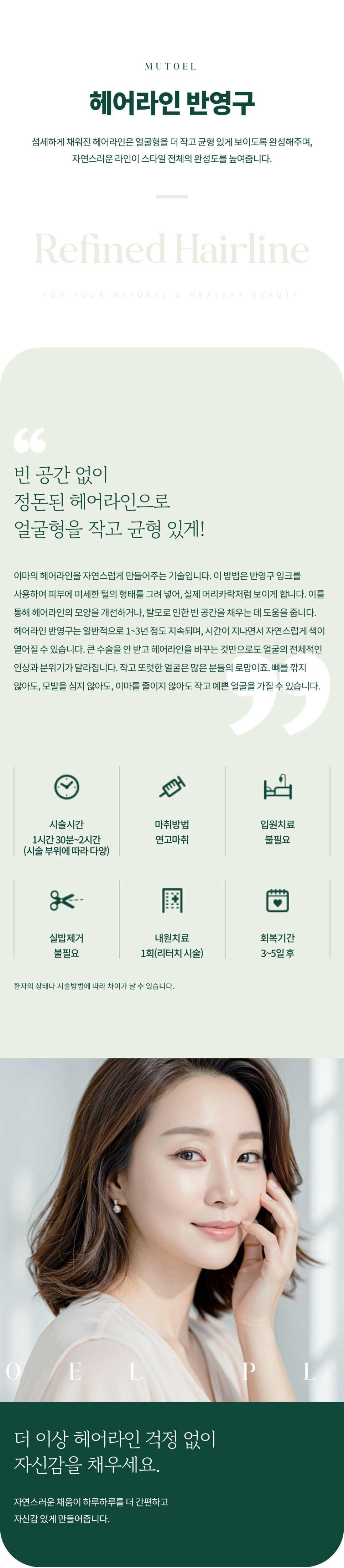
Hairline semi-permanent makeup is more suitable for people whose hair is gradually thinning and showing gaps,
or who are worried because their hairline has become wider,
rather than for those in a 'completely bald' state with almost no hair.
It can also be used effectively for those who want to make a broad forehead look more naturally balanced,
or when you want to fill the empty space that can occur before or after hair transplantation.
On the other hand, for people with scalp inflammation (such as seborrheic dermatitis),
those with a strong tendency toward keloids,
and those who have recently undergone strong laser treatment or
chemical peeling,
it is recommended to stabilize the scalp condition first
before receiving the procedure.
In addition, for those with a history of pigment allergies,
a patch test should be performed first to ensure safety.
How is it performed?
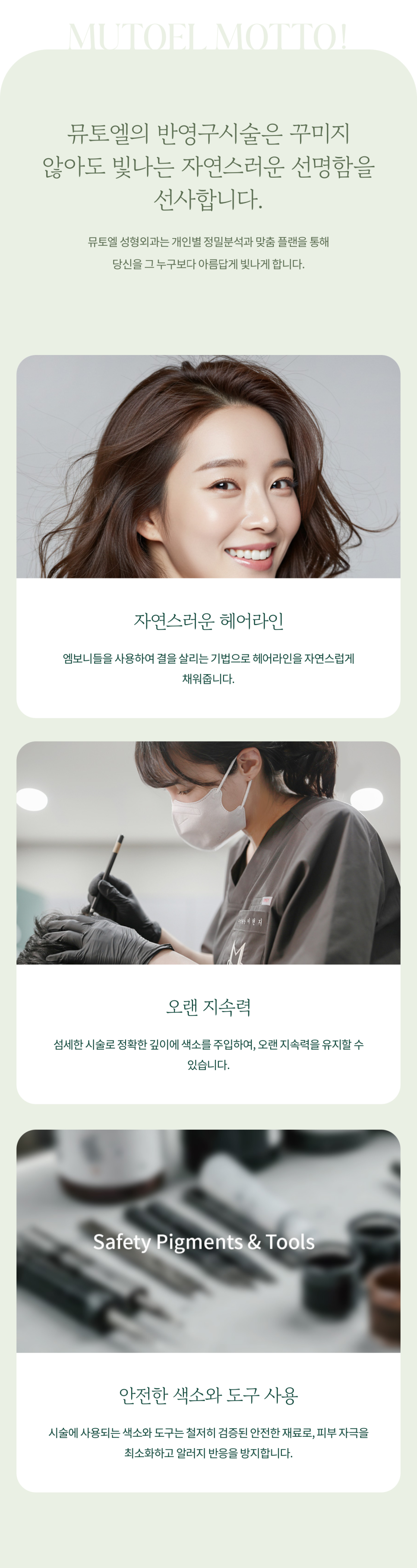
The main techniques are broadly divided into two types.
One is 'follicle simulation (dotting).'
It is a method of expressing the look of hair growth by placing many very fine dots,
and the other is the 'gradient' technique,
which adds shading to the part line or sparse areas
to fill in the overall empty spaces.
These days, for a more natural result,
it is common to combine the two techniques appropriately depending on the situation.
For men, the more precisely the follicle simulation is done,
the more natural it looks,
and for women, combining the gradient technique around the part line
creates a softer forehead line.
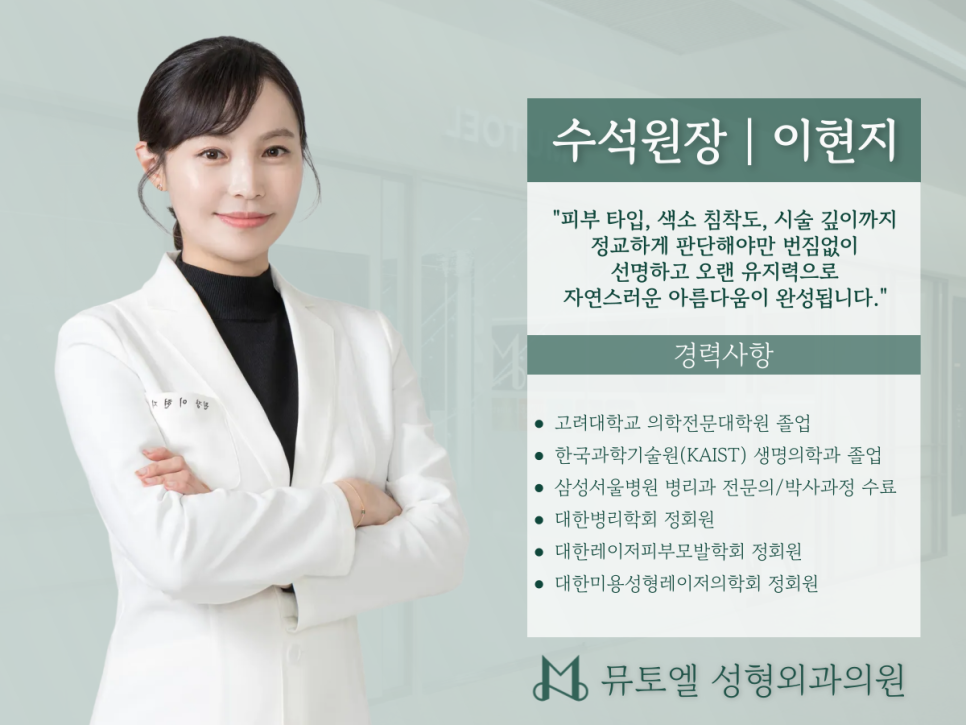
So the key is to work with professional medical staff
who can create a 'natural forehead line' while considering each person's face shape, hairstyle, and age.
How is the procedure carried out?
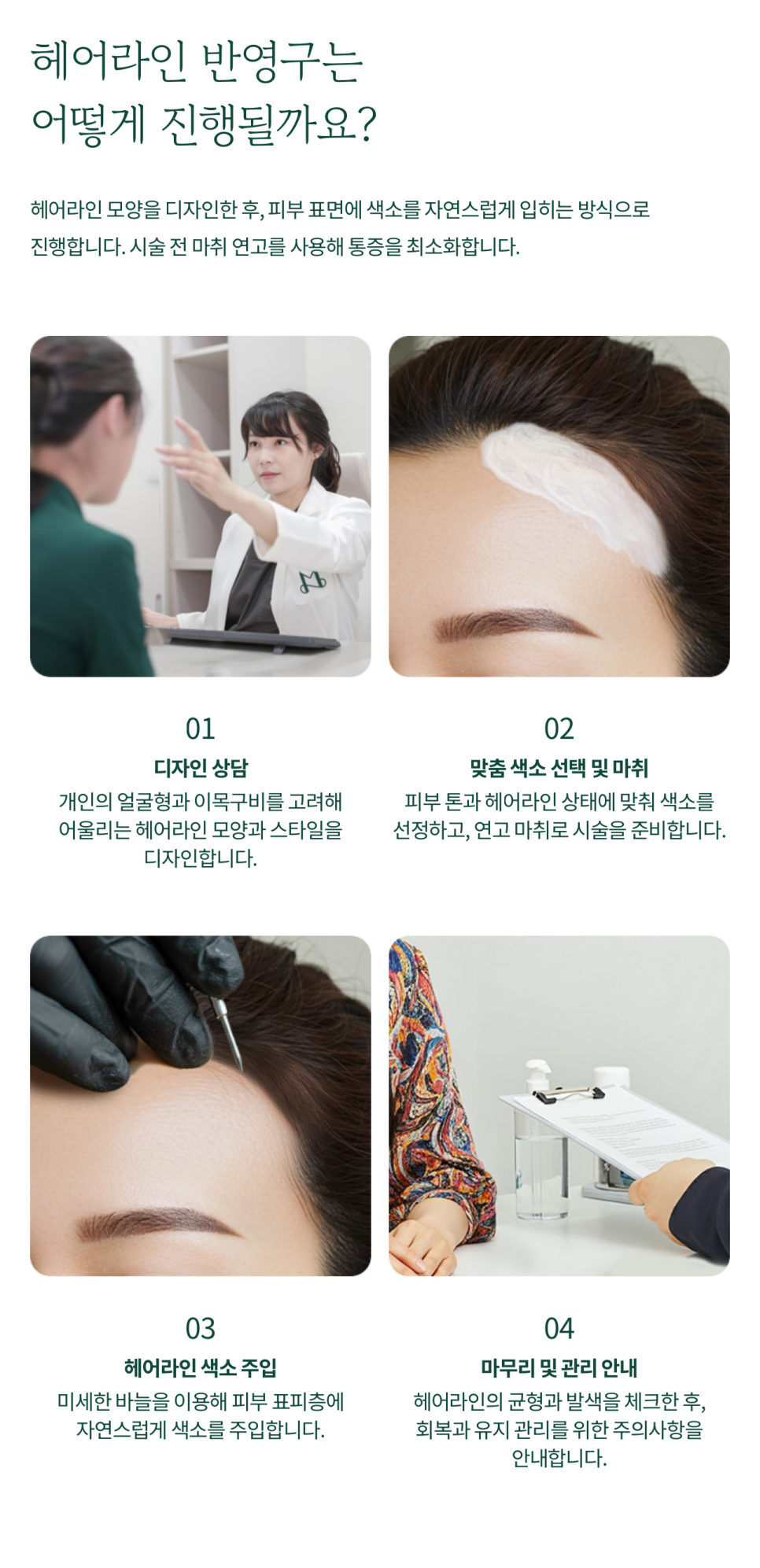
First, through a detailed pre-procedure consultation,
the desired hairline and tone are decided,
photos are taken for comparison, and the optimal line and overall style are designed
while considering the individual's face shape and features.
After that, an appropriate pigment is selected to match the skin tone,
a topical anesthetic cream is applied,
and after waiting about 30 minutes,
the procedure begins.
The procedure time usually takes about 1 hour 30 minutes to 2 hours,
depending on the area,
but the actual time may vary somewhat depending on the method and the treated area.
Pain varies from person to person, but it is not severe and is at a tolerable level.
If there is discomfort, a second round of anesthesia can also be performed during the procedure.
Immediately after the procedure, the color may look dark,
but as the scabs come off, it settles into a natural tone,
so it is best to allow time and observe the result afterward.
What is important when choosing a clinic?
Hairline semi-permanent makeup can be said to depend most on the technician's delicacy.
From design that takes each person's characteristics into account,
to pigment selection and post-procedure care,
skill and experience are needed in many areas.
Therefore, be sure to carefully review the portfolio (before-and-after photos),
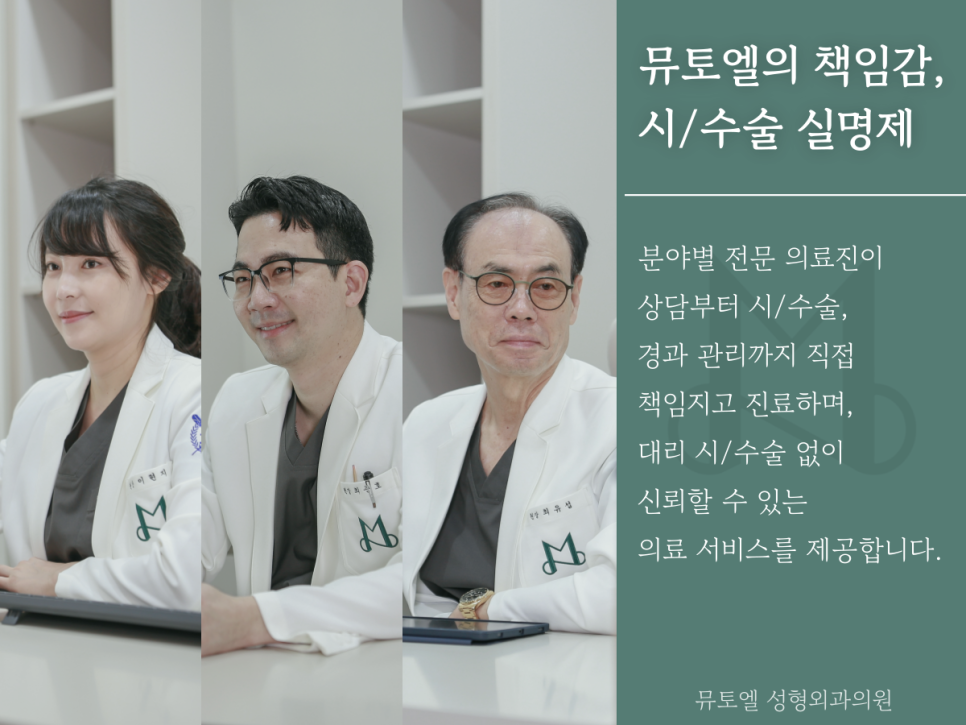
and we strongly recommend checking whether experienced medical staff in scalp and hairline procedures
are the ones who perform the procedure directly.
Even if you visit a clinic with good results, there are cases where someone other than the medical staff
performs the procedure instead,
so careful attention and selection are necessary.
In addition, you should choose a place that can clearly explain the brand of pigment used,
whether sterilized and disposable needles are used,
whether patch testing is available,
the retouch policy,
and the complication response process.
Only then can you obtain the safest and most satisfying result.
In closing...
Hairline semi-permanent makeup is an appealing procedure that can change the overall impression 'immediately.'
However, keep in mind that it is a procedure that increases the 'visible density' rather than 'making hair grow,'
and it is best to choose a professional medical team that can provide a design suited to you.
To make it look natural, you need not a uniform line,
but an irregular hairline, a color that matches the individual's skin tone well, and appropriate density,
and to achieve this, sufficient consultation with an experienced practitioner is essential.
If you have any additional questions,
please visit Mutoel and share your concerns.
Our experienced professional medical staff will consult with you directly and answer according to each individual's concerns.
That concludes today's Yongsan Plastic Surgery post,
and we will return next time with even more useful information.
This was Mutoel Plastic Surgery.
Thank you.