Shinyongsan Plastic Surgery Mini Lift
For a natural youthful look
Hello.
This is Mutoel Plastic Surgery.
When we talk about lifting surgery in the consultation room,
we often meet people who say,
"I want to lift and tighten, but a major surgery feels like too much."
Procedures using lifting devices are widely used,
and options such as thread lifting have become common.
In that situation, choosing a lifting surgery that requires
sedation and also involves a recovery period can naturally
bring concerns and 부담.
That is why the surgery we can recommend to these people
is the "mini lift."
As the name "mini" suggests, it minimizes the incision and
dissection range and can selectively lift only the main areas
of sagging, so compared to a traditional lift, recovery is
relatively faster and more natural results can be expected.
In other words, for those who feel a traditional facelift is too
much and want a more natural change, a mini lift can be a good option.
Today, we will explain in detail what the principle of this surgery is,
how the procedure and recovery progress, and also what procedures
work well when combined with it.

What principle is used to lift the face?
The mini lift at Shinyongsan Plastic Surgery focuses on lifting the
mid and lower face, especially the cheeks, jawline, and the areas
around the nasolabial folds.
After partially dissecting the subcutaneous fat layer and the
SMAS (superficial musculoaponeurotic system) layer,
the loosened tissues are pulled up and fixed with sutures.
Unlike a traditional facelift, it does not require extensive dissection,
so it has the advantages of less bruising and swelling and a shorter
recovery period.
Right after the procedure, the facial contours are naturally restored,
and after several weeks, as the tissues stabilize and collagen
regenerates around the inserted threads, more distinct lifting and
improved elasticity effects appear.
How is the procedure performed?
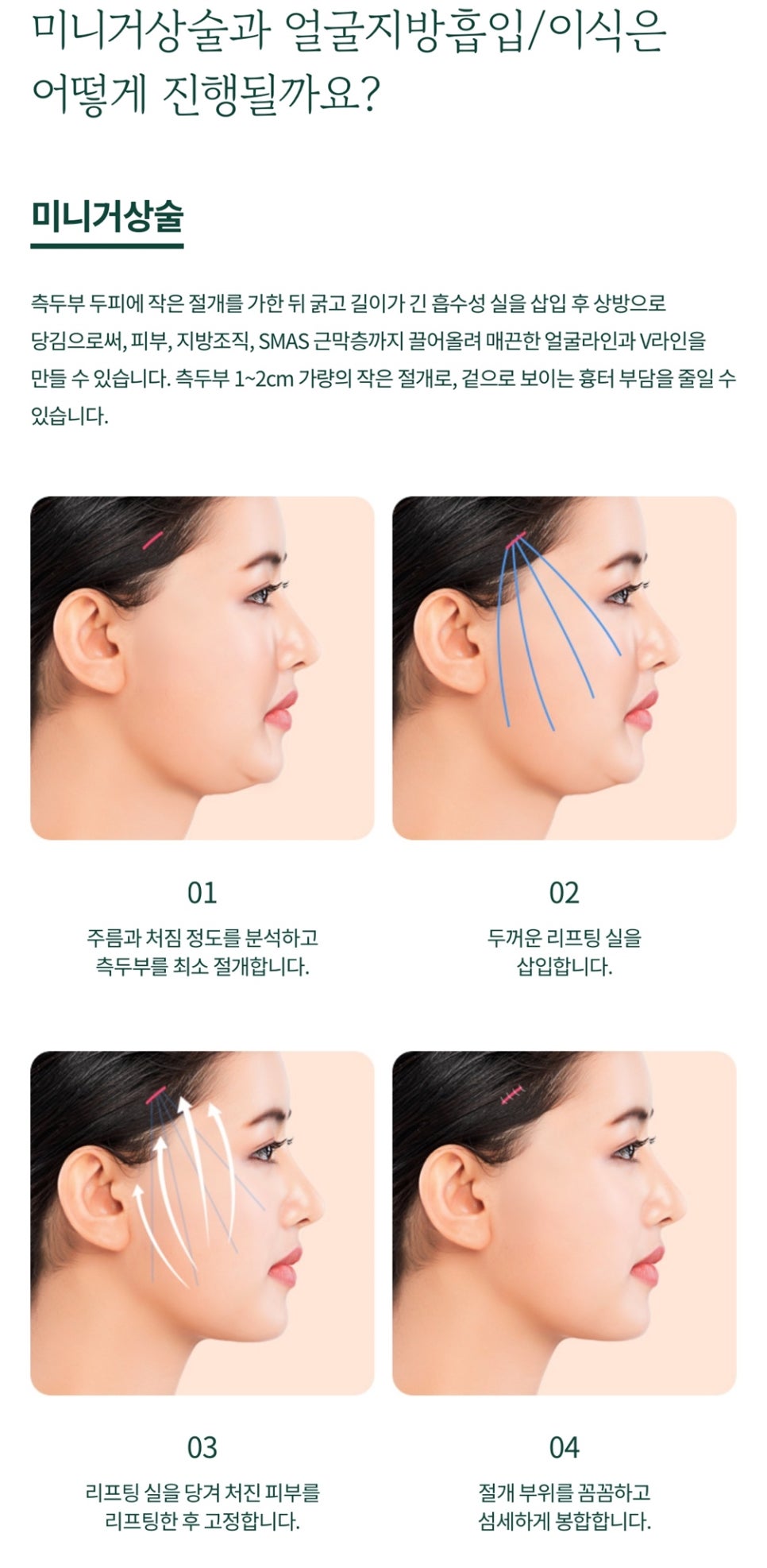
The mini lift at Shinyongsan Plastic Surgery is performed under
sedation anesthesia. The incision site is kept minimal, making
a 1–2 cm incision in the temporal scalp area. After dissecting as
needed close to the fascial layer, the lifting is performed. Thick
absorbable threads are inserted to pull up and fix the tissues from
the jawline to the cheekbones, and then the scalp is sutured.
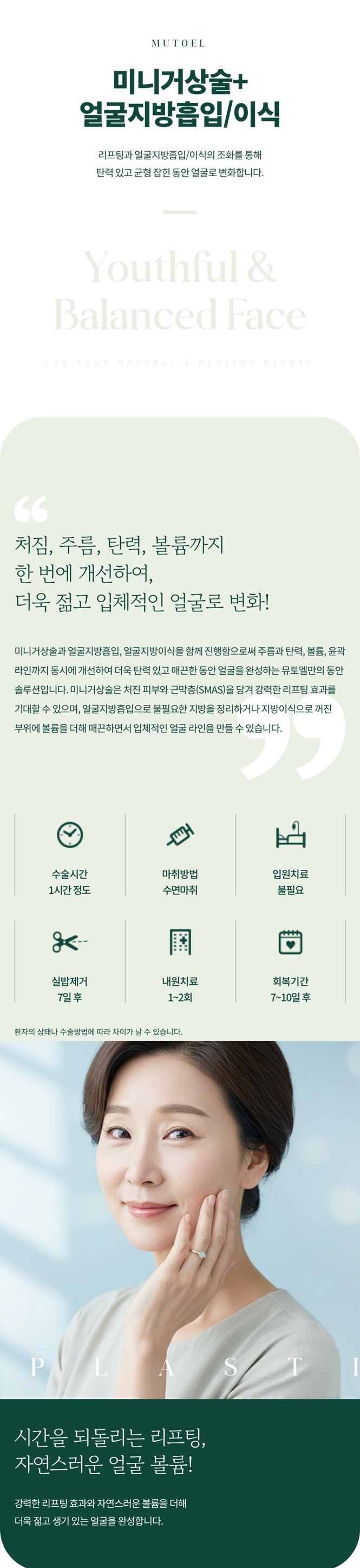
The procedure does not take long, usually within 1 hour, and the
recovery period is about 1 week, allowing a relatively quick return
to daily life compared with other lifting surgeries.
Some swelling and bruising may appear, but in most cases they
improve within about 3 days.
The stapler used to close the scalp is usually removed on the 7th
day after surgery, and the scar is also generally favorable; over
time it fades and becomes almost unnoticeable.
However, the overall recovery period can differ depending on whether
other procedures are performed at the same time, so detailed
personalized consultation before surgery is recommended.
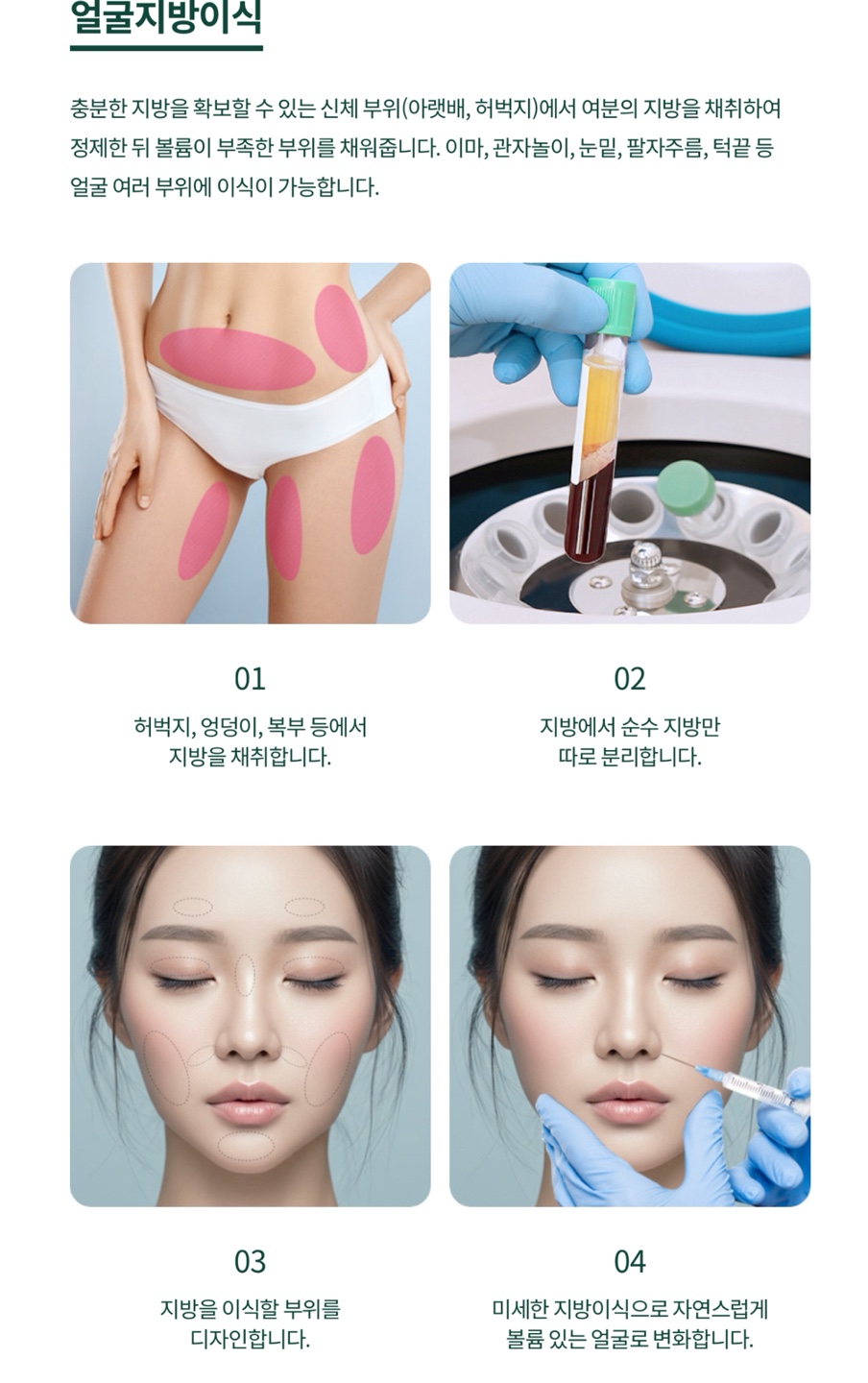
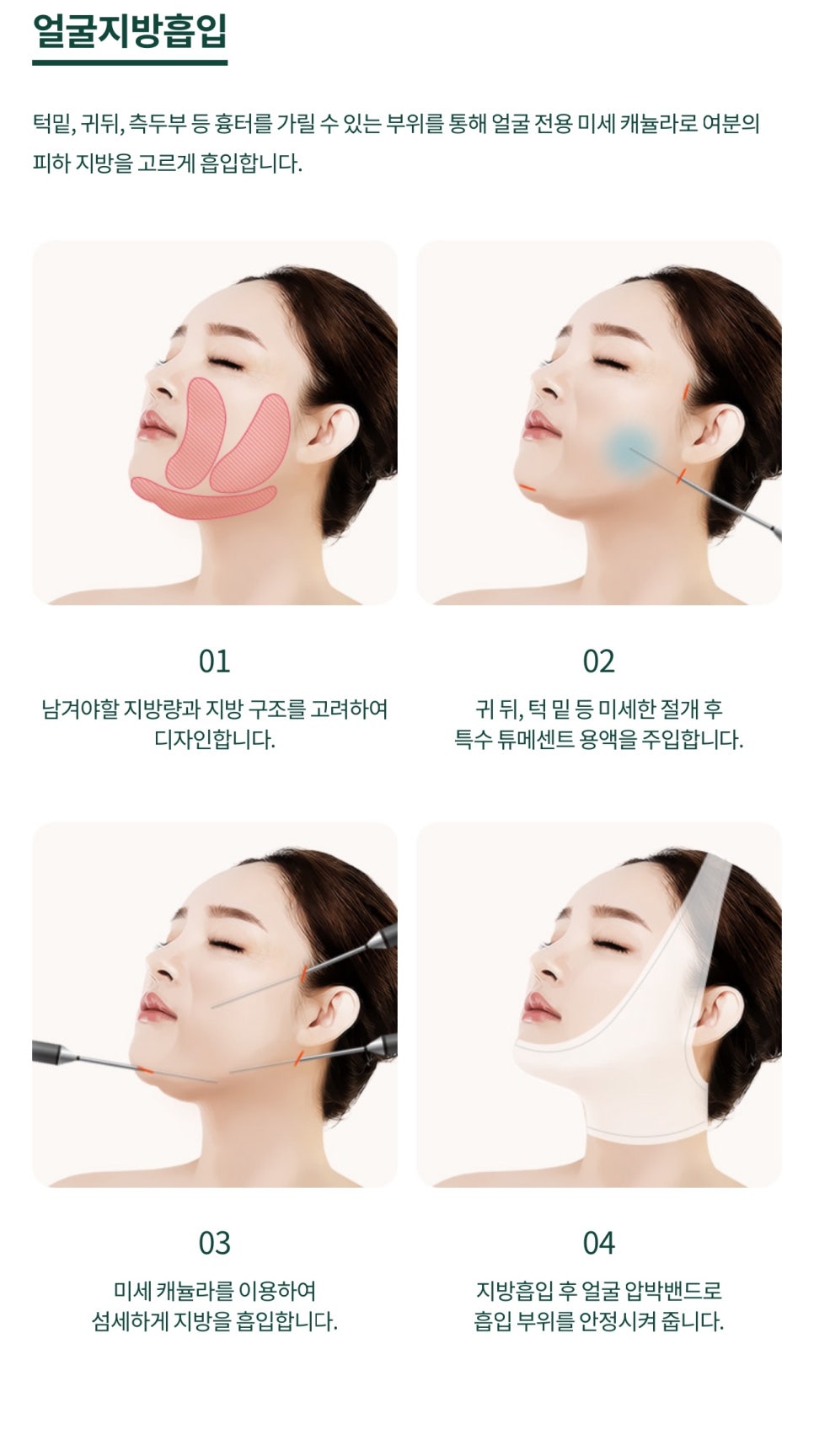
Why is it good to combine it with fat suction/grafting?
If you combine a mini lift with fat suction/grafting,
you can refine the facial contours more naturally.
When the facial line has become blurred due to excess fat buildup,
simply removing unnecessary volume through facial fat suction can
already bring clear contour improvement and lifting effects.
On the other hand, if there are areas that look sunken due to a
lack of volume, combining the procedure with fat grafting to fill
those areas can enhance the overall three-dimensional look of the
face and create the feeling of an "aged face becoming younger"
rather than simply a pulled appearance.
In other words, fat surgery is a combined procedure that can create
more natural and harmonious results by controlling overall
three-dimensionality and volume while lifting at the same time.
Who is it recommended for?
The mini lift at Shinyongsan Plastic Surgery is most recommended
for people in their 40s to 60s whose facial sagging has progressed
to a moderate degree or more.
Because skin elasticity is still preserved, it can be an especially
good option for those who want to minimize surgical burden,
and it can be said to be most effective for those who are seeing
full-fledged sagging in the cheeks, including nasolabial folds and
the jawline (marionette line).
In particular, for those who did not feel much improvement even
after energy-based lifting with devices, it will be a good alternative
that can make up for the limitations of non-surgical procedures.

How should it be managed and maintained?
In the early period after surgery, the top priority should be to
rest sufficiently for about one week so that swelling and bruising
can subside.
For facial washing and skin care, we recommend using low-irritation
products gently, and it is best to avoid saunas and high-intensity
exercise for 2–3 weeks if possible.
To maintain the lifting effect for a longer time,
from 6 months to 1 year after surgery, you can supplement and
manage the facial line with skin regeneration treatments, Botox,
fillers, and similar options, allowing you to experience a more
distinct improvement effect while also increasing longevity.
In closing...
A mini lift is a good surgical lifting option that can create a
natural facial line while having a small incision and a relatively
fast recovery.
When performed together with facial fat suction or fat grafting,
it can go beyond simply giving a pulled appearance and help achieve
a more three-dimensional and harmonious youthful effect.
Although it may be a relatively simple surgery,
the surgeon’s touch, experience, and design differences can create
differences in the result,
so please remember that it is essential to be treated by an
experienced board-certified plastic surgeon who has handled a wide
range of cases.
That concludes today’s post from Shinyongsan Plastic Surgery.
If you have any additional questions, please visit Mutoel,
and we will always listen carefully to each customer’s concerns
and provide a sincere consultation.
This was Mutoel Plastic Surgery.
Thank you.