Hello.
This is Mutoel Plastic Surgery.
Hair loss is more than just a matter of losing hair;
it directly affects appearance and confidence,
so people who are worried about hair loss often feel a great deal of stress.
Take alopecia areata, for example. Due to stress,
a sudden patch of hair loss appears, and if it occurs
in a highly visible area, other people’s attention
can feel even stronger, and it may become more
noticeable every time you look in the mirror.
Of course, alopecia areata is an autoimmune disease,
and it can be treated with medication or injections.
However, in the case of common male pattern hair loss,
which progresses gradually, hair transplant surgery
may also need to be considered, making it feel even
more difficult.
At times like this, a non-surgical method that reduces
the burden of treatment while still creating a major
change in appearance is scalp SMP.
SMP stands for Scalp Micropigmentation,
and it is applied to the hairline and scalp.
Today, we will explain how this SMP procedure
is performed, why it is suitable for covering hair loss,
and what points to be careful about.
What kind of procedure is it?
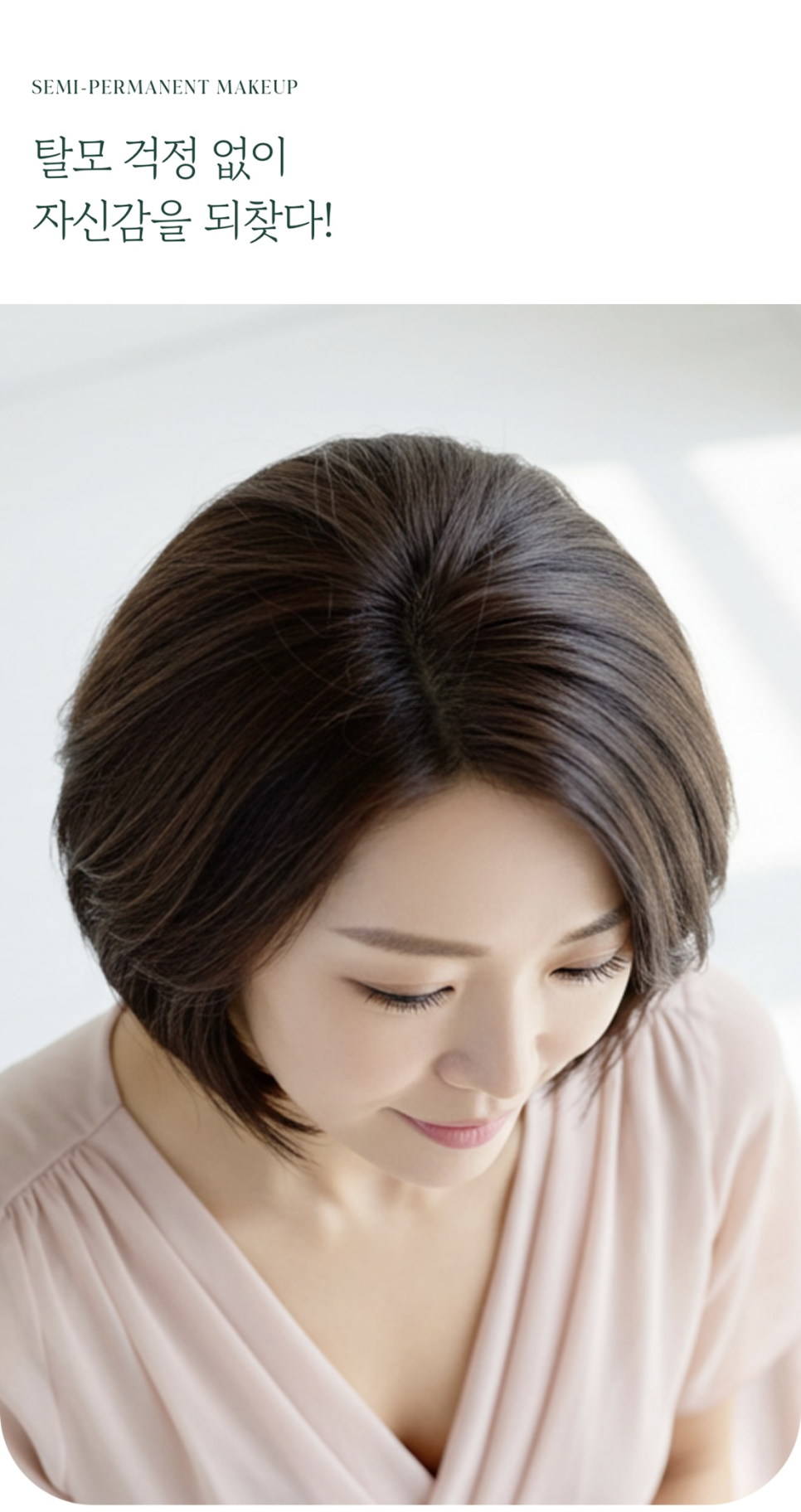
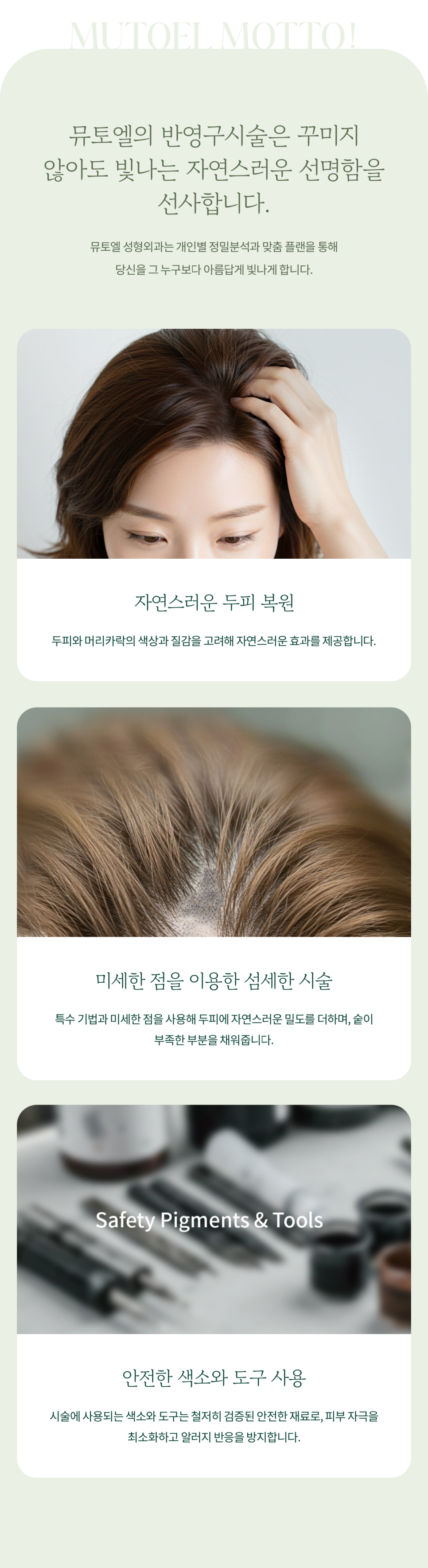
The SMP procedure is one in which tiny dots are
deposited into the scalp so that, from the outside,
it looks as if hair follicles are present.
It is similar to the principle of tattooing, but the
needle thickness and pigment characteristics are different.
In other words, the detailed features of the procedure
are optimized specifically for the scalp, which is its
biggest distinguishing point.
When semi-permanent pigment is precisely injected
as dots into a hairless scalp, it creates the appearance
of closely shaved hair, and through this, areas that
look sparse are effectively filled in, covering the scalp
so it appears much fuller than it really is.
How is it performed?
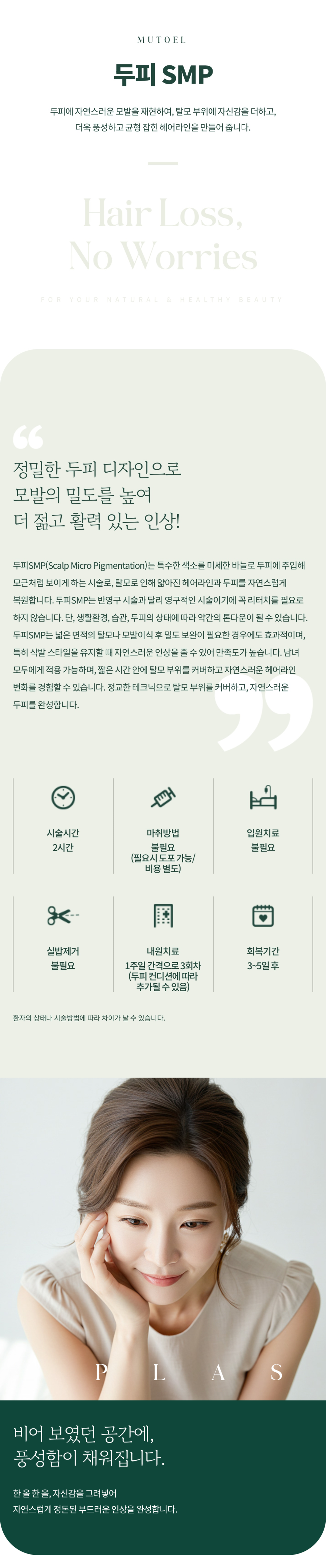
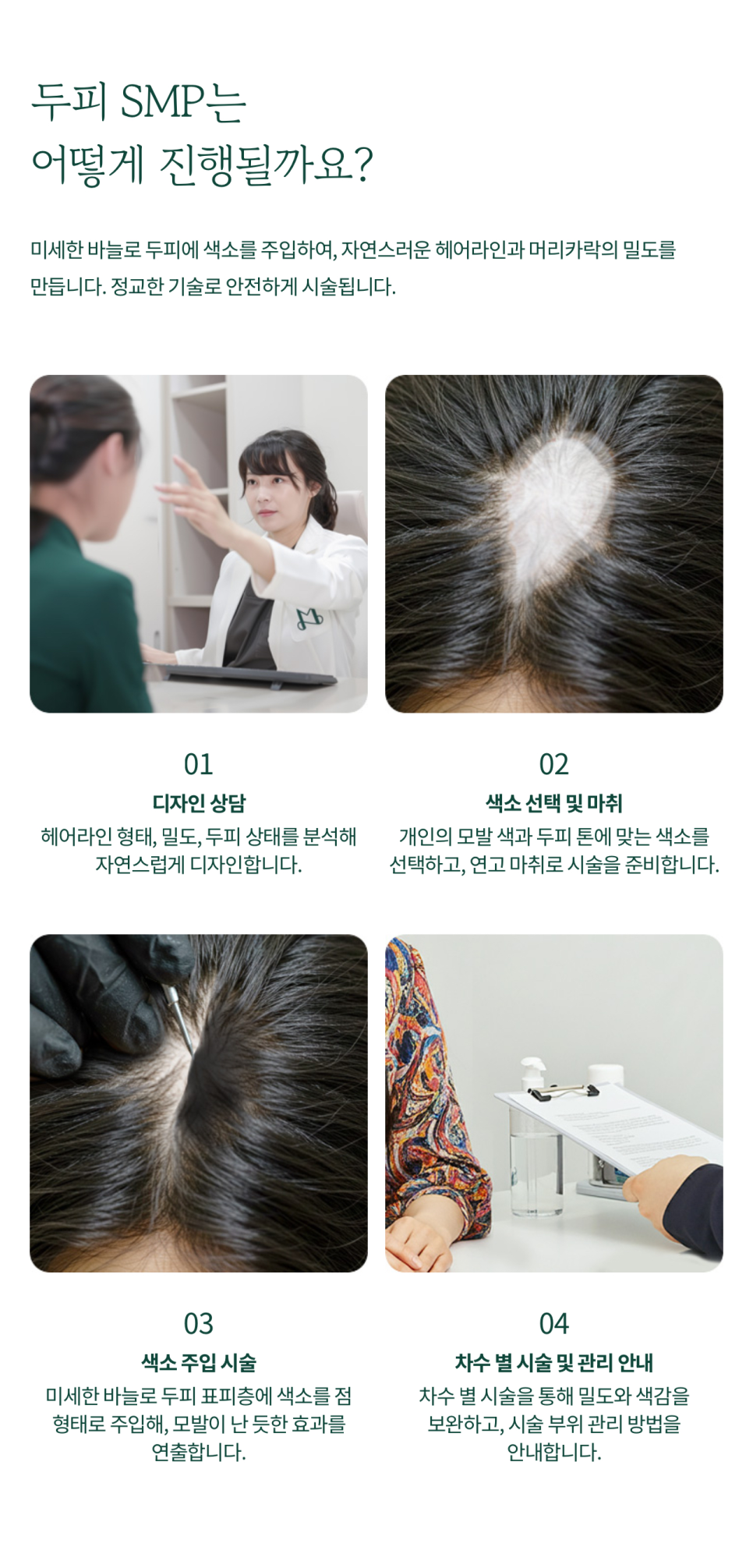
First, through a careful consultation, the overall
condition of the scalp is checked, and the pigment
that best matches the hair color and skin tone is selected.
Using pigment that is too dark or that does not suit
the skin tone can easily lead to an unnatural result,
so the color-matching process is very important.
SMP is usually performed in two stages. At first,
the overall design is mainly established, and density
is increased during the retouch session. However,
depending on each person’s scalp condition, additional
SMP sessions may be added.
The reason it is difficult to complete in a single session
is that step-by-step reinforcement is needed until the
pigment settles stably into the scalp.
Because pigment absorption varies depending on skin type,
an appropriate amount of reinforcement is used to create
a uniform color.
With additional sessions, not only is the color reinforced,
but detailed design adjustments are also made,
allowing for even more natural results.
What are its advantages?
The biggest advantage of scalp SMP is that it is a
non-incisional procedure, meaning the process is simple
and the recovery period is short.
Since there is no incision or suturing as with hair
transplant surgery, no separate recovery period is needed,
and daily life is possible immediately after the procedure.
Pain and bleeding are also minimal, so the burden is low.
Although it is not a fundamental solution to hair loss,
it immediately covers appearance-related concerns,
making it a practical option for relieving worry.
In fact, after immediately covering areas that look sparse
through SMP, if treatment that helps hair grow again
fundamentally is carried out at the same time, the final
effect can be much fuller-looking overall.
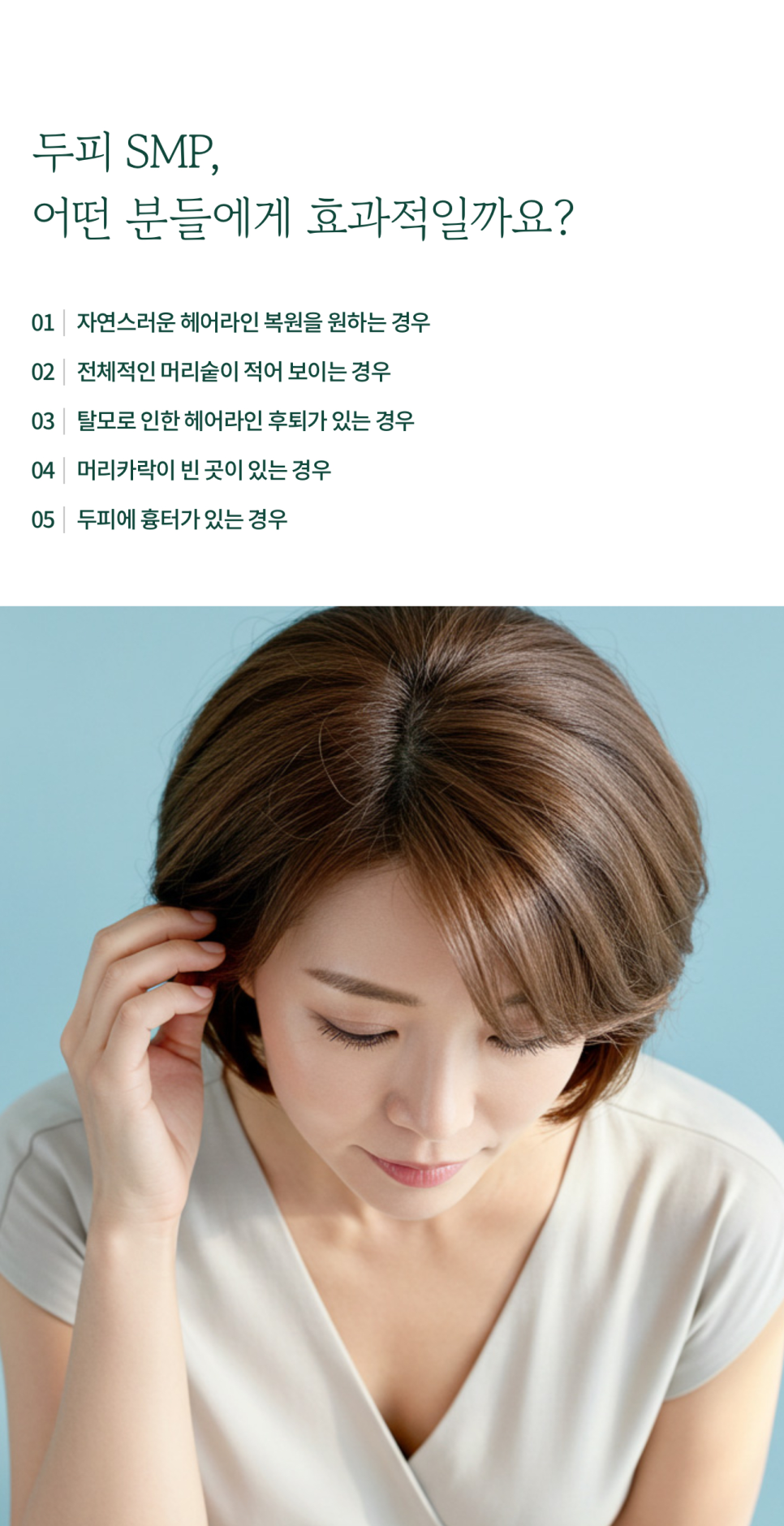
Can it be combined with other treatments?
SMP has the advantage of being able to be combined
with traditional hair loss treatments.
For example, in the case of alopecia areata, medication
and injection therapy can be used to address the root
cause of the condition, while SMP can also be performed
at the same time to effectively fill in the thinning areas
even before treatment is fully completed.
Also, for people who have undergone hair transplant
surgery, SMP can be performed on areas that are not
fully filled in by surgery alone, naturally reinforcing
areas with lower hair density and creating synergy
with other treatments.
Although actual hair does not grow, matching the color
and density of the hair precisely creates a much more
natural appearance.
This greatly reduces the psychological burden that hair
loss patients feel during various treatment processes.
To conclude...
Scalp SMP is not a method that fundamentally treats
hair loss itself, but by using pigment to fill in sparse
areas with tiny dots, it becomes an effective way to
boost confidence and bridge the gap during hair loss
treatment.
It is particularly effective for covering patches of hair loss
that appear suddenly due to stress, such as alopecia areata,
and its major strength is that it can be performed easily
at any time without disrupting daily life.
However, because the results and how long they last vary
depending on each person’s scalp condition and characteristics,
we recommend that you 반드시 consult sufficiently with a
medical professional and receive SMP in a safe environment.
That concludes today’s post from Yongsan Plastic Surgery.
We will come back next time with even more helpful information.
This was Mutoel Plastic Surgery.
Thank you.