Hello :)
This is Director Choi Junho of Mutoel.
I used to serve as a military doctor at the Armed Forces Capital Hospital,
where I handled both treatment and referral-related duties.
Now, as a board-certified plastic surgeon,
I run a private clinic in the civilian sector,
and I have come to be on the side that receives referral requests.
After personally experiencing both roles on the ground,
I have seen many cases where service members have difficulty because they do not fully understand
the procedures for civilian hospital referrals.
In particular, many people are not sure how much of the medical cost can be reimbursed
and which type of facility is the most advantageous to visit for treatment.
Today, from both the perspective of a military doctor and a clinic director,
I will give you a complete overview of military referral treatment.
- How does the military referral treatment process work?
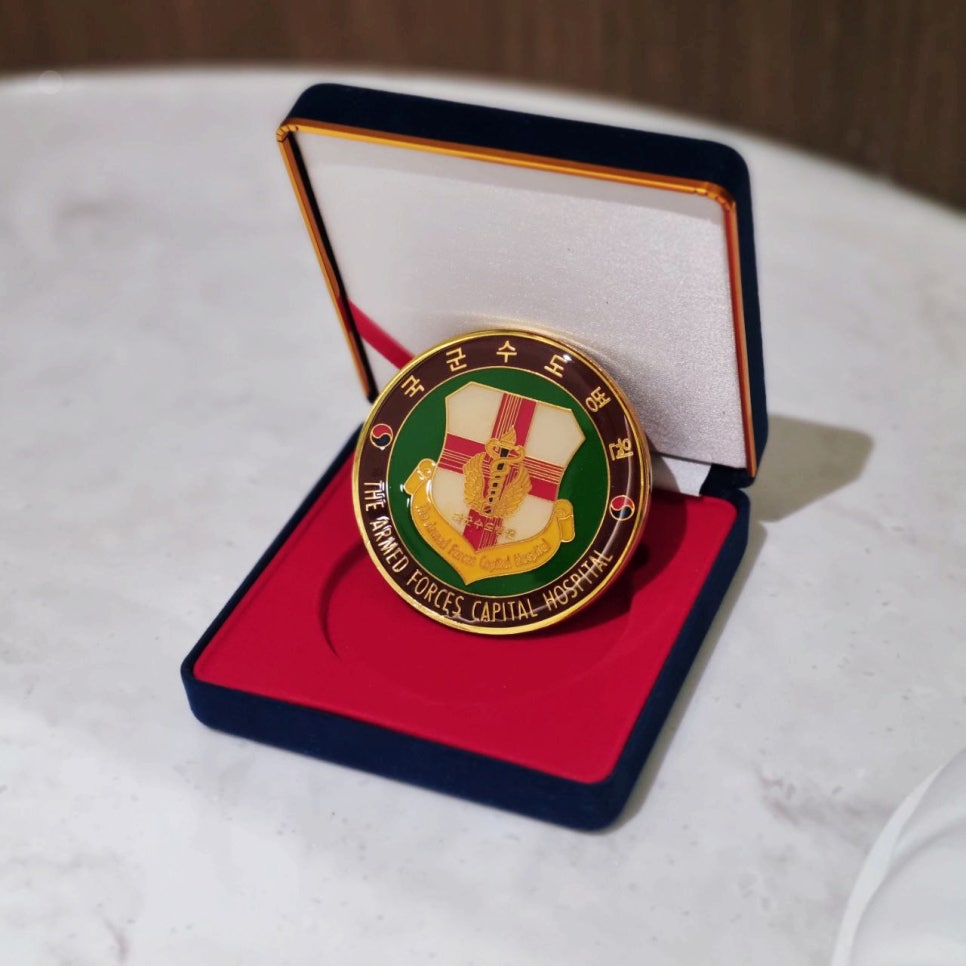
Medal received after discharge from service as a military doctor at the Armed Forces Capital Hospital
First, you must receive treatment at a military hospital or medical station.
However, based on the Armed Forces Capital Hospital standard, if the relevant department does not exist,
or if treatment within the military medical system is difficult due to a lack of necessary equipment,
and civilian medical care is deemed necessary,
the military doctor will submit a referral request to the Armed Forces Medical Command,
stating reasons such as the need for specific tests or surgery,
or the need for consultation with a specialist department.
Once the Military Referral Review Committee approves it,
a referral letter is issued.
Now, bring the referral letter and your ID to a civilian hospital or clinic,
and you can receive treatment right away.
Although procedures may vary somewhat by medical institution,
the process generally follows this order: examination -> tests -> diagnosis -> treatment.
- Tertiary general hospital vs. clinic: which one should you choose?

Large tertiary general hospital
Many service members may be confused about whether to go to a large hospital or a small neighborhood clinic.
I will honestly compare tertiary general hospitals,
such as Seoul National University Hospital, Korea University Hospital,
and Samsung Medical Center,
with local hospitals and clinics, including their pros and cons.
First, tertiary general hospitals offer more precise examinations through testing equipment such as CT and MRI.
They also have the advantage of being able to perform highly complex surgeries.
However, because they are places that many people from all over the country visit,
even the initial reservation for the first step, the "examination," often takes anywhere from a few weeks to several months.
In such cases, relatively simple procedures such as tumor removal may actually be inefficient when time is taken into account.

Interior of a clinic with a relatively short waiting time
In contrast, general clinics have fewer outpatient visitors,
so the waiting time is very short, which is a major advantage.
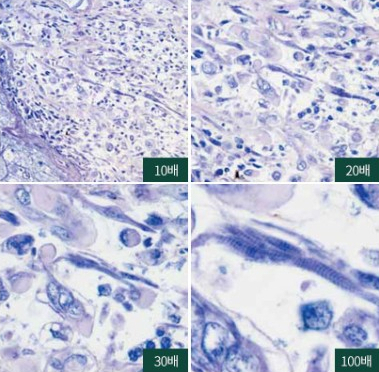
In particular, at Mutoel, which has a three-specialist collaboration system,
| Examination by a dermatologist -> ultrasound examination -> clinical diagnosis -> surgery by a plastic surgeon -> definitive diagnosis through pathological tissue examination by a pathologist |
all procedures are carried out quickly.
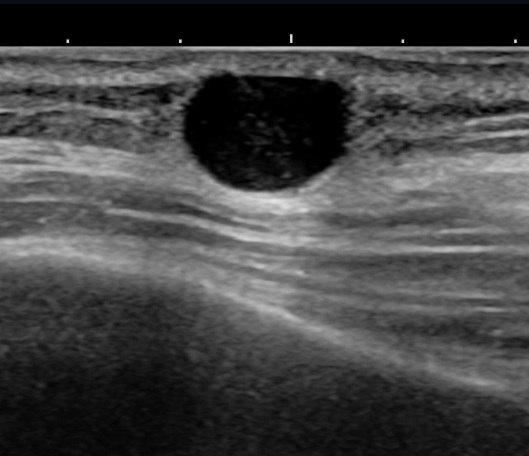
Clearly defined cystic tumor
As in the photo above, when the boundaries are clearly visible on the ultrasound screen,
it is possible to confirm surgery quickly, either on the day of the visit or on a near date.
However, if the case is not simple like the one above and a malignant tumor is suspected,
you should know that a tertiary general hospital, rather than a clinic, is more appropriate!
- How much of the medical cost will be reimbursed for service members?
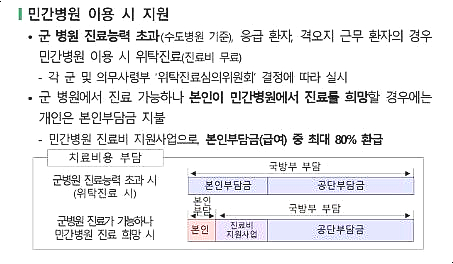
Scope of treatment cost burden for referral treatment. Source: 2025 Military Life Guide
When a service member receives referral treatment at a civilian hospital,
treatment costs can be reimbursed from 80% up to 100%.
In the case of referral treatment through a military doctor's referral request,
100% is reimbursed, and both the patient's out-of-pocket amount
and the insured portion are covered by the Ministry of National Defense.
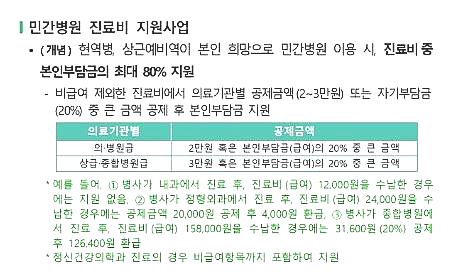
Scope of medical expense support. Source: 2025 Military Life Guide
Treatment is also possible within the military,
but if you personally wish to receive treatment at a civilian hospital,
you must pay the out-of-pocket amount.
Through the medical expense support program,
up to 80% of the out-of-pocket amount (covered benefits) can be reimbursed.
- Medical expense reimbursement procedure
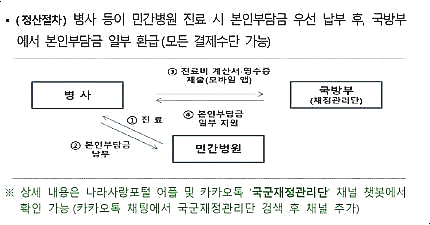
Military medical expense reimbursement procedure. Source: 2025 Military Life Guide
To receive reimbursement for medical expenses,
the service member must first pay the cost at the time of treatment
and then receive reimbursement later from the Ministry of National Defense.
At this time, both cash and card payments can be used.
You must be sure to submit the medical bill and receipt,
so do not forget to bring them home with you!
If you submit and claim through the National Love Portal app,
payment will be deposited into your salary account after 1 to 2 months.
- Closing
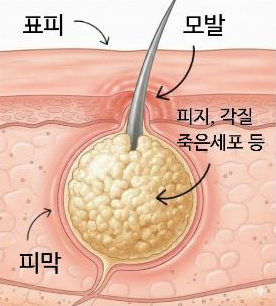
Epidermal cyst in illustration form
When living in the military, high humidity, temperature changes,
sweat, blocked pores caused by dust and sebum,
and various stresses can lead to a hard lump forming somewhere on the body.
If you need referral treatment during military service,
it is best not to wait unnecessarily long,
but to choose the right place for your situation and resolve it quickly.
Health during military service is not a choice; it is a necessity.
I hope you understand the civilian hospital referral process correctly,
receive treatment, and return quickly to your normal daily life :)