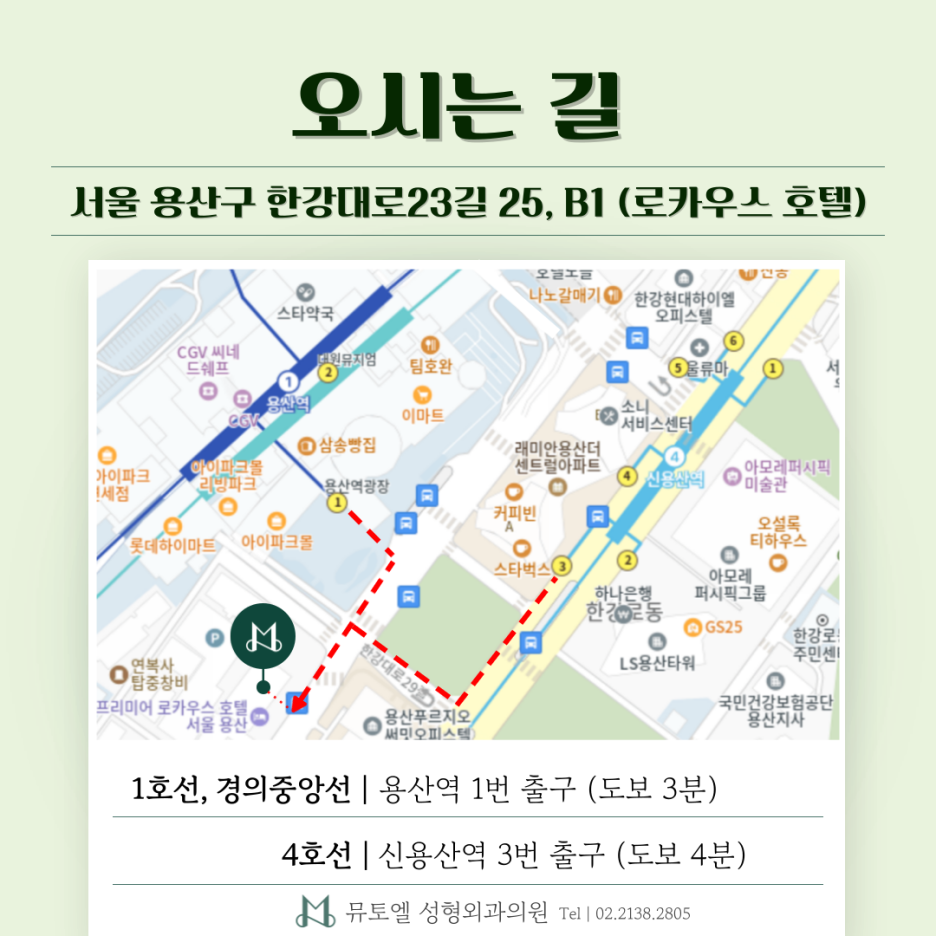
Hello.
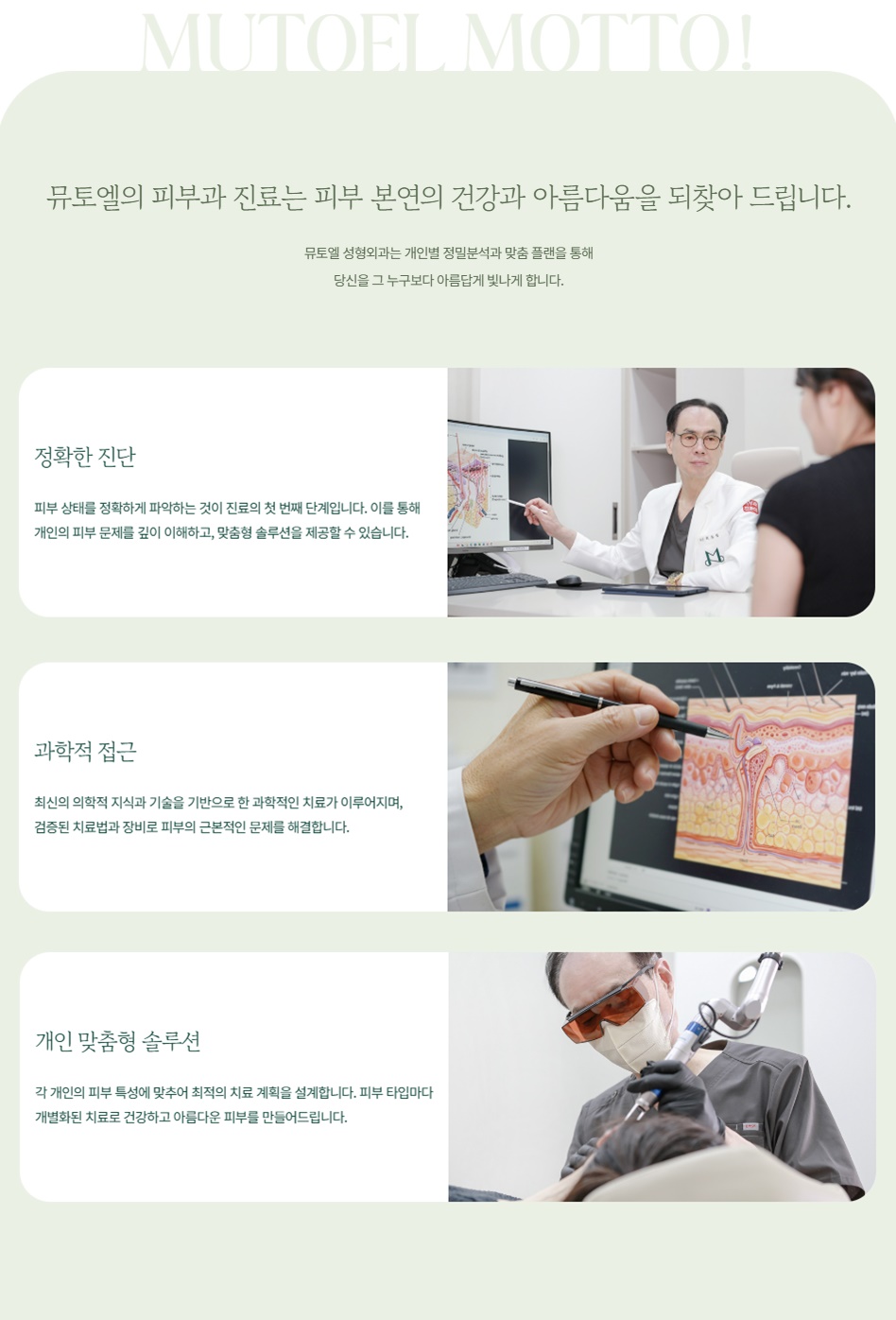
This is Mutoel Plastic Surgery.
Mutoel strives to provide the procedure that is just right for each person
through a three-doctor collaborative system with board-certified plastic surgery and dermatology specialists,
and through systematic medical care.
We promise a medical experience you can trust throughout the entire process,
from comfortable consultations and careful procedures to aftercare.
Beyond simply providing procedures,
we will always do our best to become a medical partner
that can take responsibility for our clients’ tomorrow.
You may have heard the term “skin lesion.”
A skin lesion refers to any abnormal change that appears on the skin due to disease or allergies.
Even if it looks like a small change on the surface, if it is a skin lesion that can cause discomfort in daily life or cosmetic stress, it can become a long-term concern.
Among these, we’d like to talk about “skin tags,” which surprisingly many people experience.
Skin tags commonly appear in areas where the body folds, such as the neck, armpits, and under the breasts.
They occur more frequently in summer, and because they can get caught on clothing or cause pain when moving, they become a source of stress.
At Mutoel Plastic Surgery and Dermatology in Yongsan, we will explain in detail, as if in a consultation room, the removal methods for skin tags, the level of pain, precautions, and even the causes of skin tags that many people are curious about.

How is skin tag removal performed?
First, we carefully check the location, number, and size of each skin tag.
The removal method changes depending on these factors.
Skin tags vary widely in size, from tiny ones only a few millimeters across to clearly protruding ones that are visibly raised.
Therefore, removing all skin tags with just one method can actually increase the likelihood of scarring or recurrence.
In other words, thorough individual diagnosis is very important.
If the size is small, they can be removed more easily by burning them off with a laser device.
However, larger skin tags are better removed by excision using a radiofrequency device.
Tiny skin tags measured in millimeters are removed in an instant, so the procedure is very quick, and some people even ask whether it is already over.
But if it is close to 1 cm in size, removal is performed by combining excision and coagulation in a more surgical manner, while preserving the deeper layers of the skin as much as possible to minimize the risk of scarring.
At Mutoel, we avoid methods that unnecessarily damage tissue and precisely remove only the lesion area to promote faster recovery.
Thanks to this approach, irritation is minimal and the recovery period is short, so the removal procedure can be relatively comfortable.

Does skin tag removal hurt?
The part many people fear most is pain.
Most clients who undergo the procedure say it ended more simply than they expected.
Very small skin tags can be completely removed without anesthesia, and in practice the procedure ends with only a slight stinging sensation.
If the skin tag is larger or in a more sensitive area, the procedure is done with topical anesthetic or local anesthesia, and because the procedure begins after sufficient anesthesia, the person receiving it does not feel much discomfort.
Because most skin tags are limited to the skin and are somewhat distant from complex vascular and nerve structures, severe bleeding or pain during the removal process is relatively uncommon.
Immediately after the procedure, there may be a slight burning sensation or mild warmth,
but most symptoms improve quickly, within 30 minutes to 1 hour at most.
After removing a larger skin tag,
a little swelling and a scab may form at the removal site,
but this is usually manageable with simple skin care.
What should you be careful about?
Skin tag removal is a relatively simple procedure,
but if you follow a few basic precautions carefully,
you can expect a cleaner result and faster recovery.
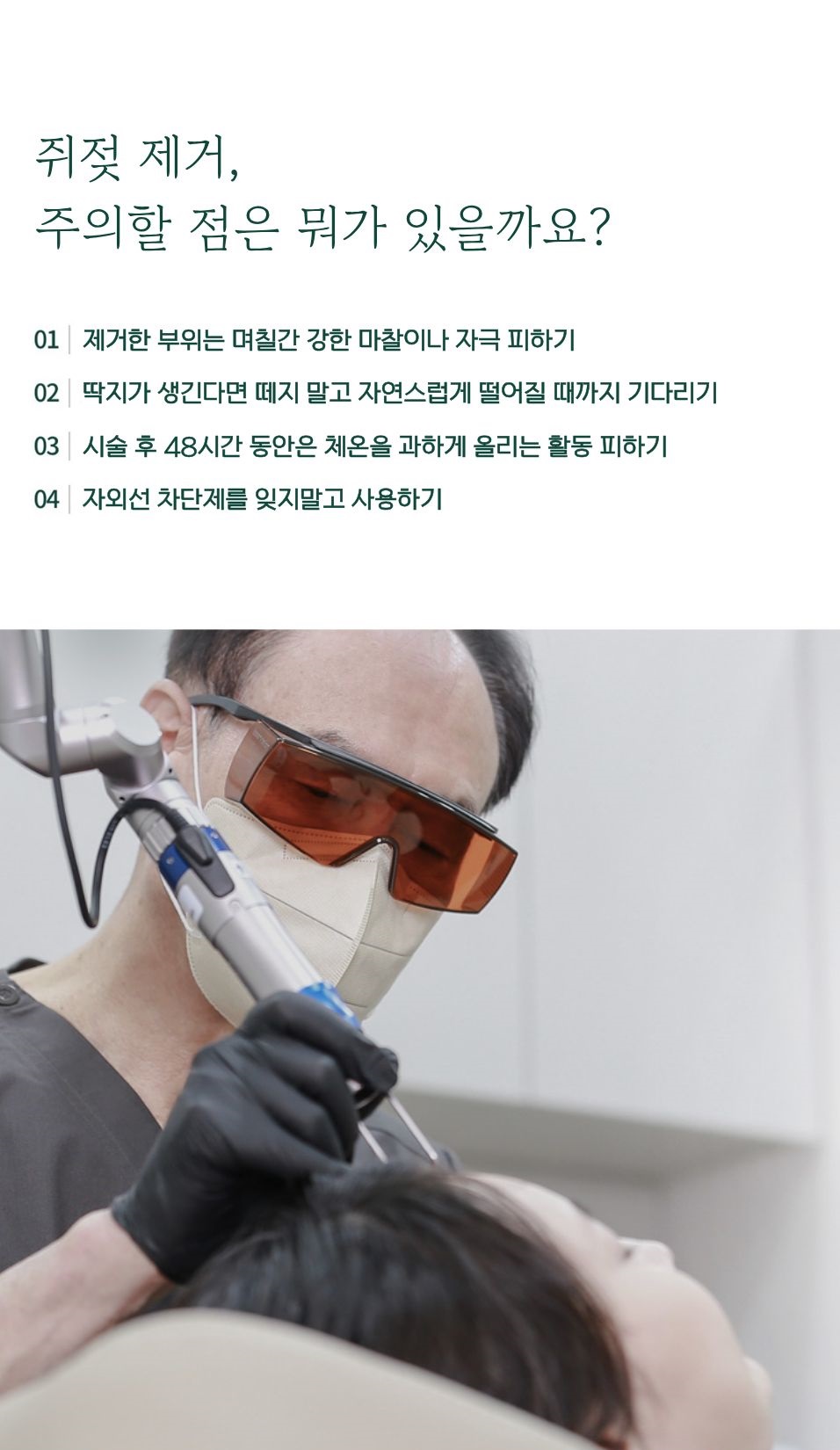
For several days around the area where the skin tag was removed,
it is important to avoid strong friction and irritation.
If repeated friction occurs from necklaces, shirt collars, or bag straps,
the scab may come off before it has fully healed,
increasing the risk of pigmentation.
Do not forcefully peel off the scab that forms at the procedure site.
Wait until it falls off naturally.
If you remove it by force, the scar may last a long time.
Also, for up to 48 hours after the procedure, it is better to avoid activities that excessively raise body temperature,
such as strenuous exercise or saunas, and to rest.
If you had the removal procedure on a visible area,
it is good to apply sunscreen consistently,
and makeup is possible starting the day after the procedure,
but you should avoid rubbing or repeated friction so that the area can heal without scarring.
At Mutoel Plastic Surgery and Dermatology in Yongsan,
we also pay close attention to these detailed aftercare steps to increase satisfaction.
To conclude..
A skin tag may seem like a small lesion, but when it appears on the face or neck, it keeps drawing attention, and depending on the area, repeated friction can cause pain.
Fortunately, skin tags can be removed relatively easily, and recovery after the procedure is also fairly quick.
To reduce the risk of scarring or other side effects, we recommend having them removed safely in a clean medical environment.
After skin tag removal, it is important to reduce the likelihood of recurrence by improving daily habits, such as minimizing friction from jewelry or clothing.
Also, if a skin lesion such as a protrusion or lump develops and you are unsure whether it is a skin tag, we recommend quickly consulting and being examined by a specialist so that the type of lesion can be accurately diagnosed.
Mutoel is doing its best to provide care that reduces the burden on clients and allows them to receive treatment in a comfortable state.
This has been Mutoel Plastic Surgery,
with your healthy skin.
Thank you.