The Time That Turns Fear into Confidence,
A Guide to Safe Lower Eyelid Surgery
Hello.
I’m Director Junho Choi of MUTOEL.
We now live in a world where the phrase “the 100-year era”
no longer feels unfamiliar.
Beyond simply living longer,
this is an era in which people increasingly wonder
how to live healthier, look younger,
and maintain beauty in a way that still feels like themselves.
In line with this trend, the search for a plastic surgery clinic
naturally centers on “anti-aging procedures.”
Among the many surgeries available, if I had to pick the so-called
“high-value surgery” that can deliver dramatic results in terms of time and cost,
I would confidently point to upper eyelid surgery and lower eyelid surgery.
However, upper eyelid surgery improves drooping eyelids
while also creating a double eyelid line, so the change in appearance
can be quite noticeable,
making it a procedure after which people are more likely to hear,
“Did you get surgery?”
On the other hand, lower eyelid surgery, often called eye bag surgery,
can improve the natural shape under the eyes,
enabling people to hear pleasant feedback such as
“Your face looks brighter these days”
or “You look more refreshed.”
It is a very appealing procedure.
But even though it is such an effective surgery,
many people hesitate to go to the operating room right away
because of the frightening stories they encounter on the internet or in the news.
When you decide on lower eyelid surgery and start searching,
you may sometimes come across news about serious complications
such as blindness or strabismus.
Even if you have worried about it for a lifetime,
one article like that can make you think,
“Let’s just keep living like this,” and change your mind.
That is only human.
As a board-certified plastic surgeon,
I feel a heavy sense of responsibility whenever I come across such news.
Today, based on the content I covered in a YouTube video,
I will explain in detail on the blog what is important for ensuring
that the eye surgery you have decided on is performed safely.

The element that must be checked before surgery, and that is!
The most important factor in securing safety in lower eyelid surgery
is hemostasis—stopping the bleeding completely.
You might simply ask,
“Can’t the doctor just stop the bleeding carefully?”
But hemostasis is a joint effort completed through the interlocking of
the surgeon’s skill and the patient’s overall health condition,
like gears fitting together.
If a patient has a condition that makes blood clot poorly,
even the most skilled surgeon can face unexpected variables.
For safe surgery, the first thing I check during consultation
is the medications the patient is taking regularly.
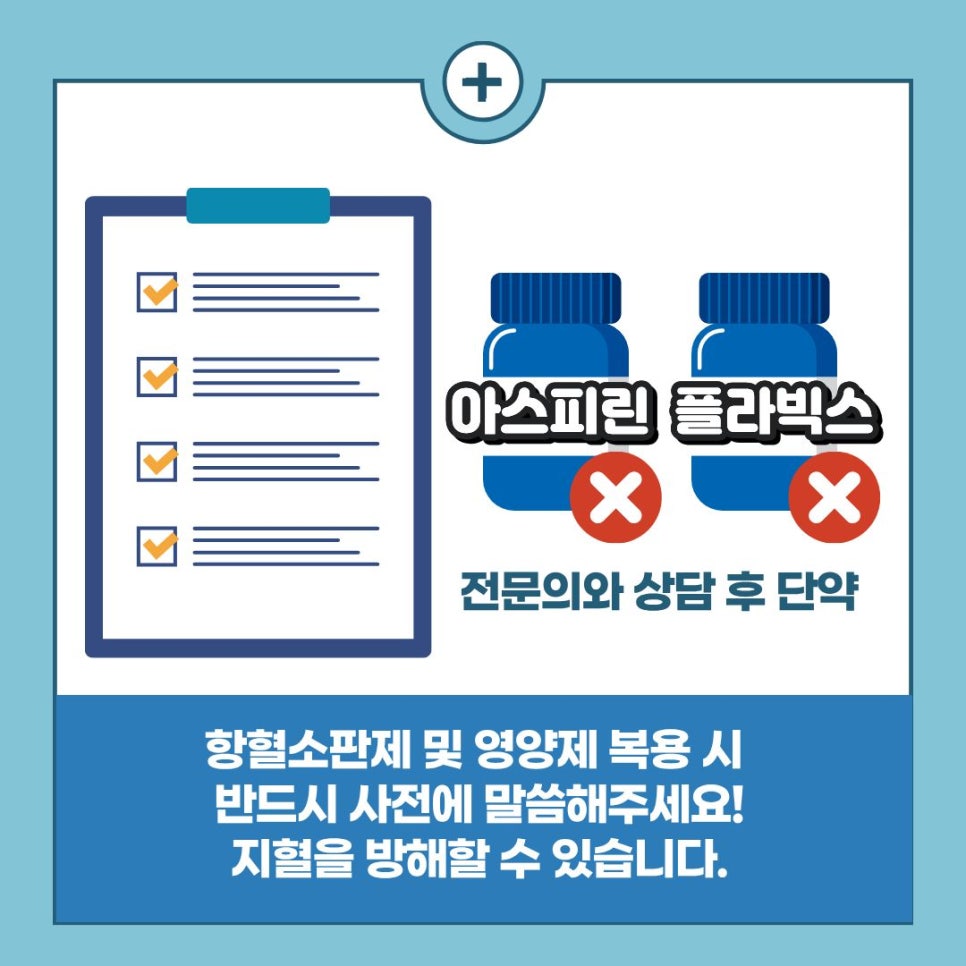
In particular, extra caution is needed for people who take antiplatelet drugs
such as aspirin or Plavix for high blood pressure, heart disease,
or stroke prevention.
These medications thin the blood and interfere with the hemostatic process,
so before surgery, you must consult the doctor at the hospital
that prescribed the medication and secure a safe period off the drug.
The next thing to be careful about is what we commonly take for our health:
“supplements.”
Among them, omega-3 is so effective at reducing the risk of clots
and improving blood circulation
that it can become a hidden obstacle in the surgical field
by interfering with hemostasis.
In fact, among long-term users,
there are sometimes cases where hemostasis during surgery is especially difficult.
That is why at MUTOEL, we strongly recommend
stopping omega-3 one week before eye surgery.
Supplements you take for your health should not become a tool
that threatens the safety of surgery.
For the first 3 days after surgery, you must be as careful as possible!
Even if hemostasis was completed perfectly in the operating room
and everything was confirmed to be fine in the recovery room,
it is still too early to relax completely.
This is because of “delayed bleeding.”
The area around the eyes is one of the places in our body
where tiny blood vessels surrounding fat are densely and intricately gathered.
Blood vessels that behaved quietly during surgery
may reopen after discharge due to sudden stimulation,
causing bleeding.
In particular, during the first 3 days after surgery,
lifting heavy objects,
actions that place excessive strain on the abdomen,
or even something as simple as a forceful sneeze can raise blood pressure,
so I strongly recommend being as careful as possible.
If internal bleeding occurs because of these actions,
the eyes can swell rapidly, pain can develop,
and in severe cases, eye movement may even become restricted.
Therefore, for 3 days including the day of surgery,
you must rest absolutely.
Avoid bending your head down,
and keep using cold compresses steadily to help maintain
a constricted state in the blood vessels;
that is the best way to prevent delayed bleeding.
I ask every patient who has completed surgery to come back to the clinic
within 3 days.
The regular checkups performed during this period have meaning
beyond simply observing the recovery process.
This is because subtle swelling or risk factors that patients may not notice
can be detected early through a specialist’s eye.
I understand that visiting the clinic may feel inconvenient,
but I hope you will remember that this short visit becomes the most reliable
safety measure for preventing many of the difficulties that may arise after surgery.

Lastly, you need to be careful about “this.”
Even if the surgery was performed safely,
there is one more hidden issue that can make patients anxious during recovery.
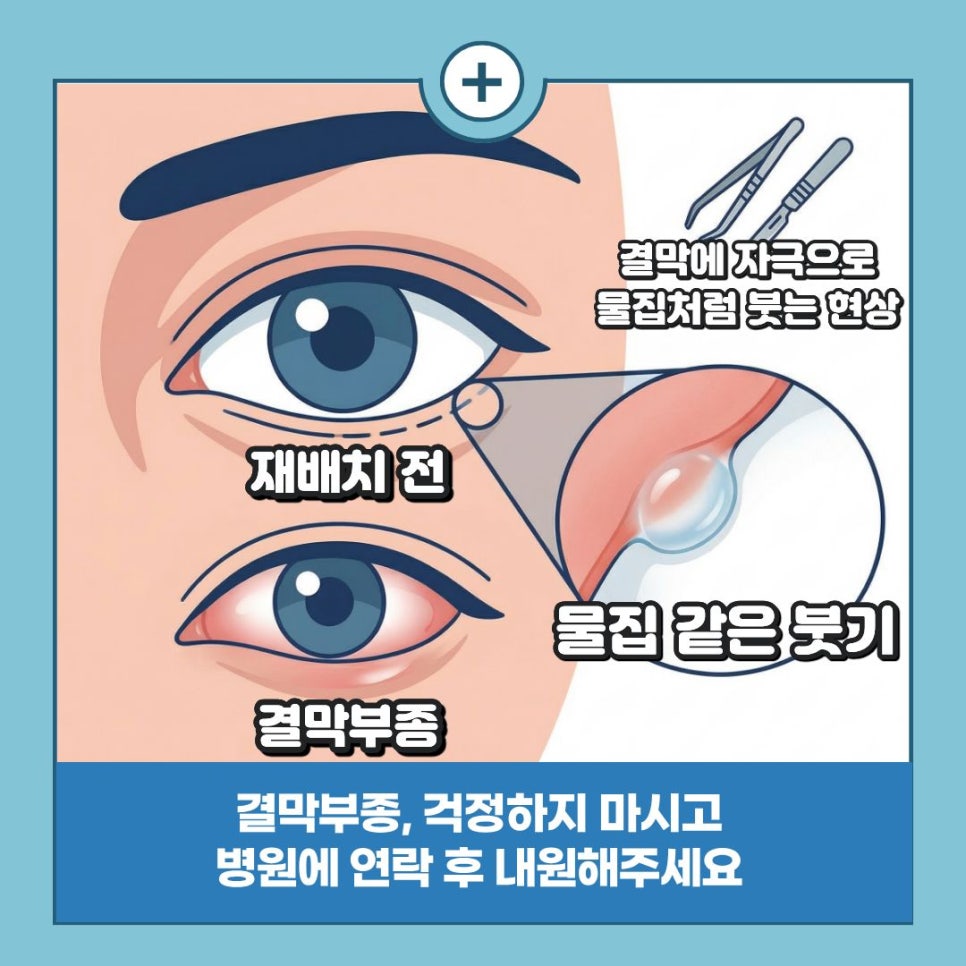
That is “conjunctival edema.”
When the conjunctiva, the membrane covering the eyeball
and the inside of the eyelids, is physically irritated,
it can swell up like a transparent blister on the white of the eye.
Some people are startled by the unfamiliar appearance of their eyes in the mirror
and try to press, rub, or squeeze it out with their hands,
but this is absolutely not allowed.
Use eye drops consistently and focus on compresses,
and most importantly, do not let your worries grow on your own;
have the courage to contact the clinic at any time and get checked quickly.
In closing..
Overcoming fear comes down to communication and principles.
As a plastic surgeon, what saddens me most is when
patients experience a small abnormal symptom after surgery,
but instead of seeking help, they quietly worry on their own and leave it unattended,
missing the right time for treatment and even being emotionally hurt.
If your eyes are a little swollen after lower eyelid surgery,
or if an unexpected symptom appears,
don’t blame yourself too much or be consumed by fear.
MUTOEL Plastic Surgery will honestly stand by you throughout the entire process
so that the vague fear you once felt can turn into confidence and satisfaction
every time you look in the mirror.
We will do the worrying for you, so all you need to do is
come to us with the hope of seeing a brighter appearance
and feel comfortable reaching out for a consultation.
This has been MUTOEL Plastic Surgery.
Thank you.