Skin Benign Tumors: Characteristics by Type and
A Professional Guide to Accurate Treatment
Hello.
I am Director Choi Jun-ho of Mutuel Plastic Surgery.
One day, while showering or changing clothes,
if you find a lump somewhere on your body that wasn’t there before,
it is natural to feel worried right away.
"Could this be cancer?"
"If I leave it alone, could it become something serious?"
Many people may stay up all night searching online
because of their anxiety.
Fortunately, most lumps that form under the skin are
very often skin benign tumors that do not threaten life.
However, being "benign" does not mean it is always safe
to simply leave it alone.
Today, we would like to take a detailed look at the medical definition
of these unwelcome guests in the body,
skin benign tumors, and the characteristics of each type.

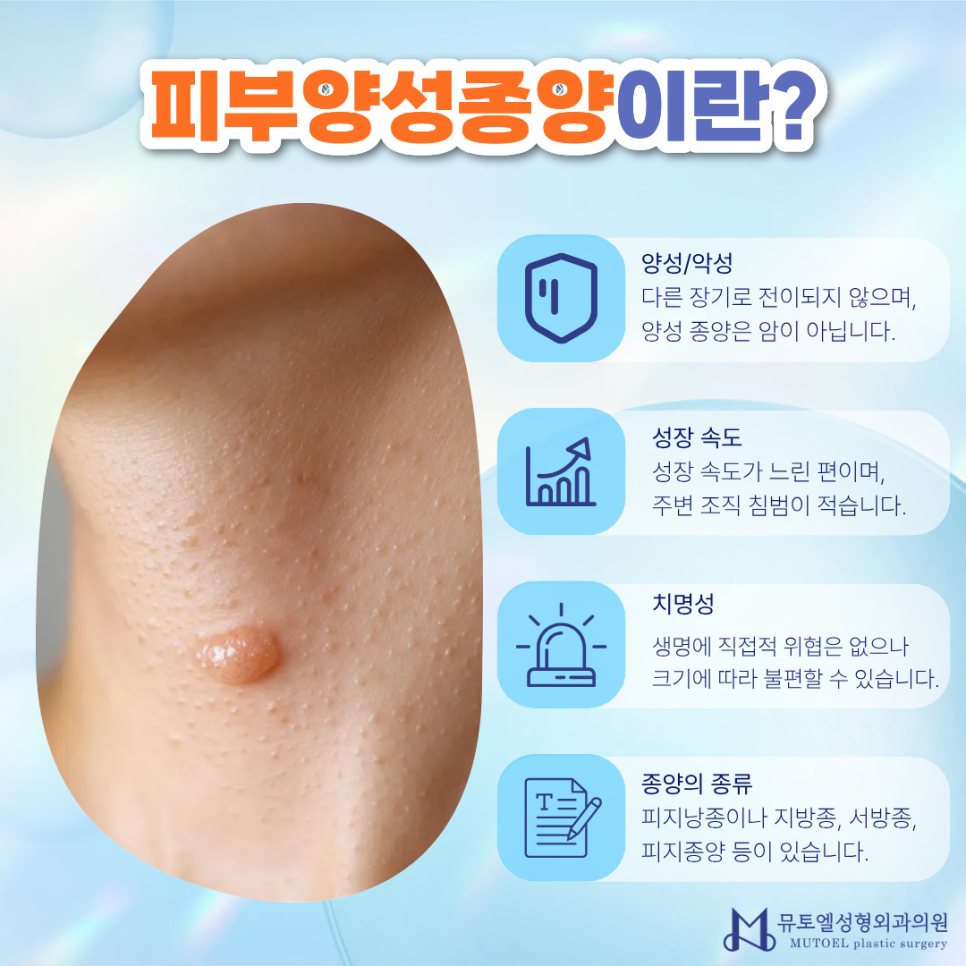
Definition of Skin Benign Tumors and the Crucial Difference from Malignant Tumors
A tumor refers to a mass formed when the cells in our body
abnormally and excessively proliferate.
Among these, skin benign tumors are characterized by
slow growth and the fact that they do not invade
surrounding tissues.
In contrast, malignant tumors (cancer) grow very quickly
and spread to other organs through the lymphatic or blood vessels,
which makes them life-threatening.
Benign tumors are not fatal in themselves,
but over time they can gradually grow larger,
compress nearby nerves, or cause inflammation.
Also, because it can be difficult to distinguish them from malignant tumors
with the naked eye alone, a medical diagnosis must come first.
The Most Common Benign Tumor: Epidermoid Cyst
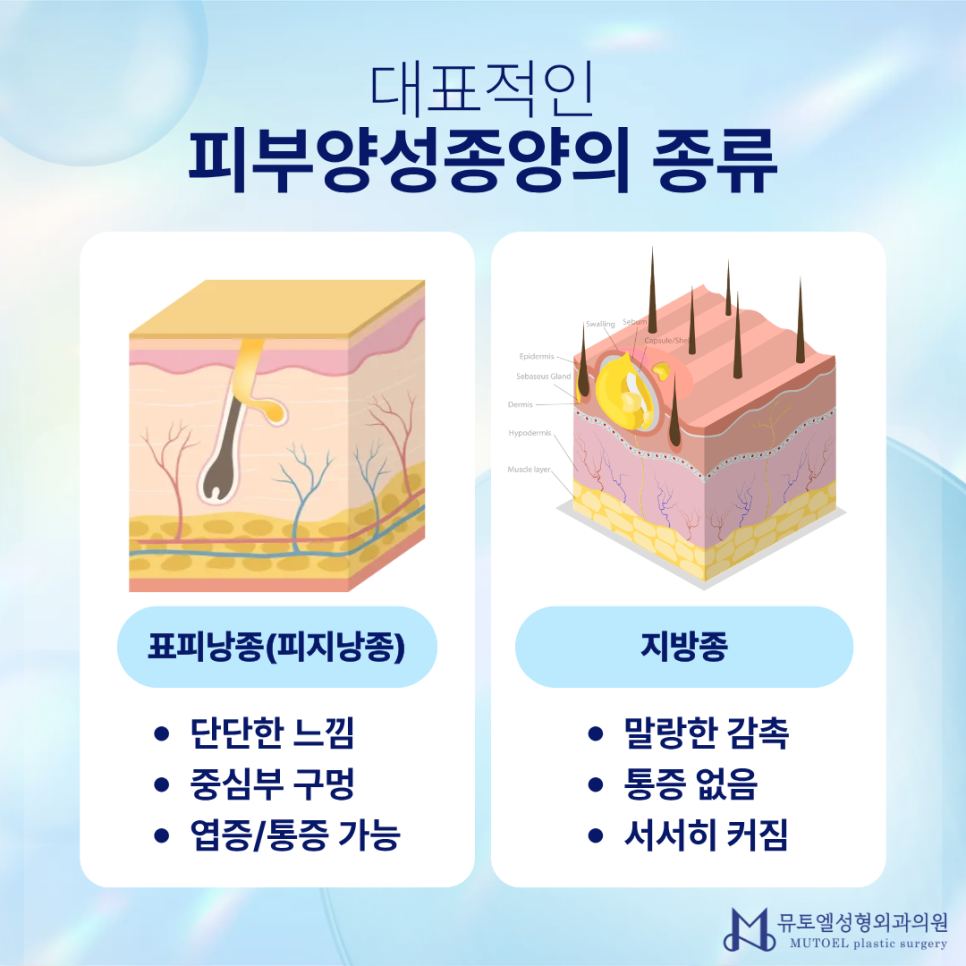
Among what we commonly call a "lump,"
the most frequently seen is an epidermoid cyst.
A pouch forms under the skin,
and waste materials such as sebum and dead skin cells accumulate inside,
creating a lump.
When touched, it often feels slightly firm,
and a small opening is often visible in the center.
If you forcefully squeeze it, foul-smelling discharge may come out,
but unless the pouch itself is removed,
it will continue to recur.
In fact, excessive squeezing can rupture the cyst wall
and cause severe fascial inflammation or pain,
so special caution is needed.
On the other hand, a lipoma is one type of skin benign tumor
that occurs when mature fat cells abnormally cluster together.
It can usually develop anywhere that has fat,
such as the back, shoulders, and limbs,
and when touched, it feels soft and rubbery, like a rubber ball.
It rarely causes pain, but over time it can grow
as large as 5 to 10 cm or more.
Lipomas rarely disappear on their own,
and the larger they become, the wider the incision
that may be needed for removal.
Therefore, if it interferes with daily life
or is large enough to be cosmetically bothersome,
it is wise to take appropriate action early.
Characteristics of Fibromas and Other Various Skin Lumps
Fibromas, which occur when the skin’s fibrous tissue
proliferates excessively, are also a common type of benign tumor.
There are soft fibromas (skin tags), which look as if they are hanging from the skin,
and hard fibromas, which feel firm to the touch.
These are not only cosmetically unappealing,
but they can also be rubbed by clothing or accessories,
causing repeated wounds and bleeding.
In addition, there are many other types of skin benign tumors
under our skin, such as neuromas and hemangiomas.
The important thing is the clinical fact that individuals should not
make their own judgment, apply ointments, or leave them untreated.

The Role of a Pathology Specialist
for Accurate Differentiation
The most important key in treating benign tumors is
the process of confirming, "Is it really benign?"
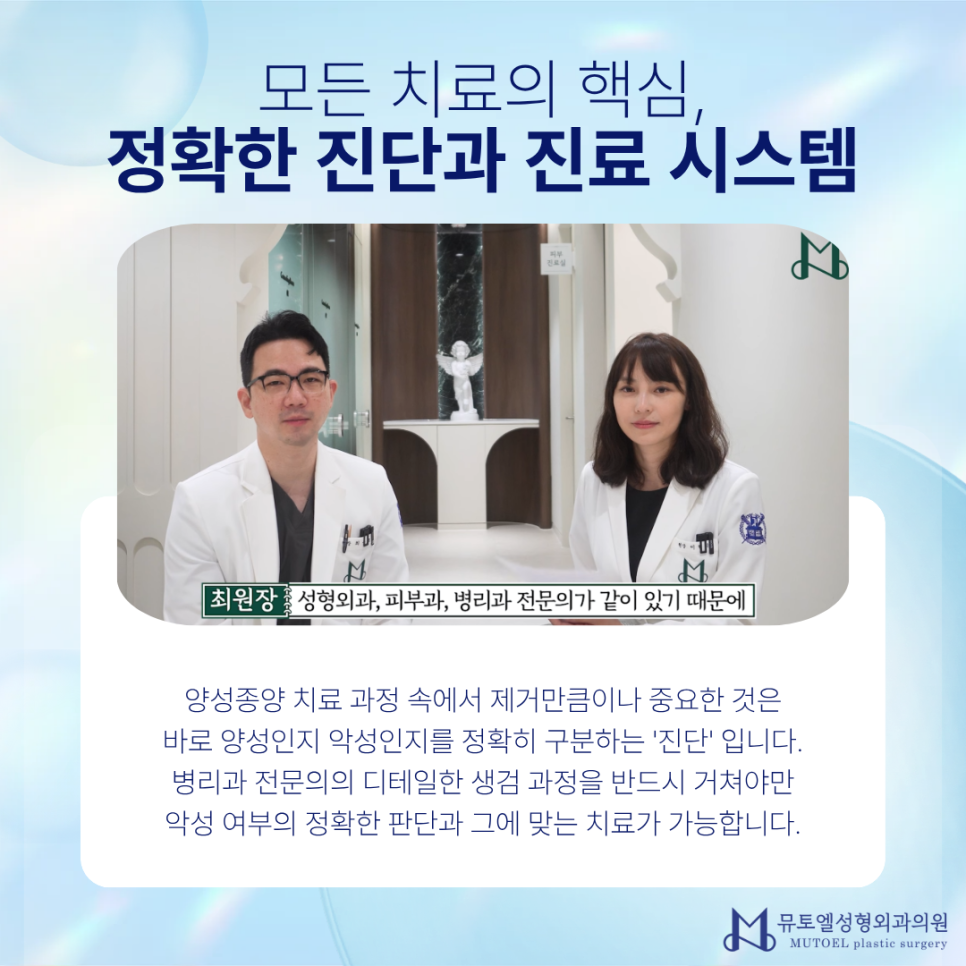
This is also why Mutuel Plastic Surgery emphasizes a system of specialist collaboration.
A plastic surgery specialist precisely excises the tumor,
and a pathology specialist analyzes the tissue down to the cellular level
through a biopsy using a microscope.
This multifaceted review helps rule out the possibility
of malignancy and forms the basis for establishing the safest
possible treatment plan.
That is because diagnosing a skin benign tumor requires not just looking at the exterior,
but also accurately understanding the nature of the internal tissue.
Plastic Surgery Excision Helps Reduce the Burden of Scarring
Even when treatment is deemed necessary,
patients often hesitate to undergo surgery because they worry about scarring.
The plastic surgery approach to removing skin benign tumors
focuses not simply on "removal" but on "restoration."
The incision is minimized by considering the tumor’s location and the skin’s tension,
and the skin texture is carefully aligned through microsuturing techniques.
This delicate process helps prevent noticeable post-surgical scarring
and also shortens the recovery period.
The surgical method that reflects the medical team’s philosophy
of pursuing natural results is one of the very important factors
that increases patient satisfaction.
Care Guide for a Safe Recovery After Surgery
Completing the removal surgery does not mean
that the entire process is over.
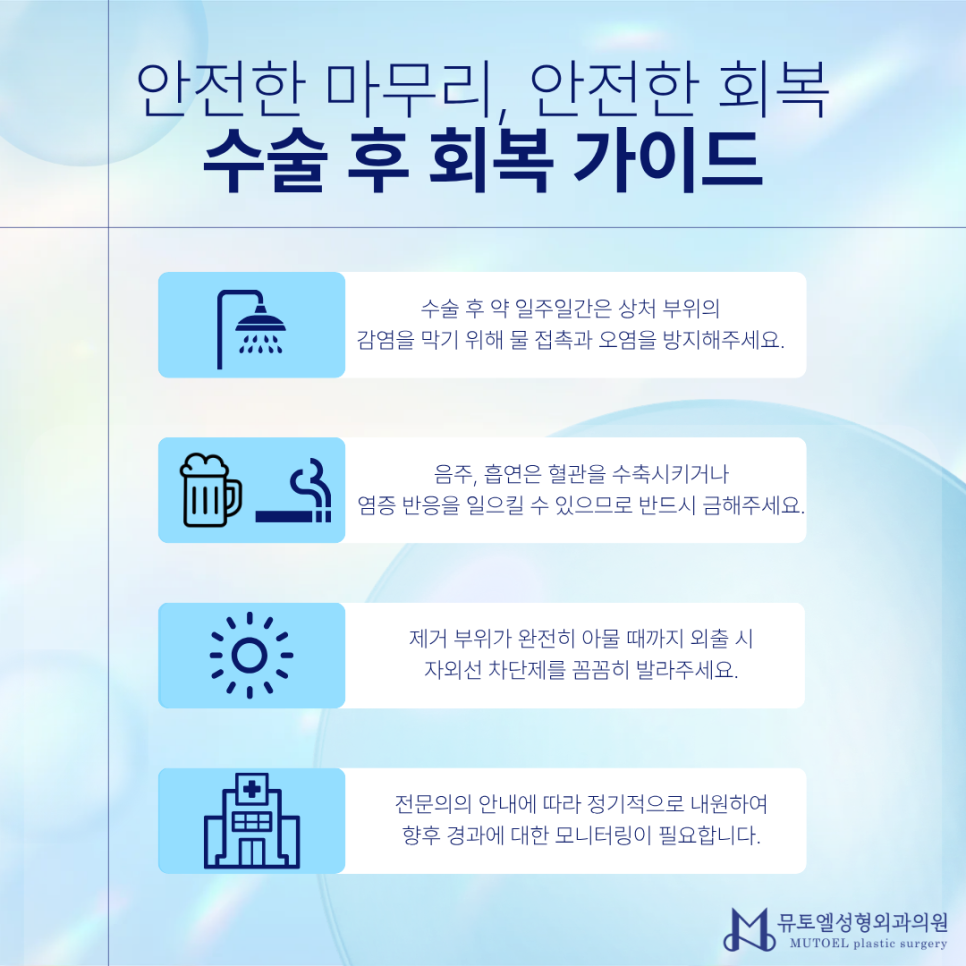
For about one week after surgery, it is advisable to avoid
contact with water and contamination as much as possible
to prevent infection of the wound area.
Also, alcohol and smoking constrict blood vessels
or trigger inflammatory responses, which slows recovery,
so they must be avoided for a certain period.
Until the area where the skin benign tumor was removed
has fully healed, paying attention to sun protection
can help you achieve clear skin without pigmentation.
Following the hospital’s instructions and visiting regularly to check progress
is also an essential step for recovery without complications.
In Closing...
A small lump on your body may be one message
your body is sending you.
Skin benign tumors are problems that can be fully addressed
if an accurate diagnosis is made at the right time.
Rather than excessive recommendations,
Mutuel Plastic Surgery aims to help patients make the right choices themselves
by providing accurate information.
Skin specialists, plastic surgery specialists, and pathology specialists
will work together to protect your skin health.
For natural beauty and a healthy daily life,
we will always repay you with honest medical care.
If you have any questions, please do not hesitate
to consult with a specialist.
This has been Mutuel Plastic Surgery.
Thank you.