'Everything About Regenerative Creams'
Hello.
I am Jun-ho Choi,
Director of Mutoel Plastic Surgery.
At Mutoel Plastic Surgery Clinic in Yongsan,
three specialists in dermatology, plastic surgery,
and pathology work together to provide care,
always dedicating themselves to achieving
the most natural beauty.
As more patients have recently been undergoing
various dermatological procedures,
we are receiving more detailed inquiries
about the ingredients in 'regenerative creams'
that can help with effective post-procedure care.
Most dermatological procedures work by creating
minute wounds or stimulation to induce
the skin's own regenerative process,
so post-procedure care is very important.
The Key to Skin Recovery: The 'Turnover Cycle'
The skin constantly produces new cells
that rise toward the surface, while dead cells
are shed through a turnover process
that repeats at regular intervals.
This metabolic process is commonly called
the 'skin turnover cycle,' and in generally
healthy skin, it takes approximately
28 days, or four weeks.
However, as aging progresses or the skin
is directly exposed to strong stimulation,
this cycle gradually becomes longer.
As a result, the skin barrier can weaken rapidly,
and dead skin cells may not be shed properly,
leaving the skin rough and dry.
In particular, sophisticated laser procedures
work by temporarily awakening and stimulating
skin cells, so an 'auxiliary tool' is needed
to support the cells' natural recovery.
So, what is the key mechanism of action
behind 'regenerative creams,' which are intended
to help restore injured skin cells to their
original condition and rebuild the skin barrier?
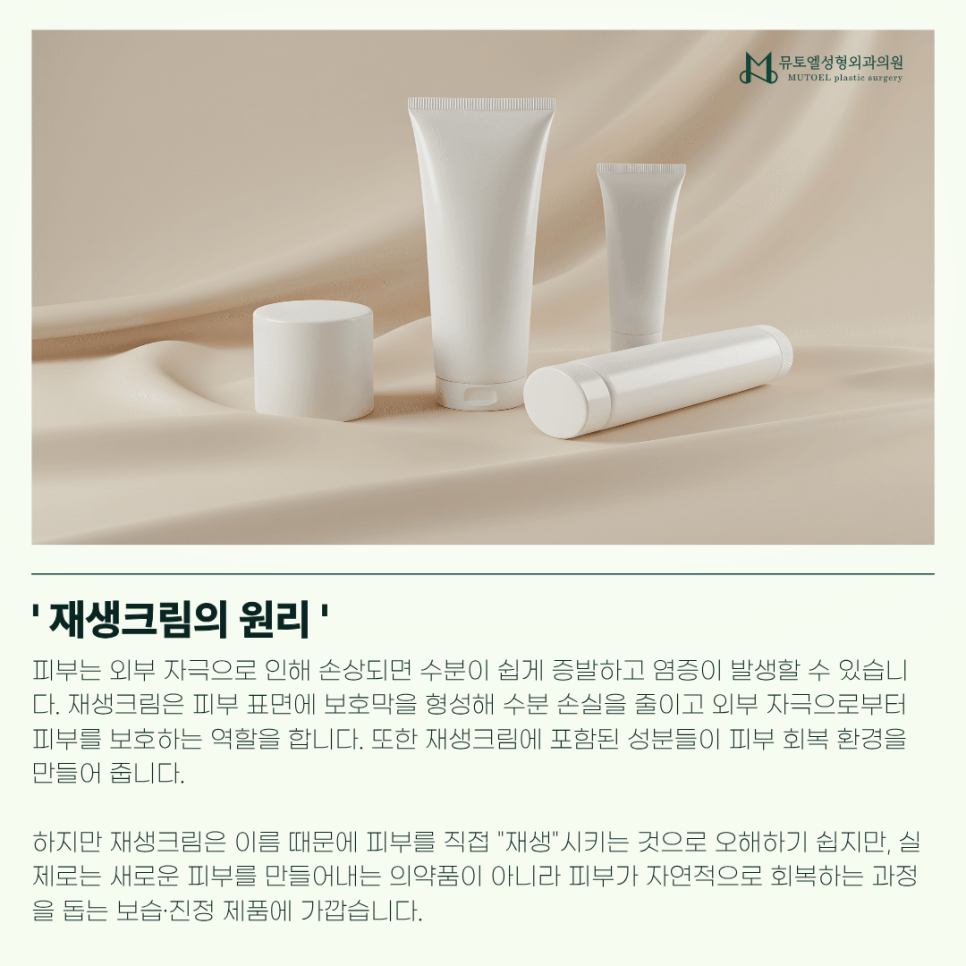
Their most representative role is to rapidly
and firmly rebuild the damaged lipid barrier.
The outermost layer of the skin, the stratum corneum,
serves as a strong protective shield that densely
blocks harmful external substances and prevents
unnecessary moisture loss.
However, when the skin undergoes an intensive procedure
or is exposed to an extremely dry environment
for a prolonged period, this barrier can break down,
allowing moisture to escape through the gaps.
Many regenerative creams available on the market
contain abundant amounts of 'ceramides,' 'cholesterol,'
and 'fatty acids'—ingredients with structures
that closely resemble the actual lipid structure
of our skin—and can help restore the skin barrier quickly.
The Repair Mechanism That Restores the Skin
Another mechanism of action of regenerative creams
is their role in promoting the growth and activity
of epithelial cells, thereby encouraging the synthesis
of new cells.
EGF, widely known as an epidermal growth factor,
and FGF, which stimulates fibroblasts,
can accelerate the rate of cell growth.
In addition, widely used ingredients such as
'madecassoside' and 'Centella asiatica'
help induce collagen synthesis in damaged areas,
filling the tiny gaps in wounded skin
and restoring them to their previous condition.
As these ingredients interact, they can help calm
redness caused by procedures and soothe skin
that has become sensitive due to various stimuli.
Next, let us take a detailed look at the various
types of products currently available on the market.
Regenerative creams applied after dermatological procedures
can generally be divided into two categories
according to their purpose and ingredients.
The first type is 'functional cosmetics from medical lines,'
which are mainly distributed exclusively through clinics
such as dermatology and plastic surgery practices.
These products are researched and manufactured directly
by brands intended for clinic use. They are characterized
by containing large amounts of high-concentration,
high-quality functional ingredients to support
the post-procedure recovery of patients whose
skin barriers have been severely damaged.
In particular, because the skin is at its most sensitive
and weakened immediately after a laser procedure,
it is safer to use a high-function medical product
that contains no artificial fragrances and has undergone
low-irritation testing.
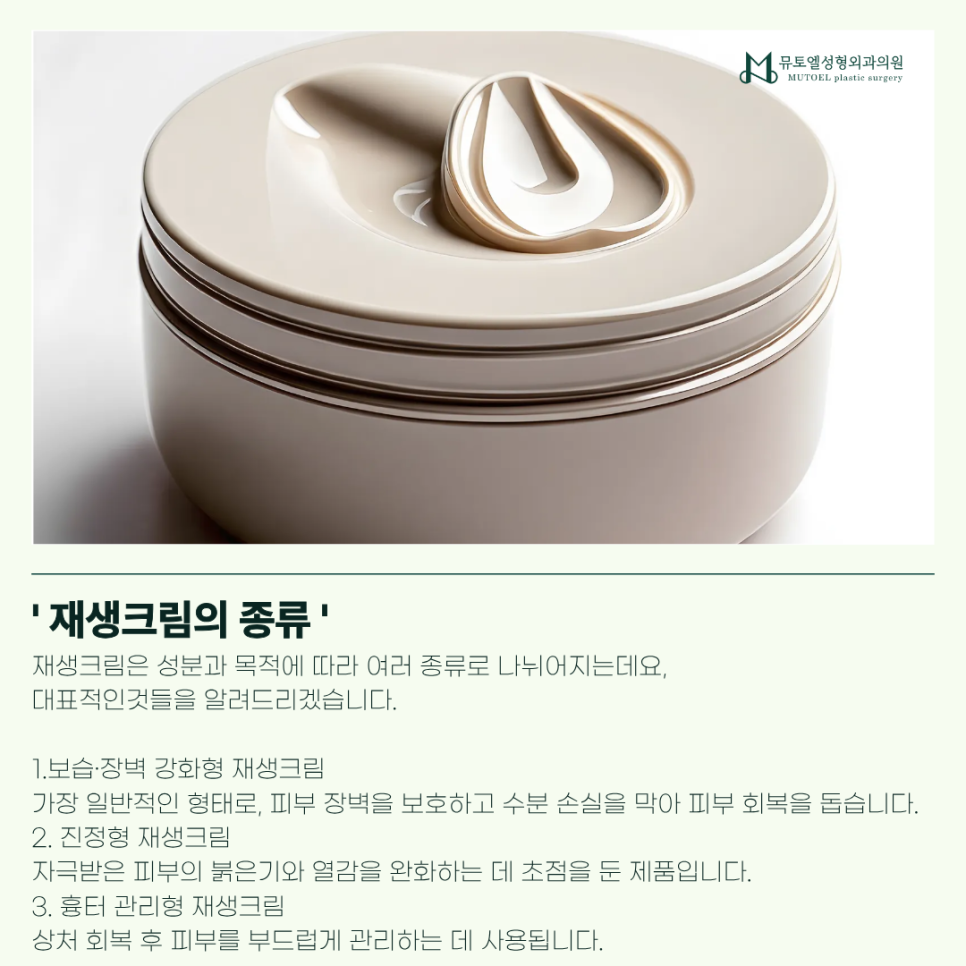
Cosmetic Categories and How to Choose the Right Texture for Your Skin
The second type is the 'cosmetic daily line,'
which anyone can easily purchase and use
from regular retailers such as Olive Young
or large supermarkets.
Regenerative creams intended to soothe sensitive skin
often contain ingredients such as panthenol
or Centella asiatica extract in relatively gentle formulations,
and are suitable for daily soothing when the condition
of the skin barrier is only mildly compromised.
Products can also be distinguished according
to their texture. The main types include
'dense ointment or balm textures,'
'lightweight cream textures,'
and 'fresh gel types.'
Types that are 'somewhat rich in oil
and dense in texture' are primarily useful
for very dry skin or for intensively building up
the damaged barrier in specific wounded areas.
On the other hand, for those with oily skin
or skin that is relatively prone to breakouts,
choosing a 'gel- or lotion-like texture'
with less oil and abundant moisture
may be the best way to reduce the likelihood
of unwanted effects.
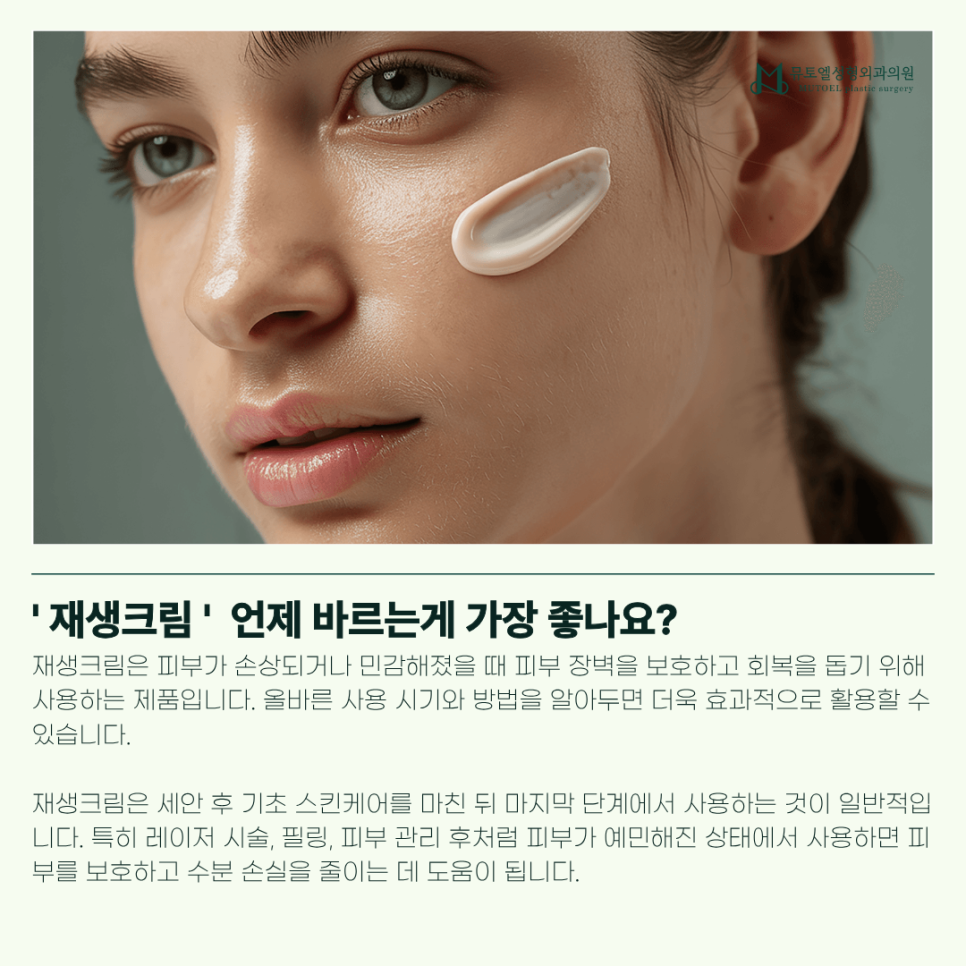
When to Apply It and Tips for Application to Maximize Its Benefits
So, when and how should these regenerative creams
be applied to provide the greatest possible help
for our skin?
The first recommended time to use these products
is during the recovery period after treatments
such as laser toning, Fraxel, or peeling,
when the skin barrier has been damaged.
For approximately one week immediately after a procedure,
skin cells are at a peak stage in which they need
the greatest amount of nutrients and protection.
During this period, after cleansing in the morning
and evening, carefully apply the cream
just before the final step of your skincare routine
so that you can complete the healing process quickly
without interfering with the original effects of the treatment.
The second situation in which it is very useful
is during periods with many harmful external factors,
such as the middle of winter, when bitterly cold winds blow,
or the change of seasons, when fine dust levels are high.
At these times, before going to bed at night,
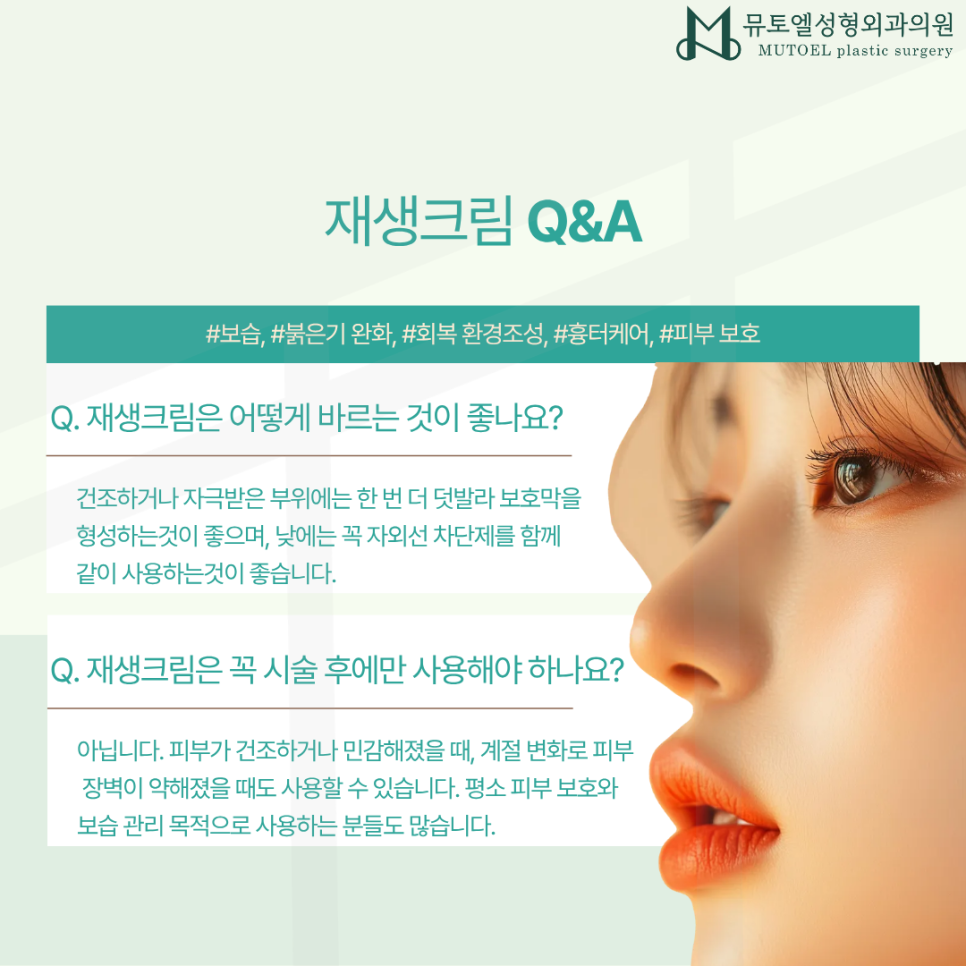
spread your usual daily lotion thinly over the skin,
then apply a thin additional layer of the cream
at the end, as if covering the skin with a protective film.
This can help thoroughly prevent moisture from escaping overnight.
You should also pay close attention to the proper way to apply it.
First, never apply it in a stimulating manner
by excessively rubbing or forcefully massaging
areas with wounds or severe redness.
Strong friction against the skin may cause
additional damage to regenerative cells
in the affected area. Instead, use your fingertips
to gently pat the product in, applying it softly
as though you were pressing it into the skin.
Second is cleansing and hygiene.
If you scoop out the product with unclean hands
and apply it directly to your face, bacteria may enter
through the gaps in the skin, potentially causing
secondary infection or breakouts.
Therefore, thoroughly wash your hands
and make a habit of applying the product hygienically,
using a spatula whenever possible,
to complete your care routine without unwanted effects.
Third is periodic reapplication.
Rather than applying a tremendous amount
in one thick layer all at once, apply it periodically
over time, building up thin moisturizing layers.
This approach can significantly improve the skin's absorption
and be much more beneficial for wound recovery.
If you are not sure which regenerative cream
is best suited to you, rather than using the wrong product
indiscriminately, it is essential to choose a product
through a careful consultation with a dedicated medical professional
who has specialized knowledge.
In Closing..
Mutoel Clinic, located in Yongsan,
believes that the most complete and natural beauty
emerges when each individual's unique bone structure
and skin characteristics are in harmony.
Rather than simply following trends or unilaterally
recommending excessive or unnatural procedures,
we provide honest, natural, and comfortable
'customized solutions' that are precisely suited
to each individual's face, based on an accurate diagnosis.
Furthermore, we have established a systematic
collaborative care system involving specialists
in dermatology, plastic surgery, and pathology,
and we do everything we can to help you experience
healthier and more satisfying changes in your skin.
We hope the various information shared today
has provided a little comfort and support
to those working toward healthy skin recovery.
If you need more detailed information about
the best care method for your current skin condition,
or would like to receive a consultation,
please do not hesitate to contact our clinic
at any time.
This was Jun-ho Choi, Director of Mutoel Clinic.
Thank you.