Hello, this is BT Plastic Surgery.🤗
"I don’t want silicone in my nose, but is there a way to correct it naturally?"
Many people consider rhinoplasty, but hesitate because they feel burdened by implants such as silicone or Gore-Tex.
It’s natural to worry about foreign-body sensation, contracture, infection, and more.
So today, we’ll be introducing non-implant rhinoplasty, also known as "NoVoco,"
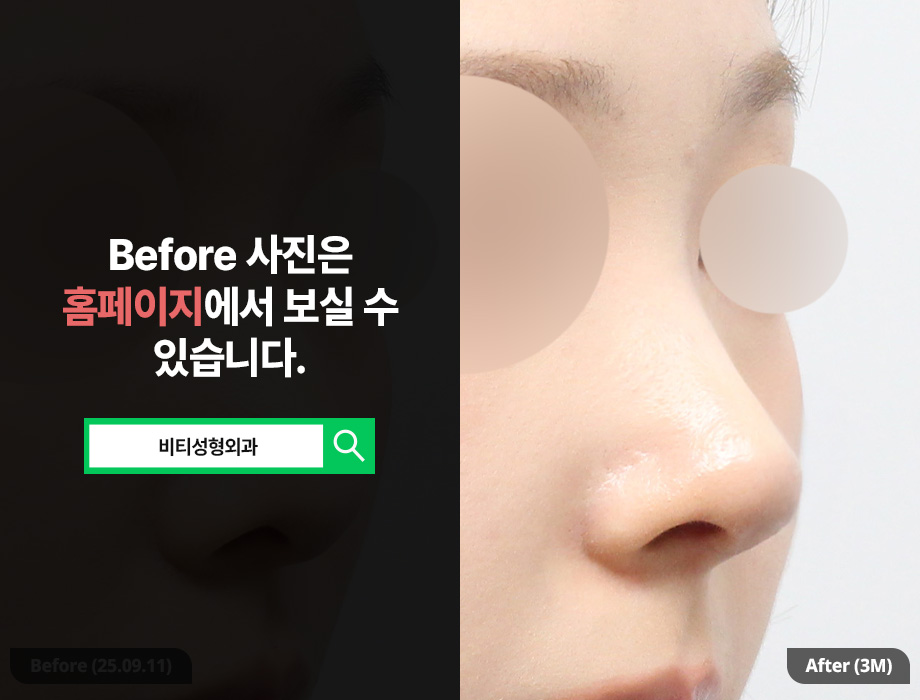
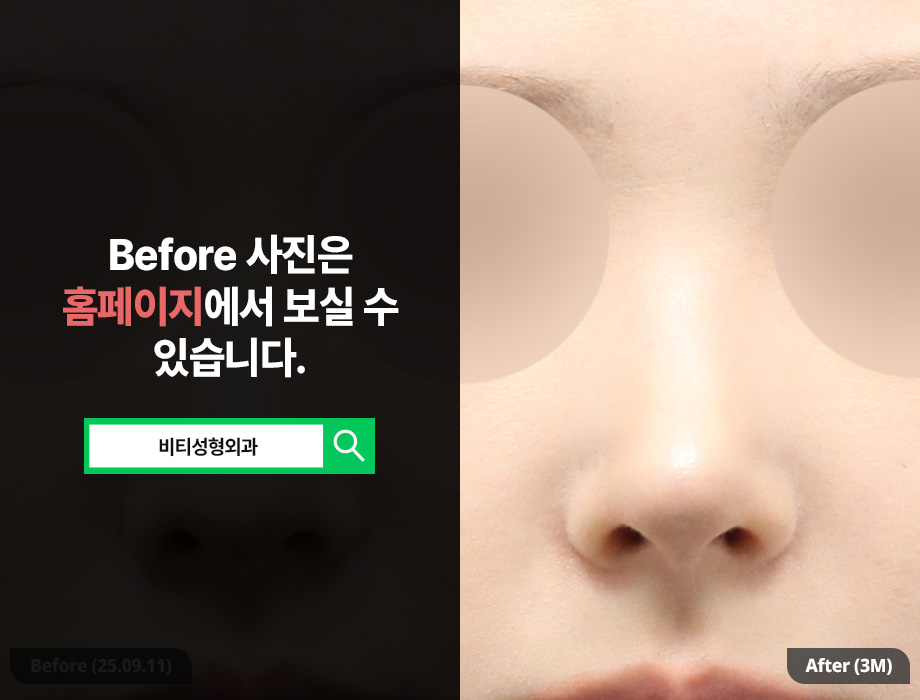
with a focus on a case in which a hump nose, bulbous nose, and nasolabial angle were corrected all at once using autologous rib cartilage,
and we’ll also explain the principles of the procedure and how the materials are selected.
✅ Please contact us if you are:
Someone who wants a natural-looking nose without implants
Someone with a hump nose whose nasal bridge is already high enough that an artificial implant is not necessary
Someone concerned about a bulbous nose (a wide, blunt tip)
Someone whose nasolabial angle (the angle between the nose and upper lip) feels too narrow or too wide
Someone who wants revision surgery after a previous implant-based rhinoplasty
🦴 What is NoVoco (non-implant rhinoplasty)?
NoVoco is a surgery that corrects the nose using only your own cartilage tissue, without implants such as silicone or Gore-Tex.
It is broadly divided into two types depending on the material used.
| Category | Material |
|---|
| Autologous tissue | Ear cartilage, septal cartilage, rib cartilage |
| Allogeneic tissue | Donor rib cartilage (Irradiated Costal Cartilage) |
In this case, autologous rib cartilage was used to correct the hump nose, bulbous nose, and nasolabial angle at the same time.
🔎 Autologous rib cartilage vs. donor rib cartilage: what’s the difference?
Rib cartilage is a strong and abundant material that can be used for various purposes, such as nasal tip support, nasal bridge reinforcement, and nasolabial angle adjustment.
There are two main types: autologous rib cartilage and donor rib cartilage, and each has its own advantages and disadvantages.
Autologous rib cartilage (your own rib cartilage)
Advantages
No immune rejection because it is your own tissue
Very high graft survival and long-term stability
Enough quantity can be secured even for revision surgery or complex cases
Lower infection risk than donor cartilage
Disadvantages
An incision is needed to harvest cartilage from the rib area (scar, pain)
Surgery time is longer, and recovery may take a bit longer
There is a possibility that the cartilage may bend slightly over time (minimized by the diced method)
Donor rib cartilage
Advantages
Can be performed without a harvest incision, with only nose surgery
Shorter surgery time and faster recovery than autologous cartilage
Tissue with immunogenicity minimized through radiation processing
Disadvantages
Because it is not autologous tissue, absorption is possible
Long-term durability may be less predictable than autologous rib cartilage
Because it is donor tissue, there is theoretically an infection risk (though it is sterilized)
The amount and shape may be limited
If complex correction is needed or long-term stability is important
→ Autologous rib cartilage,
If you want a simple supplement without the burden of harvesting
→ Donor rib cartilage
It is important to determine the right material for you through consultation with the medical team.
✂️ Can a hump nose with a high bridge be corrected without implants?
When people think of hump nose correction, many assume that the bridge must be raised with an implant.
However, if the nasal bridge is already sufficiently high—or even high—then a completely different approach is needed.
The core principle of hump nose correction
A hump nose is a shape in which a protrusion appears at the junction between the nasal bridge (nasal bone) and cartilage.
✔ If the bridge is low → raise the entire nasal bridge with an implant to relatively reduce the hump
✔ If the bridge is high → directly smooth and remove the protruding area (bone and cartilage) for a natural correction → no implant needed
In other words, for patients with a hump nose and a sufficiently high bridge,
it is possible to create a smooth nasal bridge line by simply shaving down the protruding area,
so surgery can be performed without an implant.
This case was exactly that.
🔧 This case: simultaneous correction of hump nose + bulbous nose + nasolabial angle
Surgery points
① Hump removal
The protruding bone and cartilage on the nasal bridge were precisely refined to create a smooth nasal bridge line.
Because the bridge was already high, no separate implant was needed.
② Bulbous nose correction (using autologous rib cartilage)
The blunt, wide nasal tip was refined by using a support framework made from autologous rib cartilage to raise and sharpen the tip.
Because it is autologous cartilage, the nose tip retains a natural feel.
③ Nasolabial angle correction
If the nasolabial angle between the nose and upper lip is too acute, it can create a cramped impression.
Using septal extension and grafting with autologous rib cartilage, the nasolabial angle was adjusted to the desired angle.
📌 NoVoco is especially recommended for:
Those who feel psychologically resistant to having foreign material inserted into the nose
Those who need revision surgery due to contracture, infection, or implant visibility after implant-based rhinoplasty
Those who want to correct only the hump, nasal tip, and nasolabial angle while already having a sufficiently high nasal bridge
Those who want long-term stable and natural-looking results
⚠️ Please check before surgery
When rib cartilage is harvested, a 2–3 cm incision scar may remain on the chest area.
Non-implant rhinoplasty is not applicable to every case. If the bridge is low, an implant may be necessary.
Rhinoplasty should consider both function (deviated septum, rhinitis, etc.) and aesthetics.
We recommend consulting a specialist with sufficient experience before making a surgical plan.
NoVoco (non-implant rhinoplasty) is not simply about not using an implant; it is a concept of correcting the nose more naturally and safely using your own tissue.
In particular, in the case of a hump nose with a sufficiently high bridge, a major advantage is that correction is possible without an implant simply by refining the protruding area.
By using autologous rib cartilage, complex concerns such as a hump nose, bulbous nose, and nasolabial angle can be naturally addressed in a single surgery.
If you have any questions, please leave a comment or inquiry anytime! 😊
This post is intended to provide medical information, and surgical methods and results may vary depending on the individual.
For an accurate diagnosis and treatment plan, please be sure to consult a specialist.
The surgery takes about 1 to 2 hours,
and you can go home right away without needing to be admitted.
Gangnam best place for rhinoplasty
Before surgery, a low-dose 3D CT scan is performed
to closely assess and diagnose the patient’s nasal condition
Gangnam best place for rhinoplasty
All nose surgeries at BT
are performed directly by CEO Dr. Lee Seung-ho, who has 20 years of experience.
In addition, through 1:1 aftercare,
we help patients recover quickly.
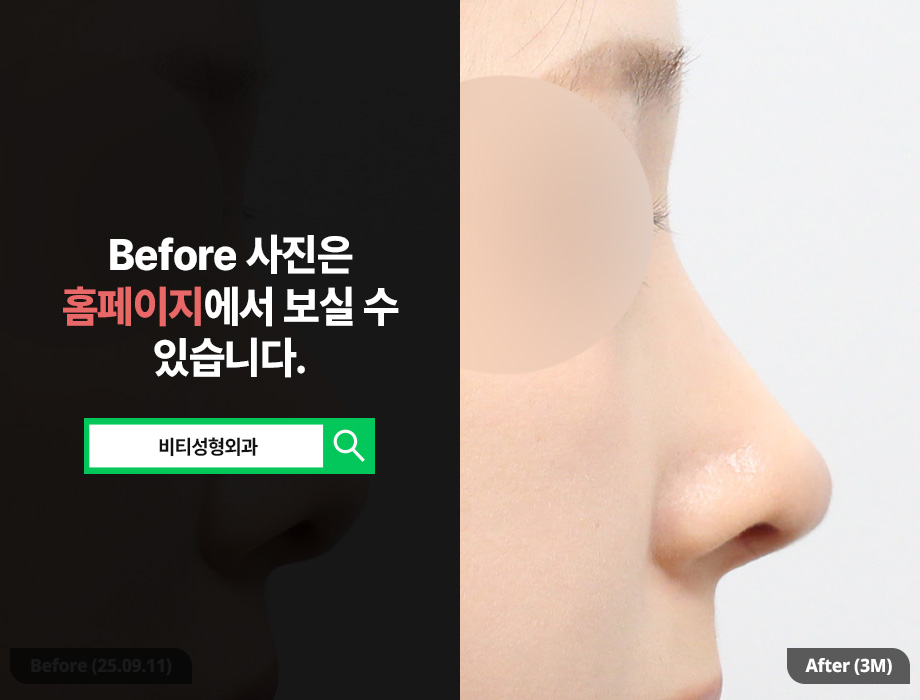
<These are real before-and-after photos from a patient who underwent surgery by CEO Dr. Lee Seung-ho of BT Plastic Surgery, and consent was obtained from the patient for these photos>
Functional rhinoplasty rhinitis nose surgery functional nose surgery rhinitis surgery deviated septum surgery rhinitis rhinoplasty functional rhinoplasty rhinitis nose rhinoplasty surgery insurance-covered nose surgery deviated septum nose surgery deviated septum rhinoplasty rhinoplasty clinic rhinoplasty price rhinoplasty surgery alar reduction surgery hump nose surgery famous rhinoplasty clinic nose surgery price nose surgery cost best place for nose shape rhinoplasty clinic famous hospital best place for nose surgery in Gangnam Gangnam rhinoplasty clinic non-implant rhinoplasty best place for revision rhinoplasty best hospital for revision rhinoplasty revision rhinoplasty clinic Gangnam revision rhinoplasty rhinoplasty revision surgery