
<Actual DM Plastic Surgery rhinoplasty patient>
Because the nose is located at the center of the face, even subtle changes in height can create a significant improvement.
An increasing number of people are becoming interested in rhinoplasty!
Today, among the various types of noses—including aquiline noses, low noses, bulbous noses, long noses, and downturned noses—we would like to talk about low noses, which are most common among East Asians.
Because the nose is at the center of the face, a low nose can make the face look flat and the overall impression appear plain.
In such cases, rhinoplasty can improve the three-dimensional appearance of the face. However, the procedure should be planned according to each individual’s balance in order to achieve a harmonious and satisfying result.
One important point to keep in mind with low nose rhinoplasty is that the nose should not simply be lengthened or raised as much as possible.
Although it is understandable to want a more dramatic change because the existing nose is low, a higher nose is not necessarily a more beautiful nose. If the procedure is performed excessively with the sole aim of improving the shape of the nose, satisfaction may decrease, and the nose alone may become too prominent, disrupting the balance of the entire face.
Therefore, sufficient consultation with a plastic surgeon who has extensive clinical experience, along with an individualized surgical plan that considers overall proportions, is necessary.

We hope this information will be helpful to those considering rhinoplasty to improve a low nose. 💖
A Natural Three-Dimensional Appearance: Low Nose Rhinoplasty at DM Plastic Surgery

A low nose has a low nasal bridge and therefore lacks three-dimensional definition.
By giving it a more defined shape, the gaze may be drawn toward the center of the face, creating a visual effect that makes the face look smaller and more three-dimensional overall.
Even if the nasal bridge is currently low, it is important not to simply aim for a higher bridge. Instead, the most suitable nasal line and angle should be selected by considering the individual’s facial proportions.
For a satisfactory result, the surgery should be performed after sufficient consultation with experienced medical professionals who have extensive anatomical knowledge and surgical experience.
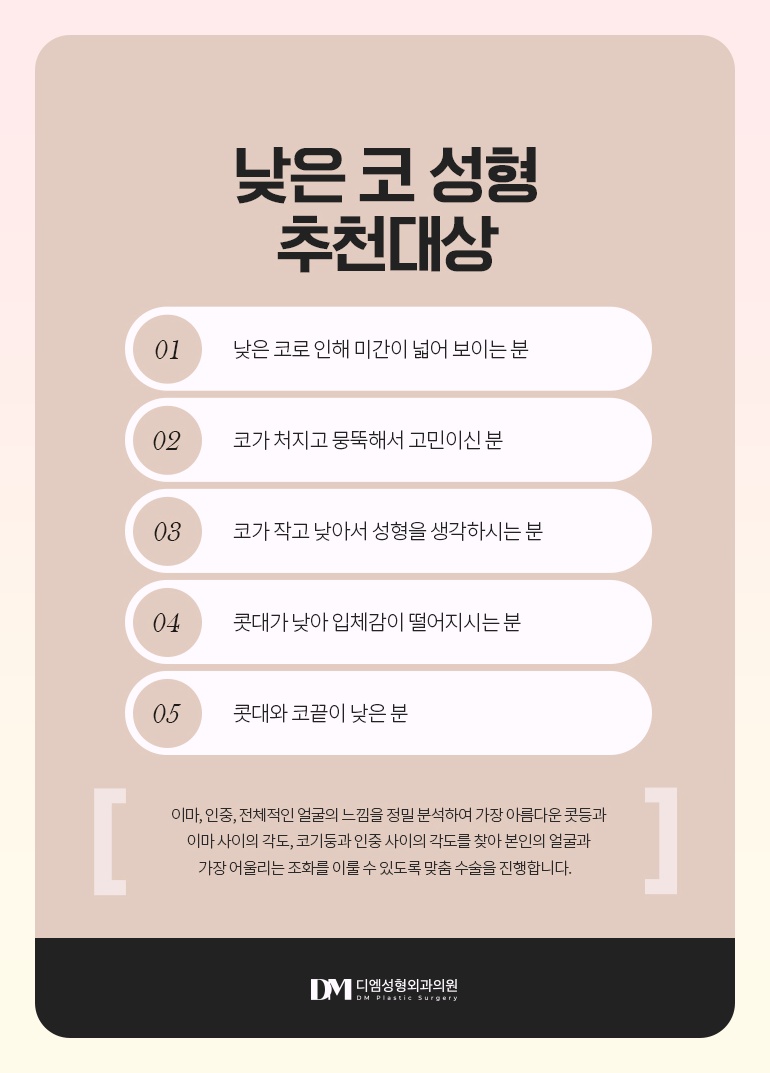
Recommended for people who:
-
Have a wide-looking area between the eyebrows due to a low nose
-
Are concerned about a drooping, blunt, or thick-looking nose
-
Are considering rhinoplasty because their nose is small and low
-
Have a low nasal bridge and lack three-dimensional definition
-
Have a low nasal bridge and low nasal tip
DM Plastic Surgery recommends low nose rhinoplasty for clients with these concerns.
An experienced specialist carefully analyzes the forehead, philtrum, and overall facial impression to determine the most aesthetically suitable angle between the nasal bridge and forehead, as well as the angle between the columella and philtrum. The surgery is then personally performed to create the most ideal harmony with the individual’s face.
What Are the Features of Low Nose Rhinoplasty at DM Plastic Surgery?

The procedure prioritizes accuracy and safety through detailed analysis using 3D CT imaging.
A one-on-one customized rhinoplasty plan is established through consultation with an eye and nose plastic surgery specialist whose extensive clinical experience and expertise have been demonstrated across numerous cases, and the surgery is then performed accordingly. This contributes to a high level of satisfaction.
How Is the Surgery Performed?
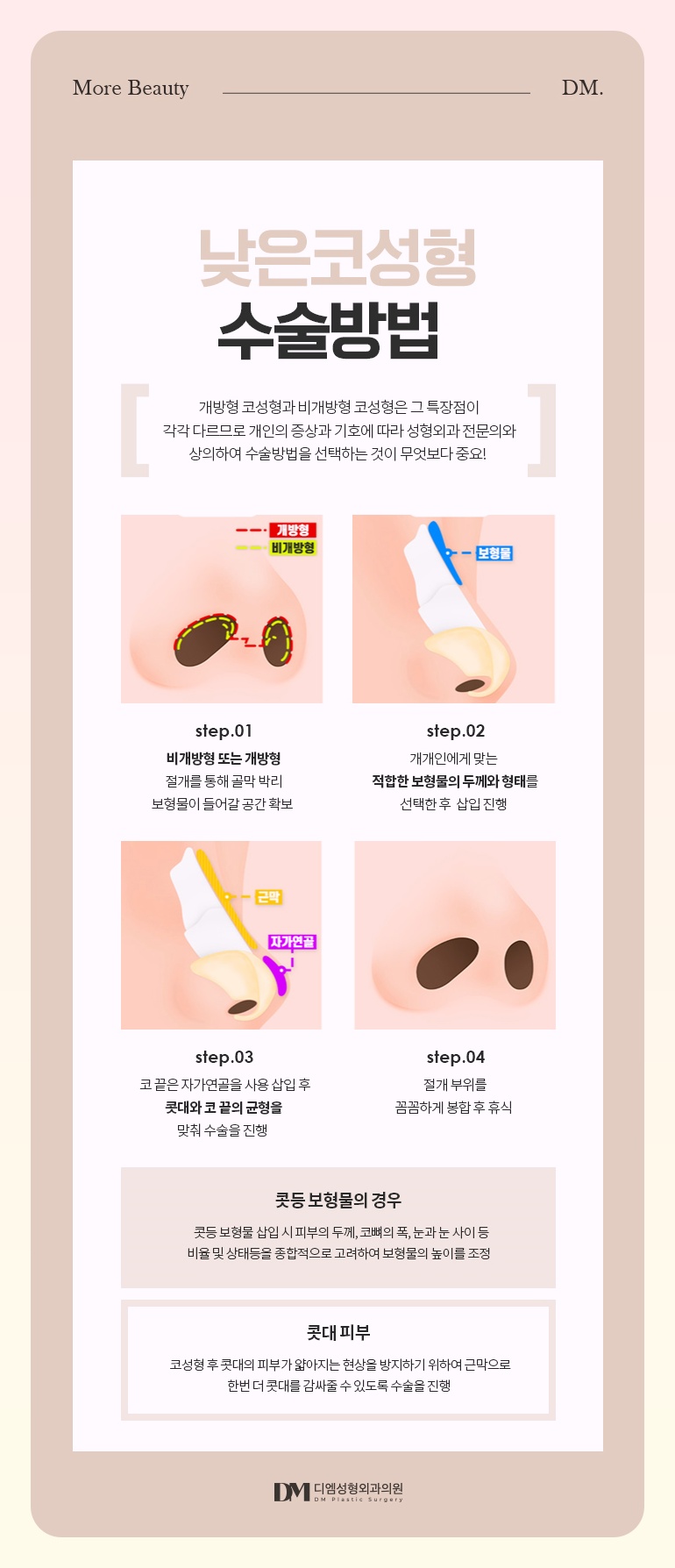

Open and closed rhinoplasty each have different advantages, so it is important to discuss the options thoroughly with a plastic surgeon and select the surgical method according to the individual’s preferences.
After an incision is made to create space for the implant, an implant with a thickness and shape suitable for the individual is inserted.
Autologous cartilage is inserted into the nasal tip to balance the nasal bridge and tip, after which the incision is sutured to complete the procedure.
When inserting an implant into the nasal bridge, DM Plastic Surgery adjusts the implant height by comprehensively considering the skin thickness, width of the nasal bones, the distance between the eyes, overall proportions, and current condition.
To help prevent the skin over the nasal bridge from becoming thinner after rhinoplasty, the procedure may also include wrapping the bridge once more with fascia.
DM Plastic Surgery Low Nose Rhinoplasty Before & After
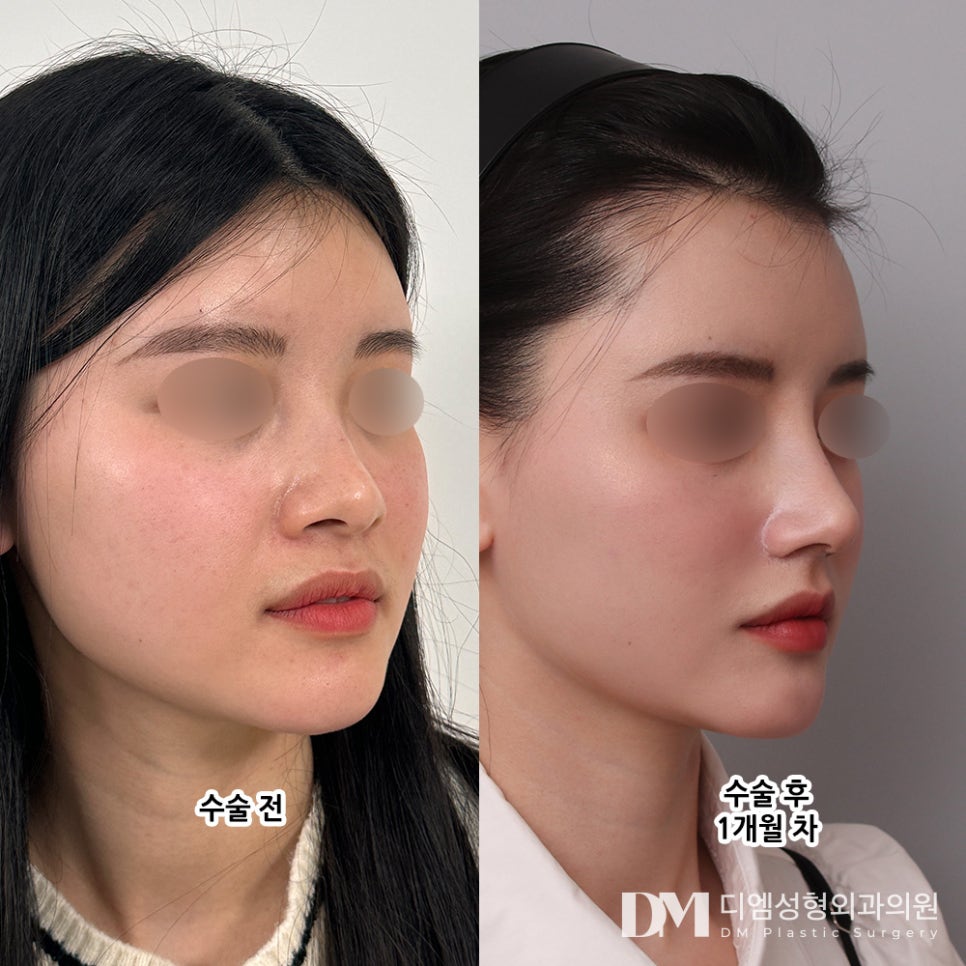
Low nose rhinoplasty: 1 month post-op
[Actual DM Plastic Surgery rhinoplasty patient]
The patient visited DM Plastic Surgery to improve a low nasal bridge.
The one-month post-operative photo shows that the nasal bridge has been raised, creating a more three-dimensional appearance overall. After an in-depth analysis of the individual’s facial features, the nose was harmoniously improved with the most suitable line and angle to complement the balance of the facial features.
※Please note that the degree of swelling and recovery may vary from person to person.※
DM Plastic Surgery Eye & Nose Surgery Center Chief Director

To achieve a positive result, surgery should be performed after sufficient consultation with a rhinoplasty specialist who has extensive surgical experience across various cases and comprehensive anatomical knowledge of facial contours.

Because the most important aspect of rhinoplasty is creating a harmonious nose shape that takes each individual’s facial features into account, we invite you to visit our clinic for a one-on-one consultation.

<Actual DM Plastic Surgery rhinoplasty patient>
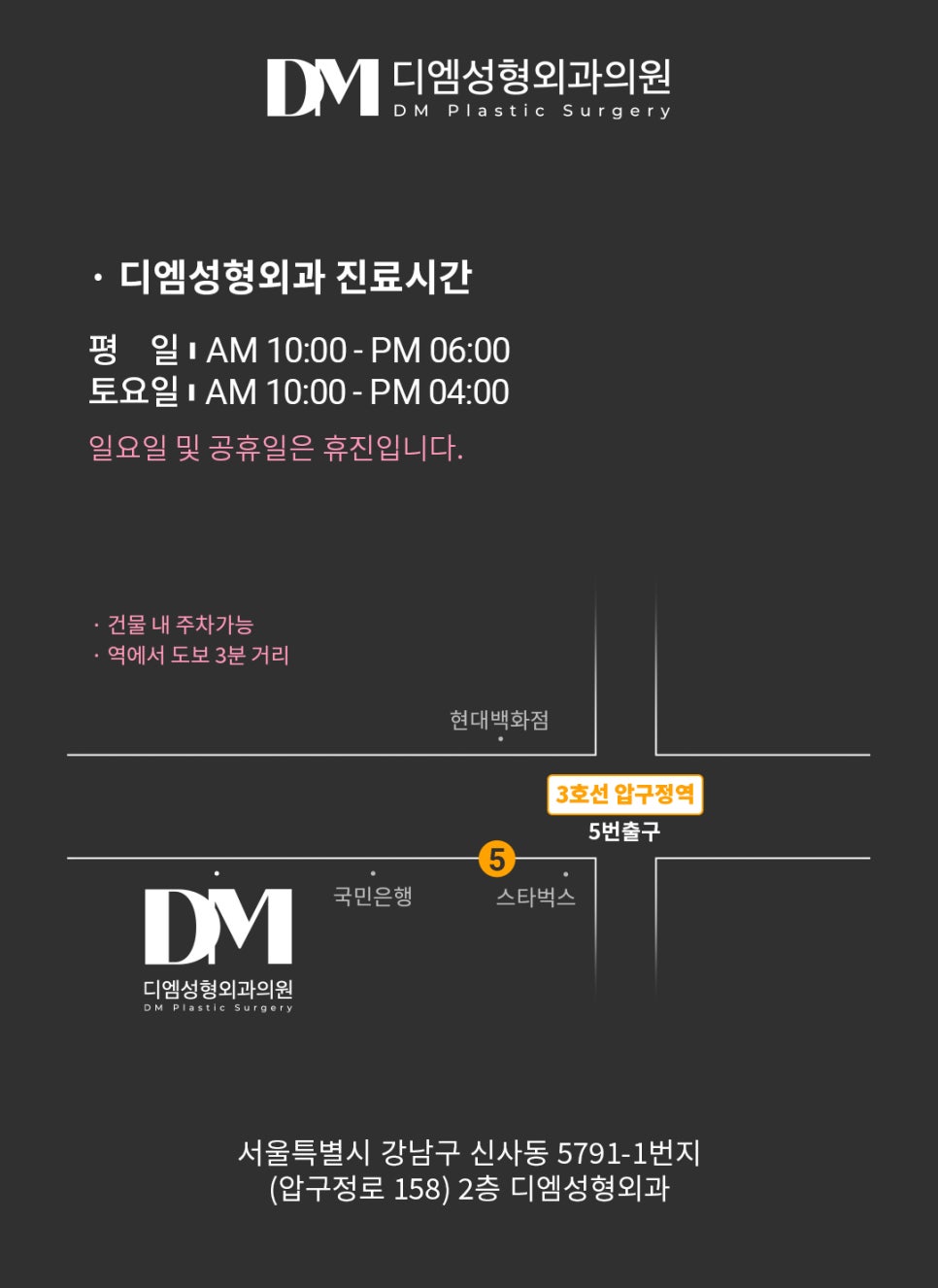
Weekdays: 10:00 AM–6:00 PM
Saturdays: 10:00 AM–4:00 PM
Closed on Sundays and public holidays