
<Real-life rhinoplasty case at DM Plastic Surgery>
The nose plays an important role in breathing, and because it is located at the center of the face,
it helps balance the facial features and adds dimension to the face.
Because it sits at the center of the face, even small changes can improve the overall image,
and as interest has increased, more and more people are planning rhinoplasty.
However, while many undergo the procedure expecting a natural change in appearance,
inquiries about revision surgery due to unexpected side effects or dissatisfaction after nose surgery are also steadily increasing.

Revision rhinoplasty is performed to improve discomfort caused by unsatisfactory results or side effects.
It is important to accurately assess and diagnose the current condition of the nose and apply a surgical method that fits it.

In particular, because it is more difficult than the first surgery and requires a high level of skill,
it should be performed by specialist medical staff with long experience,
refined surgical technique, and extensive anatomical knowledge.
Only then can the problems from the previous surgery be clearly identified and a highly satisfactory result achieved.
Revision rhinoplasty, when is it possible?

In the case of augmentation rhinoplasty to raise the bridge of the nose, it may be possible within 3 months after surgery,
but generally it is recommended after 6 months, when the tissues created during surgery have stabilized.
Because tissue damage is greater in revision surgery than in the first operation, caution is necessary.
Rather than forcing correction, it is best to improve the nose into a natural shape that suits you best,
and the most important thing is to identify the problems and causes of the first surgery.
At DM Plastic Surgery, problems are clearly identified through 충분한 consultation with a specialist,
and the procedure is carried out through customized one-on-one consultation, which leads to high satisfaction.
Revision rhinoplasty is recommended for the following people.
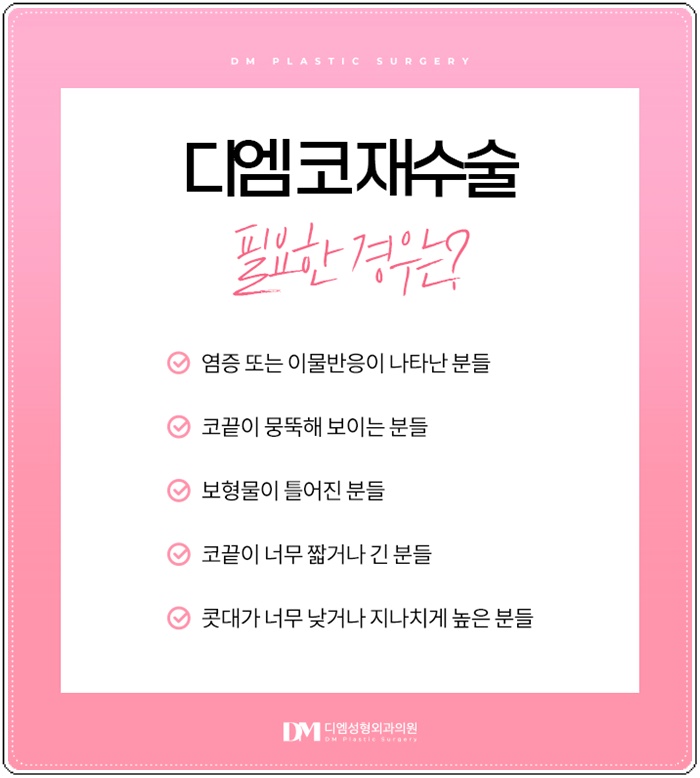
- Those whose implants are prominent and whose surgery is obviously noticeable
- Those who develop inflammation after surgery
- Those whose nasal tip or bridge has become thin or red
- Those whose nasal tip has turned up and become shorter due to contracture
- Those whose implant is bent, moving, or visible through the skin
- Those who are dissatisfied with the shape after surgery
At DM Plastic Surgery, revision surgery is recommended for these types of cases,
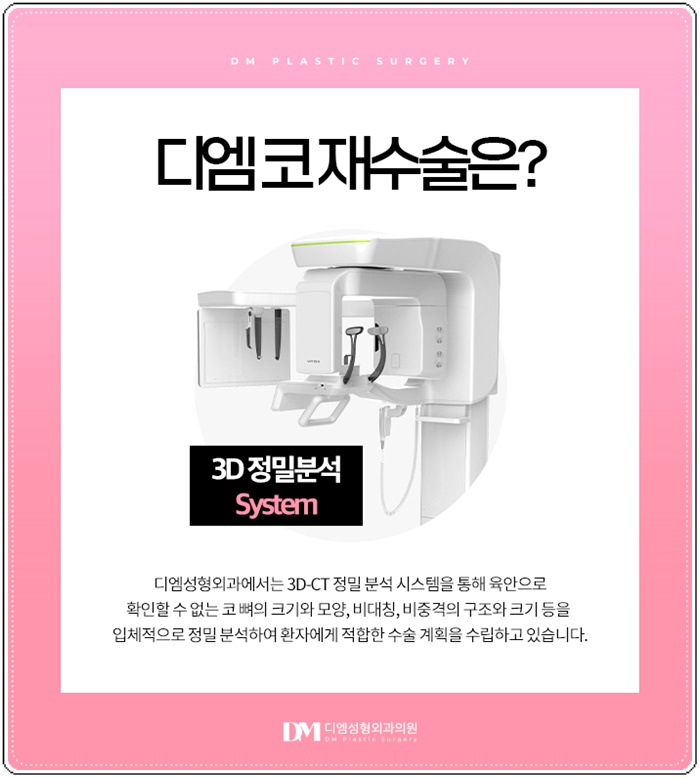
and 3D-CT is used to accurately identify the problems in the nose and select the appropriate diagnosis and surgical method.
With direct surgery performed by eye and nose plastic surgery specialists whose extensive clinical experience and know-how have been proven,
we provide individualized 1:1 customized revision rhinoplasty based on each person's preferences and condition.
Before surgery, a 3D-CT precision analysis system is used to carefully examine even the parts that cannot be seen with the naked eye,
minimizing the possibility of a second surgery failing.
In addition, through thorough consultation, we complete a nose bridge and tip that best suit the current facial line,
so many patients visit us through recommendations from acquaintances, and individual patient satisfaction is also high.
What are the surgical methods by case?!
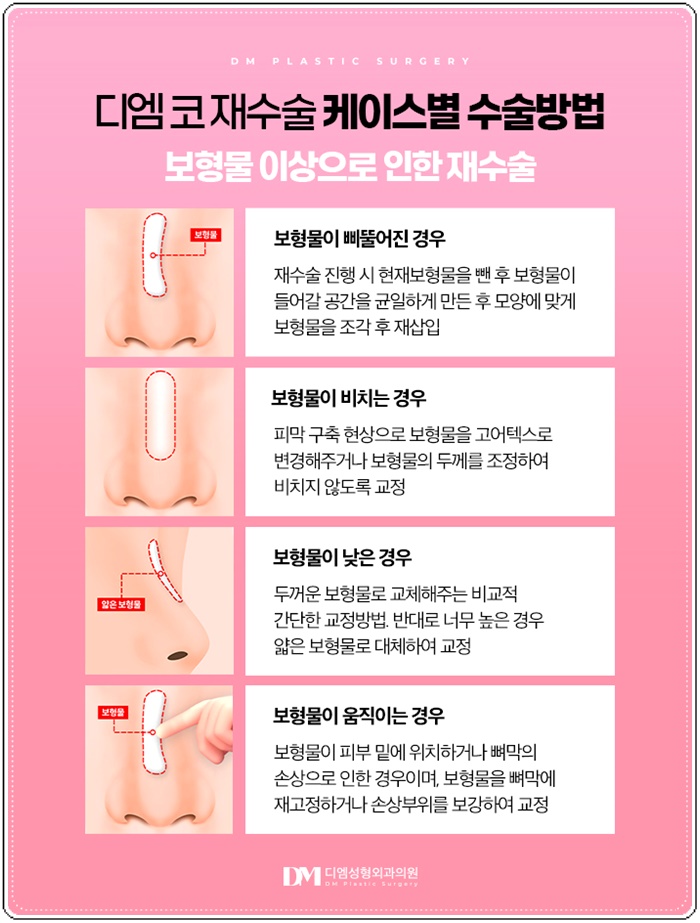
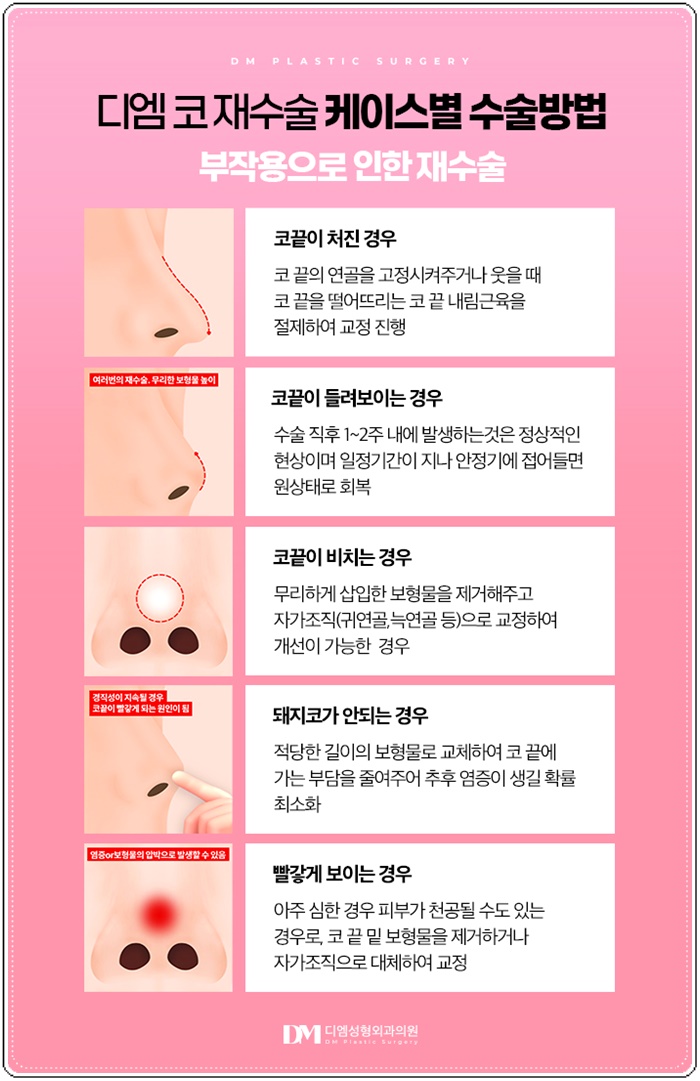
Silicone implants, commonly used in rhinoplasty, often caused problems if they were not properly fixed,
such as shifting or becoming visible when the skin is thin.
The surgical method differs depending on the case of implant-related problems, and in revision surgery it is important to completely identify and remove the cause of inflammation before operating.
In such cases, undergoing revision surgery after visiting the clinic and receiving an examination as soon as possible is a way to prevent worsening,
and because the method of compensating for side effects differs depending on the case,
proceeding with surgery through sufficient and systematic consultation with the attending medical staff can lead to better results.
DM Plastic Surgery Revision Rhinoplasty Before & After
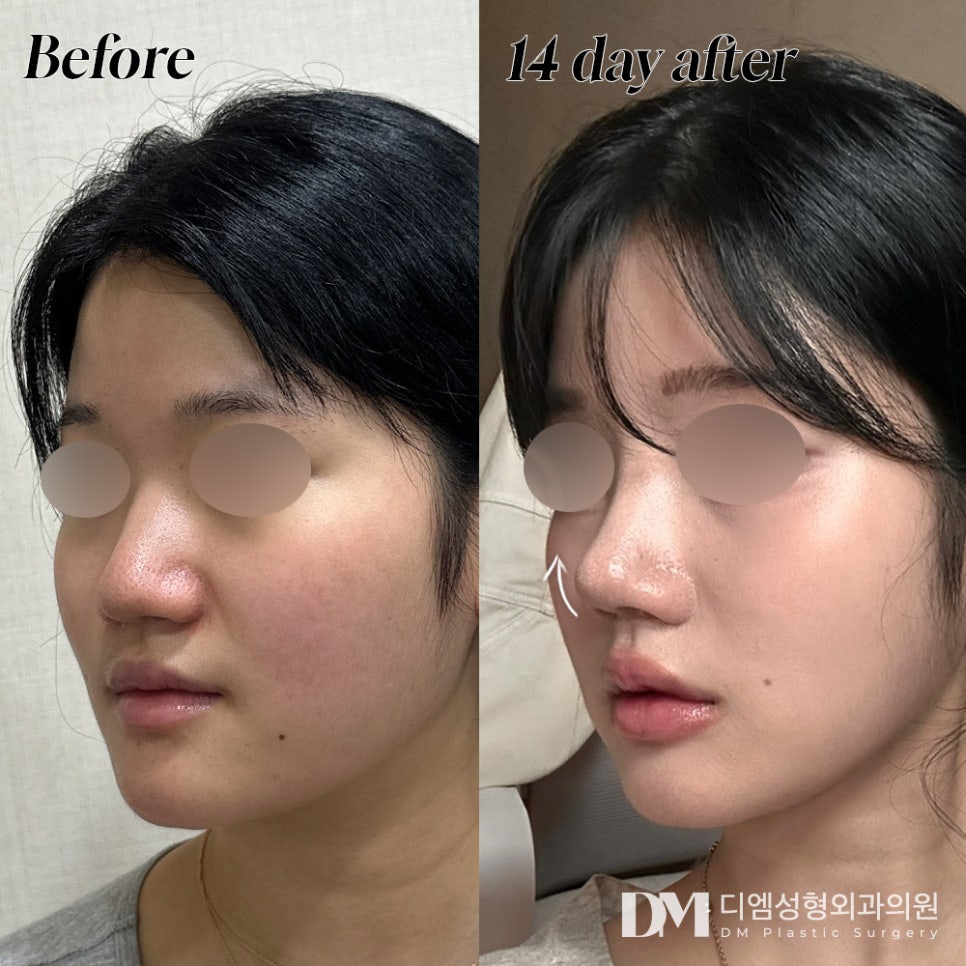
Before surgery + 2 weeks after revision rhinoplasty
[Real revision rhinoplasty case at DM Plastic Surgery]
The patient visited us to correct a low nasal bridge and nasal tip.
The photo above was taken 14 days after revision rhinoplasty,
and after identifying the cause of the first surgery’s failure, a customized procedure was performed.
Through the photo above, you can see that the line and shape have been improved to harmonize with the facial features,
and that the nose, which had become shorter due to contracture, has improved naturally.
※ The degree of swelling and recovery may vary from person to person,
so please use this as a reference. ※
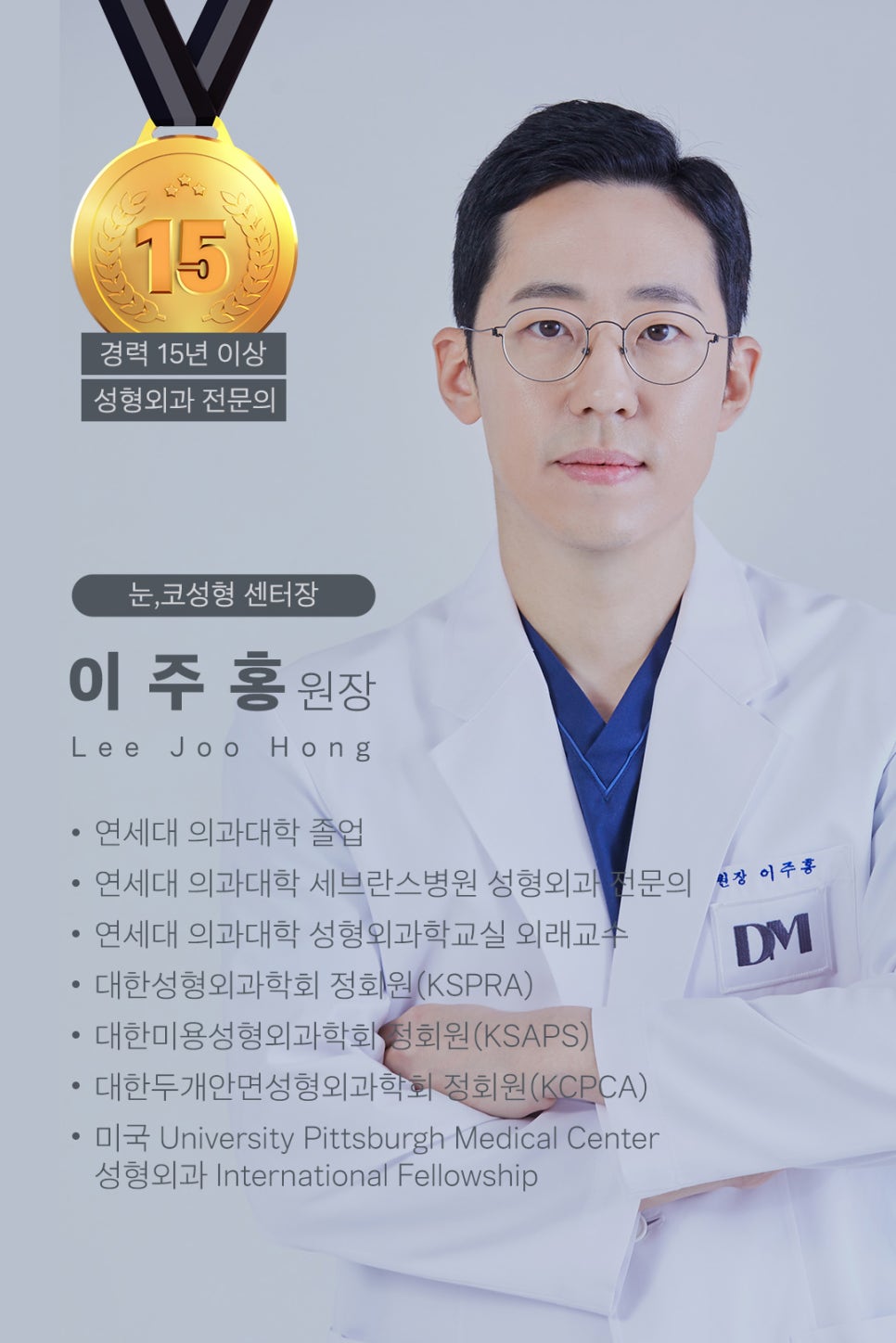
DM Plastic Surgery Eye & Nose Surgery Center Chief Director
As revision rhinoplasty is repeated, the amount of materials that can be used, such as septal cartilage, becomes insufficient,
and normal tissue also gradually loses strength.
Therefore, it must be carefully decided by medical staff with extensive surgical experience in various cases and rich anatomical knowledge of facial contours,
and it is best to avoid repeating revision surgery as much as possible.
In addition, while it is important to create a nose shape that is harmonious with the face while considering the individual’s facial features,
the internal structure of the nose must also be considered.
Therefore, we recommend visiting our clinic and receiving a 1:1 consultation with our specialist medical staff!
If abnormalities such as inflammation or contracture occur, prompt treatment is needed,
and if symptoms other than the usual pain explained by the hospital appear,
please visit as soon as possible and receive appropriate treatment!

<Real-life rhinoplasty case at DM Plastic Surgery>
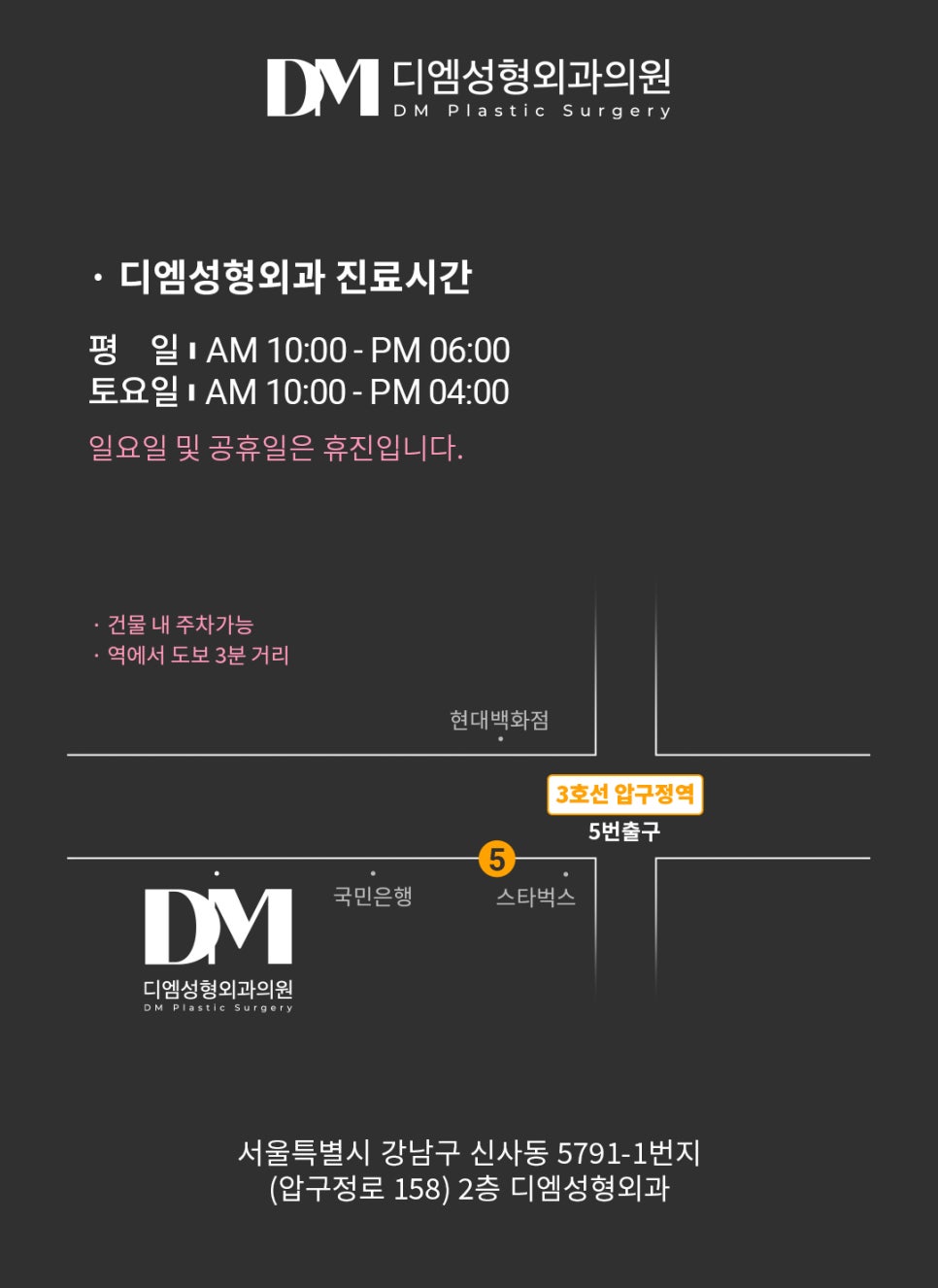
Weekdays AM 10:00PM 06:00
Saturday AM 10:00PM 04:00
Closed on Sundays and public holidays