Hello✨
MOOi Plastic Surgery, where beauty is one of a kind.

Gangnam MOOi Plastic Surgery, Gangnam nose surgery, Gangnam refined nose, nosing, non-surgical nose surgery, MOOi Plastic Surgery
Many people want to change the shape of their nose, but feel that surgery is too much of a burden.
“I’d just like to raise the tip a little—do I really need surgery?”
People often worry that fillers may spread, while surgery means a difficult recovery period.
Many people come in with these concerns.
Today, for those who want to improve the shape of their nose but feel burdened by surgery,
I’d like to talk about non-incisional rhinoplasty using lifting threads, called nosing.
Today, I’ll cover the differences between nosing and nose filler,
as well as the key features, pros, and cons of nosing.
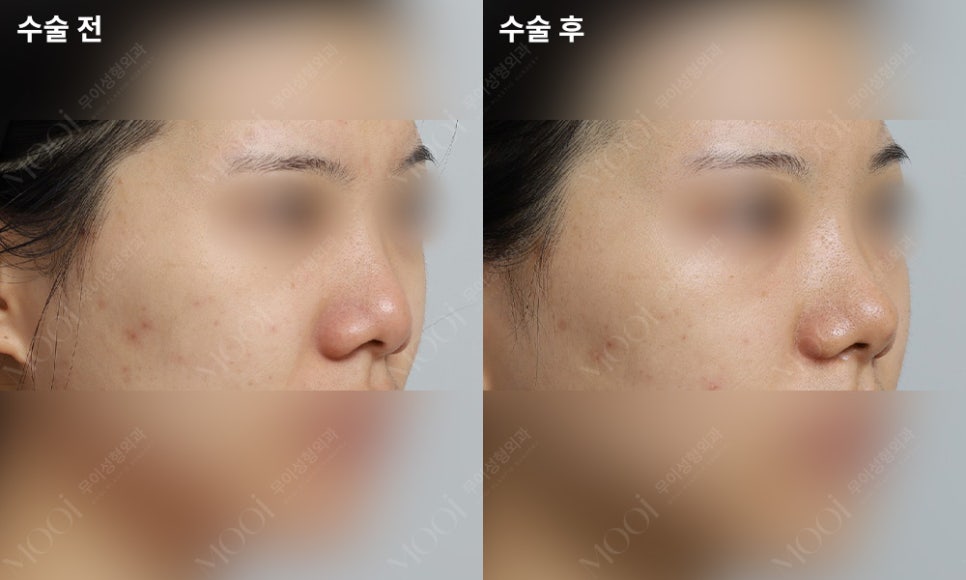
What is nosing?
Nosing is a procedure that uses lifting threads designed for use in the nose
to raise a low nasal tip and bridge, and to reduce a wide nasal ala.
Unlike surgery, it does not involve incisions, so the recovery period is short,
and it has the advantage of causing little disruption to daily life.
Simply put,
you can think of it as a non-incisional rhinoplasty that structurally changes the shape of the nose using threads.
How is it different from nose filler?
When people think of non-surgical nose enhancement, the first thing that comes to mind is nose filler.
Nose filler does have the advantages of a short recovery time and immediate changes.
But nose filler has limits in the areas of the nose it can be applied to.
Filler is a suitable procedure for building up a low bridge,
but it is difficult to change the height of the nasal tip, raise or lower the tip,
reduce the width of the nostrils, or improve the shape of the columella.
Also, as time passes, filler may move or spread,
which can make the bridge look thicker.
In contrast, nosing uses solid threads,
so it can be applied to a wide range of areas, including
raising the tip, raising/lowering the tip, reducing the nostrils, columella correction, and correcting a hump nose.
That is the biggest difference from filler, and also its advantage.
Nosing vs. nose filler, a side-by-side comparison
| Item | Nosing (thread lifting) | Nose filler |
|---|
| Material | Solid lifting thread | Gel-type filler (HA, etc.) |
| Bridge augmentation | Possible | Effective |
| Tip augmentation/raising | Effective | Difficult |
| Nostril reduction | Possible (tenting effect) | Difficult to expect |
| Columella/hump nose correction | Possible | Difficult |
| Shape retention | Structural support possible | May spread or move |
| Duration | Up to 2–3 years with PCL thread | About 6 months to 1 year |
| Procedure time | 10–20 minutes | 10–15 minutes |
| Recovery period | No major swelling/bruising, daily life immediately possible | Mild swelling, daily life immediately possible |
Here’s a summary of the advantages of nosing
Let me briefly summarize the advantages of nosing.
It does not cause major swelling or bruising.
There are no stitches to remove after the procedure, and you can return to daily life right away.
The procedure time is also short, around 10–20 minutes,
and you can see the effects immediately after the procedure.
Also, unlike the PDO threads that were commonly used before,
using PCL threads more recently can maintain a stable strength and a long duration of up to 2–3 years.
Compared with PDO threads, which usually last about 6 months to 1 year, this is quite a long time.
PDO vs. PCL: results vary depending on the type of thread
The threads used for nosing are largely divided into two types: PDO and PCL.
Both are materials that are absorbed in the body, but their properties are slightly different.
| Category | PDO thread | PCL thread |
|---|
| Duration | About 6 months to 1 year | Up to 2–3 years |
| Strength | Relatively weak | Stable and strong |
| Absorption speed | Relatively fast | Slowly absorbed |
| Collagen formation | Some induction | Induces over a long period |
So when you consult about nosing, it is a good idea to check which thread is being used.
Structural support is also key in nosing
Here is one very important point that patients often do not know.
One of the most important things in nose surgery is
building the lower support structure well based on the Tripod Concept.
The shape of the nasal tip is determined by the lower edge of the alar cartilage and the septal cartilage,
and the idea is that these structures support the nasal tip like a tripod.
If this support structure is not properly established,
either surgery nor a procedure can prevent the tip from dropping again over time,
or avoid undesired results.
The same applies to nosing.
Only when this concept from rhinoplasty is applied as it is to the procedure
can you achieve stable and effective results.
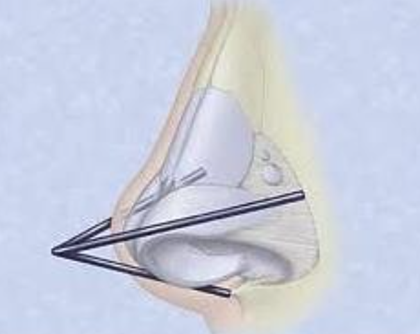
The core support structure of rhinoplasty tip shaping (Tripod concept)
Why the nasal tip drops again after nosing
Because nosing does not involve dissection of the alar cartilage or dissection of the skin soft tissue envelope like surgery does,
the pressure from the skin soft tissue envelope (SSTE) remains directly applied to the tip area.
The more the tip is raised, the greater this pressure becomes.
So if the support structure is not properly established,
the results may look fine immediately after the procedure,
but the nasal tip may drop again after some time.
For the effects of nosing to last, properly establishing the support structure is the most important factor.
I recommend consulting a specialist who has extensive knowledge and experience in this area.
Why nosing should be performed by a board-certified plastic surgeon
Usually, board-certified plastic surgeons who perform both nose surgery and nosing
carry anatomical concepts such as the tripod concept in mind during the procedure,
so they can determine the thread’s position, direction, and depth more accurately.
It is not simply about inserting threads.
Because they have experience directly viewing and handling the internal structure of the nose through surgery,
they know which position and direction will create structural stability.
Even though nosing is a non-incisional procedure,
it still changes the structure of the nose,
so receiving it from a specialist who thoroughly understands nasal anatomy
can lead to safer, longer-lasting, and more satisfying results.
Frequently Asked Questions (FAQ)
Q. Is nosing painful?
Because anesthesia is administered before the procedure, pain during the procedure is not severe.
The procedure time is also short, around 10–20 minutes, so the burden is low.
Q. Can nosing and nose filler be done together?
Yes, they can be combined.
One method is to raise the tip with threads and supplement the bridge with filler, using the strengths of each.
However, it is best to decide after 충분한 consultation with a specialist.
Q. How long do the effects of nosing last?
It depends on the type of thread used.
PDO threads last about 6 months to 1 year, and PCL threads last up to 2–3 years.
As the thread dissolves, collagen forms around it, so some of the effect may remain.
Q. Is there significant swelling or bruising after nosing?
Major swelling or bruising is rare.
There is no need to remove stitches, and daily life is possible from the day of the procedure.
Q. Can nosing have side effects?
If the thread is placed incorrectly, problems such as visibility, indentation, or re-drooping of the tip may occur.
That is why it is important to have the procedure done by a specialist who understands the anatomical structure of the nose.
In summary,
nosing is a procedure with less burden and a faster recovery compared with surgery.
But because it still changes the structure of the nose,
a correct placement based on anatomical understanding is necessary
to expect proper results.
If you are considering nosing,
I recommend consulting a board-certified plastic surgeon with extensive experience performing rhinoplasty.
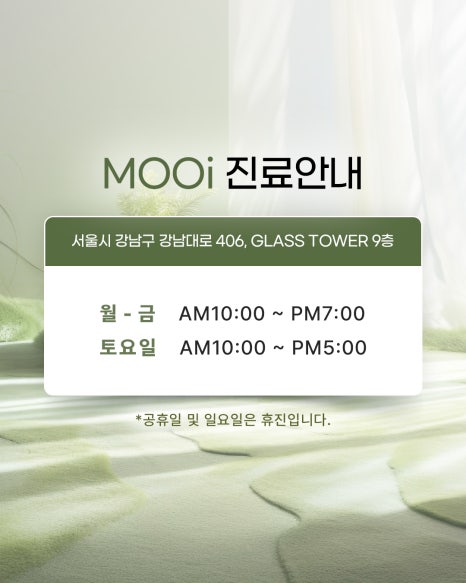
Gangnam Station MOOi Plastic Surgery clinic hours, Gangnam MOOi Plastic Surgery location
MOOi
MOOi Plastic Surgery
Beauty like No Other
As the name MOOi (無二) means “one and only,”
our MOOi Plastic Surgery designs a face that is uniquely yours.
🩷 Directions 🩷
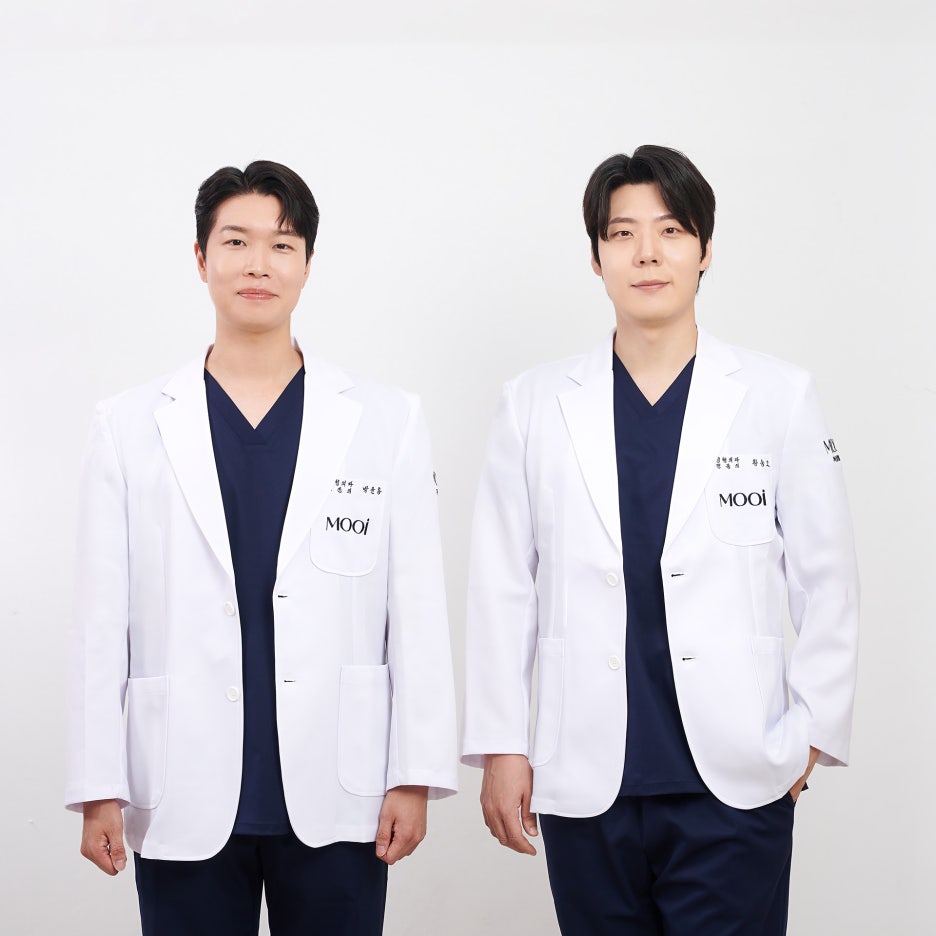
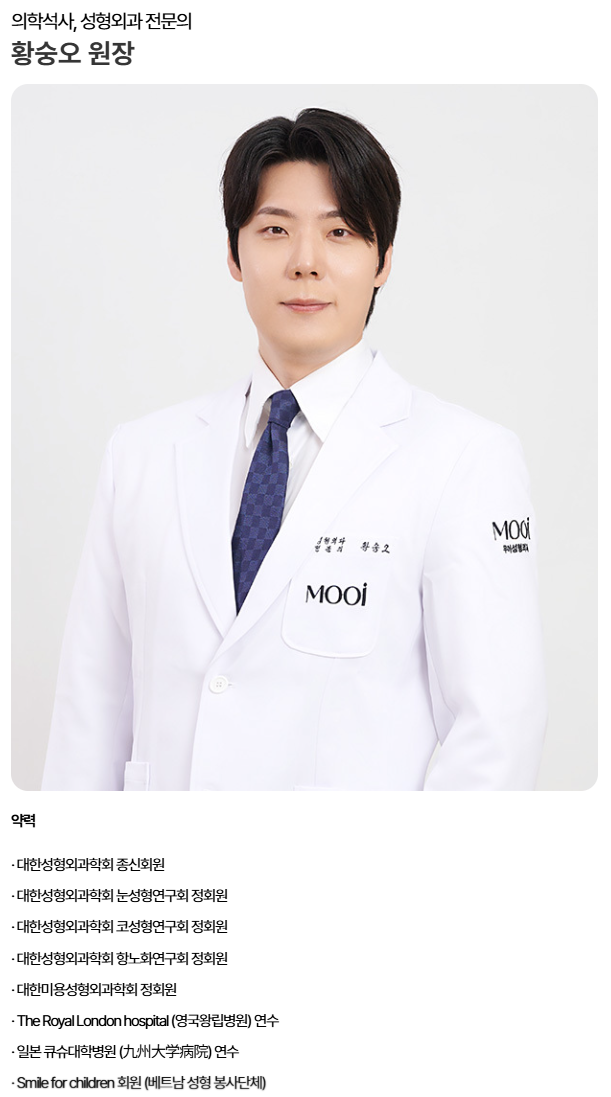
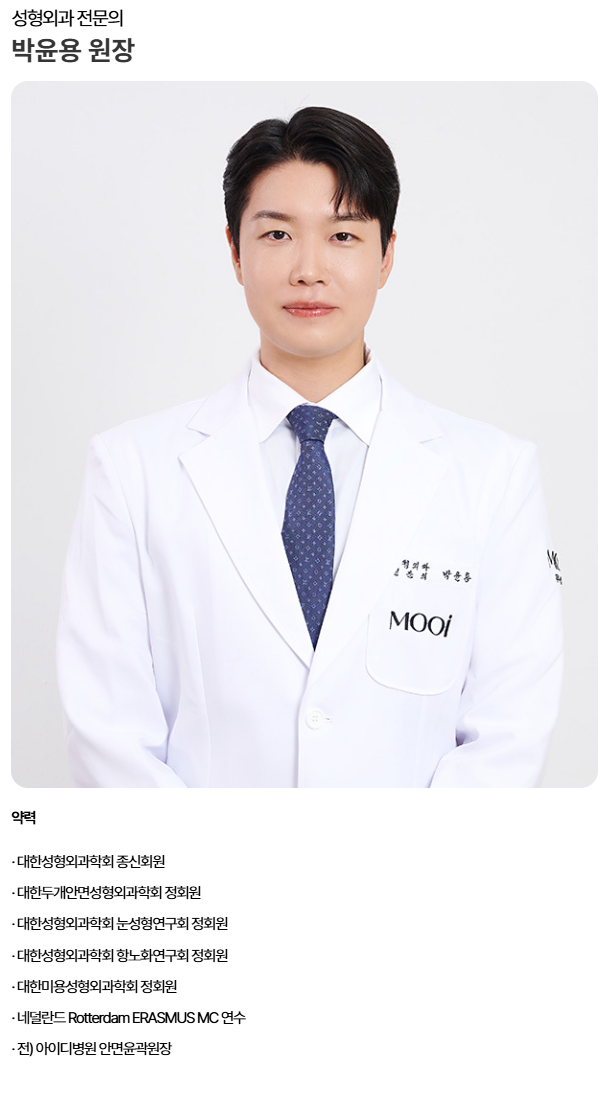
💖 Introduction to the head doctors 💖
💛 Go to KakaoTalk channel 💛
🧡 Go to website 🧡

#nosing #nonincisionalnosesurgery #nosethreadlifting #nasaltipplasty #nosefillernosing #liftingthreadnoseplasty #raisingnasaltip #nostrilreduction #humpnosecorrection #noselifting #PCLthread #PDOthread #nosingeffects #nosingreview #Gangnamnosing #nonsurgicalnoseplasty #GangnamMOOiPlasticSurgery #MOOiPlasticSurgery
This content was written directly by MOOi Plastic Surgery Clinic in compliance with Article 56, Paragraph 1 of the Medical Service Act, for the purpose of providing information in an easy-to-understand way about procedures and surgeries. All procedures and surgeries may vary by individual, and side effects may occur, so we recommend that you consult with the attending medical staff before proceeding.