Hello✨
MOOi Plastic Surgery, where unique beauty meets uniqueness.
MOOi Plastic Surgery, Gangnam nose surgery, Gangnam bulbous nose surgery, Gangnam Station bulbous nose surgery
My nose tip looks blunt because of my bulbous nose, so it seems stuffy. I want a natural yet refined nose—can that be done?
This is something people worried about bulbous noses often say during consultations.
When the nose tip is blunt, the overall impression can look dull.
To start with the conclusion: bulbous nose surgery should be performed differently depending on the cause.
It is not something that can be solved simply by raising only the nose tip.
Today, I’ll summarize the causes of a bulbous-looking nose, correction methods by cause,
and the points to keep in mind during surgery.
What exactly is a bulbous nose?
A bulbous nose refers to a nose with a blunt tip and wide-looking nostrils.
It gives an overall round appearance, which can make the face look stuffy or dull.
To understand a bulbous nose, it helps to first understand the structure of the nose tip.
If you touch the bridge of the nose, you can feel firm bone, but when you touch the nose tip, it feels elastic and soft, right?
The nose tip is made up of the alar cartilage, along with the skin and subcutaneous tissue covering it.
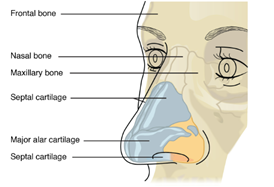
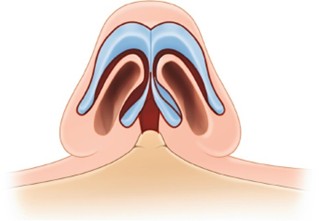
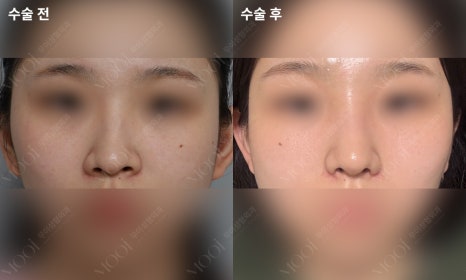
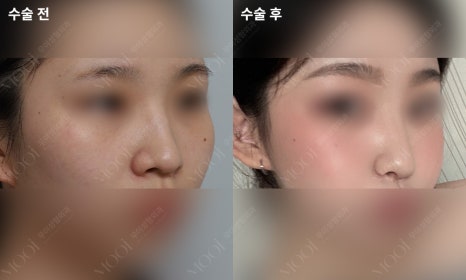
Before/after bulbous nose surgery, bulbous nose surgery before and after, bulbous nose correction, bulbous nose surgery review, bulbous nose plastic surgery, Gangnam Station bulbous nose, MOOi Plastic Surgery
What determines the shape of the nose tip?
The shape of the nose tip is largely determined by two things.
- The structure and size of the alar cartilage
This is the cartilage that supports the lower part of the nose tip. The shape of the nose tip changes depending on how this cartilage is formed.
- The thickness of the skin and subcutaneous tissue
If the skin covering the alar cartilage is thick, the shape of the cartilage does not show clearly on the surface.
Compared with Western people, Koreans tend to have lower and wider alar cartilage.
On the other hand, because the skin is relatively thick, the nose tip is more likely to look blunt rather than clearly defined.
Three causes of a bulbous nose
The key points that make a nose look bulbous can be divided into three main categories.
The surgical method should also change depending on which point is the cause.
- When the alar cartilage is spread apart
If the nose tip cartilage spreads outward on both sides, the nose tip looks wide.
In such cases, it can be corrected with cartilage suturing surgery.
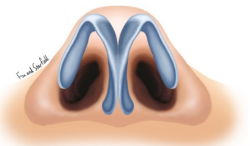
Bulbous nose, spread alar cartilage, bulbous nose cartilage suturing surgery
- When the alar cartilage itself is wide
Sometimes the cartilage is not spread apart, but the cartilage itself is wide.
In that case, it is corrected by partially removing the upper portion of the cartilage and then suturing it.
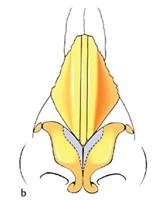
Bulbous nose, wide alar cartilage
- When the skin and subcutaneous tissue are thick
This is when the cartilage is fine, but the nose tip looks blunt because the skin is thick.
It can be improved by appropriately removing subcutaneous tissue.
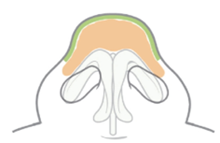
Bulbous nose, thick skin and subcutaneous tissue, bulbous nose correction
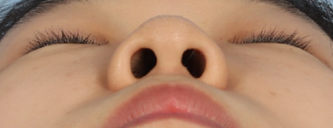
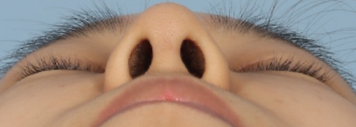
Before/after bulbous nose surgery, bulbous nose surgery results, Gangnam Station bulbous nose surgery, MOOi Plastic Surgery
Can a bulbous nose be corrected with cause-based treatment alone?
Here is the important point.
In fact, most people who come in for consultations do not have only one of the three causes above.
In most cases, several causes are combined.
In addition, the alar cartilage is often low and weak, so it does not show well at the nose tip.
That is why correcting only the causes may not lead to as much satisfaction as expected.
This is the kind of case where people say, "I had surgery, but it did not change much."
How is bulbous nose correction most effectively performed?
Effective bulbous nose correction is achieved by combining cause correction and structural reinforcement.
Basic correction
-
Alar cartilage suturing (when spread apart)
-
Partial resection of the alar cartilage + suturing (when wide)
-
Appropriate removal of subcutaneous tissue (when thick)
Structural reinforcement
-
Using septal cartilage or rib cartilage to lift and bring the alar cartilage together
-
If needed, nose tip cartilage grafting to improve definition
When cause correction and structural reinforcement are performed together like this, a much clearer and more natural nose tip can be created.
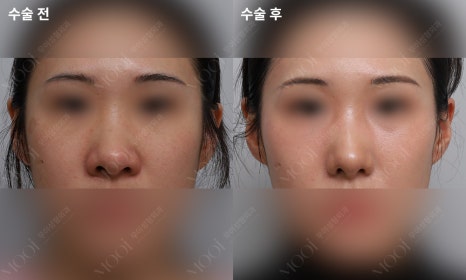
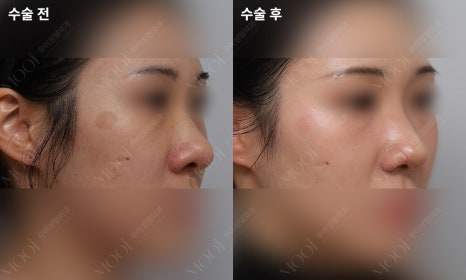
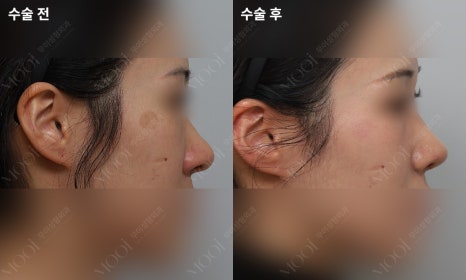
Before/after bulbous nose surgery, bulbous nose correction, bulbous nose surgery results, bulbous nose surgery review, Gangnam Station bulbous nose surgery, Gangnam MOOi Plastic Surgery
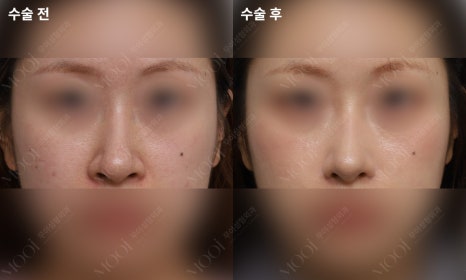
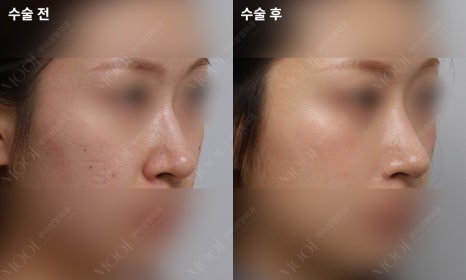
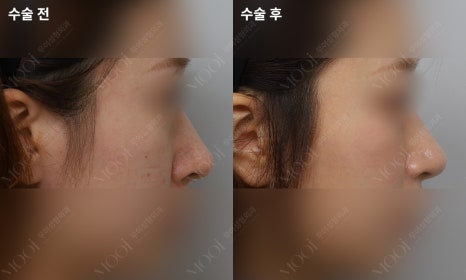
Before/after comparison of bulbous nose surgery, bulbous nose correction, bulbous nose surgery results, bulbous nose surgery review, Gangnam Station bulbous nose surgery, Gangnam MOOi Plastic Surgery
Points to keep in mind during bulbous nose surgery
Be careful not to remove too much subcutaneous tissue
If too much subcutaneous tissue is removed in an attempt to shape the nose tip, problems can occur.
Cartilage visibility
If the skin becomes too thin, a side effect can occur where the cartilage underneath becomes visible.
In particular, because the skin becomes thinner over time, only an appropriate amount should be removed from the beginning.
Excessive correction looks unnatural
If the nose tip becomes too sharp or overly refined, it can look artificial.
It becomes a "nose that looks surgically altered."
If you want a nose tip that is both natural and clearly defined, surgery should be planned with harmony with the other facial features in mind.
Frequently Asked Questions (FAQ)
Q. If I have a bulbous nose, do I also need to raise the bridge?
Not necessarily.
In some cases, correcting only the nose tip improves the overall balance.
Whether the bridge should be raised is determined based on the current condition.
Q. Does bulbous nose surgery also change the shape of the nostrils?
Yes, it can.
Bringing the alar cartilage together can make the nostrils appear longer vertically.
The design is planned while also considering the shape of the nostrils before surgery.
Q. If the bulbous nose is severe, can it be corrected in one procedure?
In most cases, yes.
However, if the skin is very thick, expectations may need to be adjusted.
During consultation, we explain how much improvement can realistically be expected.
Q. Can the nose tip become blunt again after bulbous nose surgery?
If only cartilage suturing is done without structural reinforcement, it may spread apart again over time.
Building a support structure with septal cartilage or rib cartilage provides better long-term maintenance.
To summarize
Bulbous nose correction is not simply a surgery that raises only the nose tip.
-
Spread of the alar cartilage
-
Width of the alar cartilage
-
Thickness of the skin/subcutaneous tissue
You need to identify these causes and perform customized correction to achieve satisfying results.
Because cause correction alone is often not enough,
it is effective to combine it with structural reinforcement using septal cartilage or rib cartilage.
If you want to make a blunt nose tip look more defined, the first step is to accurately identify the cause.
We recommend proceeding only after consulting with an experienced specialist.
MOOi
MOOi Plastic Surgery
Beauty like No Other
As the meaning of MOOi (無二), "one and only," suggests,
MOOi Plastic Surgery designs a face that is uniquely yours in this world.
🩷 Directions 🩷
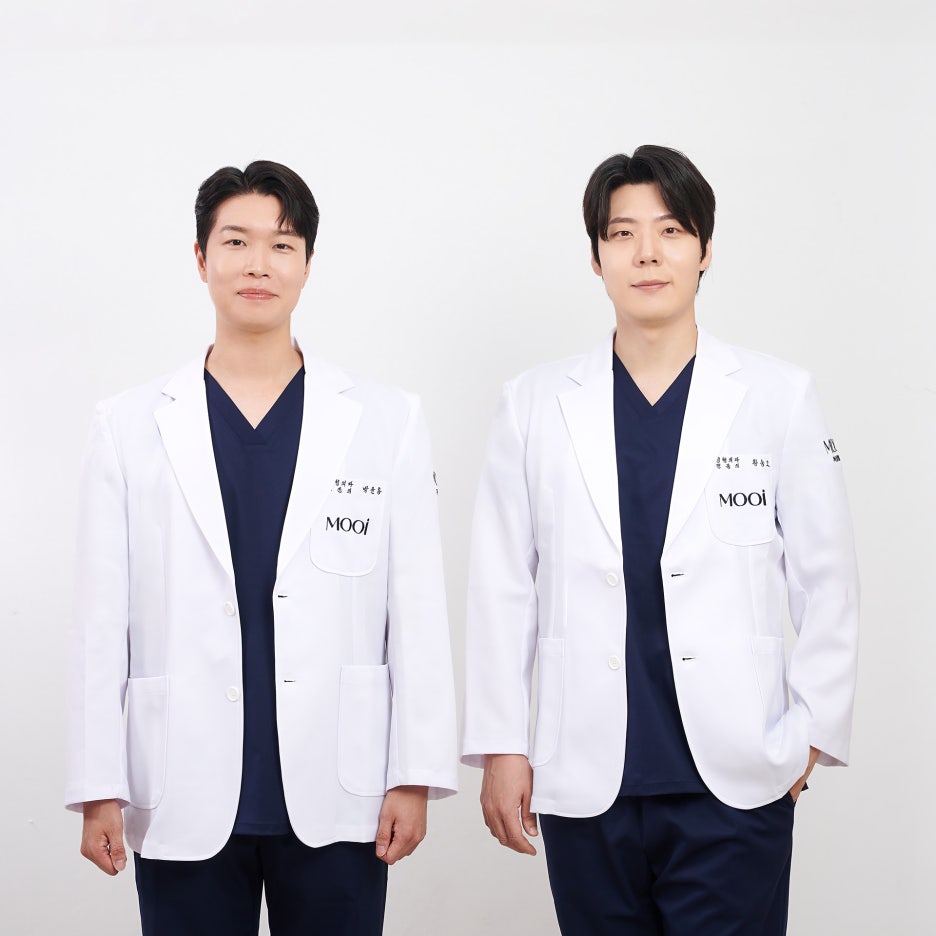
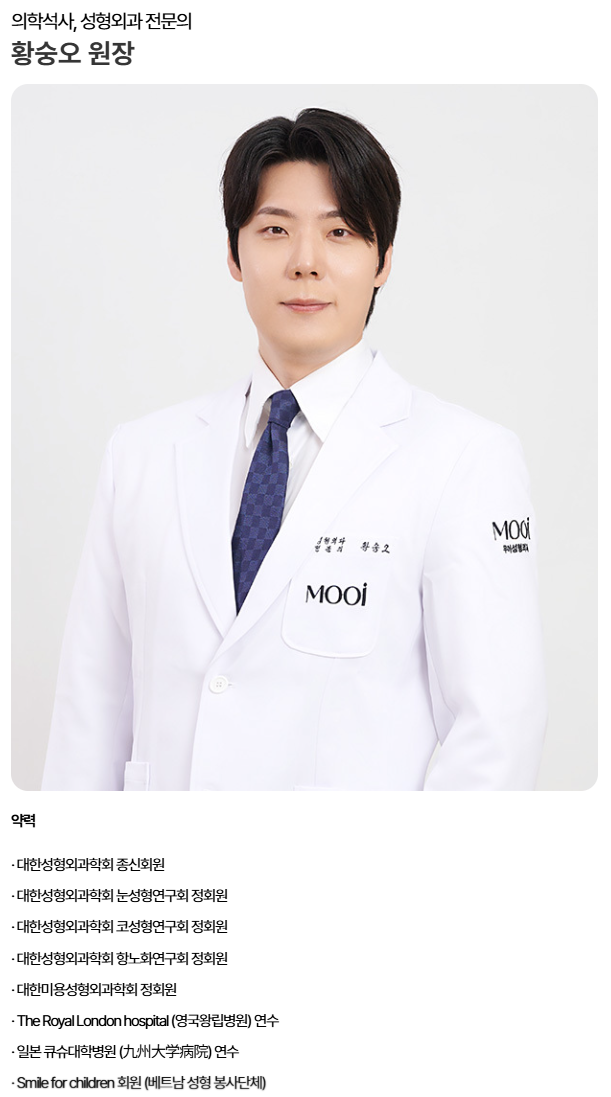
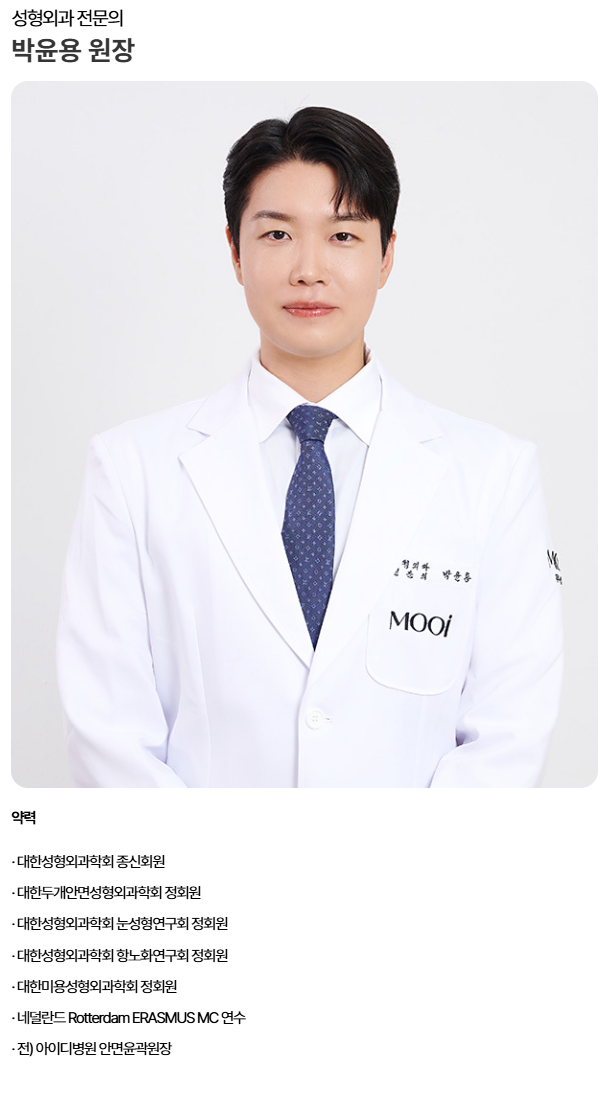
💖 Introduction to the lead surgeons 💖
💛 Go to the KakaoTalk channel 💛
🧡 Go to the website 🧡

#bulbousnose #bulbousnosesurgery #bulbousnosecorrection #nosetipsurgery #nosetipcorrection #bluntnose #nosetipsurgery #alarcartilage #nosesurgery #nosetipcartilagegraft #refinednose #Gangnambulbousnosesurgery #GangnamStationbulbousnose #bulbousnosesurgeryreview #bulbousnosesurgeryresults #Gangnamnosesurgery #MOOiPlasticSurgery
This content was written directly by MOOi Plastic Surgery Clinic for the purpose of conveying information related to procedures and surgeries in an easy-to-understand way, in compliance with Article 56, Paragraph 1 of the Medical Services Act. Since all procedures and surgeries may differ from person to person and may cause side effects, we recommend consulting with the medical staff in charge before proceeding.