Hello ✨
This is MOOi Plastic Surgery, where unique beauty comes first.
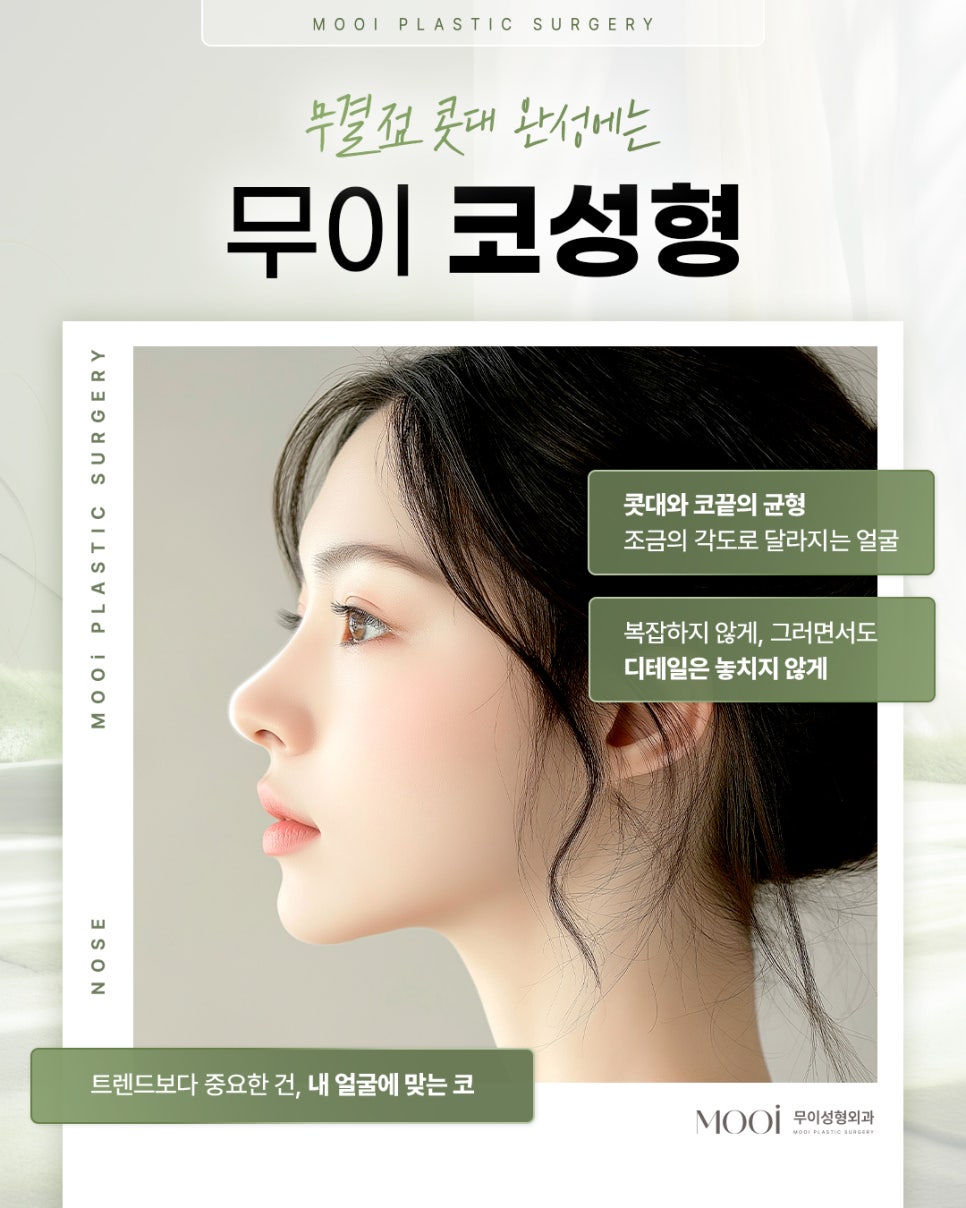
Gangnam MOOi Plastic Surgery rhinoplasty
I’m getting rhinoplasty… which is better, autologous rib cartilage or donor rib cartilage?
This is a question we hear very often during consultations.
To get straight to the point,
autologous rib cartilage is not always the right answer, and donor rib cartilage is not always just a substitute.
Depending on your nose condition (whether it is a revision surgery, the degree of contracture, and the support needed)
and the purpose of the surgery, the “more suitable material” can differ.
Today,
I’ll neatly organize the differences between autologous rib cartilage and donor rib cartilage (allograft rib cartilage)
and explain which type is better suited for which patients.
[10-Second Summary]
-
Top priority on support + able to accept scar/pain -> autologous rib cartilage
-
Want no scar + want to reduce the burden of surgery (time/recovery) -> donor rib cartilage (allograft rib)
-
If there is not enough cartilage available for rhinoplasty revision -> donor rib cartilage is often considered first
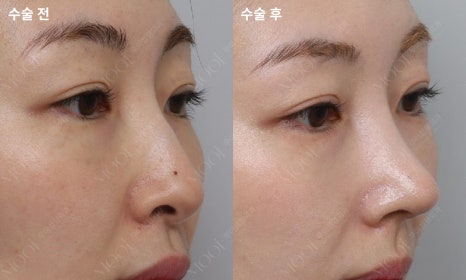
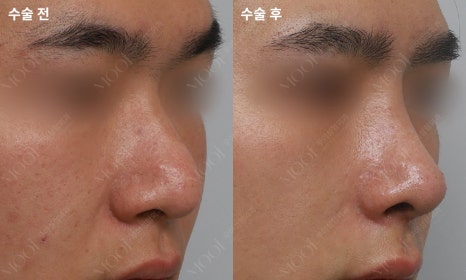
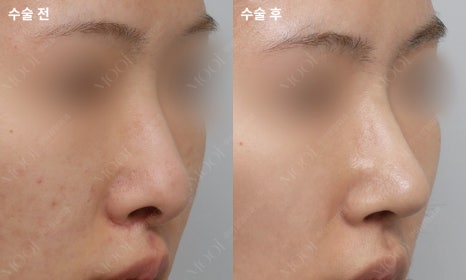
Costal cartilage rhinoplasty, before-and-after rhinoplasty comparison, rhinoplasty review, autologous rib, donor rib, rhinoplasty revision, contracture nose, Gangnam rhinoplasty, MOOi Plastic Surgery
Autologous rib vs. donor rib, a side-by-side comparison
First, let’s organize the key differences between the two materials in a table.
| Category | Autologous rib (your own rib cartilage) | Donor rib (another person’s rib cartilage) |
|---|
| Harvest site | Cartilage from your own 6th–10th ribs | Collected from a donor and processed with chemicals |
| Harvest scar | A scar appears below the chest | None (no harvesting process) |
| Pain | About 2–4 weeks at the harvest site | None |
| Cartilage strength | More solid | Slightly lower, but sufficient |
| Possibility of absorption | Relatively low | Slightly higher, but not a major difference |
| Surgery time | Longer due to harvesting | Relatively shorter |
| Cost | Higher due to harvesting | Relatively lower |
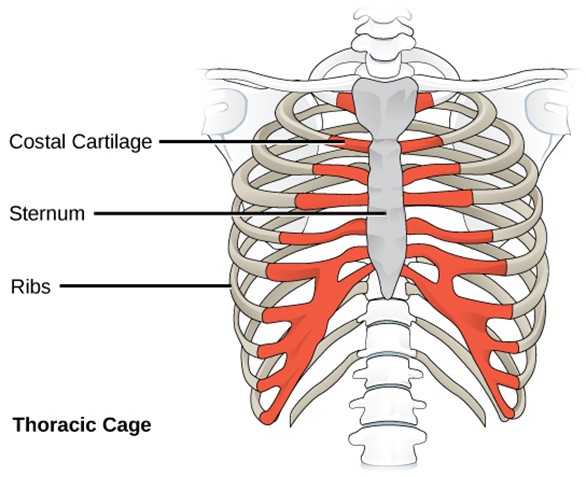
What is autologous rib cartilage used for?
It is cartilage harvested from your own rib.
Usually, cartilage from the 6th to 10th ribs is used.
Because it comes from your own body, the risk of absorption is low and the cartilage is sturdy, which is advantageous for supporting the nasal tip.
However, a scar remains at the harvest site, and there is pain for about 2–4 weeks.
The surgery time and cost also tend to increase.
Depending on the harvest location, the scar may be hidden by the underwear line or may be visible, so it is a good idea to consult a specialist before surgery.
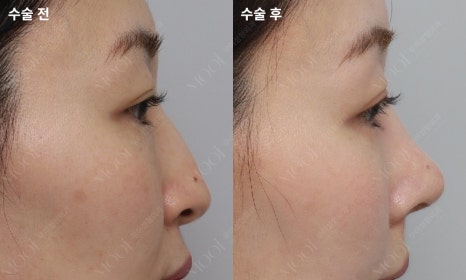
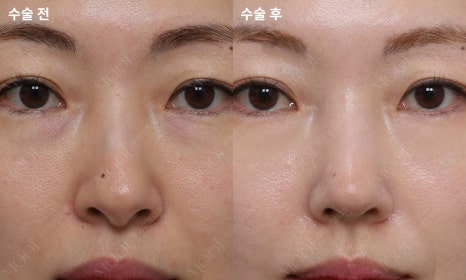
Costal cartilage rhinoplasty, autologous rib, donor rib, rhinoplasty revision, contracture nose, Gangnam rhinoplasty, MOOi Plastic Surgery
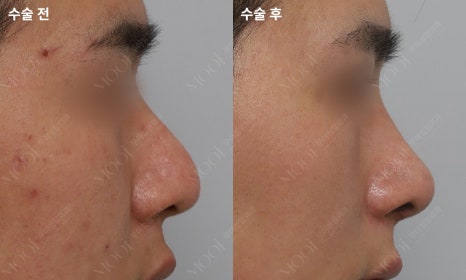
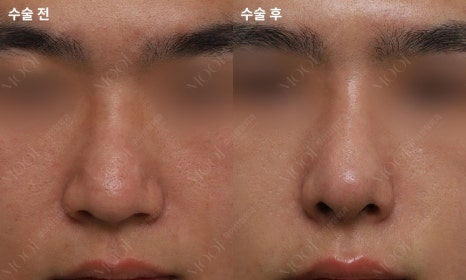
Costal cartilage rhinoplasty, autologous rib, donor rib, rhinoplasty revision, contracture nose, Gangnam rhinoplasty, MOOi Plastic Surgery
What is donor rib cartilage used for?
It is material processed with chemicals after being harvested from a donor so that it does not trigger an immune rejection reaction.
Its biggest advantage is that there is no scar or pain because nothing is harvested from your own body.
The surgery time becomes shorter, and the cost is relatively lower as well.
It can also be a good alternative when there is not enough material because septal cartilage or ear cartilage was already used in a previous rhinoplasty revision.
It is said that the possibility of absorption is slightly higher,
but several studies have found no major difference, so there is no need to worry too much.
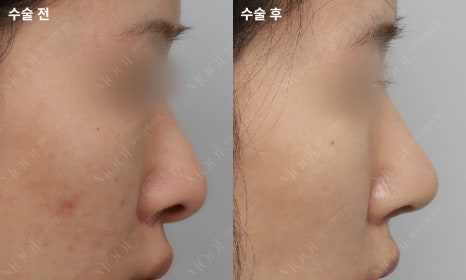
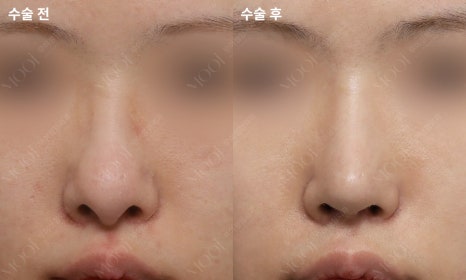
Costal cartilage rhinoplasty, autologous rib, donor rib, rhinoplasty revision, contracture nose, Gangnam rhinoplasty, MOOi Plastic Surgery
Common concerns during consultations
"Isn’t donor rib more likely to cause inflammation because it comes from someone else’s bone?" We get this question very often.
To get straight to the point, donor cartilage does not mean inflammation occurs more easily.
At present, it must pass strict standards to be approved, so the quality is also stable.
"If autologous rib is used, won’t the cartilage bend?" Some people worry about warping.
This usually happens because of the trimming process after harvesting, so if experienced medical staff handle it, it is not something to worry about too much.
In conclusion, autologous rib has a slight advantage in inflammation resistance and absorption rate,
but overall, donor cartilage is also a sufficiently stable material.
At MOOi Plastic Surgery, we precisely guide you to the more suitable material depending on your nose condition.
Commonly asked questions (FAQ)
Q. In what cases is costal cartilage rhinoplasty needed?
It is often used for contracture nose revision surgery, or when septal cartilage and ear cartilage are not enough.
Even in a first surgery, it may be used if you want a very high nasal tip or a more dramatic nose.
Q. Is there a big cost difference between donor rib and autologous rib?
Autologous cartilage requires an additional harvesting process, which increases the surgery time and cost.
The exact cost varies depending on the nose condition, so it is best to confirm during a consultation.
Q. Is autologous rib always better for contracture nose revision?
In many cases, the existing material is insufficient, so donor cartilage may also be a good choice.
Because the inside condition of the nose must be checked directly before a decision can be made, an in-person consultation is recommended.
Q. How long is the recovery period after costal cartilage rhinoplasty?
Returning to daily life usually takes about 1–2 weeks.
In the case of autologous cartilage, pain at the harvest site may last 2–4 weeks, and a natural appearance may take about 3–6 months.
This can vary depending on the individual.
In summary,
choosing the material for costal cartilage rhinoplasty is not a matter of “which is better,” but rather
“which is suitable for my situation.”
If you can accept a harvest scar and pain + need stronger support -> autologous rib
If you want to reduce harvesting burden + shorten surgery time and cost -> donor rib
If it is a revision surgery with insufficient material from previous procedures -> donor cartilage should be considered first
Please do not rule out either option unconditionally, and we recommend consulting a clinic that explains the basis for why a certain material is appropriate.
MOOi
MOOi Plastic Surgery
Beauty like No Other
As MOOi (無二) means “one and only,”
MOOi Plastic Surgery designs a face that is uniquely yours, unlike anyone else in the world.
🩷 Directions 🩷
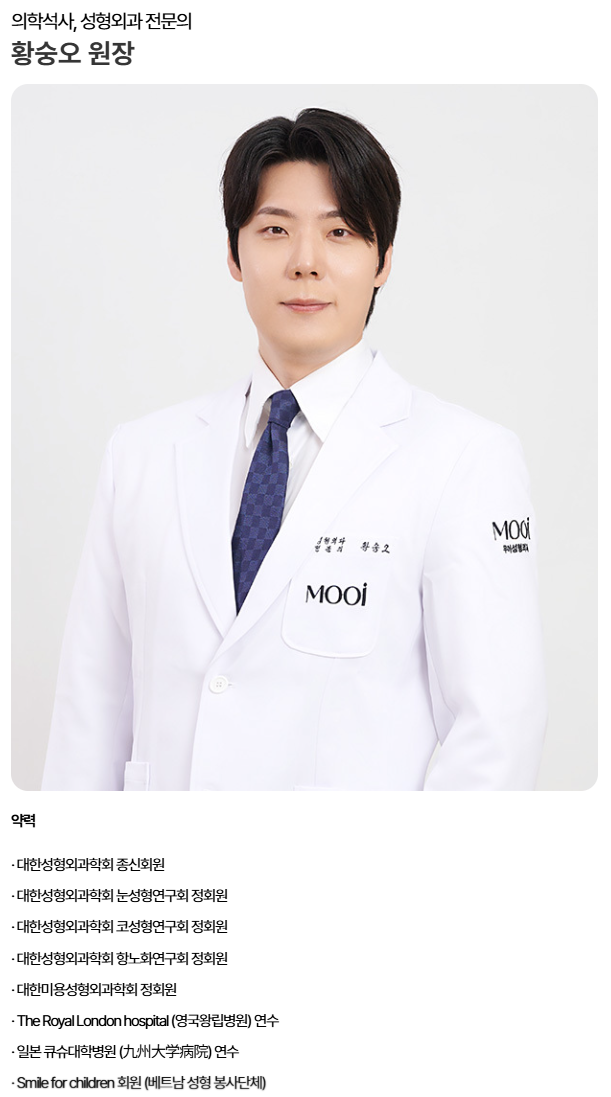
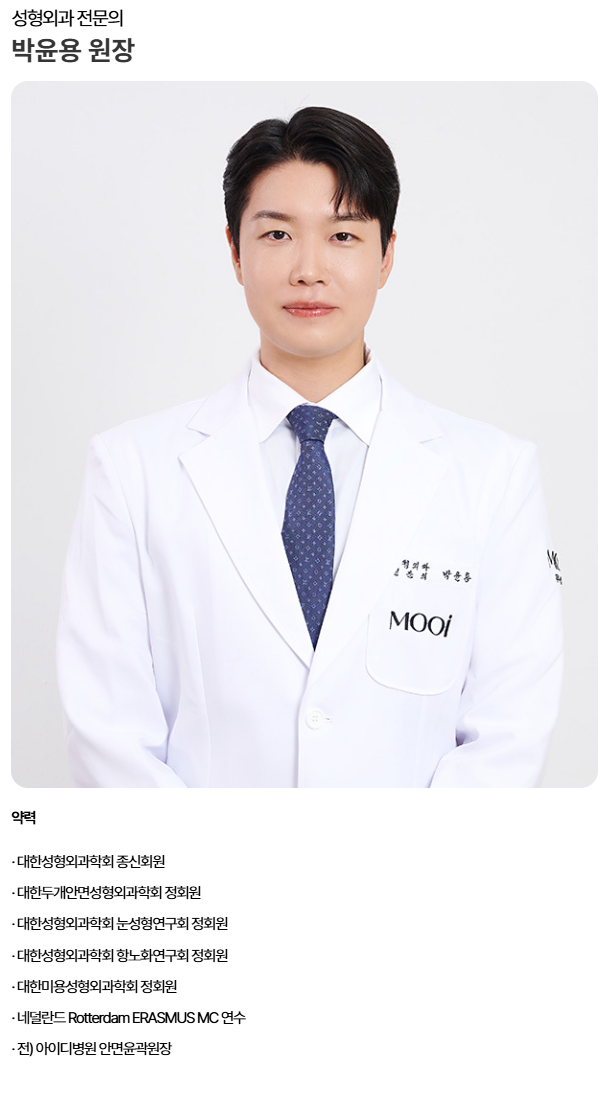
💖 Introduction to our lead doctors 💖
💛 Go to KakaoTalk channel 💛

🧡 Go to the website 🧡

#CostalCartilageRhinoplasty #AutologousRibCartilage #DonorRibCartilage #AllograftRibCartilage #RhinoplastyRevision #ContractureNose #RhinoplastyMaterials #CostalCartilageScar #CostalCartilagePain #CostalCartilageSideEffects #NasalTipSupport #MOOiPlasticSurgery #GangnamMOOiPlasticSurgery
This content was written directly by MOOi Plastic Surgery Clinic for the purpose of providing information in an easy-to-understand way about procedures and surgeries, in compliance with Article 56, Paragraph 1 of the Medical Service Act. Since all procedures and surgeries may vary by individual and may cause side effects, we recommend that you 반드시 consult with the medical staff in charge before proceeding.