"I'm worried that adding filler to my nasolabial folds might make my face look heavier."
"Even after Ultherapy and Thermage, I still feel like my sagging contours aren't becoming defined."
"Can fillers really create a lifting effect? If so, where should they be injected, and how much is needed?"
These days, beyond simply using fillers to fill hollow areas,
an approach that first considers
'why the face looks sagging'
and restores support structures starting from the outer face—known as
'anatomical filler lifting'—is becoming increasingly established.
To get straight to the point,
filler lifting is not a procedure that 'fills extensively.'
It is closer to a procedure that 'designs' the face by first organizing the outer support structures—such as the temples, lateral cheekbones, preauricular area, and jawline—so that the overall impression appears naturally lifted.
In particular, approaches such as Galderma's Restylane G.Plan,
which use different filler properties and injection layers according to the movement of each area, skin thickness, and the amount of support required,
are commonly utilized.
Beauty like no other, at MOOi Plastic Surgery
Today, we will explain in an easy and detailed way
how filler lifting works,
who it may be well suited for, and when another procedure may be more appropriate.

A Filler Lifting Guide at a Glance
-
Why can fillers also create a lifting effect?
-
Why filler is not injected directly into the nasolabial folds
-
What makes Restylane G.Plan different: not 'how much,' but 'how'
-
Who may be well suited for filler lifting?
-
Cases in which filler lifting may be difficult and its limitations
-
Procedure sequence and recovery
-
Frequently Asked Questions (FAQ)
-
How Can Fillers Also Create a Lifting Effect?
The face is not a single flat plane.
It is a three-dimensional structure in which the skin, fat layers, SMAS (the fascial layer), retaining ligaments, and bone structure are connected layer by layer.
As we age,
collagen density decreases,
retaining ligaments become looser,
and the fat layers move downward.
As a result, changes such as nasolabial folds, sagging around the mouth, loss of jawline definition, and sagging cheeks tend to appear together.
The key to filler lifting
is to precisely place filler around the retaining ligaments and in the lateral support structures,
transmit traction to the surrounding tissues,
and restore the anchor areas that firmly support the skin.
In other words, it may be easier to understand filler
not simply as a 'material for filling,'
but as a 'design tool for reconstructing the face's support structure.'
The concept may be easier to understand through an illustration:
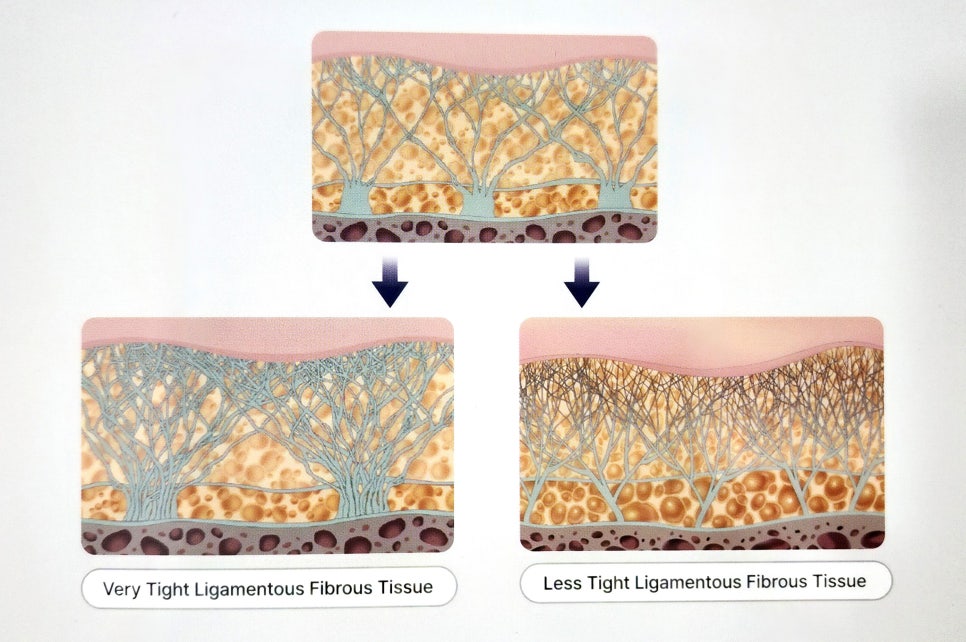
Right: Loosened skin tissue caused by reduced collagen density, loosened retaining ligaments, and downward displacement of the fat layers
- Why Filler Is Not Injected Directly into the Nasolabial Folds
Many people think, 'If nasolabial folds are my concern, can't I just have filler injected into them?'
Of course, in some cases, direct correction of the nasolabial folds may be necessary.
However, when the outer support structures of the face have weakened,
filling only the nasolabial folds may instead make the face
look heavier,
look swollen,
or create a strong impression of having been 'filled.'
That is why, in anatomical filler lifting,
before looking at the nasolabial folds, practitioners generally examine the outer support structures of the face first, including
the temples, lateral cheekbones, preauricular area, and jawline.
When the lateral support structures are restored,
nasolabial folds and sagging around the mouth often appear noticeably softened
even without excessively filling the central face.
- What Makes Restylane G.Plan Different: Not 'How Much,' but 'How'
Restylane G.Plan is an anatomical filler lifting design guide presented by Galderma.
Rather than viewing the face as one solid mass,
its key approach is to use different filler properties and injection layers according to the movement of each area, skin thickness, required support, and treatment depth.
Put simply,
areas that require structural support in deeper layers, such as the lateral cheekbones and jawline,
tend to be suited to fillers with properties that maintain their shape well.
For areas that move significantly with facial expressions, such as around the mouth and beside the philtrum,
more flexible filler properties that follow movement may be more suitable in many cases.
For areas with thin, delicate skin, such as under the eyes and the temples,
continuity and skin texture are considered together rather than focusing only on volume.
Ultimately, the key to good filler lifting
is not the 'amount' of filler, but the 'design.'
Which product is used, at what depth, in which direction, and in what amount
can affect how natural the result appears.
The image below may help you understand the details.
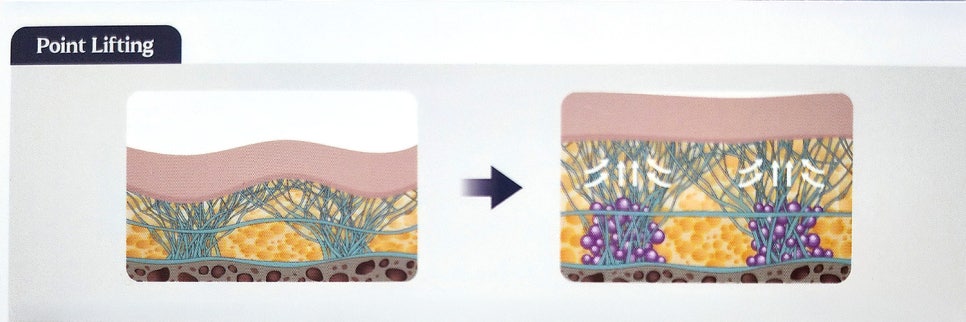
Point Lifting - Injecting a small amount of highly elastic filler between tough ligamentous fibrous tissues to pull the surrounding skin and soft tissues, creating a lifting effect
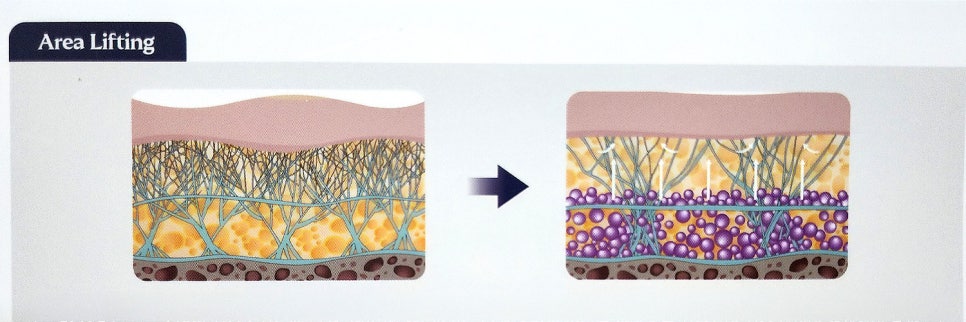
Area Lifting - Injecting a small amount broadly, as if spreading it across a surface, to improve the contours of the treated area and create a natural lifting effect
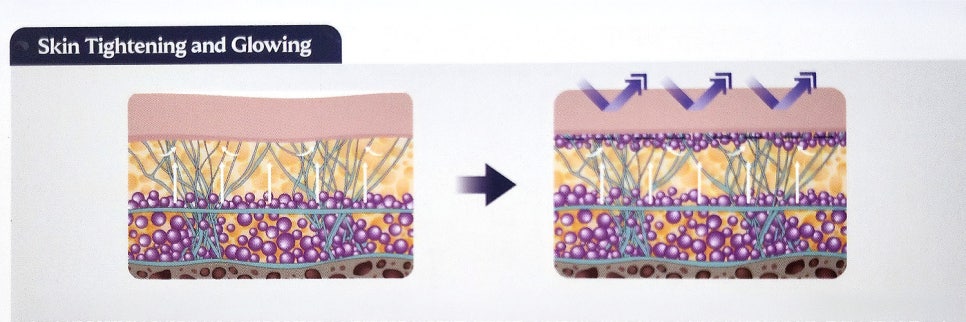
Skin Tightening & Glowing - Applying a skin booster or similar treatment to the subdermal layer to encourage lifting through tightening of the dermal tissue and help create smoother, more radiant-looking skin
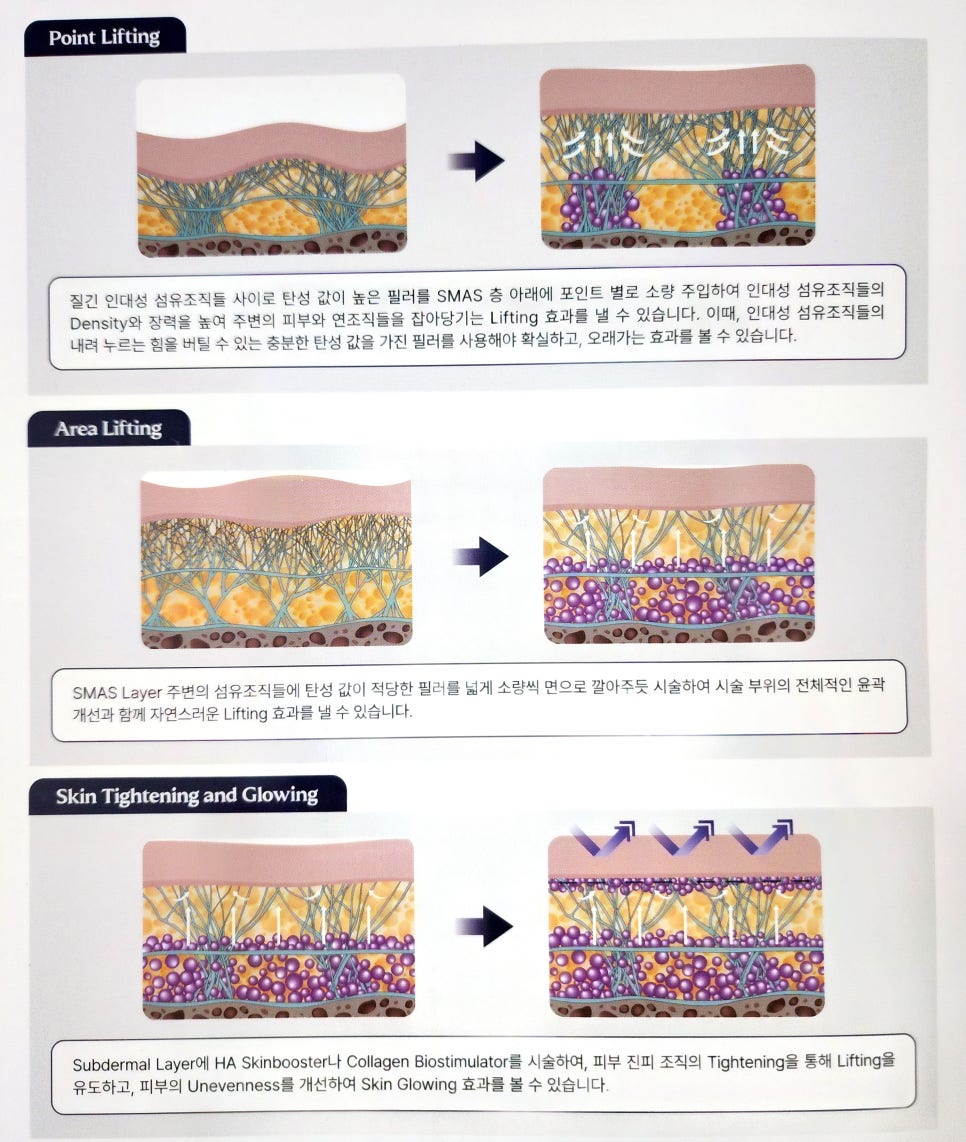
Complete Overview of Restylane G.Plan Treatment Types
- Who May Be Well Suited for Filler Lifting?
Filler lifting tends to be better suited to people in the early stages of sagging, when volume loss is also beginning,
rather than to those whose faces are already experiencing extensive overall sagging.
For example, it may be helpful for people who:
-
Have temples that have become hollow, making the outer facial contours look less full
-
Feel reduced support beside the cheekbones, making the midface appear to sag
-
Have deeper nasolabial folds but are concerned that direct filling may make them look swollen
-
Have begun to lose definition around the mouth and along the jawline
-
Want to refine an overall impression that looks tired and sagging
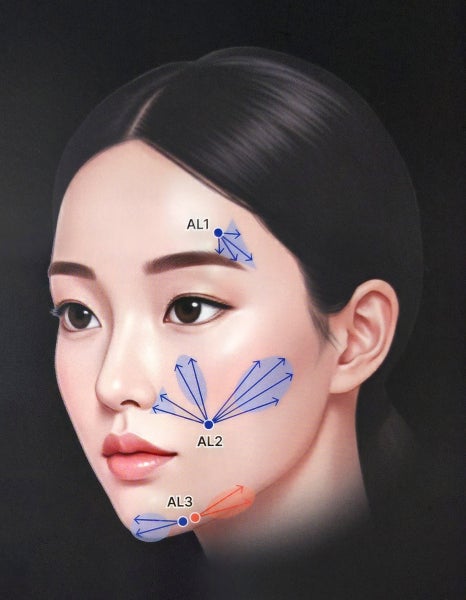
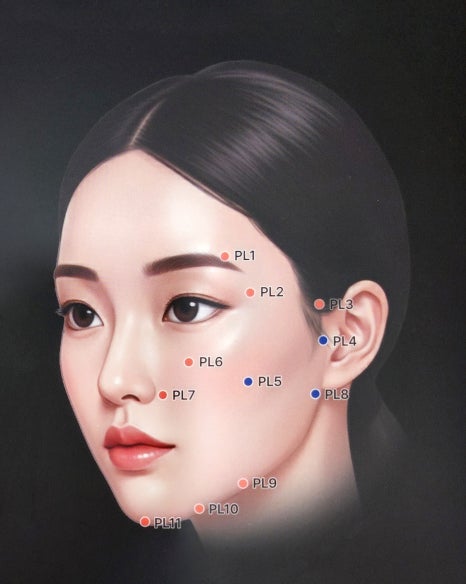
In these cases, considering the lateral support structures, midface, jawline, and skin texture together during the design process
may provide a more natural-looking lifted impression.
- Cases in Which Filler Lifting May Be Difficult and Its Limitations
Filler lifting is not a procedure that directly pulls and fixes the skin and SMAS in the way a surgical facelift does.
Therefore, in the following cases,
filler alone may not provide sufficient improvement:
-
When the skin itself is significantly stretched and sagging is pronounced
-
When sagging of the jawline and neck is progressing together
-
When skin laxity accounts for a greater proportion of the concern than volume loss
In these situations,
combining filler lifting with another procedure may often be more appropriate, such as
thread lifting, radiofrequency or ultrasound devices (Thermage and Ultherapy Prime, among others), a mini facelift, or a facelift.
In other words, the most important consideration in filler lifting
is not 'injecting as much as possible,'
but rather determining the range of treatment appropriate for the current condition of your face.
- Procedure Sequence and Recovery
The procedure generally proceeds in the following order.
① During the consultation, the overall facial structure and proportions, along with the lateral support structures, midface, jawline, and skin condition, are evaluated together.
② Priorities are set regarding which support structures should be restored first, and the treatment is designed according to the G.Plan guide.
③ Fillers with properties suited to each area are selected, and the injection depth and amount are determined in advance.
④ Filler is injected in stages, in the order of lateral support structures → midface → areas around the mouth and jawline.
⑤ Immediately after the procedure, the contours and left-right balance are checked together.
Recovery generally progresses as follows.
-
Immediately after treatment–the same day: There may be mild swelling, warmth, redness, and some bruising.
-
Days 2–3: This is when swelling tends to be most noticeable.
-
Week 1: Residual swelling subsides, and the contours generally settle into a natural appearance.
-
Weeks 2–4: The filler stabilizes within the tissue, and the final impression becomes more defined.
Recovery speed and progression may vary from person to person,
so please follow the instructions of your treating medical professional as the highest priority.
- Frequently Asked Questions (FAQ)
Q. Which is better, filler lifting or thread lifting?
They are less like competing treatments and more like tools with different roles.
Fillers are used to restore support structures and volume,
while thread lifting physically elevates sagging tissue.
When the degree of sagging is substantial, they are often combined.
Q. Can filler lifting be performed together with Ultherapy or Thermage?
Ultherapy Prime and Thermage deliver energy to the SMAS and dermal layers to help support collagen regeneration.
Because they act on different layers from filler lifting, which restores support structures,
they are often performed together.
However, it is best to determine the interval and order of treatment through a consultation.
Q. How long do the effects last?
This may vary depending on the type of filler, treatment area, and individual metabolic rate.
In general, results often last from several months to more than a year depending on the area,
but the exact duration varies from person to person, so regular checkups are generally recommended.
Q. Is it possible to achieve a natural result that does not look obvious?
When the treatment is well designed, this is certainly a possible direction.
The key is to place the amount needed at the points where it is needed rather than filling extensively.
The goal is not for the face to look 'filled' after treatment, but for the overall impression to look more refined.
Q. What side effects may occur?
Possible side effects include bruising, swelling, pain, asymmetry, nodules, and blood-vessel-related complications.
Their frequency is generally low, but it is difficult to say that the risk is zero.
This is why sufficient pre-treatment consultation and post-treatment care are important.
To summarize,
Filler lifting ultimately begins with 'balance' and 'design,' rather than simply 'filling.'
Good filler treatment generally aims not to create a face that looks obviously treated,
but to produce a result in which the original face appears more refined.
Anatomical filler lifting using Restylane G.Plan
is not simply an approach of filling hollow areas.
It considers the facial structure and direction of aging, as well as the filler properties and treatment depth,
as part of a unified approach.
The key is not to enlarge the face by injecting a large amount of filler,
but to place the amount needed at the necessary points
to create a more natural and refined impression.
Because the degree of facial sagging, skin condition, and direction of aging differ from person to person,
filler alone may be well suited to some people,
while others may be better suited to a combination of thread lifting, energy-based devices, or facelift surgery.
At MOOi Plastic Surgery, we first analyze the overall facial structure and proportions,
then perform Restylane filler treatment tailored to each individual's degree of sagging and skin condition.
If nasolabial folds, sagging cheeks, or an undefined jawline are your concerns,
rather than simply considering which area should receive how many cc,
we recommend visiting the clinic for a thorough consultation to determine which support structures in your face should be restored first.
MOOi
MOOi Plastic Surgery
Beauty like No Other
Just as MOOi (無二) means 'one of a kind,'
MOOi Plastic Surgery designs your one-and-only face in the world.
🩷 Directions 🩷
💖 Meet Our Representative Directors 💖



💛 Go Directly to Our KakaoTalk Channel 💛

🧡 Visit Our Website 🧡


#FillerLifting #Restylane #RestylaneGPlan #GPlan #AnatomicalFillerLifting #NasolabialFoldFiller #CheekSaggingFiller #MidfaceFiller #TempleFiller #CheekboneFiller #JawlineFiller #NaturalLookingFiller #FillerLiftingRecommendations #GangnamFiller #GangnamFillerRecommendations #GangnamStationFiller #GangnamStationFillerRecommendations #GangnamPlasticSurgery #MOOiPlasticSurgery
This content was written directly by MOOi Plastic Surgery Clinic for informational purposes, to make information related to procedures and surgery easy to understand, in compliance with Article 56, Paragraph 1 of the Medical Service Act. Because procedures and surgeries may produce different results and side effects for each individual, we strongly recommend consulting with your treating medical professional before proceeding.