"Maybe because my shoulders are narrow and look sunken, clothes never seem to fit quite right."
"Because of my hip dips, my side profile looks abruptly cut off whenever I wear leggings."
"Even with exercise, the hollow area on the sides of my hips—the hip dips—has not changed."
In body filler consultations, it is actually uncommon for people to mention only “one area.”
The shoulder line may roll forward and collapse,
the sides of the hips may look sunken,
and the line from the waist to the hips may appear disconnected,
making many people feel that their proportions look less flattering when wearing clothes.
To give you the conclusion first,
body filler is not a procedure that forcibly “enlarges” the body.
Rather, it is closer to a non-surgical body contouring procedure that naturally “fills” areas that look hollow or empty,
helping the overall proportions appear more balanced and refined.
At MOOi Plastic Surgery✨, where we pursue beauty like no other,
we will honestly explain the standards used to design Body Filler treatments.

Which body filler is right for me? Organized into 2 types
1. Shoulder Filler
Shoulder filler is a procedure that naturally fills in a collapsed line without making it look excessive when the upper shoulder area—the area beside the trapezius and the deltoid line—looks hollow or narrow,
helping create a shoulder line that is closer to a right-angle shape.
When the shoulders look sunken, the same clothing can easily make them appear droopy and narrow.
Once the line is filled, clothing that reveals the shoulders, such as off-the-shoulder tops, tube tops, and slip dresses,
often appears to fit more attractively.
Rather than aiming for an artificial volume that looks as though shoulder pads have been inserted,
the goal is to create a natural line that still looks balanced even when you are not wearing clothes.
People overseas also frequently search for this treatment using keywords such as “Shoulder Filler.”

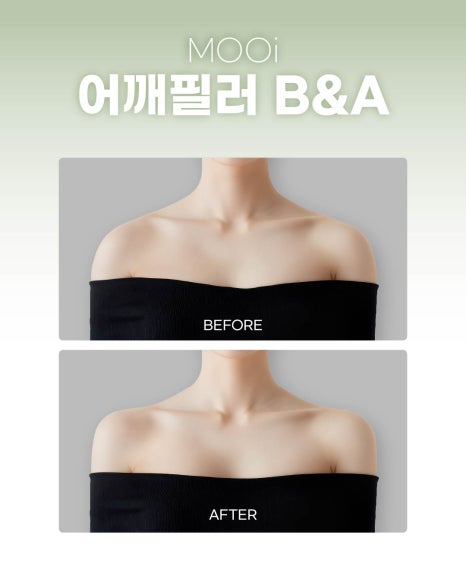
Before-and-after images of shoulder filler: the shoulder line that appeared collapsed has been refined into a more organized, straighter line
2. Hip Filler (Hip Dip Filler)
Hip filler is a procedure that smoothly fills the hip dips—the hollows on the sides of the hips—
refining the curve that runs from the waist through the hips and down to the thighs.
Hip dips are often caused by skeletal structure and fat distribution,
so they are known to be difficult to fill through exercise or dieting alone.
By filling these hollow areas, the line that appeared interrupted from the side may look more continuous,
and you may expect the overall S-line proportions to appear more balanced.
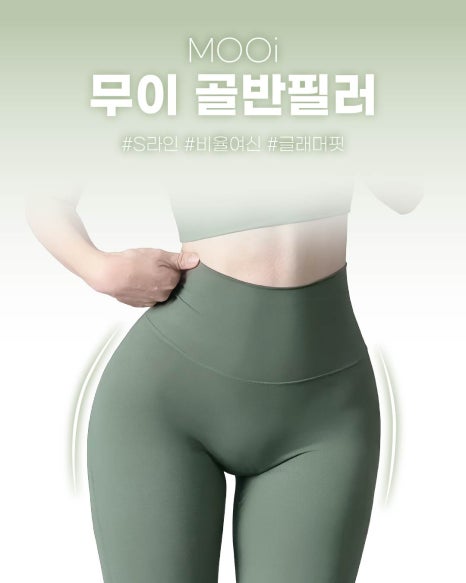
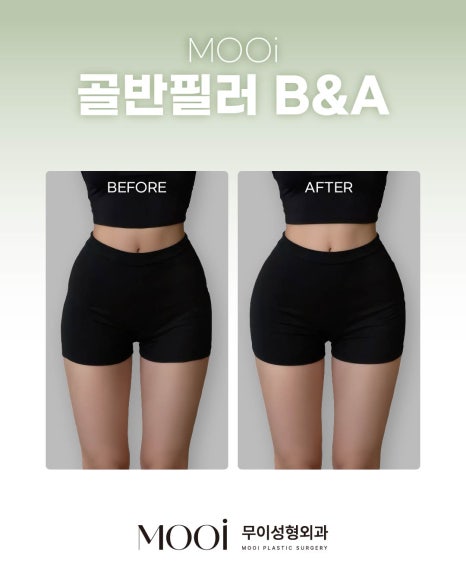
Before-and-after images of hip filler: the outer curve flowing from the waist to the hips appears to connect more smoothly
Body filler vs. other methods: points that can be confusing
-
Hip filler vs. hip-dip exercises:
Exercise may help when there is insufficient muscle, but hip dips caused by skeletal structure may have limitations that exercise alone cannot address.
In such cases, you may consider using filler to refine the contour.
-
Shoulder filler vs. implants or fat grafting:
If you want a major change in volume or a permanent result, another method may be more suitable.
If you want to refine only the contour naturally without surgery, filler is often a suitable option.
In other words, the appropriate method may vary depending on whether you prioritize a larger degree of change or a natural appearance.
Body filler may be a good fit for people who:
-
Feel dissatisfied with how their clothes fit because their shoulders look narrow and sunken
-
Feel that their line looks disconnected in leggings or tight bottoms because of hip dips
-
Are concerned about hollows on the sides of their hips that do not fill out through exercise
-
Feel that surgery is too burdensome but want naturally refined contours
-
Want a change that makes their proportions look more balanced rather than a dramatic transformation
However, be sure to understand the limitations of body filler
Body filler is not a procedure that permanently fixes the shape like surgery does.
It is gradually absorbed over time, so the duration of maintenance varies from person to person.
If sagging skin is pronounced or the amount of volume that needs to be added is very large, it may be difficult to achieve sufficient change with filler alone.
In such cases, fat grafting or a combination with another procedure may be more suitable.
Therefore, what matters is not “putting in as much as possible,” but determining the appropriate scope of treatment for your current body condition.
Post-treatment precautions
-
It is best not to rub or massage the treated area forcefully.
-
For several days immediately after treatment, avoid positions that place prolonged pressure on the area, such as wearing tight clothing or remaining pressed against one side for a long time.
-
It is best to avoid heavy drinking, saunas, high-temperature environments, and strenuous exercise on the day of treatment, as they may increase swelling or bruising.
-
Because the treated area settles as the swelling subsides, we recommend assessing the contour based on how it looks 1–2 weeks after treatment rather than immediately afterward.
There is a possibility of side effects such as bruising, swelling, pain, and asymmetry, and, rarely, lumpiness.
We recommend visiting the clinic and making a decision after a thorough consultation.
Frequently Asked Questions (FAQ)
Q. Can I see the effects of body filler immediately after treatment?
A. Since this is a filling procedure, changes can generally be felt relatively soon, but swelling may also be present initially.
As the swelling subsides, the contour often settles into a more natural shape after about 1–2 weeks.
Q. How long does it last?
A. It varies depending on the characteristics of the product, the treatment area, movement, and lifestyle habits,
but it generally remains for a certain period before gradually being absorbed. The duration varies significantly from person to person.
Q. Can I receive shoulder filler and hip filler at the same time?
A. Since they target different areas, they may sometimes be considered together.
However, the priority may vary depending on which area should be filled first to achieve the best effect for your proportions, so we recommend discussing both areas during your consultation.
Q. When can I return to daily activities?
A. You can generally return to everyday activities relatively quickly,
but we recommend avoiding exercise or positions that place strong pressure on the treated area for several days.
Recovery speed varies from person to person.
In summary,
Natural-looking body filler begins with “proportion planning,” not simply “filling.”
Ultimately, body filler is not a procedure about “injecting a lot.”
It is closer to a procedure designed around deciding where and how much to fill in order to refine the overall proportions.
Rather than simply filling one area, balancing the body’s contours as a whole may lead to a more natural-looking result.
At MOOi Plastic Surgery, we check not only the front view but also the side and back lines, as well as the silhouette while moving,
then design body filler by filling hollow areas and enhancing the overall proportions.
MOOi
MOOi Plastic Surgery
Beauty like No Other
Just as “MOOi (無二)” means “one and only, not two,”
MOOi Plastic Surgery designs your one-of-a-kind face, unique in the world.
🩷 Directions 🩷
💖 Introduction to Our Representative Directors 💖


💛 Go Directly to the KakaoTalk Channel 💛

🧡 Go Directly to the Website 🧡


#BodyFiller #ShoulderFiller #HipFiller #HipDipFiller #ShoulderFillerEffects #HipFillerEffects #HipFillerDuration #RightAngleShoulders #StraightShoulders #HipDips #SLine #BalancedProportions #GlamorousFit #IdolFit #DelicateLook #BodyContours #NonSurgicalBodyContours #ShoulderFiller #HipDipFiller #GangnamBodyFiller #GangnamShoulderFiller #GangnamHipFiller #MOOiPlasticSurgery #MOOiBodyFiller
This content was written directly by MOOi Plastic Surgery Clinic for informational purposes, to make information related to procedures and surgery easier to understand, in compliance with Article 56, Paragraph 1 of the Medical Service Act. All procedures and surgeries may involve individual differences and side effects, so you are advised to proceed only after consulting with your medical professional.