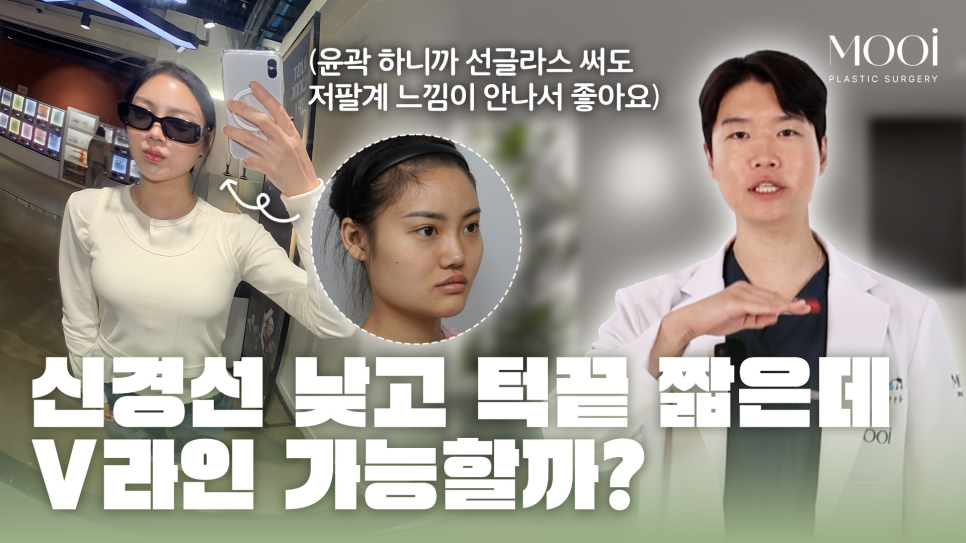
“I haven’t even gained weight, but from the side, it looks like I have a double chin.”
“I think I have a retruded chin. My chin is too short and lacks definition.”
“I want an egg-shaped V-line. Is that impossible with my chin?”
It is rare for someone seeking chin consultation to mention only one concern.
Many people feel that their chin is short and blunt, looks like a double chin from the side, and makes the lower part of their face look flat, with the empty space appearing larger.
To get straight to the point, a V-line for a short chin is not necessarily created by simply “shaving it down.” Rather, it is a type of facial contouring surgery that is completed naturally when it is safely designed according to the position of your bones and nerves.
Today, at MOOi Plastic Surgery Clinic✨, known for unique beauty, we will honestly explain the criteria used to design a short-chin V-line.
Could I also have a retruded chin or double chin? — The real reason for a short chin
Many women in Korea have less-developed chins than they might expect.
That is why many people who visit us saying, “I have a retruded chin” or “I’m concerned about my double chin” turn out, after undergoing CT and X-ray examinations, to have a very short chin itself.
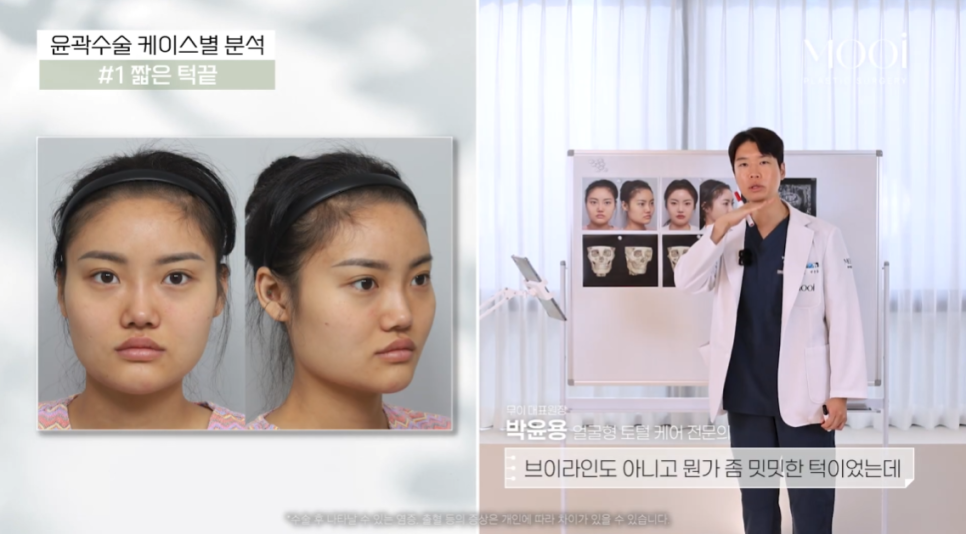
When the chin is short, rather than creating a V-line, it can give a somewhat flat impression and make the empty space in the lower face look larger.
That is why an accurate diagnosis comes first.
The direction of treatment can only be determined by examining the length and structure of the bones, rather than the visible soft tissue.
The position of the nerve, a hidden obstacle to a V-line (mental nerve)
The ideal surgery is to create a slim V-line without making the chin longer.
In practice, however, this can be difficult in many cases because of the position of the nerve—the inferior alveolar nerve.
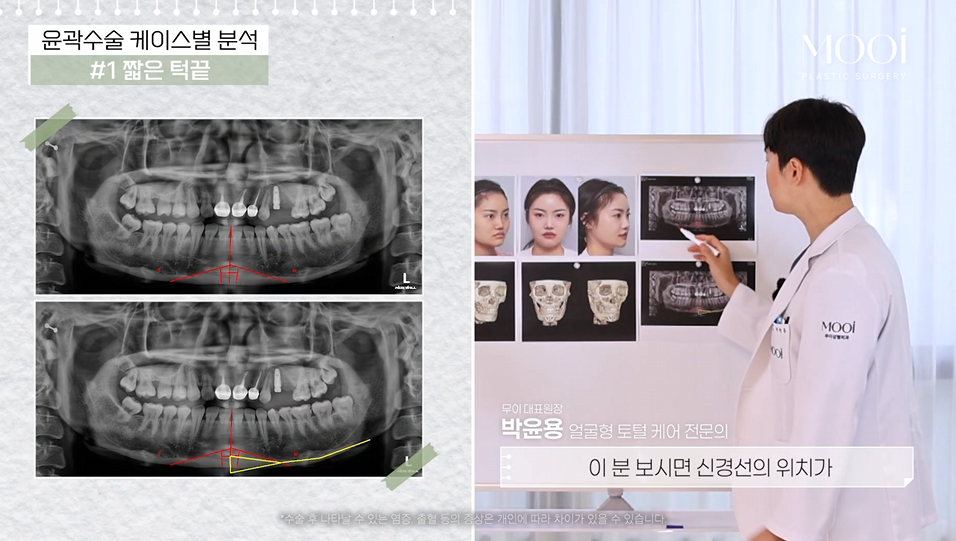
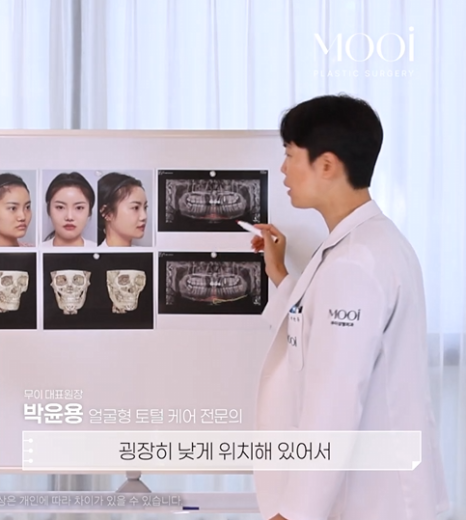
This patient’s X-ray showed that the nerve was positioned very low.
In such cases, trying to force a V-line higher may interfere with the path of the nerve, making it unsafe.
Therefore, the approach needs to be changed for patients like this.
The best option is to create a V-line while slightly increasing the apparent length of the chin.
In this patient’s case, the chin became slightly longer, the bluntness disappeared, and a sharp line was completed without an impression of excessive empty space.
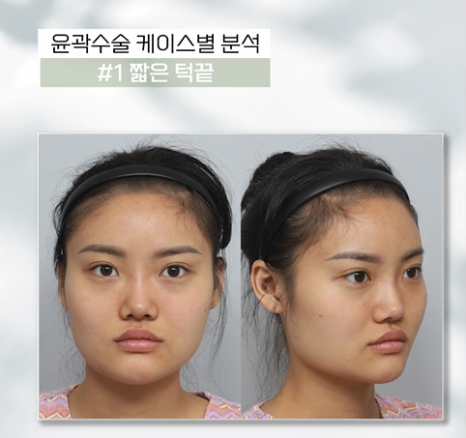
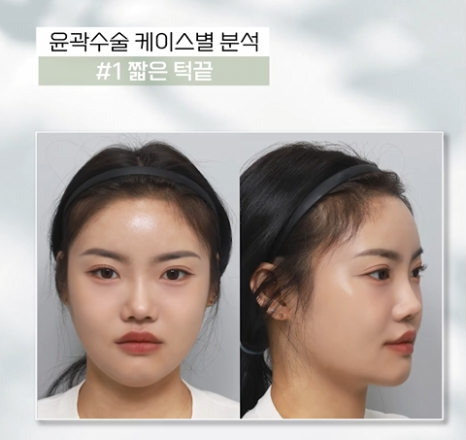
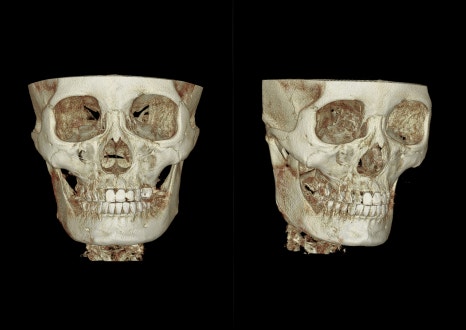
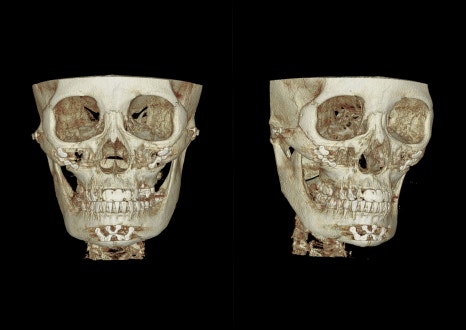
Before-and-after CT images of chin contouring surgery
Modified T-osteotomy — The diamond-shape principle
Then, how can the chin be safely lengthened and shaped into a V-line when the nerve is positioned low?
Let us explain the process step by step using an actual surgical design.
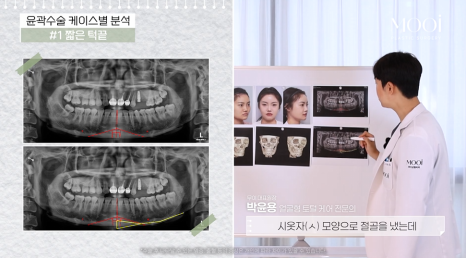
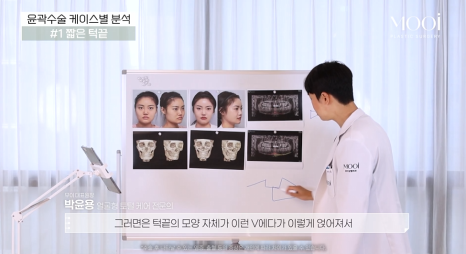
- S-shaped osteotomy
On the panoramic image, the bone is cut in an S shape at a safe location while avoiding the nerve.
- Removal of bone on both sides
The bone on both sides of the cut section is removed.
- Movement and fixation of the chin bone
The remaining triangular chin bone in the center is placed downward and fixed in position.
When the bone is placed downward in this way, the chin takes on a diamond shape, naturally extending the length of the chin.
This method is called a modified T-osteotomy.
It is the reason that even people with a low-positioned nerve may be able to create an attractive V-line while adjusting the length and avoiding the nerve.
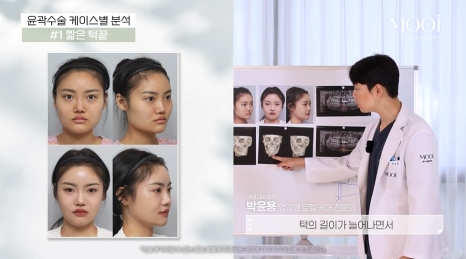
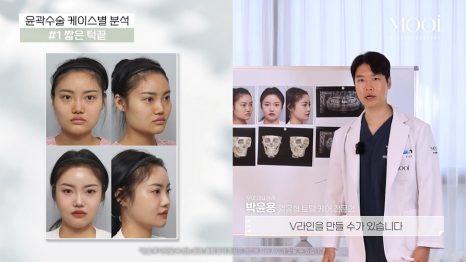
Is the gap created when the bone is moved downward okay?
Some people worry and ask, “What happens to the gap created in the middle when the bone is moved downward?”
You do not need to worry.
The small gap of approximately 1–2 mm that forms after surgery is naturally filled over time as the surrounding bone grows in.
It does not cause a functional or structural problem.
These people may be suitable candidates
-
People whose short, blunt chin makes the face look flat
-
People who look as if they have a double chin even though it is not caused by excess fat
-
People who have been told, “A V-line is difficult because you have a retruded chin”
-
People with a low-positioned nerve for whom a conventional V-line osteotomy requires caution
-
People who want a naturally refined line rather than an excessive change
However, there are points you should know
Because facial contouring surgery involves the bones, an accurate CT and X-ray diagnosis and confirmation of the nerve’s position must come first.
The possible range and method may vary depending on the nerve’s position, bone thickness, and the overall proportions of the face.
Therefore, the important thing is not “shaving off as much as possible,” but creating a safe surgical plan suited to your current bone structure.
Frequently asked questions (FAQ)
Q. If the nerve is positioned low, is V-line surgery completely impossible?
A. No, that is not the case.
In many cases, a safe V-line can be created with a modified T-osteotomy, which adjusts the length using an S-shaped osteotomy while avoiding the nerve.
However, the method may vary depending on the individual’s bone and nerve structure.
Q. How is this different from a retruded-chin implant (silicone)?
A. An implant fills out the volume toward the front and bottom by inserting a foreign material, while a modified T-osteotomy creates both length and contour by moving your own bone.
The approaches differ in that the latter refines the bone structure itself.
Q. Could the gap between the bones cause problems later?
A. A gap of approximately 1–2 mm is filled as the bone grows in over time, so it does not cause structural or functional problems and does not require concern.
Q. Is there anything I need to bring or have done for my consultation?
A. CT and X-ray imaging are essential.
Because the safe range of surgery can only be determined after checking the position of the nerve, we recommend starting with an accurate diagnosis.
In summary,
A natural V-line for a short chin begins not with “shaving off a lot,” but with “designing the procedure according to the nerve.”
If you are concerned that your short chin looks blunt or are worried about a double chin, do not make the decision on your own. We recommend creating a safe, personalized V-line transformation plan based on an accurate CT examination.
At MOOi Plastic Surgery Clinic, we design chin contouring surgery after checking not only the front view but also the side profile, lower-face proportions, and the position of the nerve, preserving safety while enhancing the contour.
MOOi
MOOi Plastic Surgery Clinic
Beauty like No Other
Just as MOOi (無二) means “one and only, not two,” MOOi Plastic Surgery Clinic designs your one-of-a-kind face.
🩷 Directions 🩷
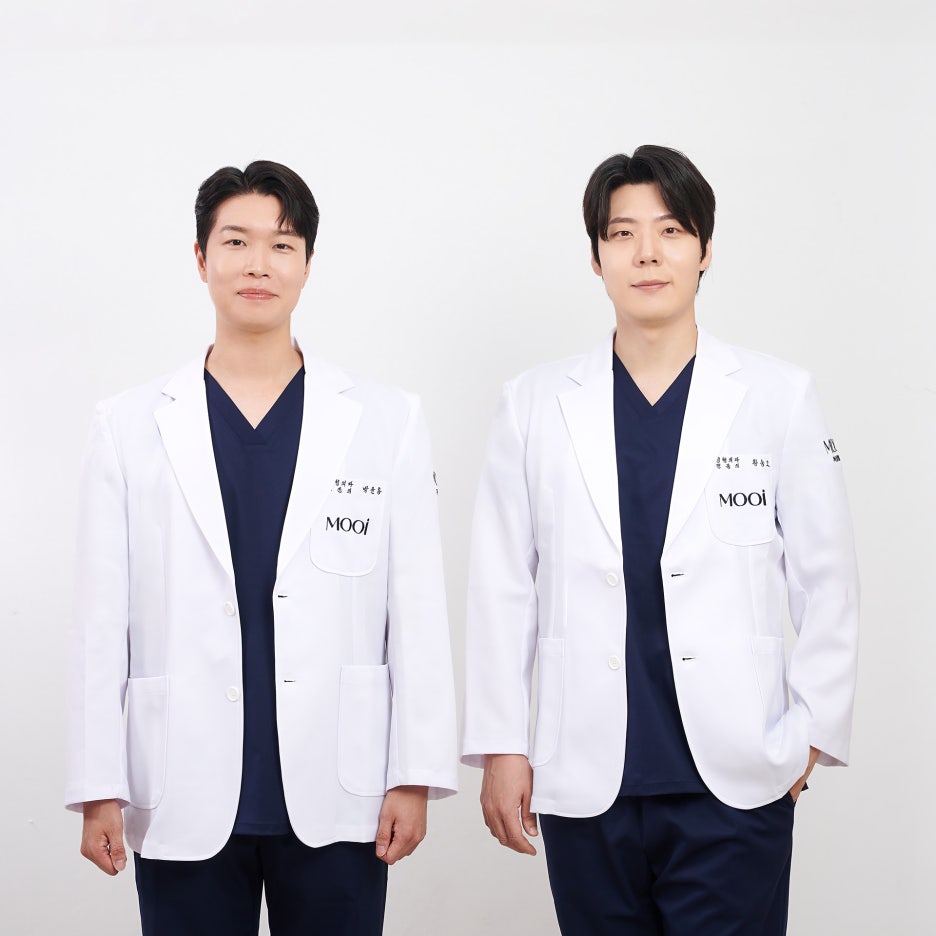
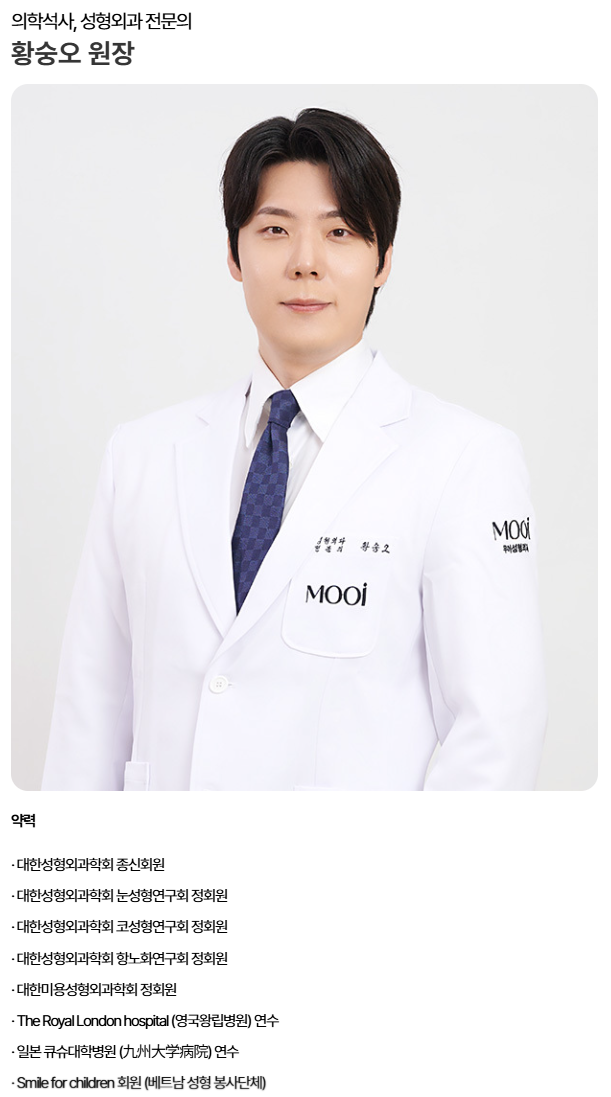
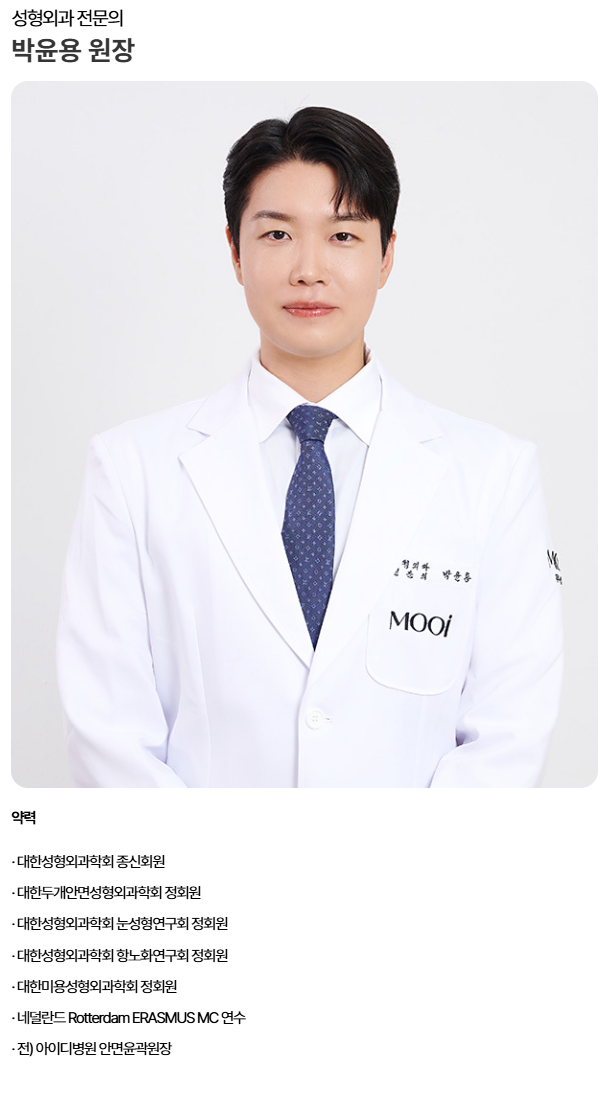
💖 Introduction to our chief surgeons 💖
💛 Go directly to our KakaoTalk channel 💛
🧡 Go directly to our website 🧡
#ShortChin #RetrudedChin #DoubleChin #ChinContouring #ChinSurgery #VLine #VLineFacialContouring #FacialContouringSurgery #ModifiedTOsteotomy #NervePosition #ChinLengthening #GangnamFacialContouring #GangnamChinSurgery #GangnamPlasticSurgery #MOOiPlasticSurgery #MOOiFacialContouring #RetrudedChinSurgery
This content was written directly by MOOi Plastic Surgery Clinic for informational purposes, to make information about procedures and surgery easier to understand, in compliance with Article 56, Paragraph 1 of the Medical Service Act. Because all procedures and surgeries may vary between individuals and may involve side effects, we strongly recommend consulting with your medical professional before proceeding.