When looking into zygoma reduction or square jaw surgery, many people hesitate at least once because of the concern about “sagging.”
It is only natural to worry, “If the bone is reduced, won’t the soft tissue in that area sag?”
Let me start with some reassuring information:
Sagging can be sufficiently reduced through the surgical technique used and several forms of care.
These are findings we confirmed by directly analyzing before-and-after surgical images with AI and publishing the results in a research paper. (Published in the international journal PRS Global Open)
So today, MOOi Plastic Surgery Clinic will address, one by one, whether the face really sags after zygoma reduction or square jaw surgery, how sagging can be reduced, and what the actual risks are—concerns many people have.
Is Facial Contouring Surgery Dangerous? Why Might It Feel That Way?
Because facial contouring surgery involves the bones, it can naturally feel “scary” or “dangerous.”
However, facial contouring surgery is performed under general anesthesia,
with an anesthesiologist monitoring and stabilizing the patient’s overall condition, including breathing.
From the surgeon’s perspective, the structure we take particular care to protect is the “nerve pathway.”
There are not many other elements that require extensive caution,
so if the nerves are properly protected during the procedure,
surgery can be performed while reducing potential risks and without making the operating time excessively long.
Of course, no surgery can be said to have absolutely no risks,
so an accurate diagnosis and consultation should come first.
Does Facial Contouring Surgery Cause Sagging? We Confirmed It Through Research
Many people are very concerned that facial contouring surgery will make their face sag.
As a basic principle, we do not believe that facial contouring surgery itself causes the face to sag.
This is because we minimize dissection during surgery
and preserve as much as possible the “retaining ligaments” that help maintain the shape of the face.
For this reason, we tend to explain the change as being closer to a “shift in volume” than to “sagging.”
Even so, because many people remain concerned,
we directly wrote and reviewed a research paper comparing before-and-after images using AI.
This study used AI, a current topic of interest, to analyze before-and-after surgical photographs and objectively examine whether sagging had actually occurred.
The findings were published in the international journal PRS Global Open.
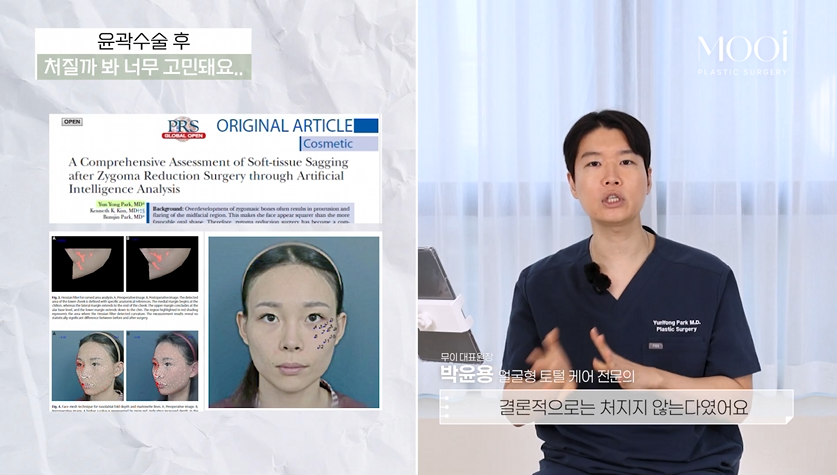
PRS Global Open “A Comprehensive Assessment of Soft-tissue Sagging after Zygoma Reduction Surgery through AI Analysis”
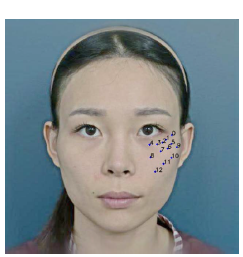
The analysis used AI to mark multiple reference points on the face and was conducted using four methods.
The researchers compared the face before and after surgery, including whether the nasolabial folds became deeper and whether the contours of the lower face increased.
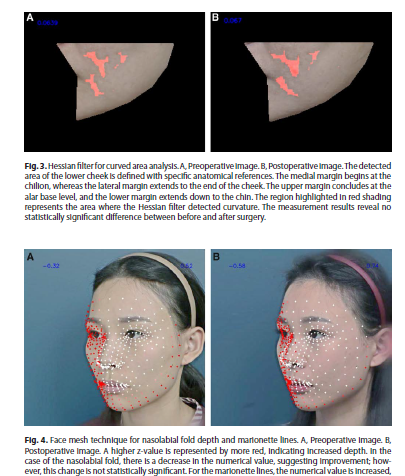
Lower-cheek curvature analysis (Hessian filter)—comparison before (A) and after (B) surgery; nasolabial fold and marionette line (face mesh) analysis—comparison before (A) and after (B) surgery
Ultimately, no statistically significant difference in sagging was identified before and after surgery.
The curvature of the lower cheeks and the depth of the nasolabial folds and marionette lines
were all determined not to represent “meaningful sagging.”
What Are the Two Situations in Which Sagging May Still Be Felt?
However, after performing many surgeries,
we have clearly observed certain tendencies among people who feel that their face has sagged.
There are two main factors.
The first is “age.”
A rubber band is an easy comparison.
A new rubber band quickly returns to its original shape when released, while an old rubber band has less elasticity.
People in their 20s and 30s generally have good skin elasticity, so even when the bones are reduced, the skin tends to naturally follow inward and recover.
However, when a person is somewhat older and has reduced elasticity, they may feel that the face has sagged.
The second is “facial fat.”
When there is a larger amount of fat on the face, it is more affected by gravity,
which may result in a somewhat greater tendency toward sagging.
Why More People in Their 40s and 50s Are Receiving Facial Contouring Surgery
Even so, facial contouring surgery has been increasing among people in their 40s and 50s in recent years.
One reason is that there are now various options that can be used together, such as Ulthera, Thermage, lifting procedures, and thread lifting.
Another reason is that even if a person wants to undergo a lifting procedure alone,
prominent zygomas or jaw bones may become more noticeable when the tissue is pulled.
For this reason, some people undergo facial contouring first, while others have facial contouring and lifting performed together.
The idea that “facial contouring surgery should not be performed because it causes sagging” is now closer to an outdated trend.
How to Undergo Facial Contouring Surgery While Preventing Sagging
If you have a relatively large amount of facial fat, dieting may help, but
combining the procedure with liposuction or, in the case of the zygomas, removing buccal fat (deep cheek fat)
may help reduce the tendency toward sagging.
Because it is generally advantageous for the face to become smaller overall,
designing a plan that reduces both the facial bones and fat
can also be helpful in terms of satisfaction.
Of course, this combination varies depending on each individual’s condition.
Facial Contouring Surgery: A Procedure That Requires Careful Consideration Before Deciding
Facial contouring surgery is a procedure that can take a long time to consider before making a decision.
People may continue to hesitate until they decide to proceed,
and may even feel relieved if they decide not to have surgery.
In fact, many people make their decision after considering it for several years.
It is also true that the recovery period can feel burdensome.
However, swelling gradually subsides from immediately after surgery through one month, three months, six months, and one year,
and the facial contours gradually settle into place.
Because this is a procedure that can bring significant changes, we recommend first confirming sufficient information and safety
and deciding at a time that is right for you.
We Recommend a Consultation If You Have These Concerns
-
You have general concerns about the risks of facial contouring surgery
-
You are worried about facial sagging after surgery
-
You are considering facial contouring surgery in your 40s or 50s
-
You want to refine your facial contours while considering both the facial bones and fat
Frequently Asked Questions (FAQ)
Q. Is facial contouring surgery dangerous?
A. Because it involves the bones, it may feel intimidating in a general sense.
Under general anesthesia, an anesthesiologist monitors the patient’s overall condition, including breathing,
and the procedure is performed while protecting the nerve pathways.
However, no surgery is completely without risk, so an accurate diagnosis and thorough consultation should come first.
Q. Will my face sag if I undergo facial contouring surgery?
A. The procedure is performed by minimizing dissection and preserving the retaining ligaments.
In a research paper analyzing before-and-after facial contouring images using AI, no statistically significant difference in sagging was identified.
However, individual differences may occur depending on age and the amount of facial fat.
Q. Can people in their 40s and 50s also undergo facial contouring surgery?
A. Recently, many people in their 40s and 50s have undergone the procedure together with lifting procedures and other treatments.
When the bones are prominent, lifting alone may have limitations, so facial contouring may also be considered.
Q. What can I do if I am concerned about sagging?
A. If there is a large amount of facial fat, liposuction or buccal fat removal may be considered together.
It is important to create a plan that takes age, skin elasticity, and the amount of fat into account as a whole.
In summary,
concerns about the risks and sagging associated with facial contouring surgery are often based on general uncertainty.
We proceed while minimizing the tendency toward sagging by ensuring thorough general-anesthesia management and nerve protection, using minimal dissection and preserving the retaining ligaments, and considering fat removal when necessary.
Facial contouring surgery is a procedure in which the effects are visible, and it is considered one of the procedures with very high patient satisfaction.
However, results and recovery may vary depending on individual factors such as age, skin elasticity, and the amount of facial fat.
Rather than making a decision on your own, we recommend consulting thoroughly with a specialist based on an accurate diagnosis before deciding.
MOOi
MOOi Plastic Surgery Clinic
Beauty like No Other
Just as MOOi (無二) means “one and only, not two,”
MOOi Plastic Surgery Clinic designs your one-of-a-kind face.
🩷 Directions 🩷
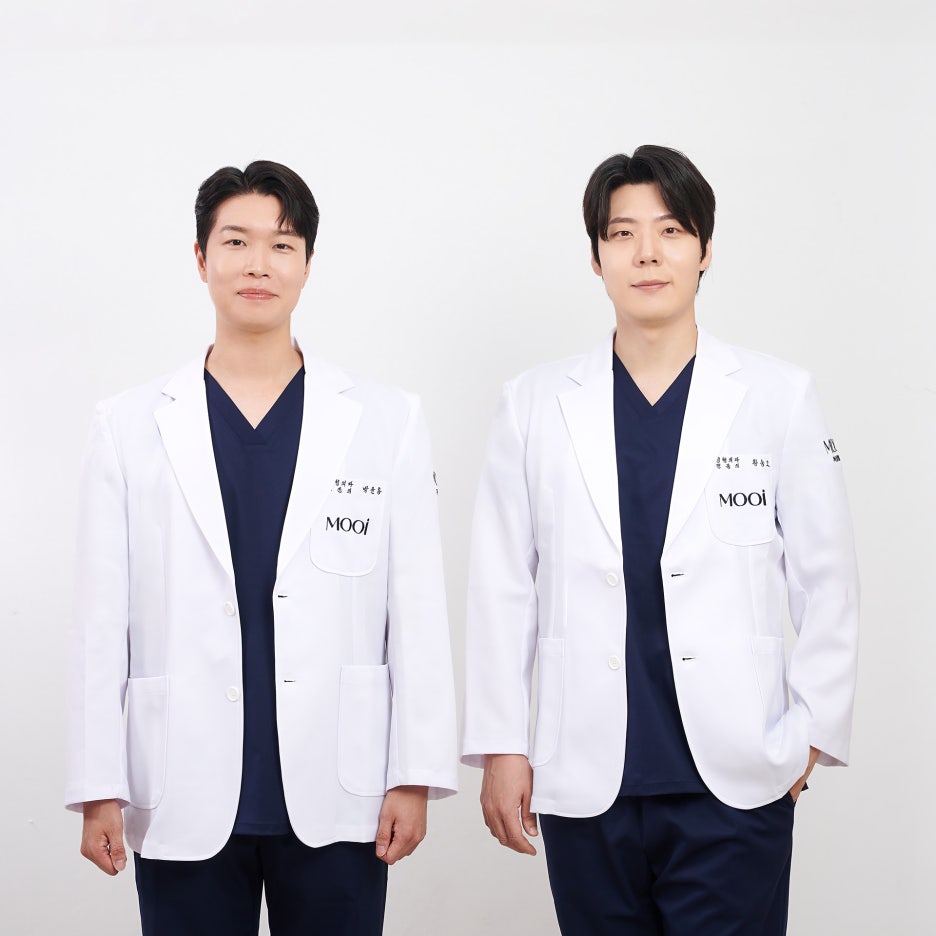
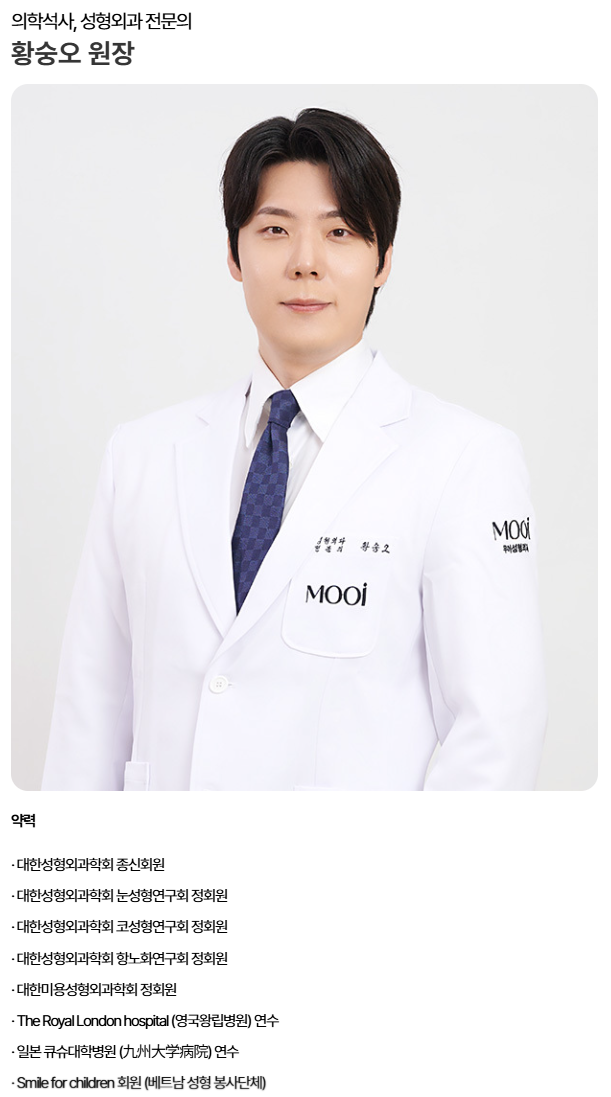
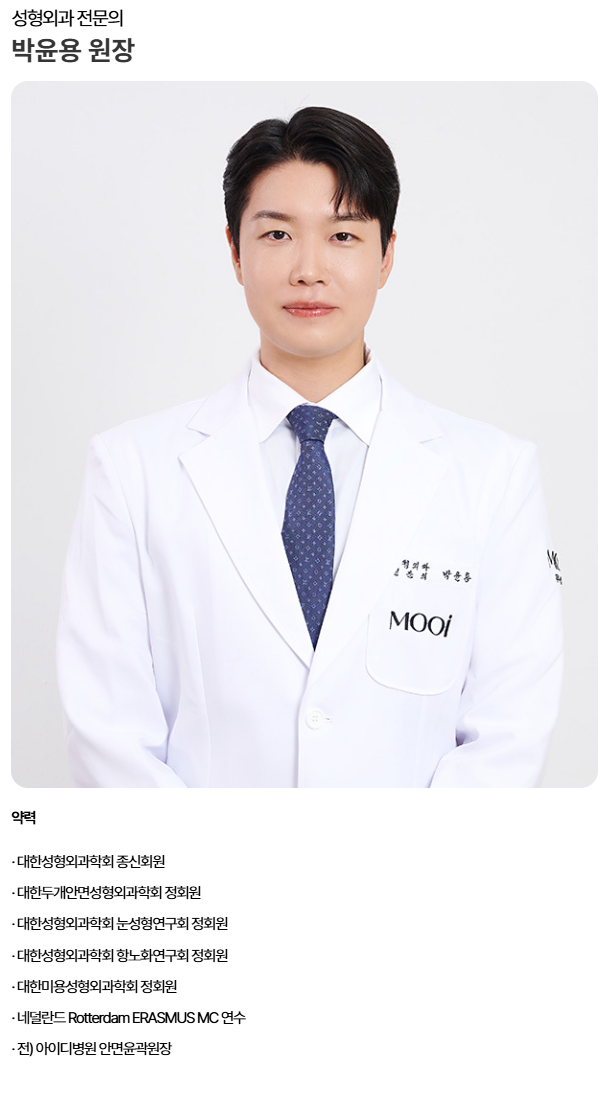
💖 Introduction to Our Lead Surgeons 💖
💛 Go Directly to the KakaoTalk Channel 💛
🧡 Go Directly to the Website 🧡

#ZygomaReduction #SquareJawSurgery #SaggingAfterZygomaReduction #SaggingAfterFacialContouring #FacialSagging #SaggingAfterSquareJawSurgery #FacialContouringSideEffects #FacialContouringSurgery #GangnamFacialContouring #FacialContouringInYour40s #MOOiPlasticSurgeryClinic
This content was written directly by MOOi Plastic Surgery Clinic for informational purposes, to make information related to procedures and surgeries easier to understand, in compliance with Article 56, Paragraph 1 of the Medical Service Act. All procedures and surgeries may involve individual differences and side effects, so we strongly recommend consulting with the medical professional in charge before proceeding.