The Importance of Eye Surgery
There are many types of eye surgery.
Double eyelid surgery, ptosis correction, front canthoplasty, rear canthoplasty, lower canthoplasty, under-eye fat repositioning, upper blepharoplasty, lower blepharoplasty, and more.
All of them change the shape of the eyes and have the effect of correcting the eye shape.
Double eyelid surgery - makes the overall outline of the eyes feel larger.
Ptosis correction - increases the amount of the pupil that is exposed, making the eyes look clearer.
Front canthoplasty - makes the front part of the double eyelid line, which is covered by the epicanthic fold, appear larger and makes the front part of the eyes look longer.
Rear canthoplasty - enlarges the back of the eyes, making them look bigger and the outer corners appear lower.
Lower canthoplasty - lowers the area under the eyes into a round shape, making the eyes look bigger or the eye shape look lower.
Under-eye fat repositioning - removes bulging fat under the eyes, helping improve dark circles.
Upper blepharoplasty - removes sagging upper eyelid skin so the double eyelid becomes visible and the field of vision improves.
Lower blepharoplasty - removes sagging skin and fat from the lower eyelids, creating a younger-looking effect.
Although there are many kinds of eye surgery, this time let’s talk about what you may not have known about front canthoplasty! ㅎ
To make the front part of the double eyelid line, hidden by the epicanthic fold, visible in front canthoplasty,
of course the epicanthic fold must be removed, but doing so can cause problems such as exposing too much of the lacrimal caruncle unintentionally, making the eyes look too close together, or leaving noticeable front canthoplasty scars.
Then, because the epicanthic fold hides the front part of the eyes and makes them look sharp,
but you do not want the inner corner of the eye to open up because you dislike having the lacrimal caruncle visible,
you may wonder whether it is possible to remove only the pointed-looking epicanthic fold.
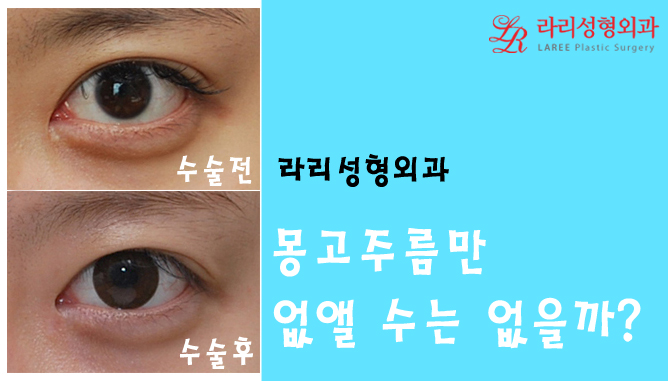
As shown in the photo above, even though front canthoplasty had been performed before, the red tissue of the lacrimal caruncle is still highly visible, the epicanthic fold remains, and there are also scars left behind. However, after surgery, the epicanthic fold was removed while the exposure of the lacrimal caruncle remained the same, and the scars also improved.
This concept is exactly about removing only the epicanthic fold while preventing exposure of the lacrimal caruncle, without further opening the eye corner.
Front canthoplasty without opening
.
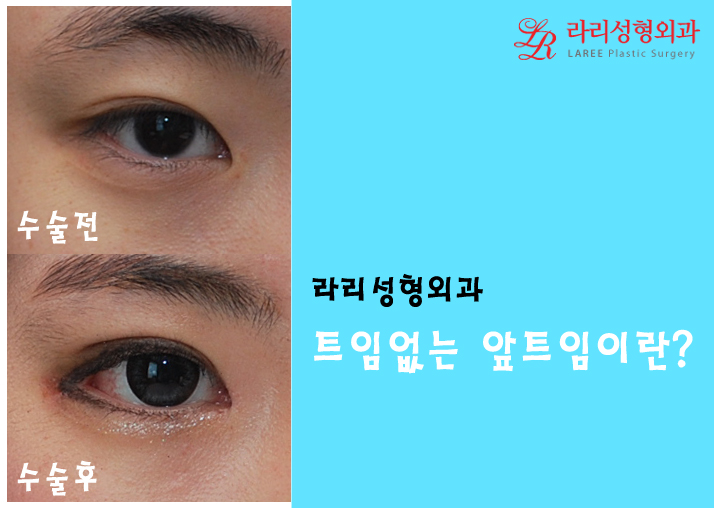
Based on thousands of eye surgery cases, this is a special front canthoplasty method that was designed and completed directly by Dr. Kim Jeong-il of Lari Plastic Surgery.
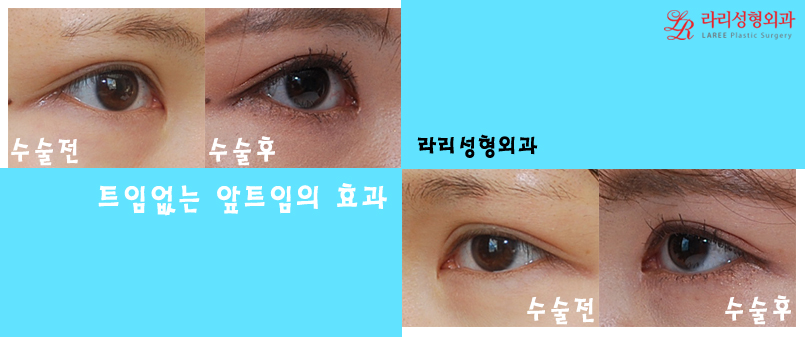
The pre- and post-operative features of front canthoplasty without opening are
in eyes with a severe epicanthic fold, it minimizes exposure of the red tissue at the inner corner of the eye, the lacrimal caruncle,
while removing only the sharply pointed epicanthic fold at the inner corner of the eye.
It shows top-level skill in front canthoplasty.
The biggest reason for developing front canthoplasty without opening was that among those who wanted front canthoplasty,
there were quite a few people who said,
"I’m afraid my eyes will end up too close together like Mr. Shin-so-and-so, so I’m hesitant to have front canthoplasty that makes the lacrimal caruncle visible,
but I want to get rid of the sharp-looking epicanthic fold at the inner corner of my eyes!"
people who visited Lari Plastic Surgery
.
Dr. Kim Jeong-il of Lari Plastic Surgery analyzed thousands of eye surgeries and front canthoplasty before-and-after photos, and individually examined the epicanthic fold characteristics of the people he had operated on.
He devised a special front canthoplasty design that can remove only the epicanthic fold without making the eye opening wider so that the lacrimal caruncle becomes more visible.
The birth of front canthoplasty without opening!
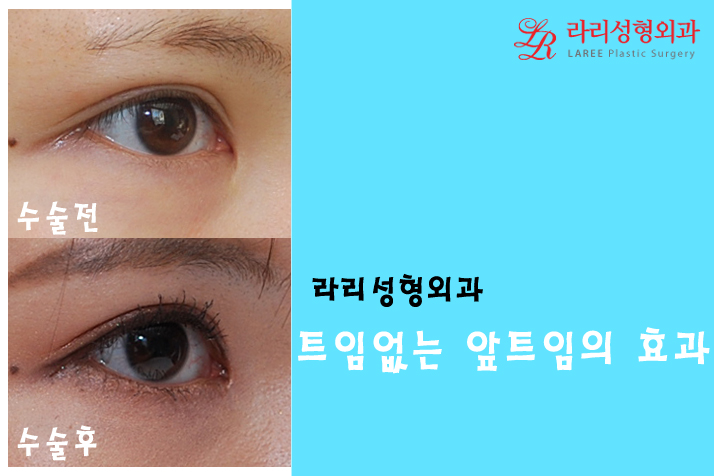
Looking at the before and after results, the amount of lacrimal caruncle exposure before surgery and after surgery is almost the same,
and only the shape of the epicanthic fold disappears, making the previously sharp-looking eye shape look softer.
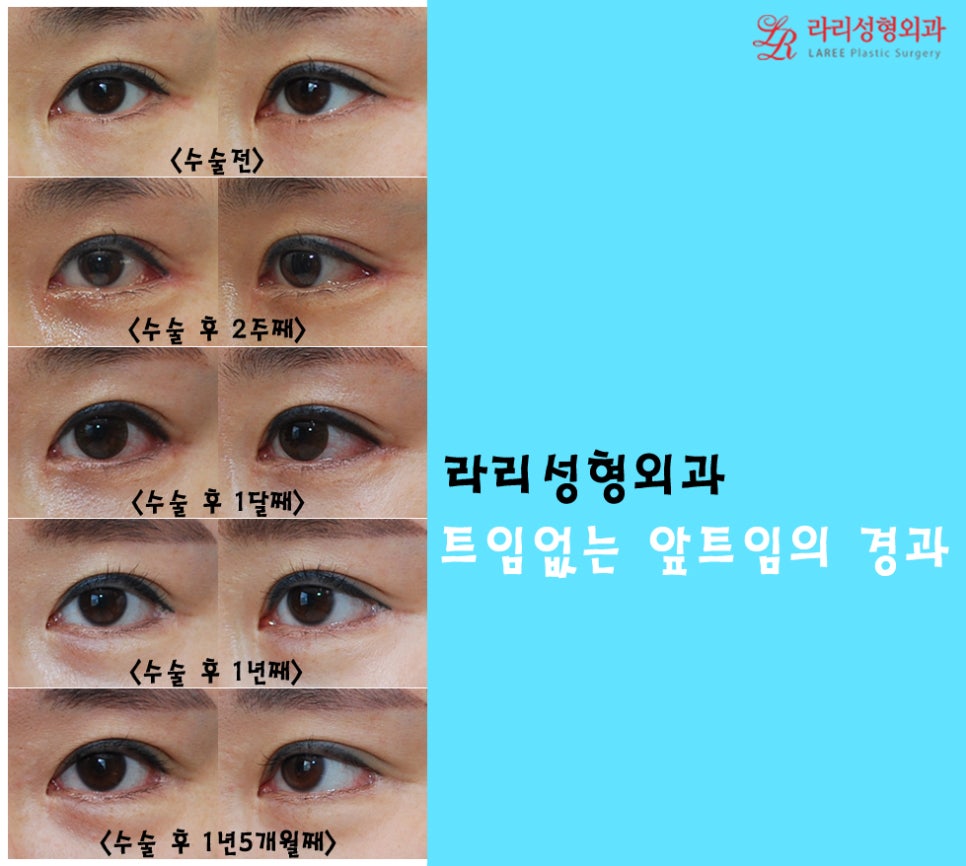
When only front canthoplasty is performed, there is almost no tissue in the front part of the eye that would swell after surgery, unlike upper eyelid surgery or rear canthoplasty, so there is little swelling and not much bruising in many cases.
Therefore, stitches are removed after one week, and as shown in the photo above, normal daily life is possible after two weeks.
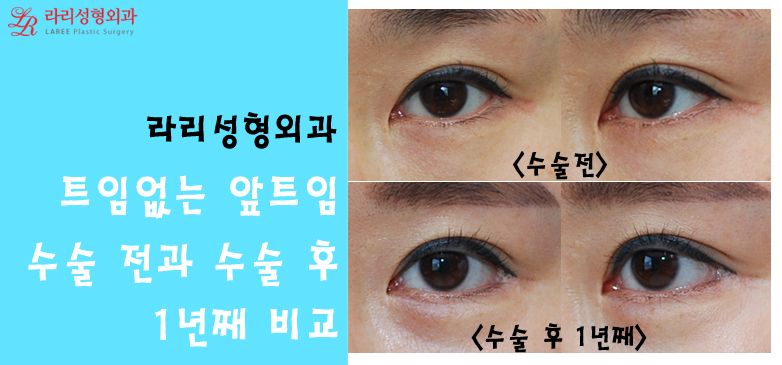
Lastly, if you look at the long-term follow-up photos taken more than one year after front canthoplasty without opening, you can confirm that, unlike double eyelid surgery or rear canthoplasty, there is no loosening or tissue deformation such as skin changes, the epicanthic fold has not recurred, and the results are being maintained well.