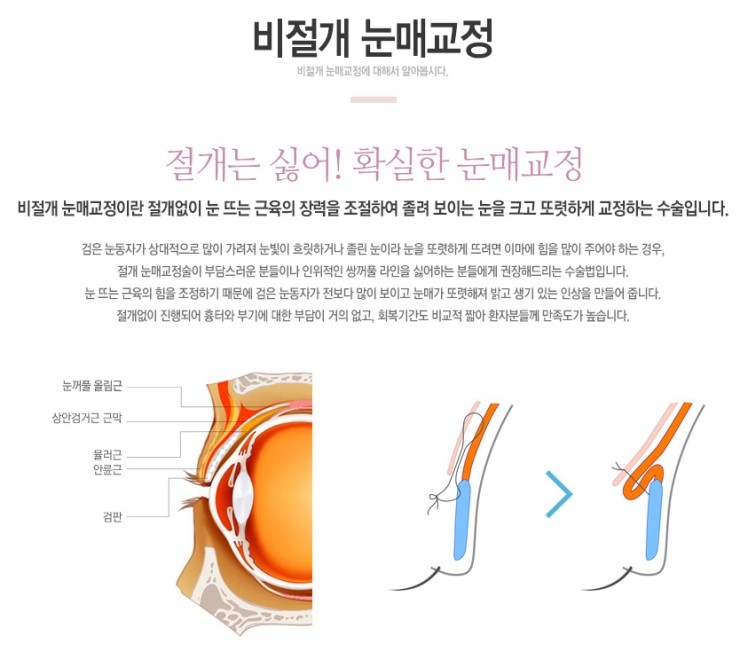
Incisional eye correction is performed by making an incision and directly viewing the Muller muscle or levator palpebrae superioris muscle that needs to be tightened, so the correction amount can be adjusted relatively accurately. On the other hand, the recovery period is long, and an incision scar may remain on the outer skin. In contrast, non-incisional eye correction does not involve an incision, so there is no scar on the outer skin and the recovery period is relatively short. However, because the eyelid is turned over and the Muller muscle is folded through the conjunctiva, it is difficult to precisely adjust the degree of eye correction.
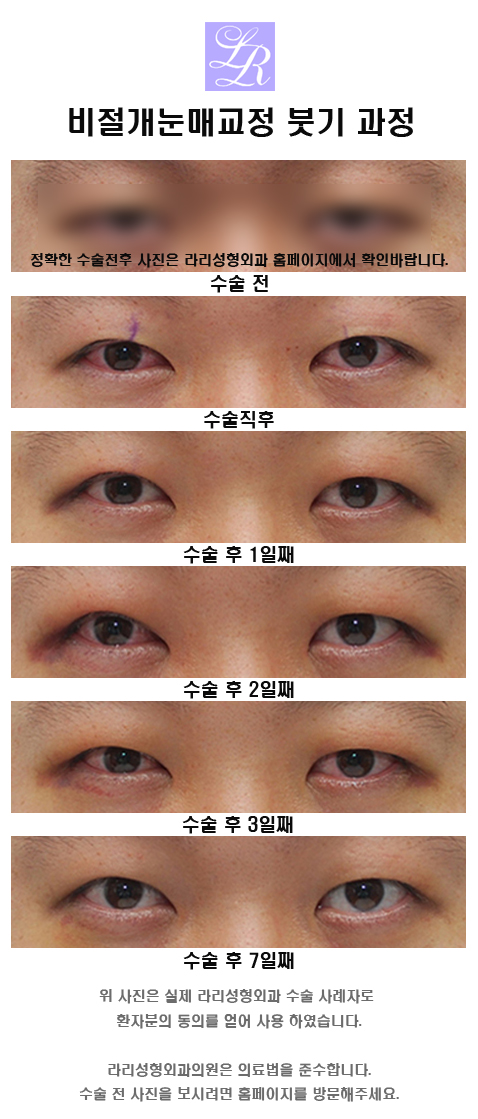
Because many people feel burdened by incisions, demand for non-incisional eye correction is also gradually increasing. This is likely because the recovery period is shorter than with incisional surgery. Looking at reviews that explain how much swelling there is after non-incisional eye correction, many cases show less swelling and a faster recovery rate compared to incisional surgery.
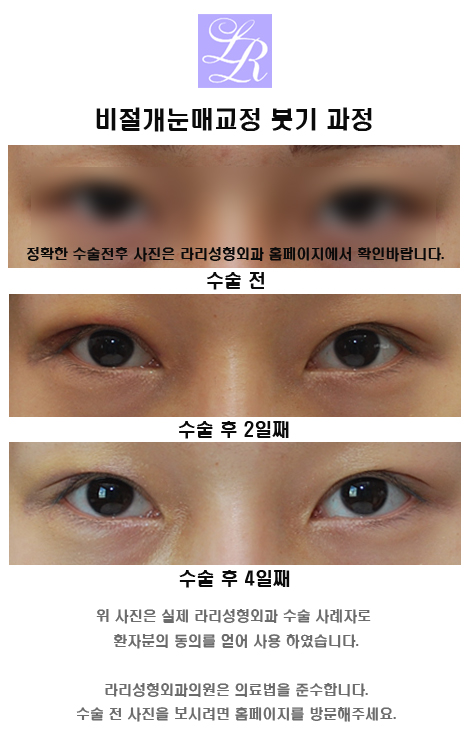
In fact, if you look at review photos saying that swelling after non-incisional eye correction is not severe and think, “I’ll probably turn out like that too,” that would be a big mistake. Even if the same surgery is performed, swelling or bruising can be severe depending on the individual. It is best to think of non-incisional eye correction reviews as a reference for how someone else’s recovery progressed.
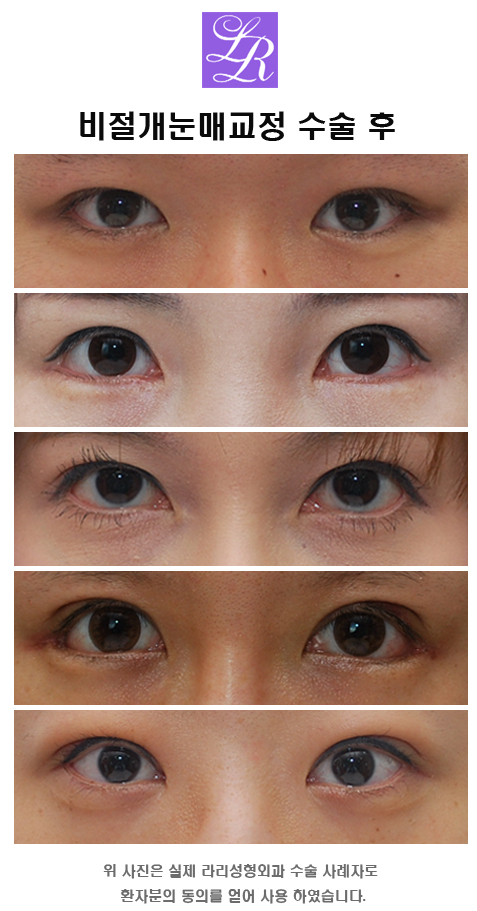
One thing that people who have undergone non-incisional eye correction consistently say is that their impression no longer looks sleepy and their eyes look clearer. It can give people you meet the impression that you are more sharp. Another side effect of non-incisional eye correction is that the eyes appear larger, and they can look even bigger when wearing circle lenses.
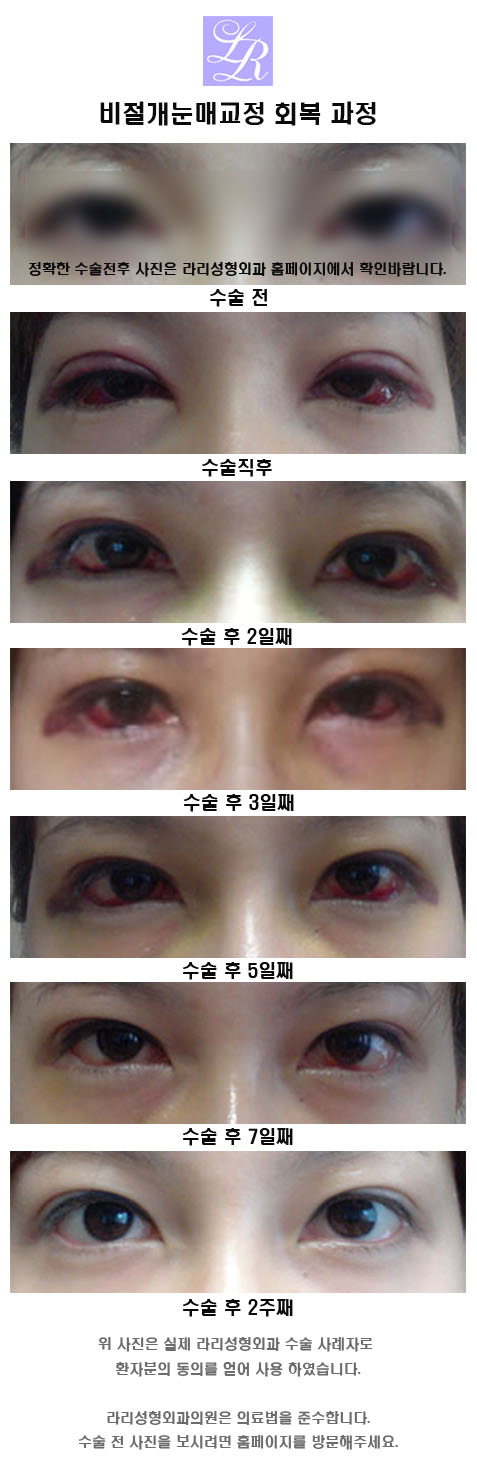
The effects of non-incisional eye correction can also be seen at a glance in numerous reviews of non-incisional eye correction. After reading these reviews thoroughly, the choice is yours.