Ptosis correction is a surgery that corrects the condition when you do not have enough strength to open your eyes. There are incisional ptosis correction and non-incisional ptosis correction. Incisional ptosis correction involves making an incision in the skin while the eyes are closed, dissecting the muscle that opens the eyes, and directly strengthening the weakened muscle while viewing it. Non-incisional ptosis correction, on the other hand, strengthens the weakened muscle by everting the eyelid and pulling on the conjunctiva, since the weakened muscle is almost attached to the inner conjunctiva of the eyelid.
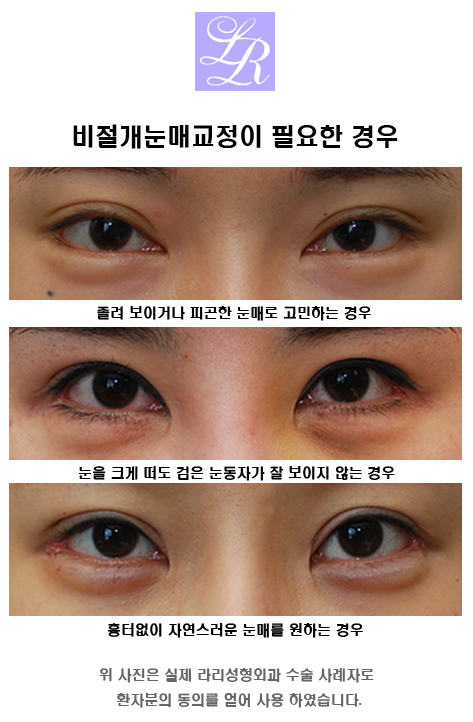
The advantage of non-incisional ptosis correction is that because there is no direct incision, even if swelling occurs, it usually subsides within one week. However, since the surgery is performed by turning the eyelid inside out, it can be quite uncomfortable for the patient. In contrast, incisional ptosis correction involves an incision, so there is bleeding and postoperative swelling takes more than a week to improve. But because the ptosis correction is performed while directly confirming the weakened muscle, more accurate correction is possible. In any cosmetic surgery, the simpler the procedure, the lower the effectiveness or precision tends to be.
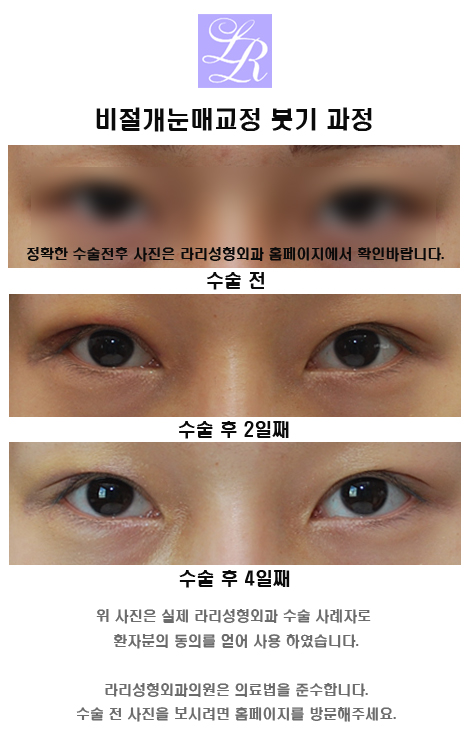
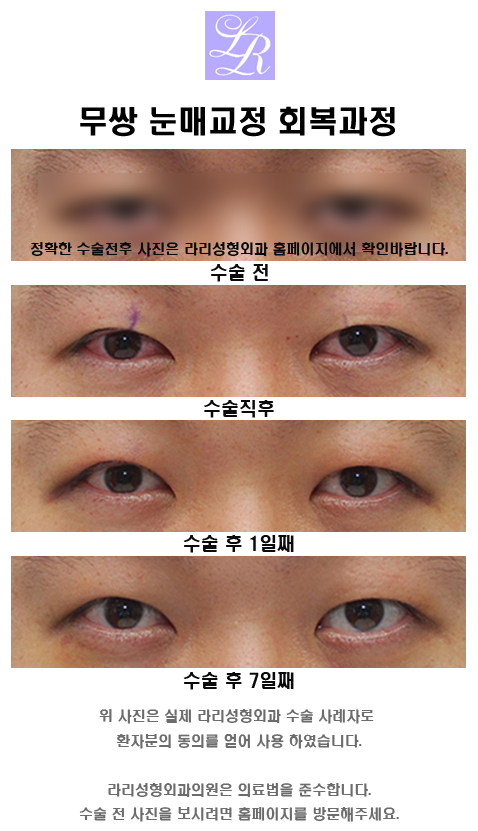
Also, if you already have double eyelids but the strength to open your eyes is somewhat weak, non-incisional ptosis correction can be effective. It is also very useful for monolid ptosis, allowing the eyes to look clearer while keeping the monolid without creating double eyelids. Since there are no double eyelids, ptosis correction can be done even more naturally.
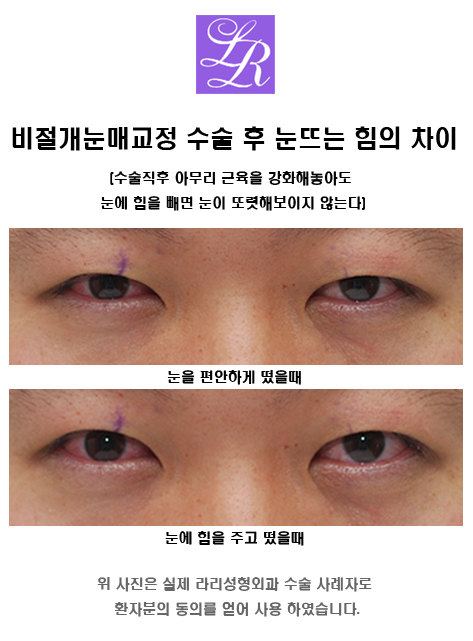
Non-incisional ptosis correction coming undone does not actually happen very often. In most cases, a person becomes used to having eyes that open comfortably after ptosis correction, and over time they unconsciously relax the effort more and more, leading them to think it has come undone. If you look in the mirror and practice opening your eyes wide, you can tell whether it has actually come undone or whether you are simply using less strength to open them. If you still cannot open them even when trying to open them wide in the mirror, then it has come undone. If you can open them wide enough that almost the entire dark pupil is visible, then it has not come undone and you have simply relaxed the muscles unconsciously.
Now that we have looked in detail at the pros and cons of non-incisional ptosis correction, as well as loosening, only your wise choice remains!