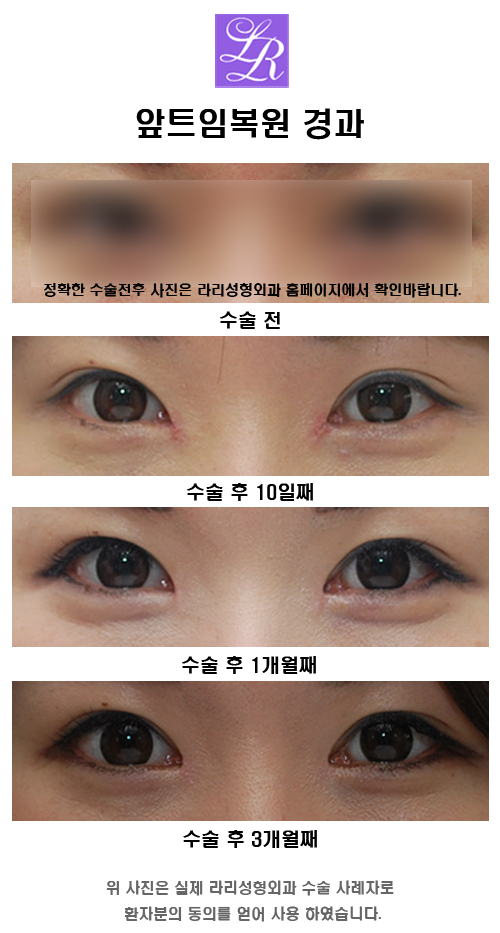
Medial canthoplasty is often performed on its own, but in most cases it is done together with double eyelid surgery. It may be done because the distance between the eyes looks wide and the eyes appear cramped, but it is also performed to change the double eyelid line from an in-line to an in-out line or an out line. If the procedure is done too aggressively or the design is incorrect, a lot of scarring can remain. Even if the design is very precise, if the Mongolian fold that is removed during medial canthoplasty is itself very thick, a sunken scar may remain.
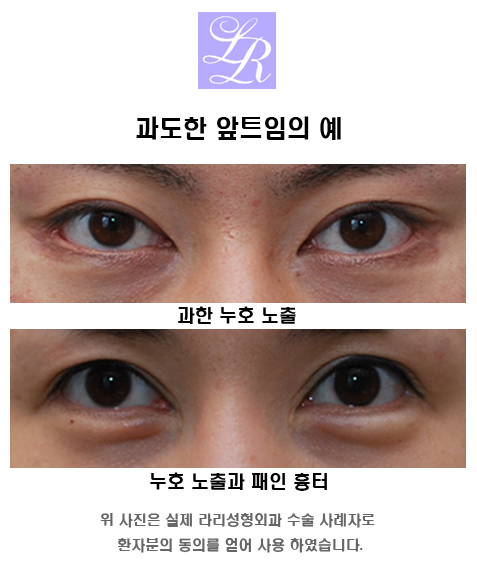
If scars like this remain after medial canthoplasty, it is natural to worry a lot. Unlike scars from other surgeries, post-medial-canthoplasty scars are not two-dimensional scars but three-dimensional, sunken scars, so they are often hard to cover even with makeup and are easily noticeable. Since people around you may point them out, they can become an even greater source of stress.
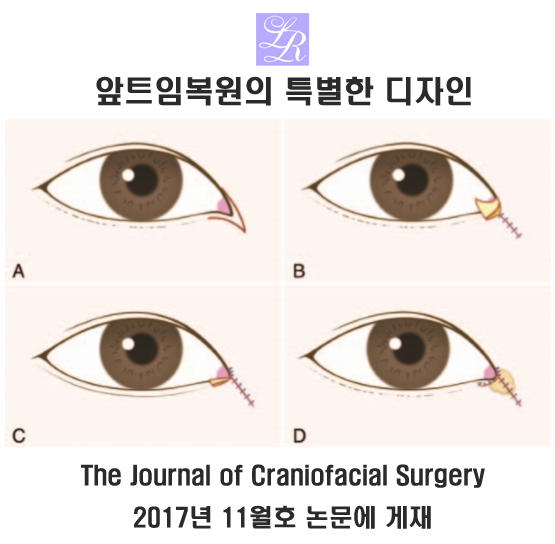
When the scarring after medial canthoplasty is severe, people eventually begin to consider revision surgery or restoration. Medial canthoplasty restoration is a method of reconstructing the removed Mongolian fold using tissue around the inner corner of the eye, and it can be effective when the eyes look too close together after medial canthoplasty or when a sunken scar is visible.
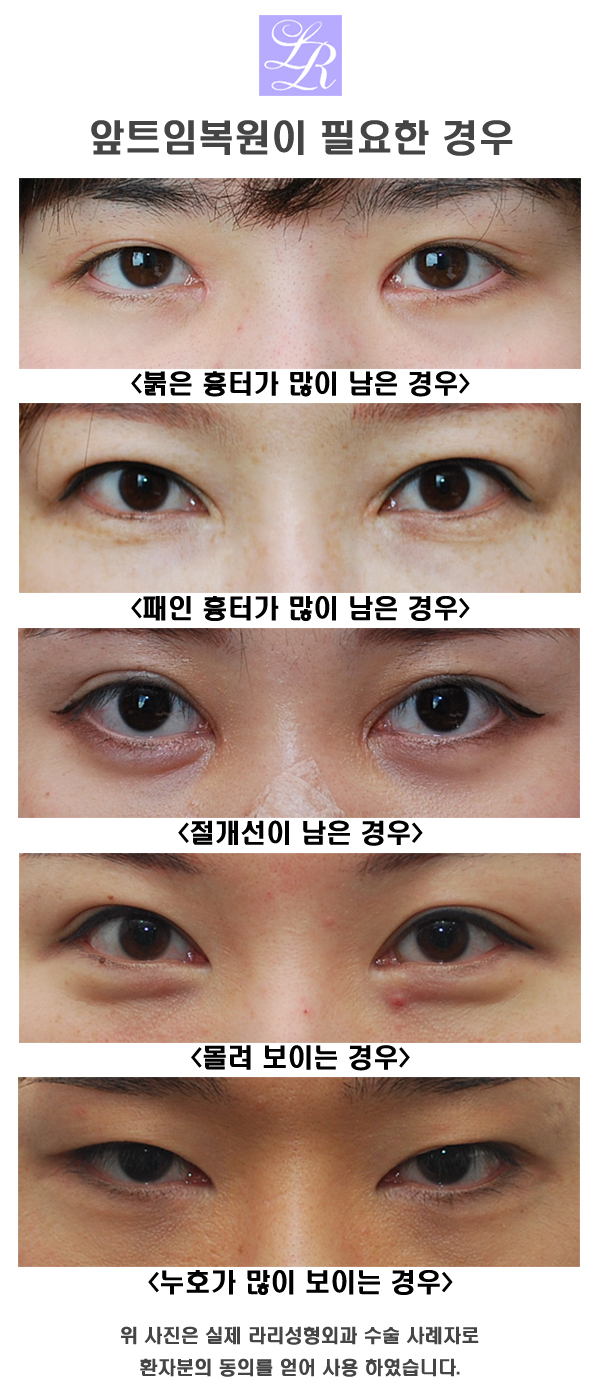
Of course, the first medial canthoplasty should be performed with precision so that this kind of restoration is not needed. Also, because doctors are human too, if unexpected scarring or side effects occur, it is advantageous for the patient in many ways to undergo surgery with a board-certified plastic surgeon who knows how to handle such problems well.