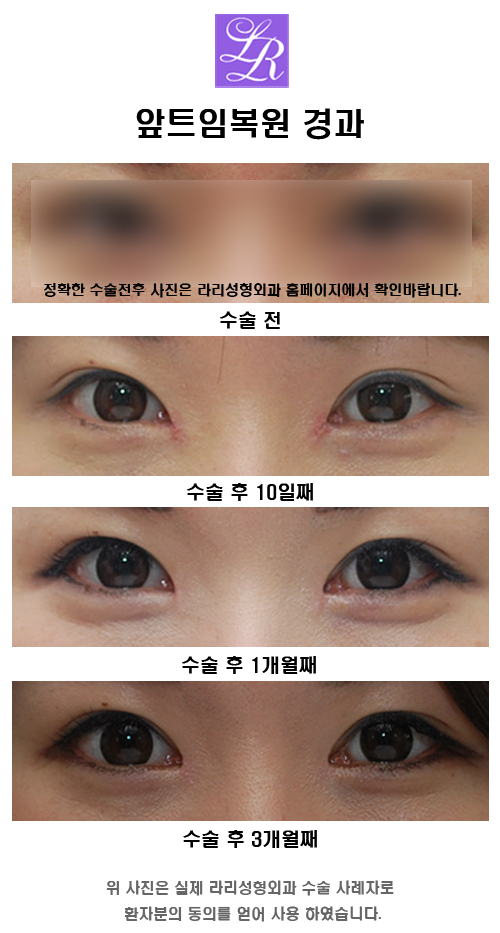
Recently, plastic surgery is something many people have wondered about at least once, and many actually go through with it. In particular, eye surgery is the most basic of all cosmetic surgeries, so there are many doctors and, correspondingly, many people who undergo the procedure.
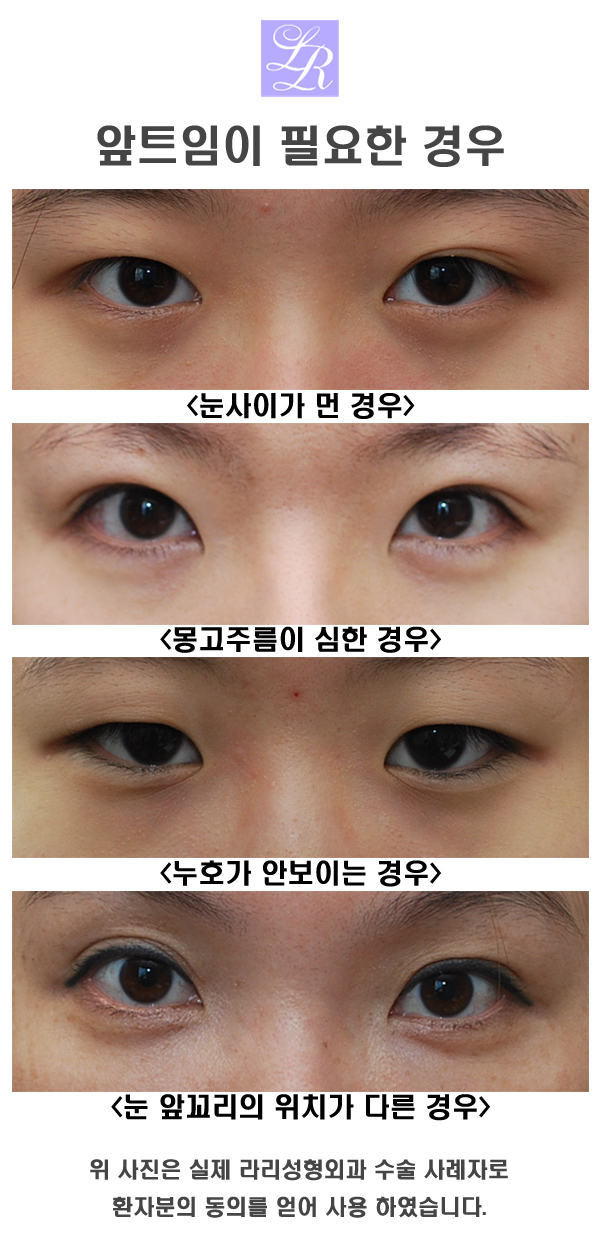
Among eye surgeries, double eyelid surgery and epicanthoplasty are often performed during school years. In cases of severe epicanthic folds, if epicanthoplasty is done too extensively to improve a cramped-looking impression, it often leaves noticeable tear duct exposure or epicanthoplasty scars. The reason epicanthoplasty scars are a problem is that the epicanthic fold is made up of three-dimensional skin, muscle, and part of the medial canthal ligament, so the scar is not two-dimensional but three-dimensional. In other words, because it is not a flat linear scar but a three-dimensional depressed scar, it cannot be hidden with makeup and is highly visible.
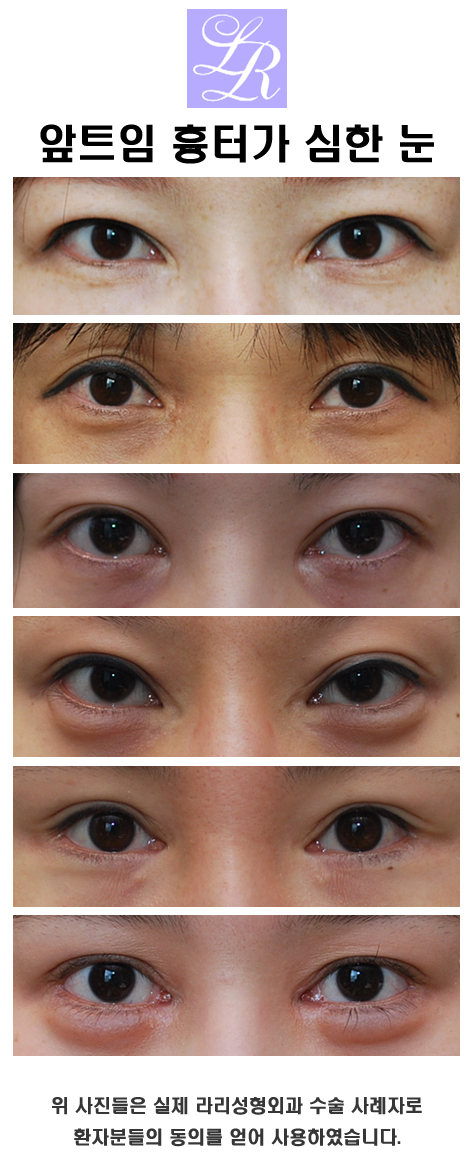
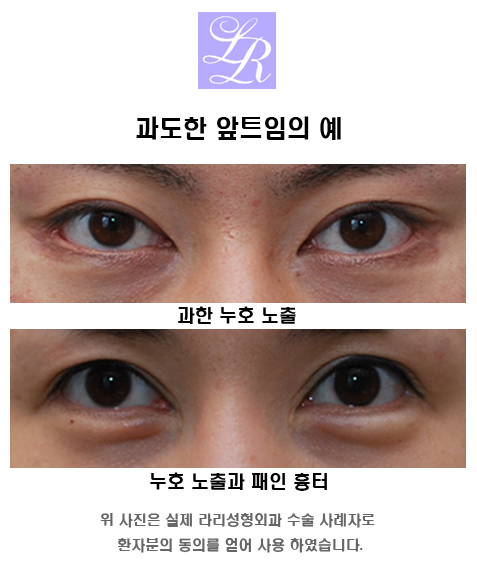
With double eyelid surgery or lateral canthoplasty, there are quite a few people who are satisfied even if it is done too much, and even if it seems excessive on a bare face, makeup can sometimes make the eyes look even bigger and, rather, more acceptable. But epicanthoplasty is different. When epicanthoplasty is done too extensively, it can make the overall impression look worse, and in many cases it cannot be covered up with makeup.
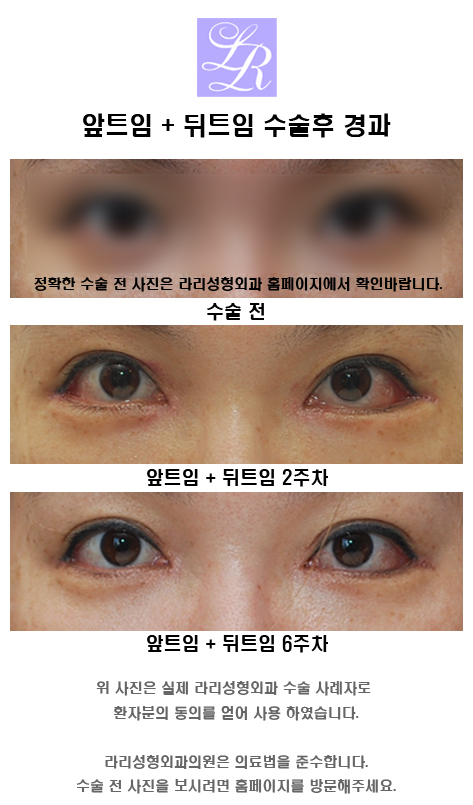
Looking at #beforeandafter images of overly extensive epicanthoplasty, the eyes look too close together, tear duct exposure is excessive, and the depressed-looking scar remains visible even with makeup. Seeing such before-and-after photos makes anyone think that epicanthoplasty should not be done too aggressively. In the end, rather than thinking of epicanthoplasty as simply "opening" the eye corner, the surgery should be performed in a way that clearly removes the epicanthic fold only.
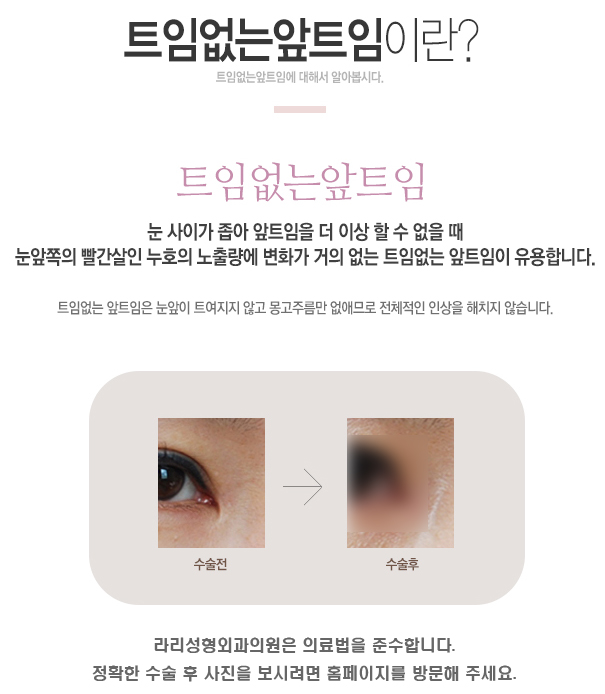
If epicanthoplasty restoration is unavoidable because of epicanthoplasty scars caused by excessive surgery, it is better to do it after six months have passed since the epicanthoplasty. Of course, the best case is to avoid the need for restoration from the very beginning, but what is right at the time may not be right later, so one must do their best with the first epicanthoplasty surgery and with revision surgery for epicanthoplasty scars or epicanthoplasty restoration.