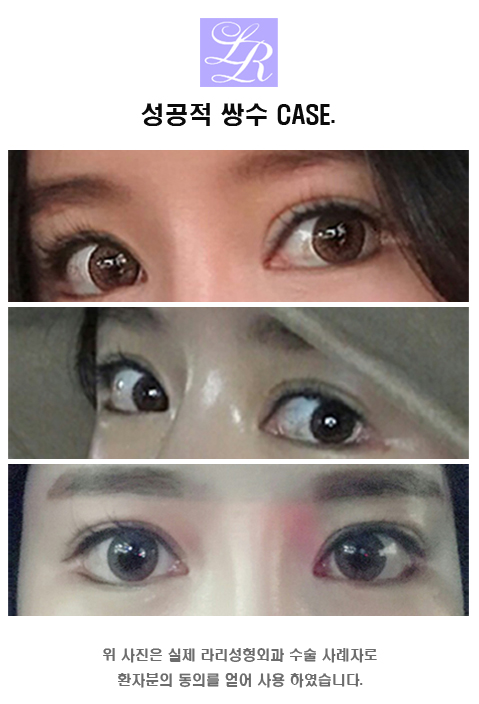
Doing the same thing repeatedly can sometimes bring a sense of reassurance, but in plastic surgery, it seems to be a different story. The burden of revision surgery is something anyone would worry about. You spent time and money on the surgery, but if you end up liking it even less—or if it might fail—the pressure of revision surgery is incomparable to that of the first operation.
So, finding a clinic that does double eyelid revision surgery well is the first step toward correcting a line you are unhappy with. If it is a place that has handled many revision cases, it is the kind of clinic you can trust and leave it to with confidence. It is the first step toward correcting a line that does not suit you or that you do not like, so that it becomes something you can be satisfied with once again.
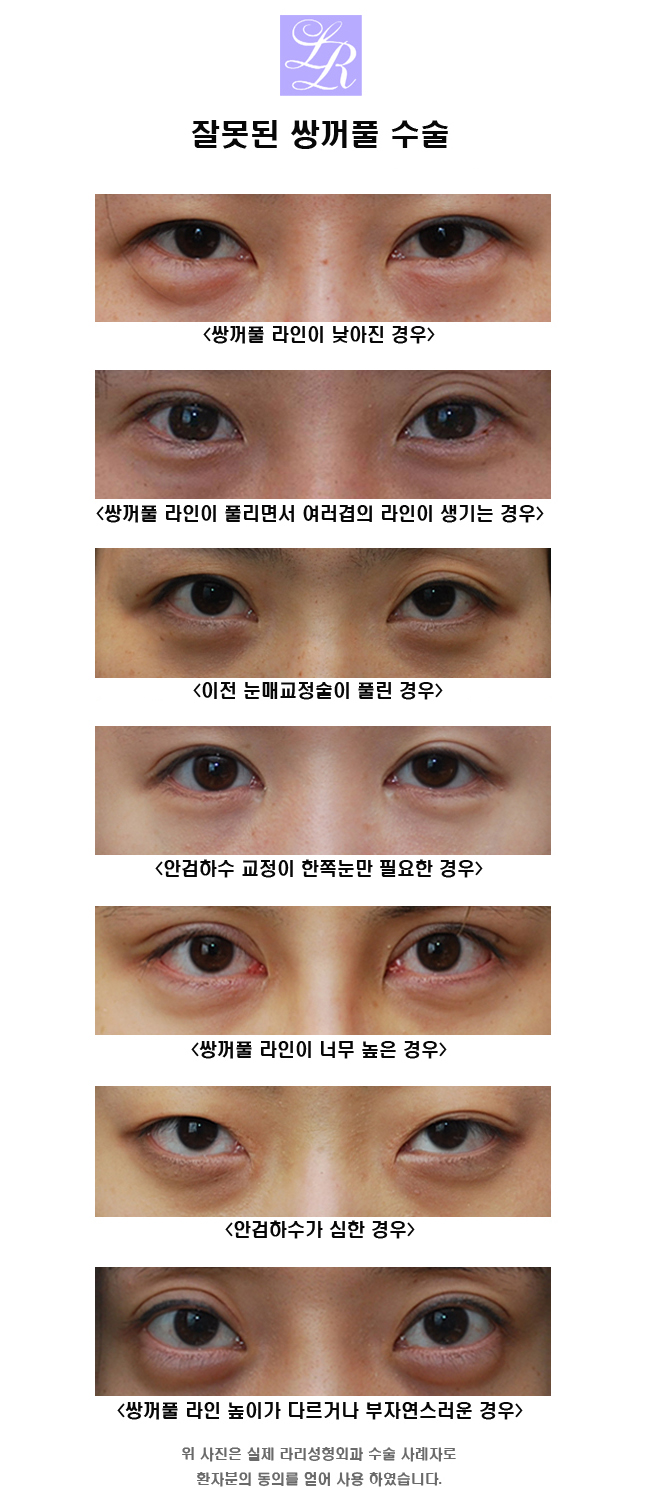
The reasons for double eyelid revision surgery vary widely. People consider revision when the line has loosened, when there is a lot of scarring, when there is ptosis, or when, for whatever reason, they are unhappy with the result. The most common cause for re-correction is, of course, the line coming undone, and the most common reason for re-correction is dissatisfaction. If you think about it again, the cause or reason ultimately comes down to the fact that it does not look good.
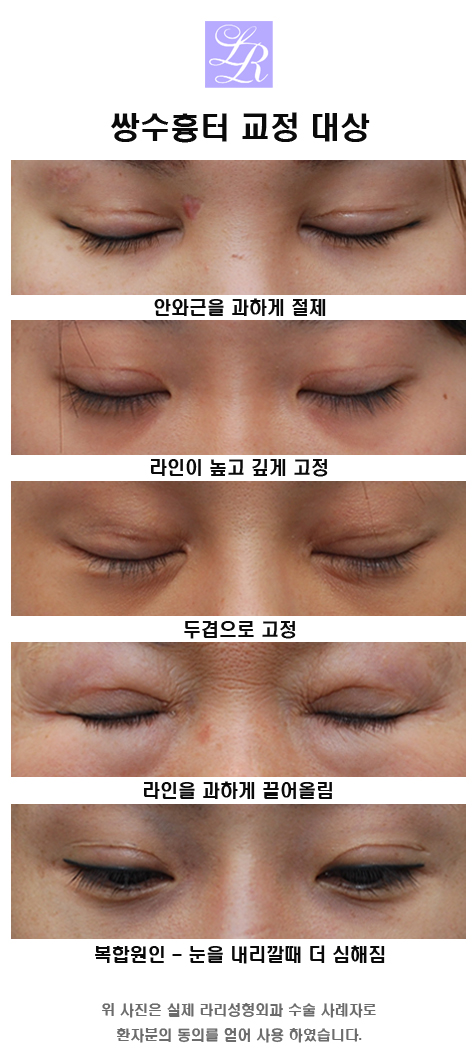
If the double eyelid line has come undone or if a lot of scar tissue remains, identifying the cause is important. In a previous surgery, if the eyelid crease line was not fixed at the exact position, or if there was a lot of fat, it may come undone easily. So, during revision surgery, it is important to secure it carefully so it does not come undone again. If there is a lot of scarring, and too much orbicularis muscle under the skin was removed, the fixed crease can look sunken and the double eyelid scar can appear more severe. In that case, the sunken area should be filled in well with surrounding muscle tissue, and the incision should be closed carefully.
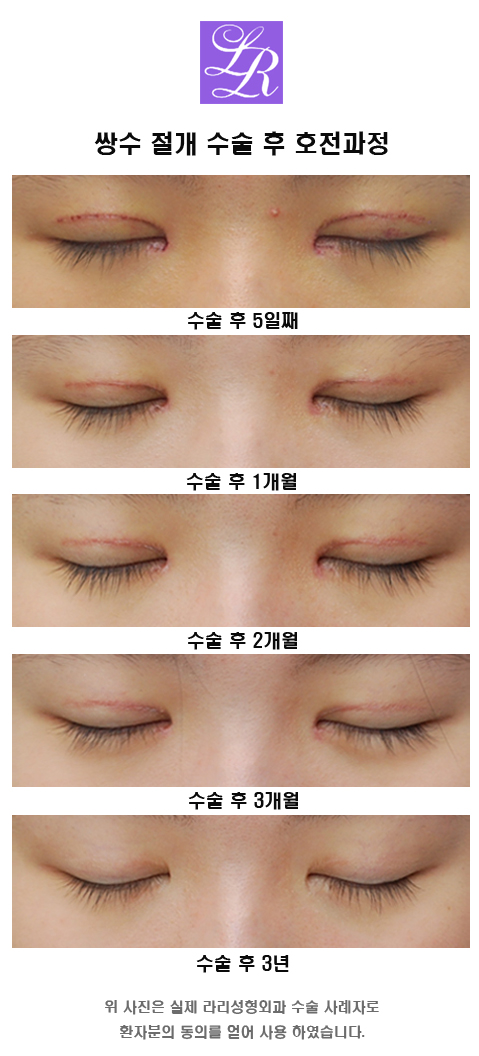
In cases of dissatisfaction, the line may be too thick, or the double eyelid line may be too small and not very visible. Through revision methods that lower the line or raise the line, it is possible to revise it to the desired shape. At that time, depending on the condition of the eyes, the line can be adjusted using either the buried-suture method or the incision method.
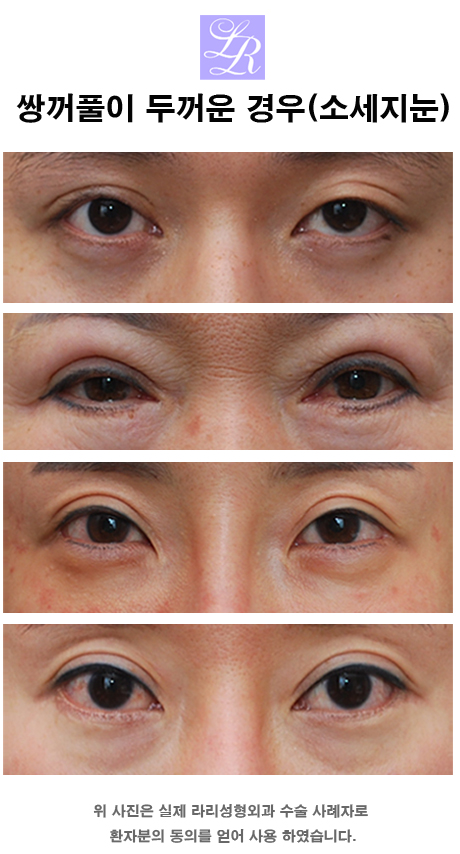
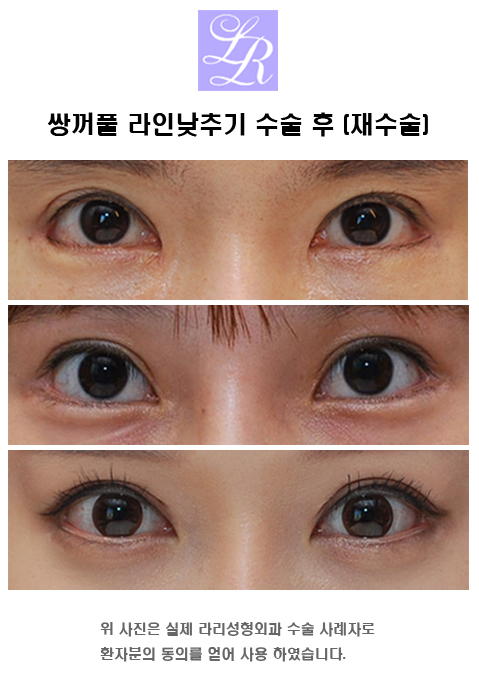
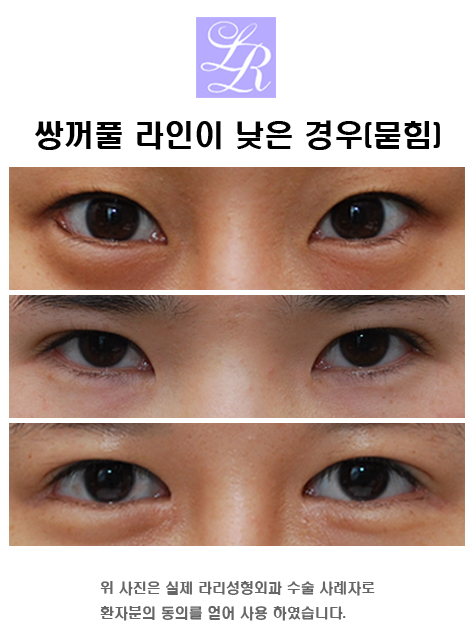
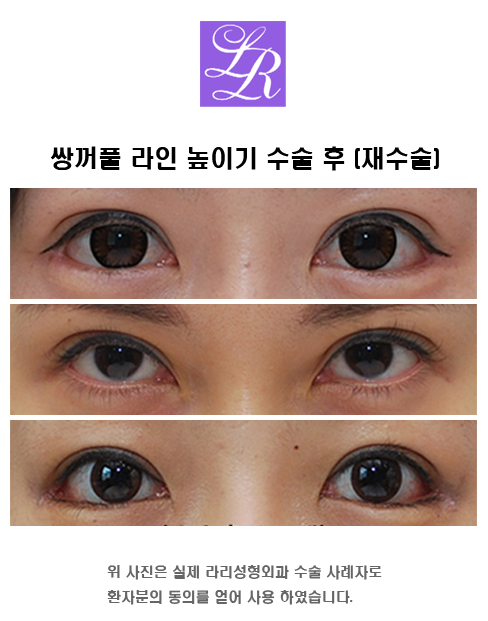
The ideal time for revision surgery is six months after the previous surgery, but depending on the condition of the eye tissue and each person's circumstances, rapid correction or early correction may also be possible. If you have decided to undergo double eyelid revision surgery, you should find an appropriate clinic that can perform the revision properly and that can provide a thorough consultation while checking the condition of your eyes. If a place has extensive experience with various double eyelid revision cases and has many before-and-after photos related to revision surgery, you can trust it as a clinic that does double eyelid revision surgery well, and that would be the way to secure a satisfactory revision result.