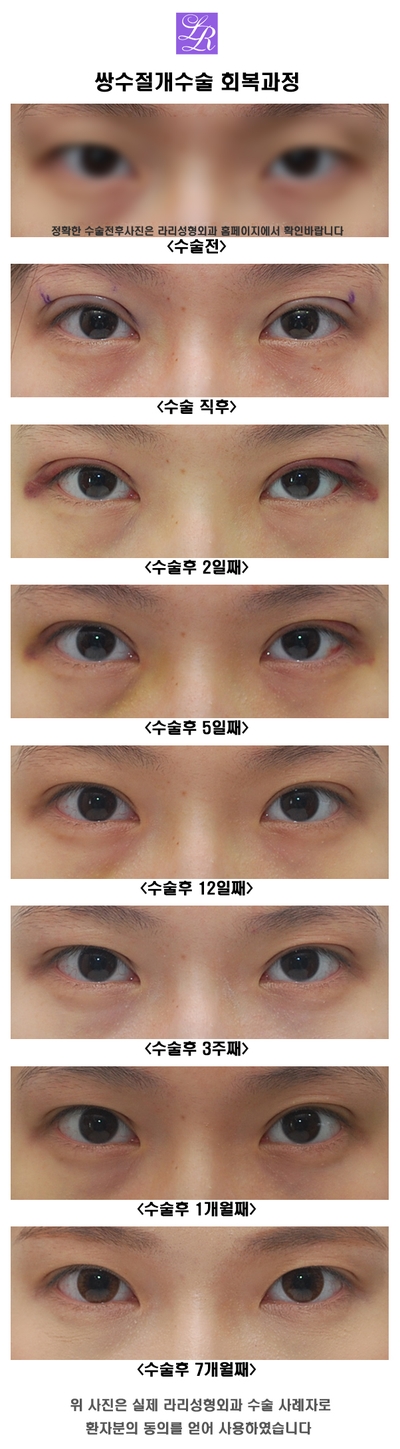
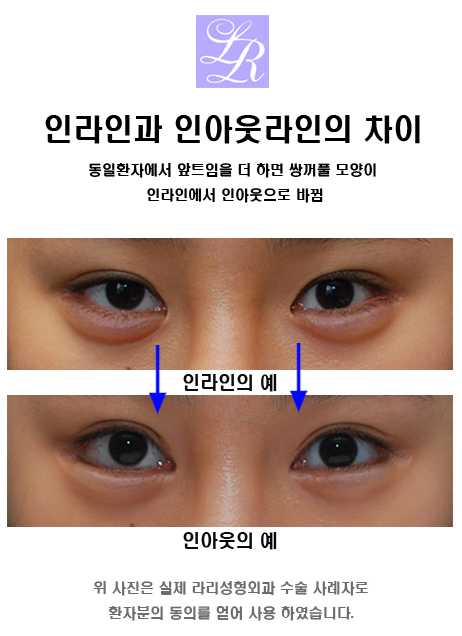
In-out describes a shape that is roughly midway between an inline and an outline double eyelid. An inline shape usually leaves the epicanthal fold as it is after double-eyelid surgery, so the double-eyelid line folds inward inside the epicanthal fold, creating a natural East Asian eye appearance. An outline shape is usually performed together with epicanthoplasty, and when there is no epicanthal fold, the double-eyelid line stays almost parallel to the lash line from the beginning to the end, creating a more dramatic Western-style eye appearance.
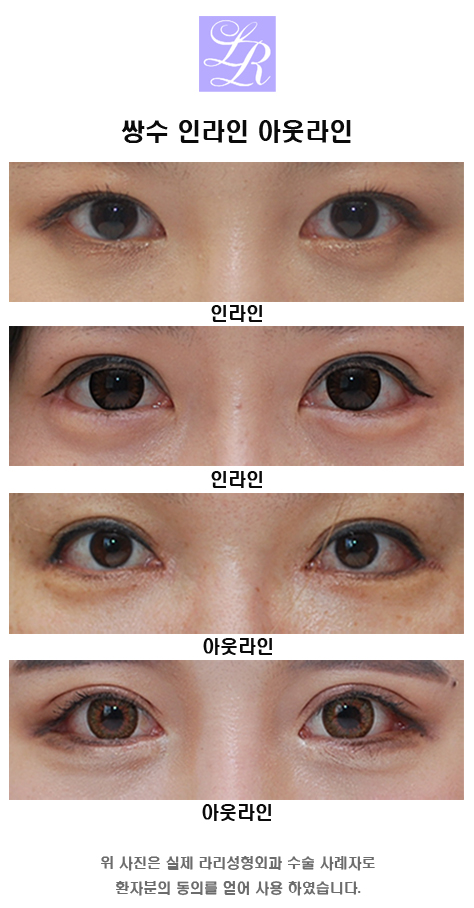
The in-out double-eyelid shape has a line that becomes wider toward the back of the eye like an inline shape, while the double-eyelid line does not meet the epicanthal fold at the inner corner like an outline shape. Because it feels natural while also making the eyes look clearer and more open, it is a suitable double-eyelid shape for people who cannot decide between inline and outline.
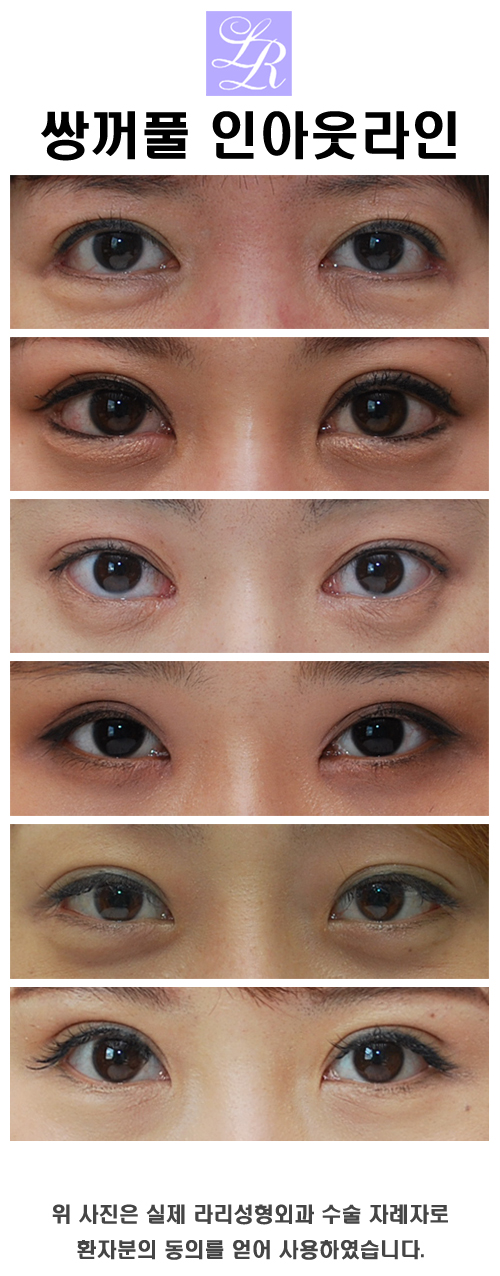
The relationship with the epicanthal fold is important when creating an in-out line. In many cases, if the epicanthal fold is prominent, it can be difficult to create an outline or in-out line. If the skin is thick or there is a lot of eyelid fat, it is difficult to make the double-eyelid line into an in-out or outline shape without epicanthoplasty. If the skin is thin, the eye-opening strength is good, and there is little eyelid fat, an in-out line or outline line can be created even if some epicanthal fold remains without epicanthoplasty.
Rather than deciding on outline or in-out solely by looking at someone else’s eyes, it is better to consult with a board-certified plastic surgeon who specializes in eye surgery and make the decision after receiving proper medical advice about which double-eyelid shape is right for you.