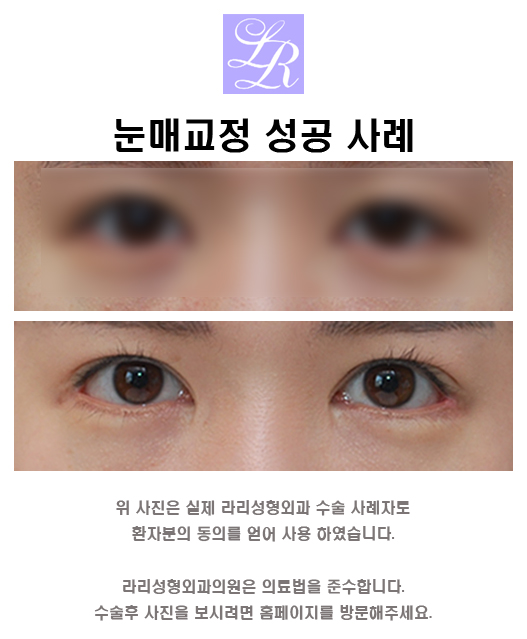
#Ptosis refers to cases where the eyelid covers the pupil. However, not every case in which the eyelid covers the pupil is ptosis. In addition to ptosis, where the force to lift the eyelid is insufficient, there are also cases where the upper eyelid covers the pupil because the skin has sagged due to aging or other reasons; in such cases, correction may be possible with upper blepharoplasty or double-eyelid surgery.
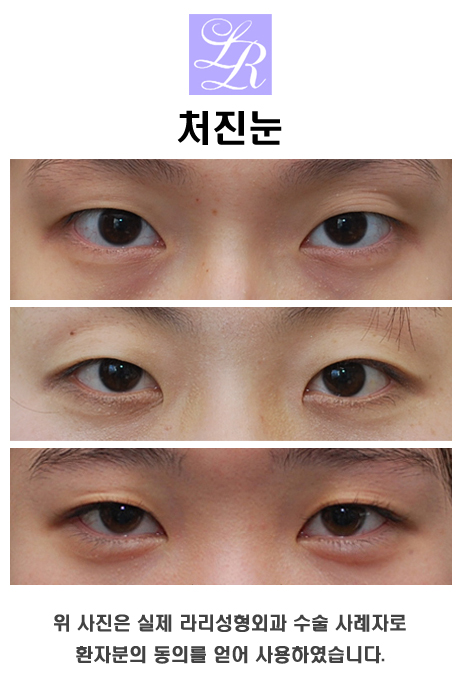
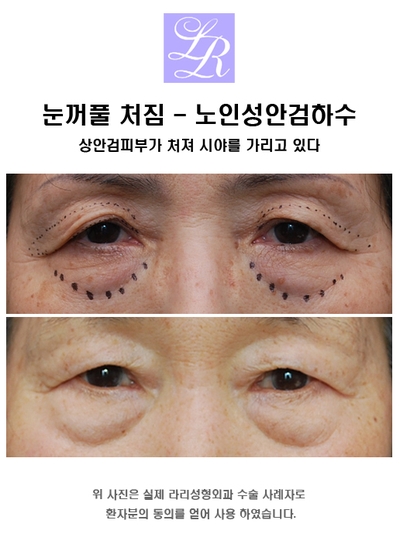
#The cases in which #ptosis #correction surgery is needed are, to be precise, cases where the strength to open the eyes is insufficient—that is, cases where the muscles that open the eyes have weakened. #Ptosis correction surgery is strictly different from upper blepharoplasty or double-eyelid surgery. Their purposes and methods are different.
Ptosis correction surgery - strengthens the muscles that open the eyes
Upper blepharoplasty - removes sagging upper eyelid skin, muscle, and fat
Double-eyelid surgery - creates a double eyelid
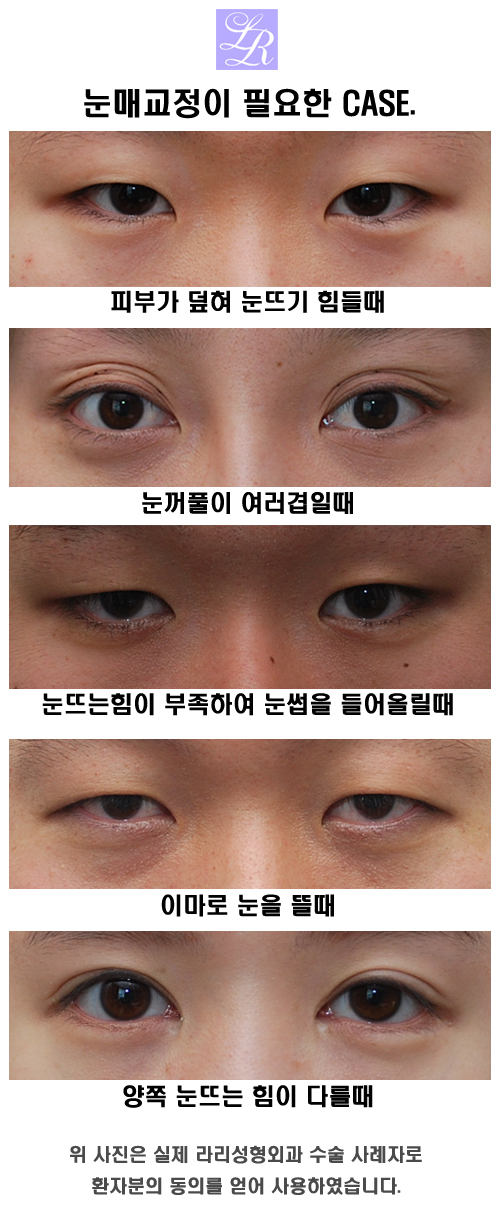
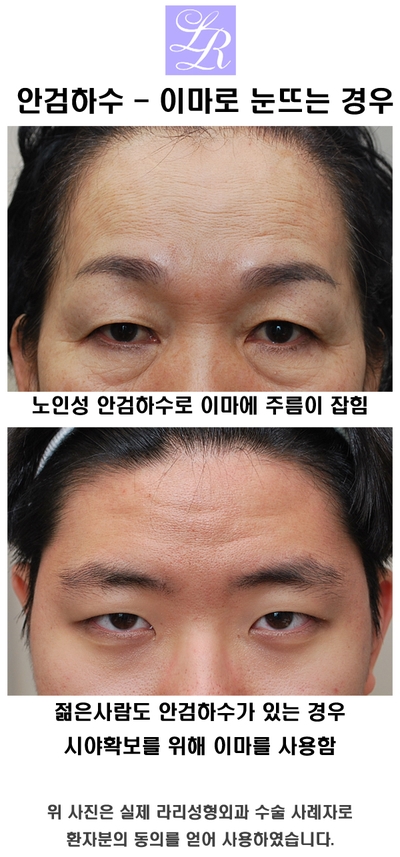
#When ptosis is corrected with #ptosis correction surgery, patients usually say it becomes easier to open their eyes, and along with the change of having clearer eyes, another noticeable change is that forehead wrinkles improve. Normally, when ptosis is present, the pupil is covered by the eyelid and vision is obstructed, so as a compensatory action people tend to lift their chin or raise their forehead, which often causes wrinkles on the forehead. This is why older adults with sagging upper eyelids often develop many forehead wrinkles.
Some people try to have ptosis surgery in ophthalmology, but ptosis is primarily a cosmetic correction, and since the surgical approach is the same as double-eyelid surgery rather than the eyeball itself, it is often much better structurally and aesthetically to have the surgery performed by a plastic surgeon who is well versed in the anatomy of eyelid tissue. Please keep this in mind!