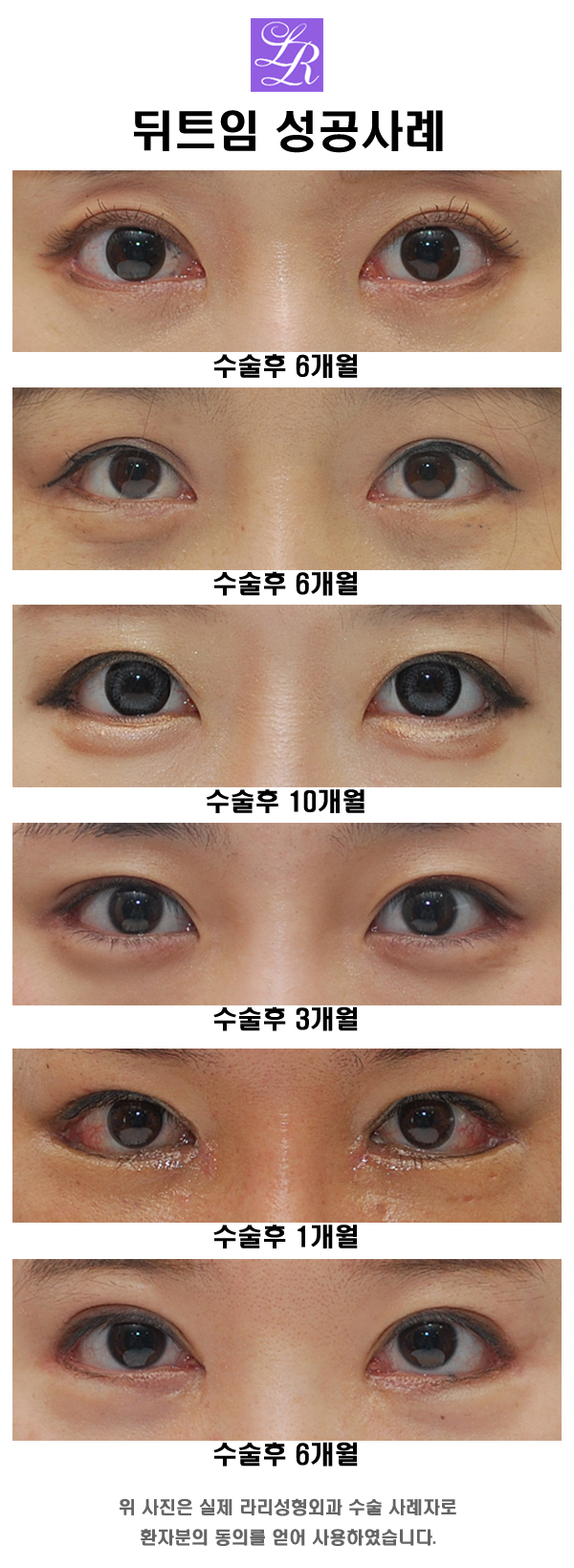
Lateral canthoplasty, like medial canthoplasty and lower canthoplasty, is one of the canthoplasty procedures that has been performed frequently in recent years. In the early days, medial canthoplasty was performed indiscriminately, which often left scars or caused eyes to look too close together. Likewise, lateral canthoplasty also had an incomplete surgical method at first, leading to many side effects such as the eye sticking back together after surgery or leaving a red scar caused by the inner conjunctiva turning outward.


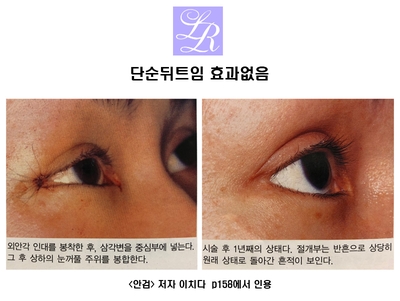
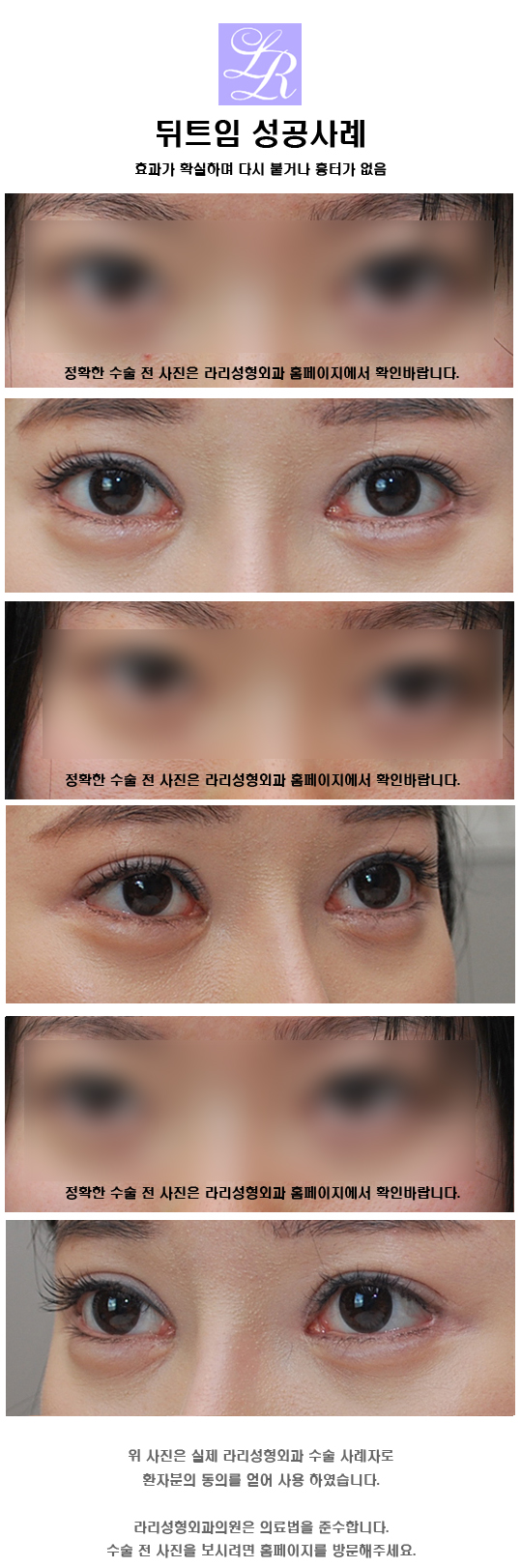
After the groundbreaking #eye_corner_lowering_lateral_canthoplasty method was developed, it demonstrated more advanced postoperative results for lateral canthoplasty. By correcting upturned eye corners, it became possible to change the overall impression with lateral canthoplasty alone. If you look at before-and-after photos or reviews of lateral canthoplasty performed with the #eye_corner_lowering method, you can clearly see that the change in the eye corner and eye shape is more distinct than with simple lateral canthoplasty, and the effect is noticeable both from the front and from the side.
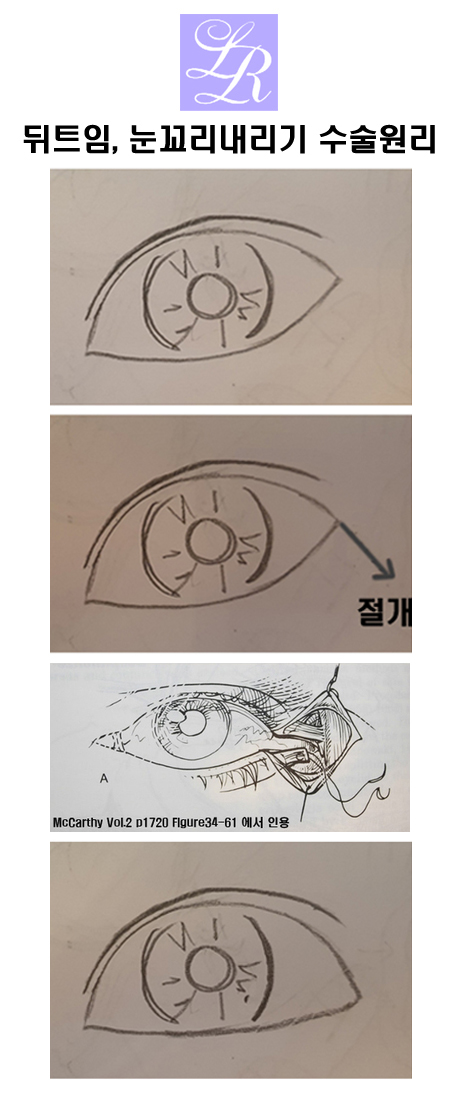
If we explain the principle of #lateral_canthoplasty_surgery or #eye_corner_lowering_surgery in detail, first the desired position for lowering the eye corner and the extent of the widening are designed, and the incision points are marked. Then the outer skin and inner conjunctiva are incised along those points. After separating part of the lateral canthal ligament of the lower eyelid to free the lower eyelid, the tarsal plate is anchored to the periosteum at the new eye-corner position to be lowered, and the new conjunctiva and skin are neatly sutured in a triangular shape to complete the procedure.
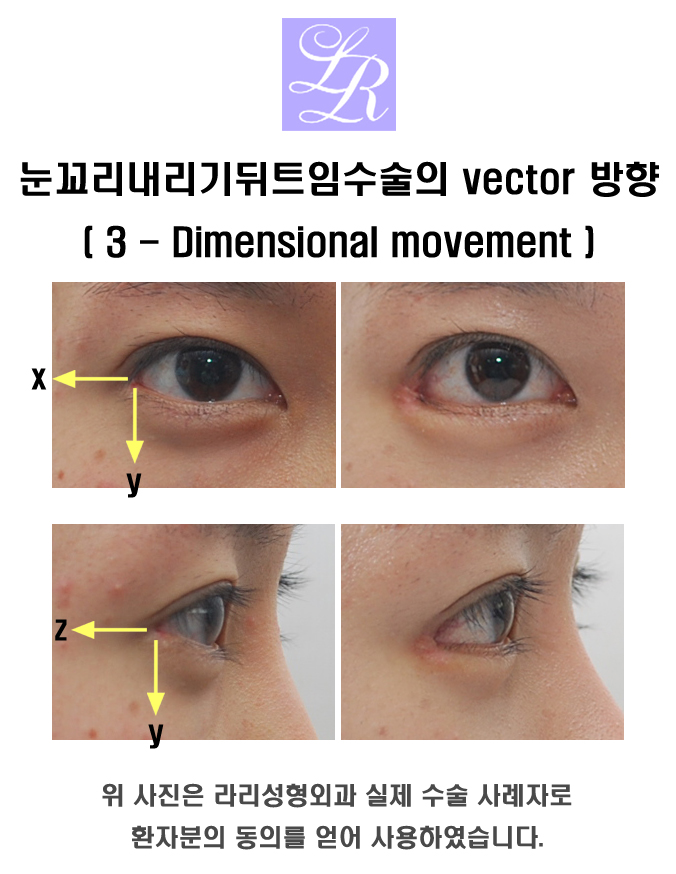
In relation to this surgical principle, some people who do not read the textbook material on lateral canthoplasty or external canthoplasty carefully, or who do not really understand it, say that lateral canthoplasty cuts the lateral canthal ligament and will later cause the eyelid to sag without strength or lead to ectropion. However, that is just the imagination of people with no experience who have never performed lateral canthoplasty or followed patients for more than five years. By following dozens of patients for more than five years and comparing preoperative and postoperative photos, we could see that there had never been a case of the eyelid sagging without strength or ectropion.
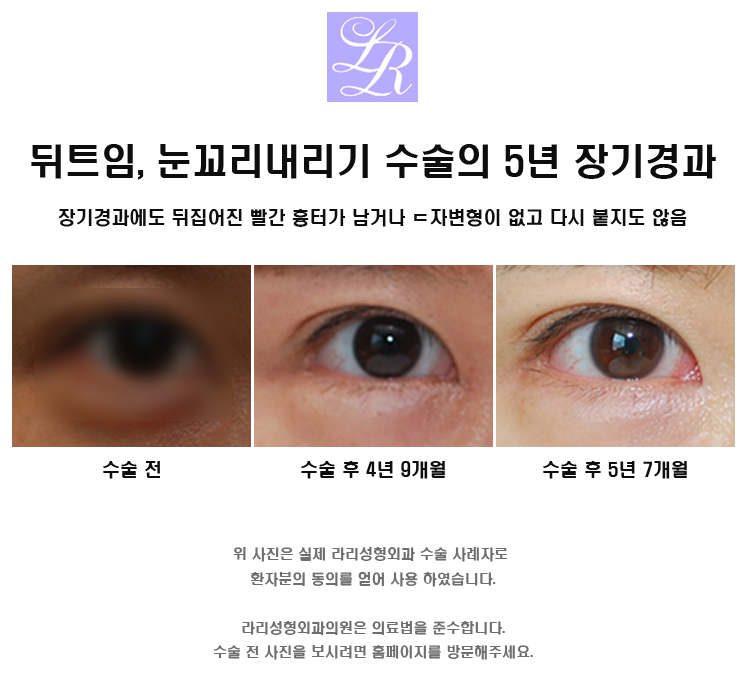
We have looked into the surgical principle of the most innovative lateral canthoplasty method, the eye corner lowering lateral canthoplasty. If you observe the long-term course of lateral canthoplasty managed with this method for more than a year, I hope you will understand that, in terms of effect and safety, it has a lower chance of side effects compared with other lateral canthoplasty methods, and that Lari Plastic Surgery has been performing it for more than 10 years without any major special problems.