Many people in Korea, Japan, and China have outer eye corners that appear raised. When the outer corners are raised, the eyes can look sharper and somehow angry, which can make the overall impression look less favorable. Even though that is not how they feel, hearing that they seem like they have a bad personality can be very stressful.
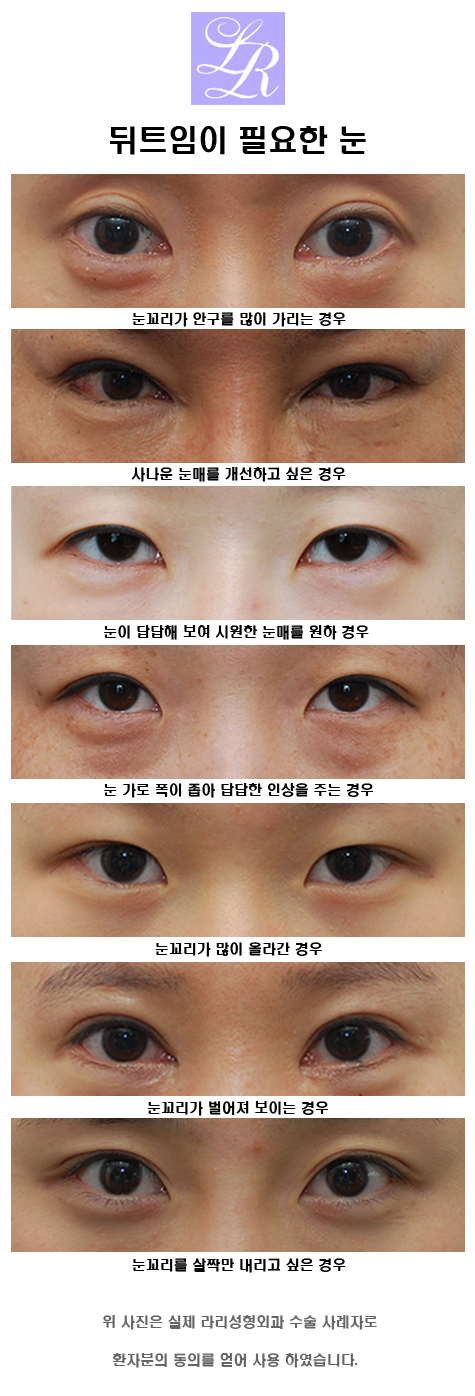
Especially in today's age, where social media photos are everywhere, profile photos that express your face well are essential. In the end, to make raised outer eye corners look kinder, people may darken the makeup around the outer corners or undergo eye surgery, and surgeries that can effectively correct these raised outer corners include #outercornerloweringoutercanthoplasty and #lowereyecanthoplasty.
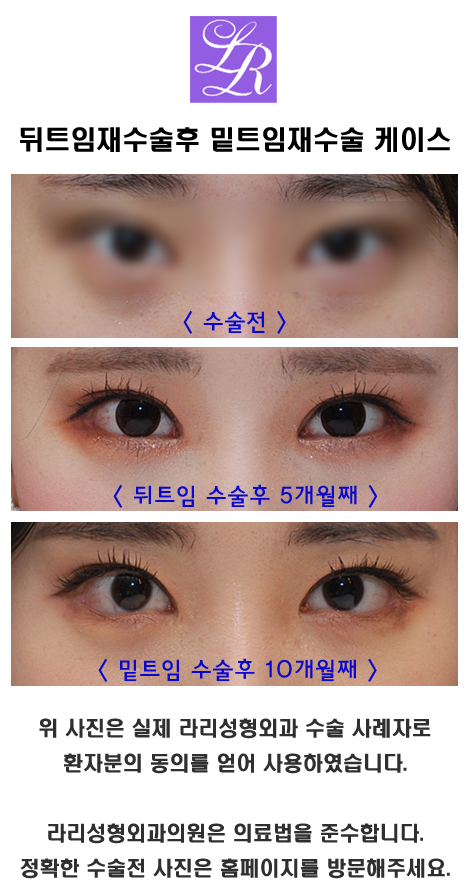
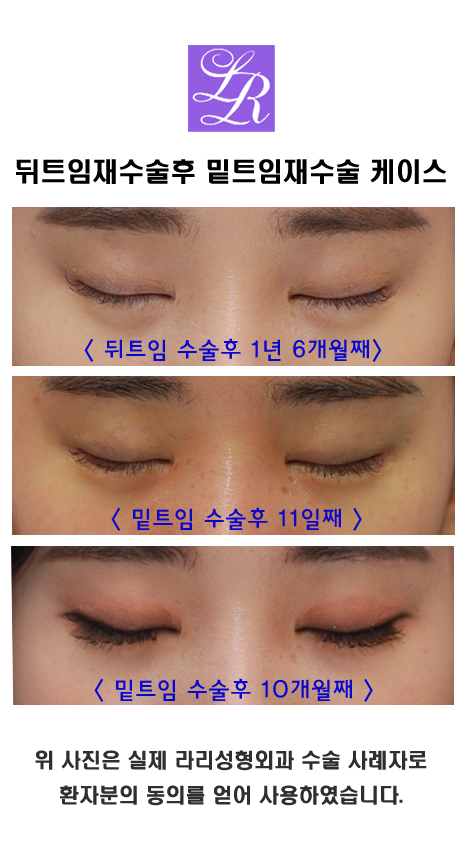
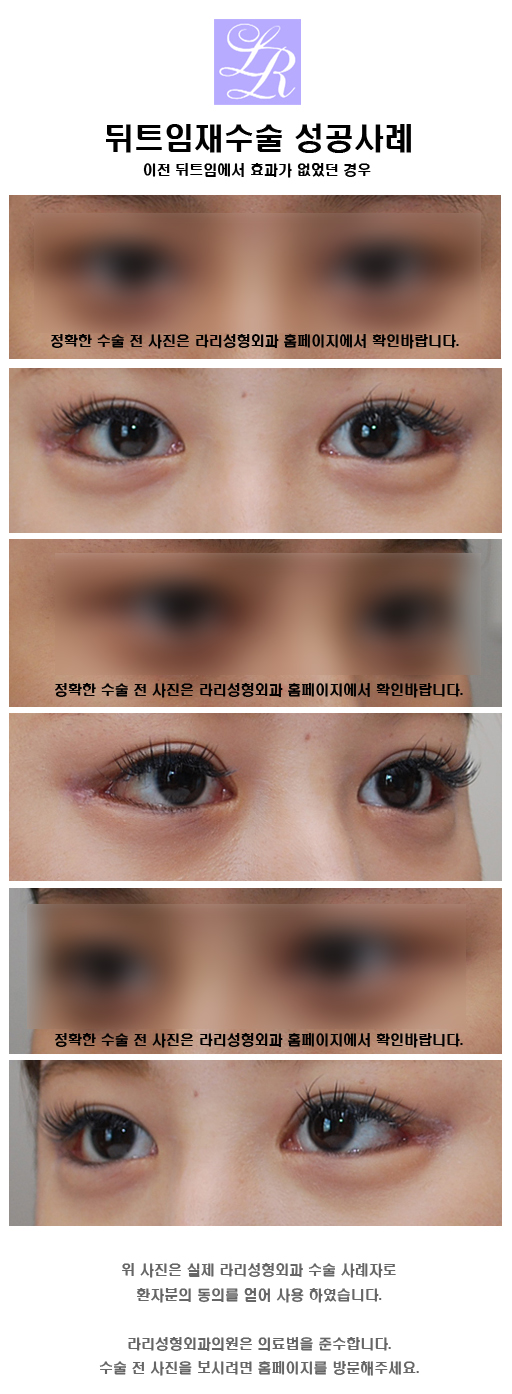
Recently, more and more people have been undergoing outer canthoplasty or lower eye canthoplasty to improve the impression of the eyes. However, there are also more people considering revision surgery because the effect has partially returned or the problem has recurred after conservative methods such as simple outer canthoplasty or non-incisional lower eye canthoplasty.
During #revisionoutercanthoplasty or #revisionlowereyecanthoplasty, carefully releasing any previous scars or adhesions and performing the surgery properly can help reduce the likelihood of another failure.
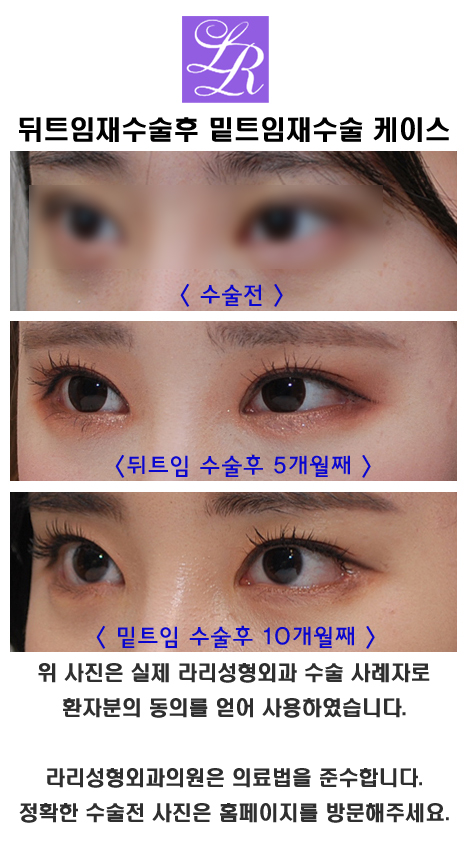
In particular, when outer canthoplasty and lower eye canthoplasty are performed at the same time, the outer canthoplasty is a simple outer canthoplasty. If outer canthoplasty is done by lowering the outer eye corner, such as outer corner lowering, the lower eyelid does not turn outward, so lower eye canthoplasty cannot be performed. If outer canthoplasty is performed as outer corner lowering, lower eye canthoplasty can be done about 3 months after the outer canthoplasty.
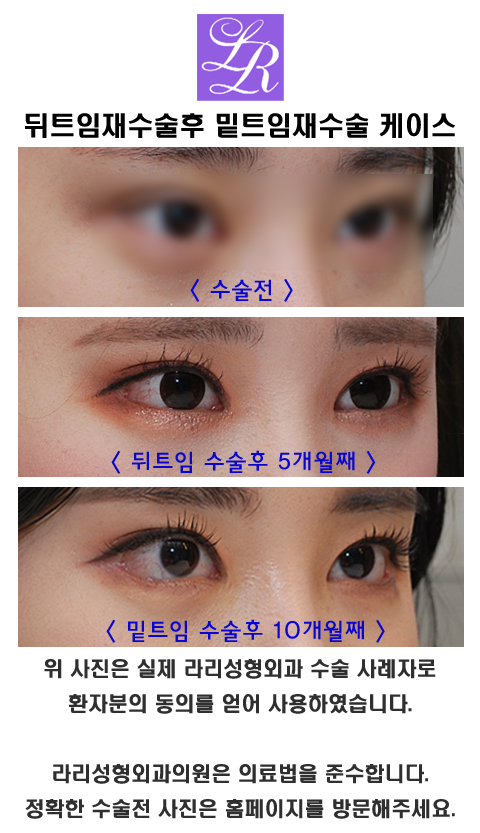
If your outer eye corners are raised so severely that outer corner lowering alone does not make the eyes look sufficiently downturned, remember that doing lower eye canthoplasty as well can create a more downturned eye shape!