Why people get epicanthoplasty
-
To open the hidden lacrimal caruncle and release the epicanthic fold
-
To correct a hook-shaped epicanthic fold
In the early days of epicanthoplasty, the main purpose was to remove the #epicanthicfold covering the lacrimal caruncle at the inner corner of the eye so that the eyes would look bigger.
As a result, the focus was only on making the inner corner of the eyes look larger, and problems began to arise because the epicanthic fold was cut too much.
If epicanthoplasty is done too aggressively
-
Too much lacrimal caruncle becomes exposed, making the inner corners look close together
-
The epicanthic fold is cut away too much, leaving only a hook-shaped scar
Problems that can arise when epicanthoplasty is overdone
Example photo 1.
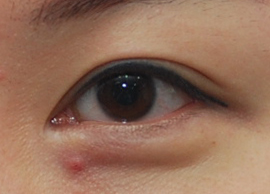
Too much lacrimal caruncle exposure makes the inner corners look close together
Example photo 2.
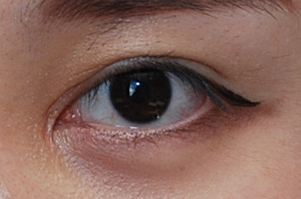
The epicanthic fold is cut away too much, leaving only a hook-shaped scar
But if you do only a slight epicanthoplasty out of fear that too much lacrimal caruncle will be exposed, the widening effect does not happen, and the #epicanthicfold remains as it is.
So the question became: can you perform epicanthoplasty while avoiding actual widening and removing only the hook shape?
What was created through an original design method is Lari Plastic Surgery’s "epicanthoplasty without inner corner widening."
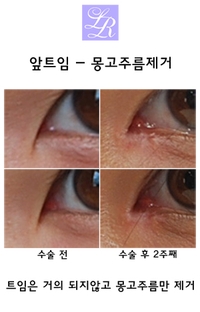
Epicanthoplasty without inner corner widening
-
The amount of lacrimal caruncle exposure before and after surgery is the same
-
Targeted removal of only the hook of the epicanthic fold is possible
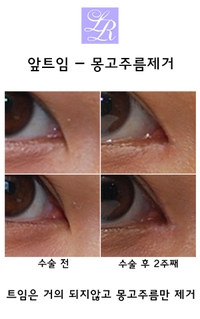
Even if only the epicanthic fold is removed, the impression around the inner corners of the eyes can look softer. Let’s look at several other cases.
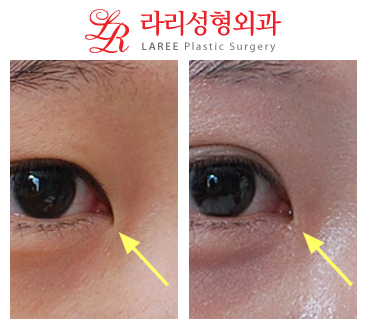
case 1
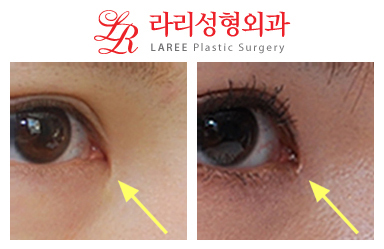
case2
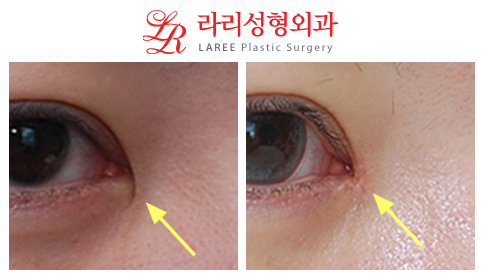
case3
Because this is completely different from an epicanthoplasty revision design, it is not a reversal procedure. So a much more advanced design sense than that of ordinary epicanthoplasty, along with delicate skills based on a distinctive design, is essential.
These design skills can also be applied to correcting a #doublehook epicanthic fold, where the shape of the epicanthic fold at the inner corner of the eye splits into two branches.
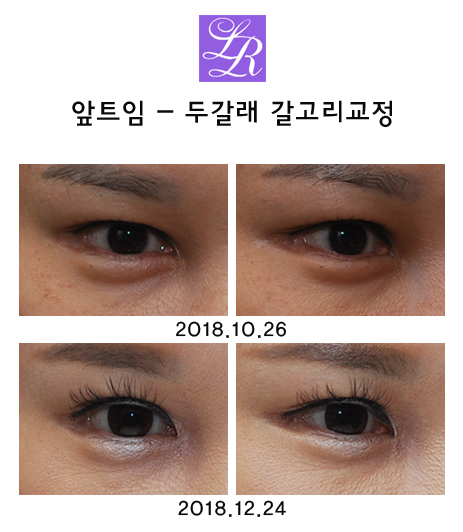
Although no epicanthoplasty was performed, the epicanthic fold hook has split into two branches like a side effect of epicanthoplasty
An applied case of #epicanthoplastywithoutinnercornerwidening used to correct another double-branch hook-shaped epicanthic fold
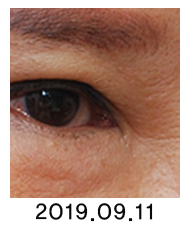
Before surgery, the fold at the inner corner of the eye and the epicanthic fold hook are split into two lines
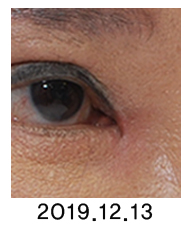
After surgery, it was organized into a single epicanthic fold.
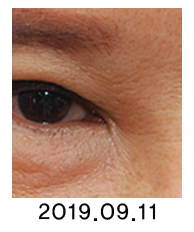
From the front, the epicanthic fold appears split into two branches and extends into the inner eye crease,
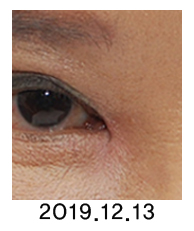
but after the epicanthoplasty without inner corner widening, you can see that it has improved into a single line.
For epicanthoplasty and epicanthic fold removal,
Lari Plastic Surgery’s epicanthoplasty without inner corner widening, developed after a great deal of thought!