Double eyelid revision surgery is performed for a variety of reasons.
However, rather than the previous surgery being wrong, in most cases the double eyelid is too thick, or it is too much of a hidden double eyelid, so the line itself is different from what was desired, which is why revision surgery is often done.
In short, it means ‘I’m not satisfied.’
Of course, there are also cases where surgery is done because of problems from a previous double eyelid surgery, such as sausage-like swelling or a deeply indented scar visible when the eyes are closed.
These are not so much subjective dissatisfaction as they are complications from double eyelid surgery, which is why #doubleEyelidRevisionSurgery is needed.
Reasons why double eyelid revision surgery is needed
-
Dissatisfaction
-
Complications
First, surgery for dissatisfaction mainly focuses on changing the line.
If the line is too large, it is made smaller and more natural, and if the line is too small and becomes a hidden double eyelid, the line is slightly raised.
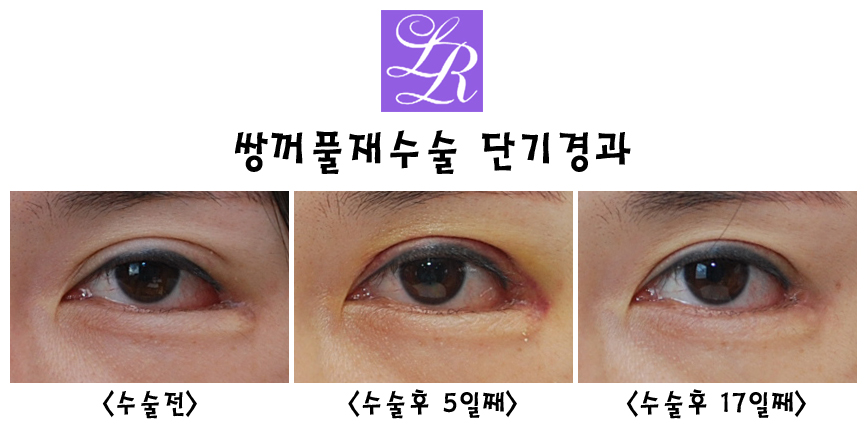
Making the existing double eyelid line a little smaller can be changed relatively more easily than making it larger.
If the double eyelid line itself is large, there is a lot of tissue below the double eyelid line, and because that is reduced, revision surgery that makes the line smaller does not leave swelling for as long compared with when the line was large.
In the photo above, you can see that only about two weeks have passed since surgery, yet the swelling has gone down a lot.
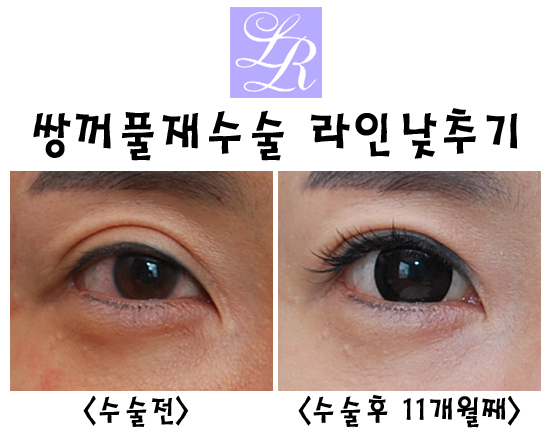
When the existing line is too much of a hidden double eyelid and the goal is to make the line larger, the design line is small and the existing line that has gone inward must be erased, then redesigned above it to create a larger line.
When making the line larger, the technique for removing the previously small design line is not easy.
If the double eyelid fixation from the previous surgery was strongly attached to the #tarsalplate, it must be carefully loosened little by little for it to come apart well without scarring.
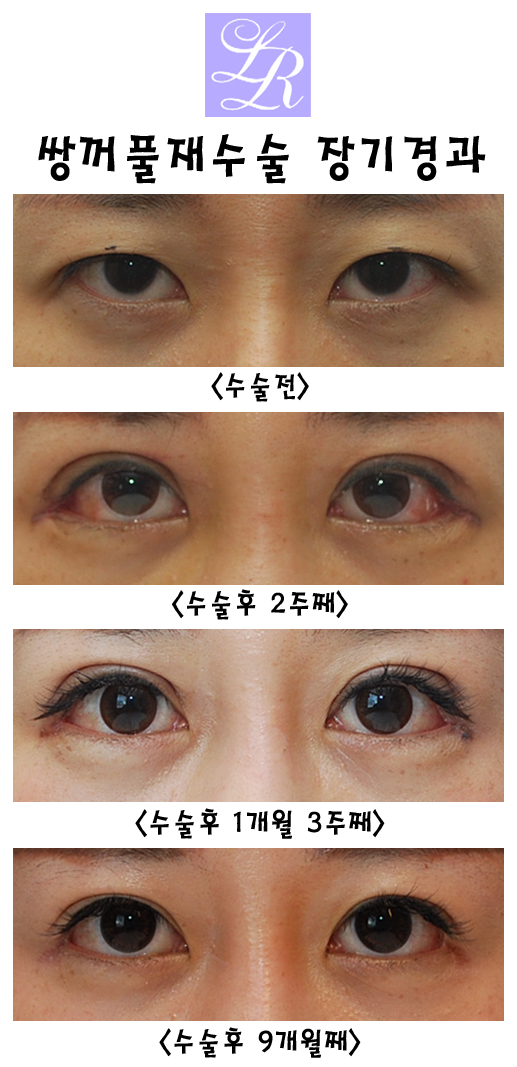 Also, double eyelid revision surgery that makes the line larger than the existing line can usually leave swelling for a long time.
Still, compared with cases of hidden double eyelids, the eyes look larger, so even if you draw eyeliner more boldly, the eyes can still look natural and pretty.
Second, #doubleEyelidSausage or #indentedScars are #doubleEyelidComplications, so they must be corrected for cosmetic reasons.
From a functional standpoint as well, sausage-like complications can interfere with the ability to open the eyes, so they must definitely be corrected.
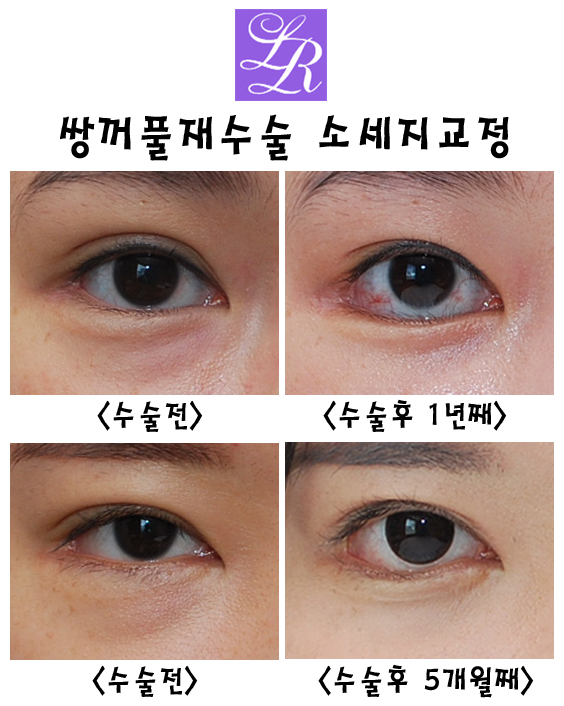
In cases where the line is thick like a double eyelid sausage, the fixation of the double eyelid from the previous surgery is as high as a high fold, so the eyes often do not open as much and look sleepy.
When the line becomes thinner after sausage correction, you usually also get the effect of eyelid correction, with improved eye-opening strength.
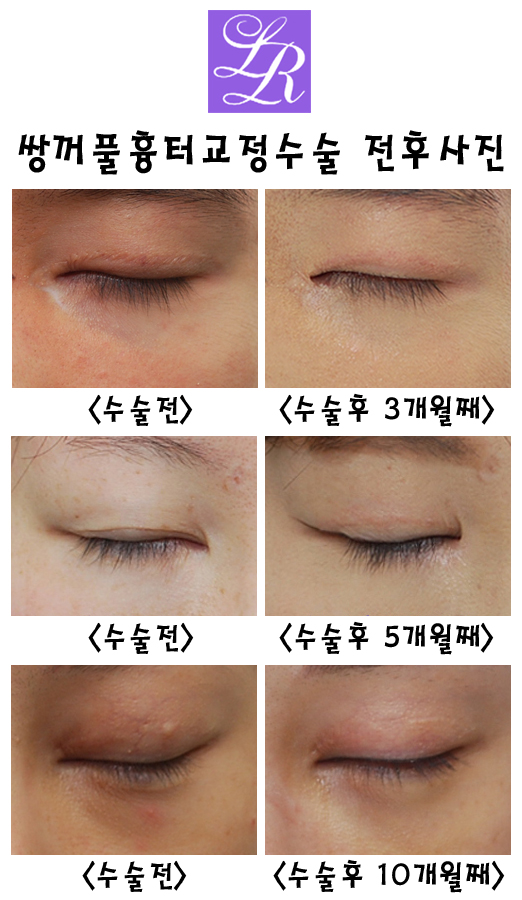
Indented scars after double eyelid surgery can also become visible when looking at a smartphone on the subway, so these also need correction.
In most cases, the indentation occurs because too much of the orbicularis oculi muscle around the double eyelid design line was removed in the previous surgery.
During revision surgery, the surrounding tissue must be used to fill it in properly.
After that, if it is carefully sutured, more than 90% of the indented scar can improve.
Finally, there is also double eyelid revision surgery for line correction that is neither lowering nor raising the double eyelid line.
In the case below, the skin had sagged and the line had also loosened, giving a somewhat sharp impression.
After line correction, not only was the line itself neatly arranged, but the overall eye shape also became much softer.
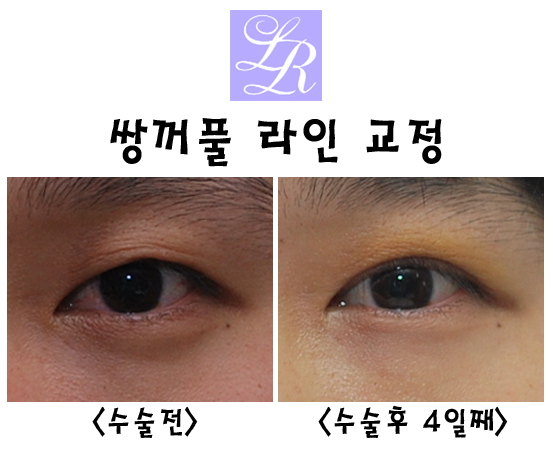
Revision surgery is performed often at Lari Plastic Surgery, which is close to Exit 5 of Apgujeong Rodeo Station on the Bundang Line.
If you are considering double eyelid revision surgery, please come for a consultation at Lari Plastic Surgery, where a single specialist handles everything directly from consultation to surgery.