If you look closely at a person’s nose, it is not very common for it to extend perfectly straight in a line.
Even handsome and pretty celebrities often have uneven nostrils or a slightly crooked bridge.
However, most people do not really notice this, so they often do not know whether the nostrils are uneven or the bridge is crooked.
Most people’s noses are slightly crooked.
But not all such noses are candidates for rhinoplasty.
Of course, a nose that is crooked beyond the normal range may not only look unattractive, but in some cases it can also make breathing difficult, so it can become a candidate for correction.
When the crookedness exceeds the normal range, there may anatomically be crookedness in two areas:
the bony part that forms the bridge of the nose and the cartilage part that forms the tip of the nose.
In cases where the cartilage part is crooked, some people are born that way and become more crooked as they grow, but in most cases it happens after an L-type silicone implant is inserted,
when pressure is applied to the tip of the nose and it collapses, causing it to tilt to one side.
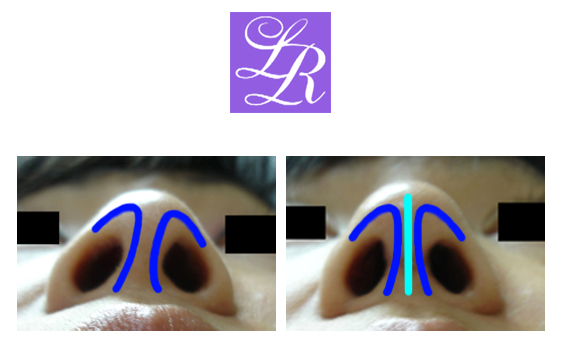
In such cases, through an incision under the nose, the asymmetrical deformity of the alar cartilage, which mainly forms the shape of the tip, is corrected.
Because cartilage has elasticity like a spring and tends to return to its original shape, it is important to place a strut between the alar cartilages
to prevent the corrected shape from becoming crooked again.
If the strut is properly placed, a crooked columella can be easily straightened.
Crooked columella
A STRUT must be placed.
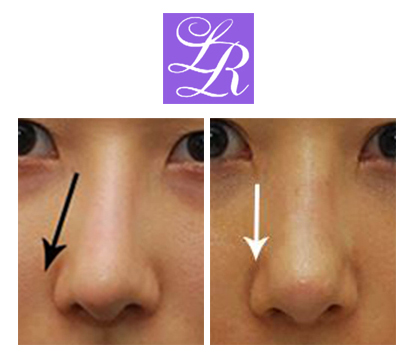
After rhinoplasty, the bridge of the nose sometimes becomes crooked from the front.
One reason is that there is a hump under the silicone implant, and when the silicone is placed over it as is, the implant may ride over the hump and cause the bridge to become crooked.
In such cases, during #revisionrhinoplasty, removing the existing silicone, removing the hump, and inserting a new silicone implant will correct it.
When the silicone is removed in such cases, there are often traces on the underside of the implant where material was carved out to account for the convex part of the hump.
This means that the surgeon in the previous operation recognized that there was a hump, but instead of shaving it down, tried to solve the problem by carving a groove into the implant.
However, because such carving cannot precisely include the hump, it often rides over it and makes the nose look crooked.
When there is a hump
A silicone implant may look crooked. Hump removal is essential!!
Everyone has some degree of #crookednose, but if congenital facial asymmetry is severe, the overall nasal crookedness can also be severe,
and surgical correction may be necessary.
In such cases, because the growth rates of the bones on both sides of the face have differed since childhood, causing the nose to become crooked,
it is necessary to correct the deviation by separating each cartilage, such as the #septalcartilage and #alarcartilage, along with osteotomy of the bony part of the nasal bridge.
By straightening the tilted bridge bone through osteotomy and repositioning the nasal tip cartilage, it is possible to correct the crooked bridge to some extent, even if not perfectly.
The nose is not only curved when viewed from the front. In the profile line, or side view, the bridge of the nose is often curved.
A bridge that protrudes like a hump, whether congenital or caused by injury, is called a hump nose.
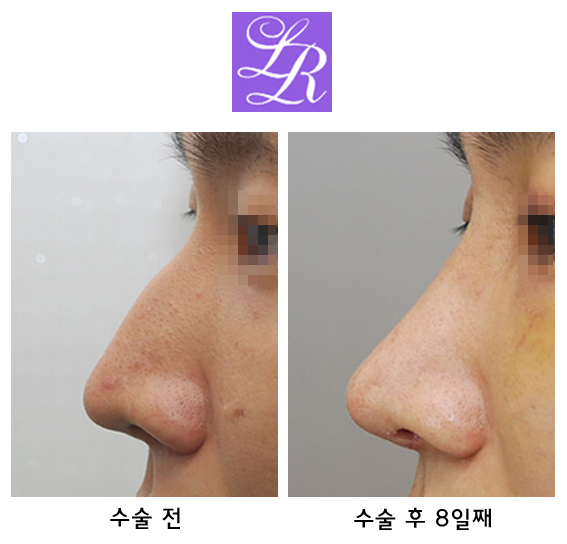
A hump nose refers to a bridge in which the bony part of the bridge and the cartilage part of the tip grow abnormally together, making the nasal bridge look bent like a hump.
Usually, when the bridge is bent, the tip appears to point downward more, which can make a person look older and seem stubborn.
Because this kind of hump requires removal of both the bone and cartilage in the curved bridge area, harmonious rhinoplasty technique is essential.
If the angle is even slightly wrong during removal, the bone may not be fully removed, and the bridge may instead look collapsed.
Hump removal
The removal angle must be set accurately to remove it cleanly!
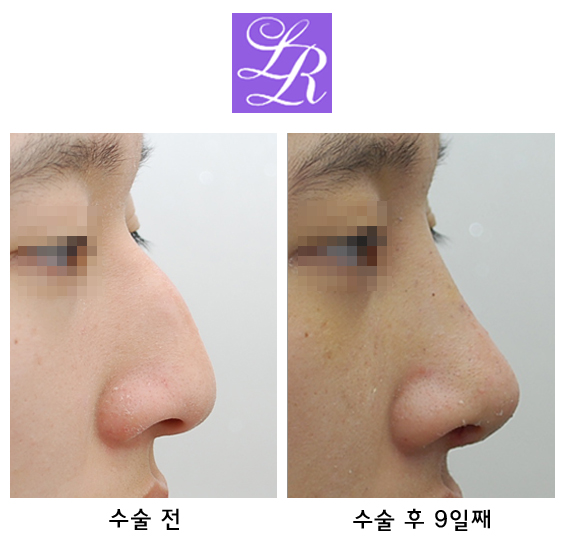
In particular, when the hump is large and protrudes from the tip of the nose to near the glabella, removing only the hump may make the bridge look severely collapsed.
In that case, after hump removal, the sides should be appropriately osteotomized to create a natural-looking bridge.
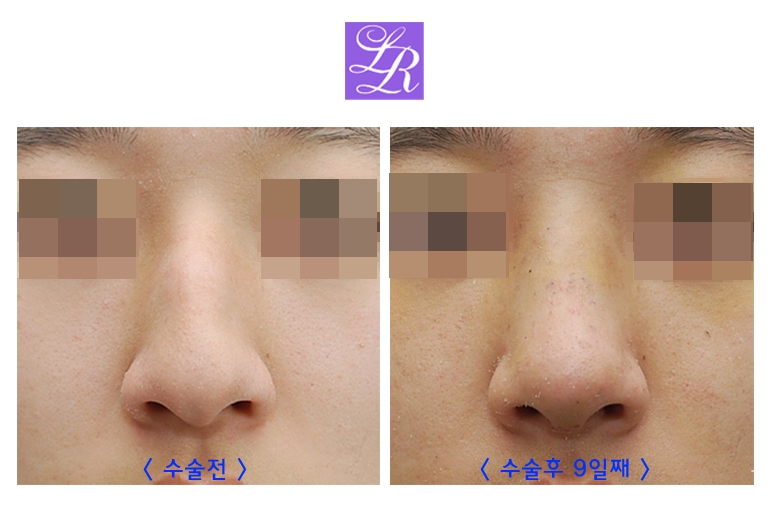
Along with hump removal, the bilateral nasal bone osteotomy should be performed appropriately so that the bridge shape from the front does not look too collapsed.
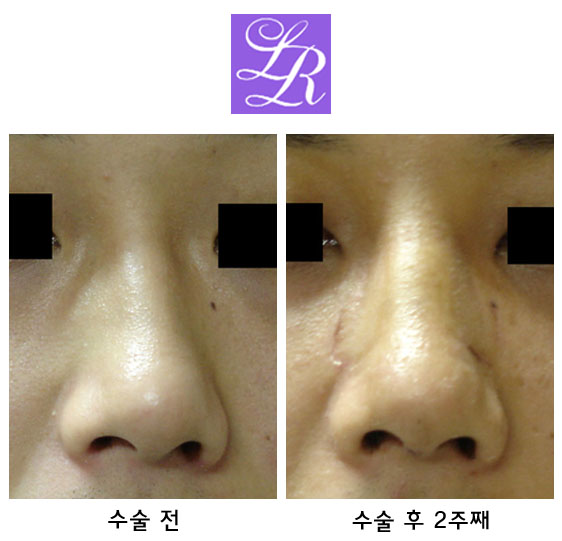
Then you can see that the bridge, which looked slightly bent when there was a hump, has been corrected.
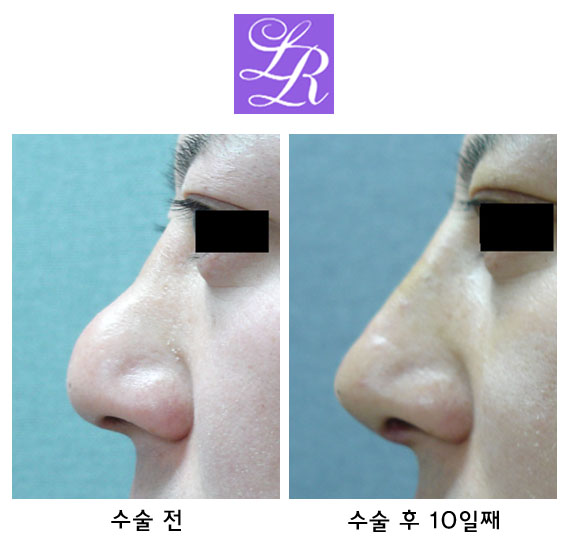
I corrected a case where #humpresection had not been done properly at another clinic, and the #humpnose had been deformed into a more strange shape.
In the previous surgery, the removal angle for the #hump was not set correctly, so the cartilage part of the hump was not removed properly and only the bony part was removed, making the nasal tip cartilage look even more protruded.
Hump removal
Bone area + cartilage area = must be removed together!
Rarip Plastic Surgery, which is skilled at correcting crooked noses and hump noses, is close to Exit 5 of Apgujeong Rodeo Station on the Bundang Line.
If your nose is crooked or your hump nose is severe, please make time to visit for a consultation.
The doctor, a single-board-certified specialist, will personally provide the consultation!