In many East Asian noses, the bridge is low and the nasal tip is often blunt. Until about 20 years ago, the concept of nasal tip surgery was not well established.
Back then, the focus was mainly on raising the low nasal bridge.
If you think about it, in the past people mostly took front-facing photos rather than photos from various angles like today, so there was little reason to make the nasal tip look more refined and lifted.
The nasal tip is more noticeable from the side profile, that is, the profile line.
Since the 2000s, the concept of nasal tip surgery has been widely accepted in plastic surgery, and now when rhinoplasty is performed, it is usually not only about inserting an implant to raise the bridge,
but also about #NasalTipSurgery to raise the tip more elegantly.
Secondary rhinoplasty that further lifts the nasal tip
Case photos of a surgery performed directly at Lali Plastic Surgery!
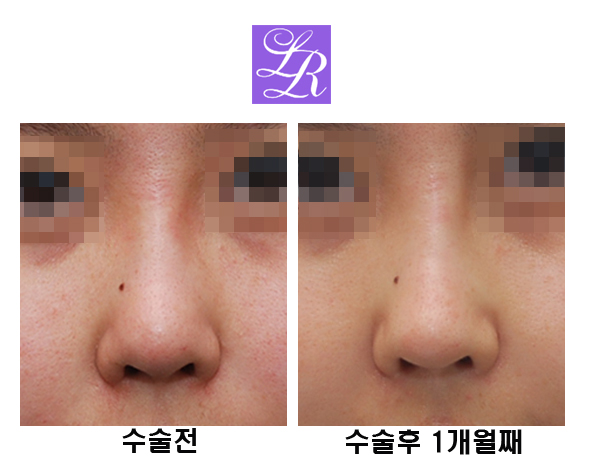
Also, even if someone had bridge + tip surgery before, the ear cartilage or septal cartilage used to support the tip can weaken,
causing the tip to droop and leading many people to undergo secondary rhinoplasty again.
Looking at the before-and-after frontal photos above, there is actually not a dramatic change in the nose shape from the front before and after surgery,
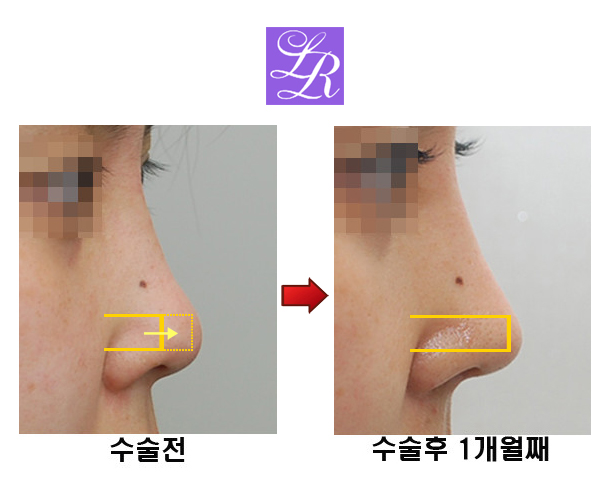
but when comparing the side profile before and after, the change in the nasal tip is clearly visible.
These days, anyone can take photos easily, and there are many different poses, especially since photos can be taken from all over the place.
So not only the front view of the face, but also the side view and the face seen at an angle are important.
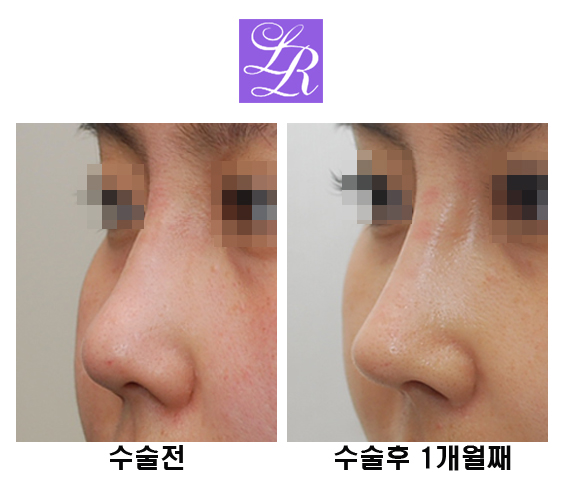
Before, the nasal bridge had already been raised to some extent with a nasal implant procedure, but the tip was still? somehow lacking and blunt.
After the overall secondary rhinoplasty, including the tip, you can see that the nasal tip has changed to a sharper shape.
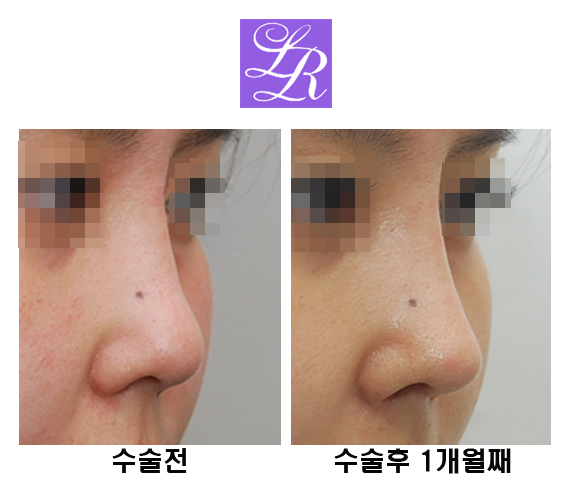
The bridge line was also not smooth before the secondary rhinoplasty, but after surgery the bridge line became smooth.
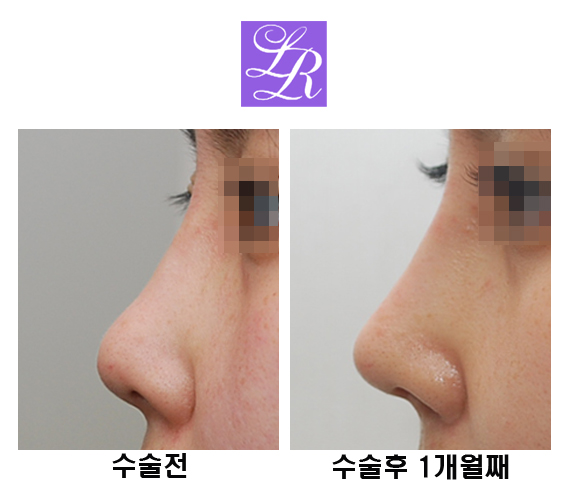
The nasal bridge can be raised simply by placing an implant such as silicone on top, but the nasal tip does not become more refined just by placing an implant or autologous cartilage on it.
As shown in the photo below, a strut, the columellar pillar that supports the nasal tip like a tent pole and prevents it from collapsing again, is absolutely necessary.
When the pillar is supported, the columella in the nostril photo below also becomes longer, making the nostrils longer to match the refined nasal tip.
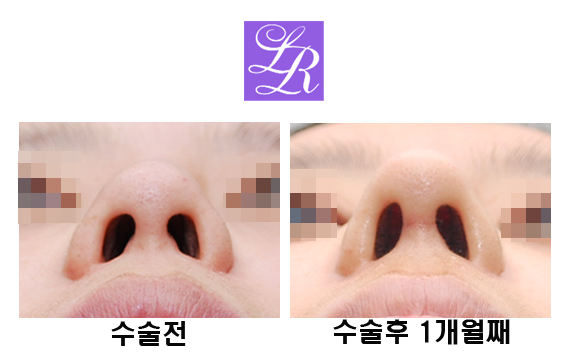
A bonus benefit is that nostrils that seemed uneven can be naturally balanced!