Lateral canthoplasty is a surgical method that lowers the outer corner of the eyes and makes the eyes look larger. In particular, it is intended to reshape the outer corner of the eye, that is, the lateral canthus.
If the lateral canthus of the eye is reshaped and the outer corner is lowered slightly, the eyes can look larger and longer.
Laree Plastic Surgery
<First Lateral Canthoplasty>
If the palpebral fissure is short compared to the length of the double eyelid, lateral canthoplasty is often performed to match the length of the eye opening with the length of the double eyelid line.
There are people who want to undergo #FirstLateralCanthoplasty for this purpose.
Of course, another goal is to lower the outer corner of the eye and make the eyes look larger.
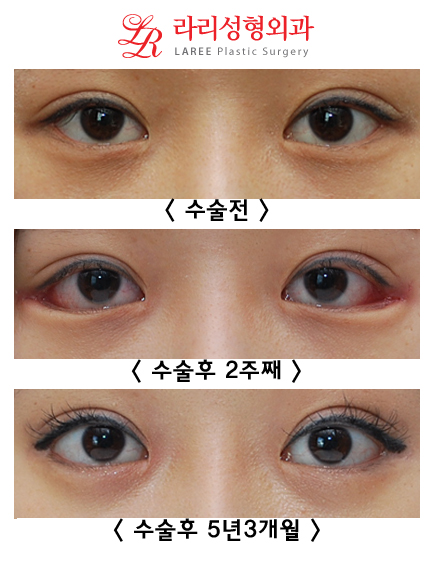
Because lateral canthoplasty can lengthen the lateral canthus, it can help match the eye opening to the length of the double eyelid line.
At the 2-week mark, not long after surgery, the eyes may look overly open, but as time passes, the natural tendency to return to the original state means they gradually become somewhat shorter.
However, compared to before surgery, long-term follow-up photos taken several years later show that the eyes remain significantly more open and the longer eye length is well maintained.
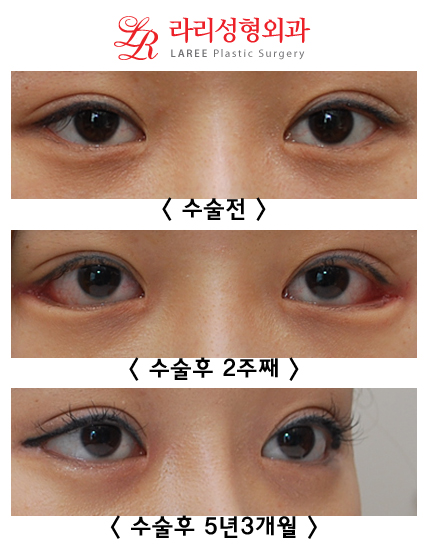 Lateral canthoplasty short-term follow-up - the effect is clear!
Lateral canthoplasty long-term follow-up - the effect is maintained!
#ShortTermFollowUpLateralCanthoplasty #LongTermFollowUpLateralCanthoplasty
Lateral canthoplasty short-term follow-up - the effect is clear!
Lateral canthoplasty long-term follow-up - the effect is maintained!
#ShortTermFollowUpLateralCanthoplasty #LongTermFollowUpLateralCanthoplasty
As can be seen from the short-term and long-term follow-up of lateral canthoplasty, our clinic's lateral canthoplasty clearly produces effective results and does not reattach.
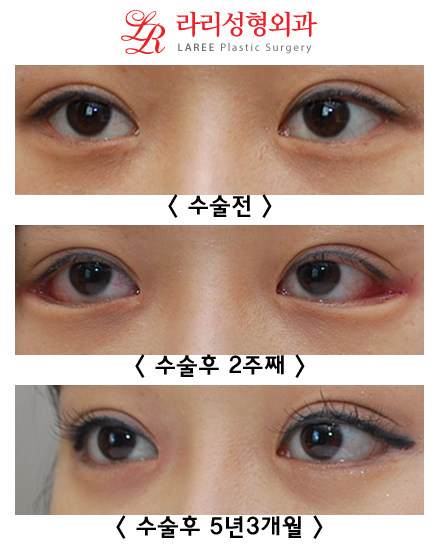
It is hard to find #BeforeAndAfterPhotosOfLateralCanthoplasty that show better results than this for people who are hesitant about #LoweringTheOuterCornerOfTheEyeLateralCanthoplasty.
Q&A
Q. If such good results are shown, do some people undergo the same surgery again for an even better effect?
A. Yes. In this case, the patient remembered the beneficial effect from the previous surgery and, wanting even more effective eyes, underwent the same surgery again 8 years later.
↓
The following are before-and-after photos of the same patient who underwent the same surgery again 8 years after the first operation, wanting a greater effect.
<Revision Lateral Canthoplasty>
#RevisionLateralCanthoplasty
Even 8 years later, the effect remained unchanged from 5 years earlier, and although the first surgery initially looked overly widened,
we were able to see long-term follow-up photos in which it eventually became natural.
There were no cosmetic side effects such as incision scars or D-shaped deformity, and no functional side effects such as #LateralCanthoplastyDryEye.
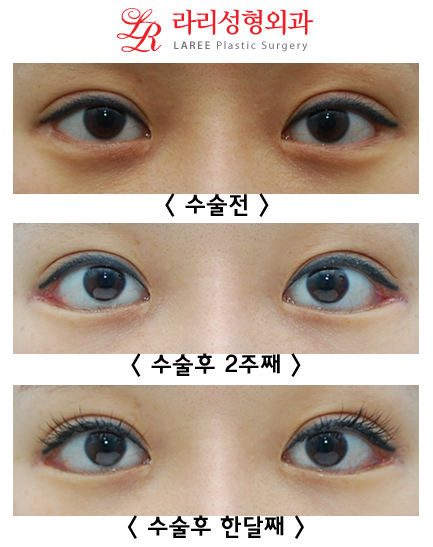
In this case, 8 years after the first lateral canthoplasty, a #RevisionLateralCanthoplasty was performed again because the patient wanted more effect.
Since the eyes were already somewhat longer and larger after the first lateral canthoplasty, the second lateral canthoplasty could enlarge the eyes relatively easily, and because the surgery was performed at the same plastic surgery clinic as before,
we knew well which areas required extra caution during the operation.
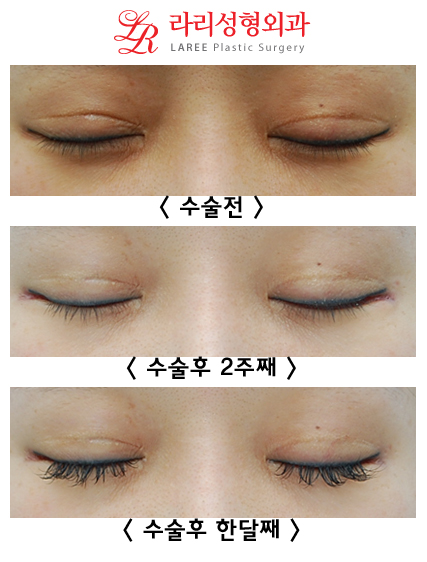
Even after two lateral canthoplasties, the eyes close well just as they did before surgery.
Although nearly 10 years have passed since the surgery, there has been no deformity of the outer corner of the eye or sagging of the lower eyelid.
This is because the lowering-the-outer-corner lateral canthoplasty does not cut the entire #LateralCanthalLigament, but only part of it.
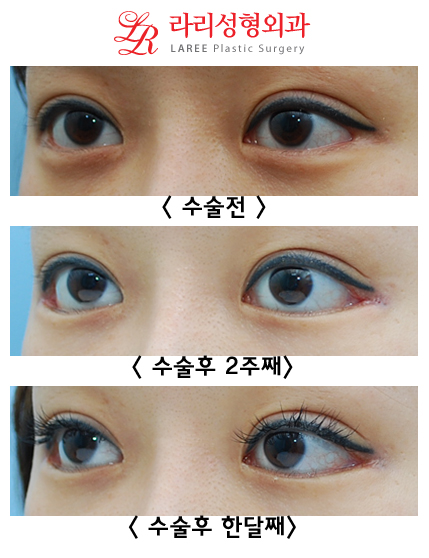
And one important point here is that each individual's habits after surgery are also extremely important in relation to postoperative deformity of the outer corner of the eye.
Looking at this patient's before-and-after photos, the length of the opened outer corner did not decrease at all at 2 weeks or 1 month.
That means, in this case, the muscle action at the outer corner of the eye was relatively weak,
which shows how important it is to reduce muscle action at the outer corner during lateral canthoplasty.
Frequent squinting at the outer corner of the eye, smiling often, or rubbing the outer corner strongly can cause deformity of the outer corner of the eye, so
this suggests that if each person is not careful after outer-corner surgery, deformity of the outer corner may occur.
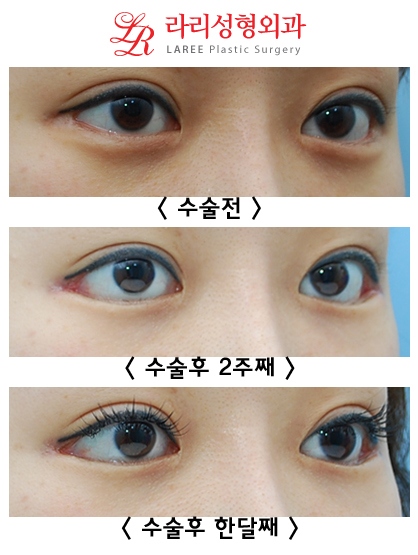
Now, the second revision lateral canthoplasty is also a success!!