To soften the impression, people often think that a canthoplasty that lowers the outer corner of the eye is all that is needed.
Of course, in many cases, a canthoplasty alone can create a softer impression.
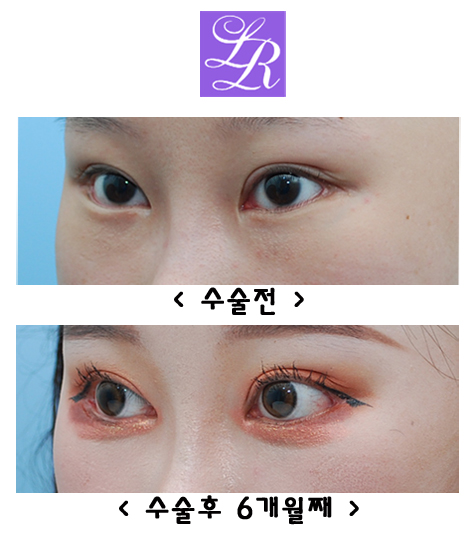
However, if not only the upturned outer corner but also the epicanthal fold at the inner corner of the eye is pointed downward, as in the preoperative photo,
the overall impression can look sharper.
By performing a directional change epicanthoplasty at the same time as the canthoplasty,
changing the downward-pointed epicanthal fold into a horizontally elongated shape can make the eyes look gentler.
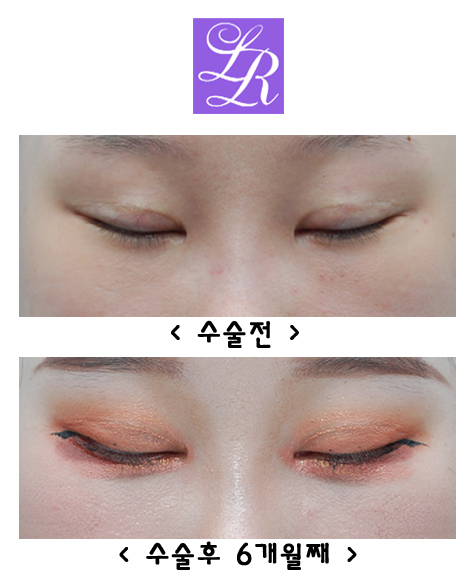
When the eyes are closed, the epicanthal fold is still visible, and the inner corner that used to point downward
has been well opened into a horizontal shape after epicanthoplasty,
and you can also see that the length of the eye opening when closed has increased.
Lower eyelid fat repositioning performed together with canthoplasty is also effective.
Just as our skin stretches and sags over time,
fat located under the eyes can also loosen and create puffiness under the eyes.
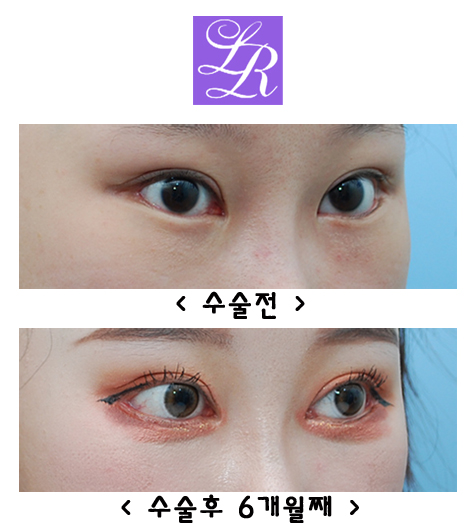
When there is puffiness under the eyes
The under-eye area can look dark and dull,
and the overall impression can look tired and older.
In such cases, removing or repositioning the under-eye fat may help.
If you lower the upturned outer corners while also correcting the under-eye fat,
the eyes can look much softer and more youthful.
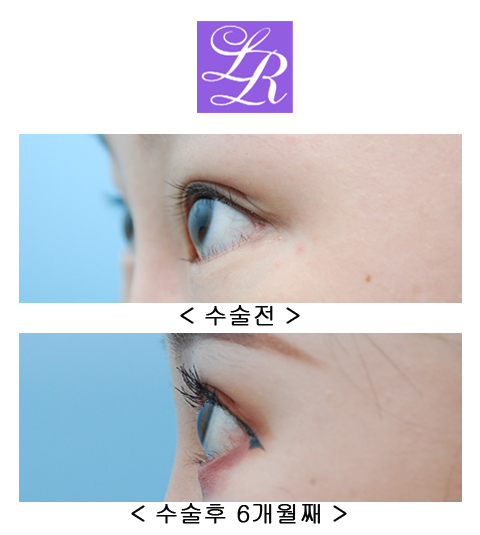
In the case of lower eyelid entropion, the eyelid rolls inward, and the lower eyelashes point toward the eyeball.
In this case, even from the preoperative photo, the patient felt discomfort because the eyelashes were touching the eyeball,
and tried to relieve the symptoms by pulling out their own eyelashes,
but since the eyelashes grow back after 2–3 weeks, repeating this continuously is difficult.
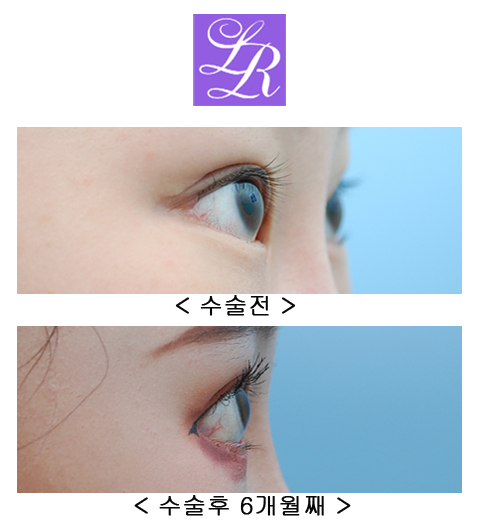
After entropion correction surgery, the lower eyelashes are directed outward,
and it can be confirmed that they no longer poke the eye.