Let’s Learn About Gum Recession Treatment Methods at Gaepo-dong Dental Clinic.
Hello.
This is Oks Dental Clinic.
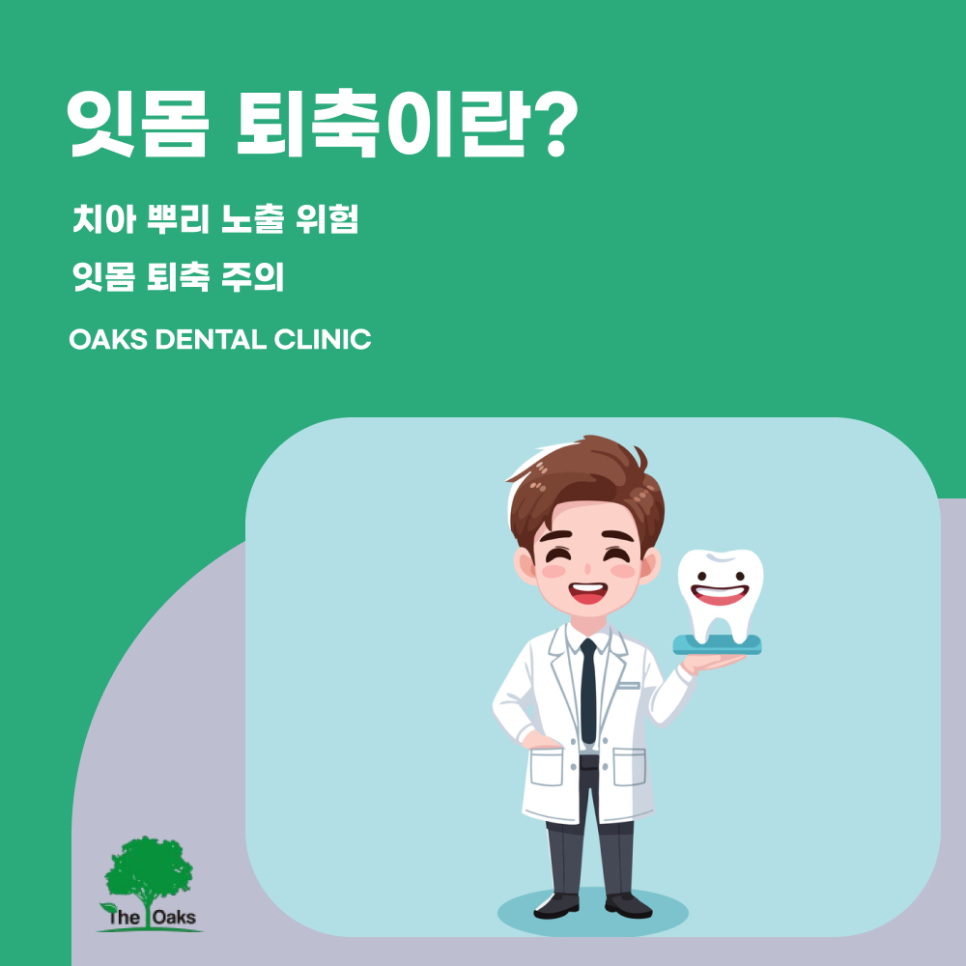
Today, we will look at treatment methods for gum recession.
What is gum recession?
Gum recession refers to a condition in which gum tissue gradually decreases, exposing the roots of the teeth.
This not only has a negative effect on dental health, but can also cause aesthetic concerns.
In the early stages, the symptoms are mild, but if left untreated, the teeth may become loose, and in severe cases, it can lead to tooth loss.
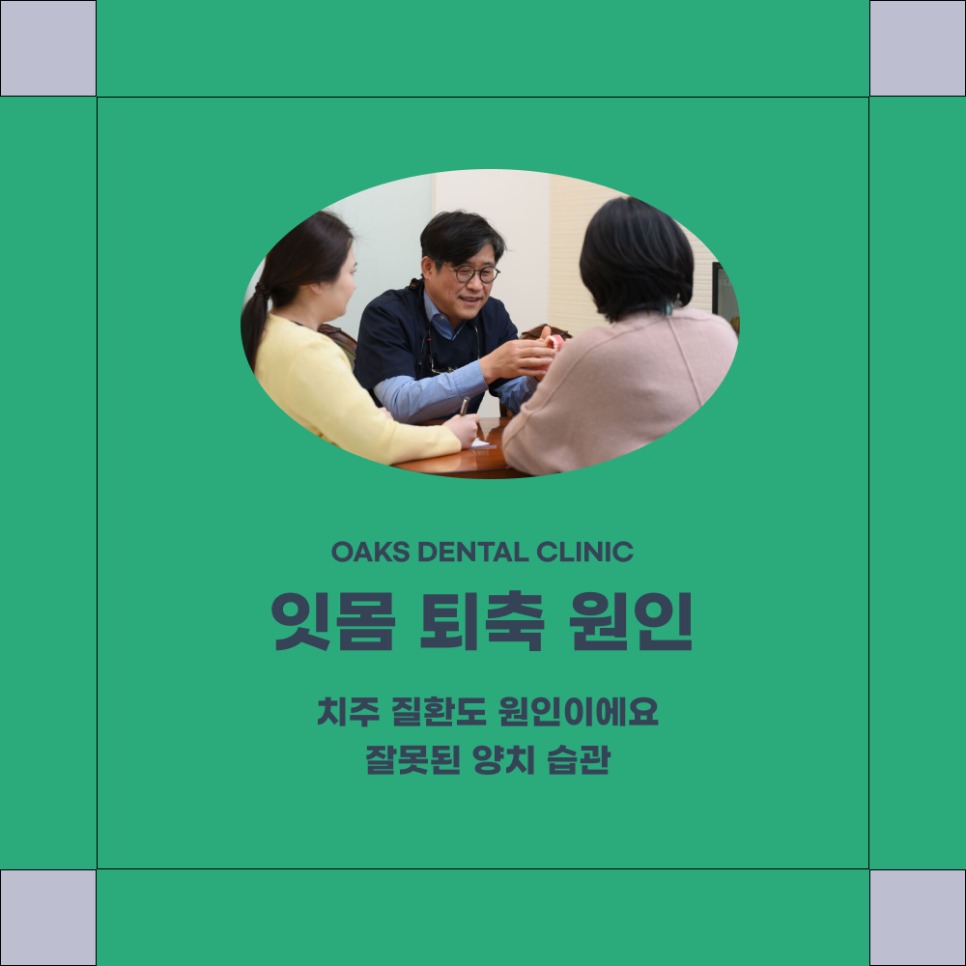
Main causes of gum recession
Gum recession can occur due to various causes, and the main ones are as follows.
▶ Improper brushing habits
Brushing too hard or using hard bristles can gradually wear down the gums and cause recession.
▶ Periodontal disease (gum disease)
When plaque and tartar build up, bacterial infection occurs, inflammation in the gums worsens, and eventually the gum tissue is damaged and recedes.
▶ Improper bite (misaligned bite)
If the teeth do not align evenly or excessive force is applied to certain areas, the gums and alveolar bone can weaken.
▶ Smoking and drinking
Smoking interferes with blood circulation, making it difficult for gum tissue to recover, and drinking can weaken immunity and worsen gum disease.
▶ Aging
As we age, gum tissue can naturally weaken and shrink.
▶ Genetic factors
If there is a family history, the gums may be inherently weak, making recession more likely.
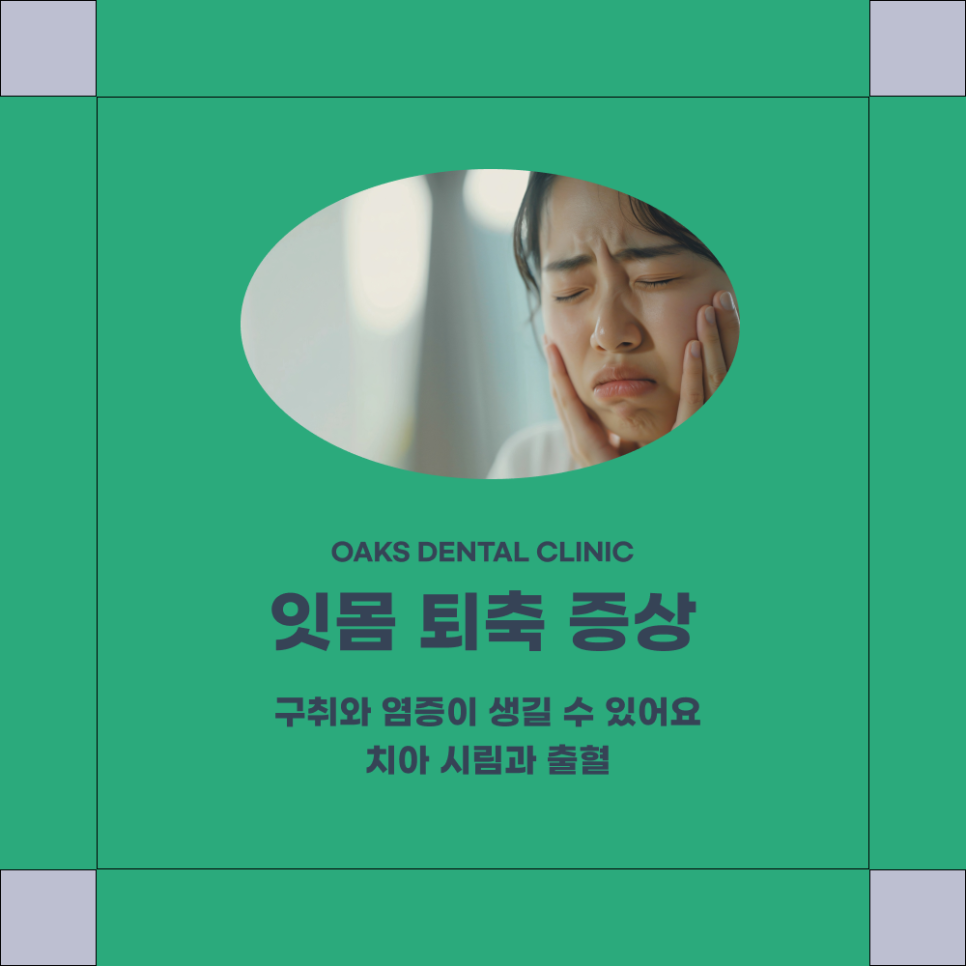
Main symptoms of gum recession
Because gum recession progresses slowly, it can be hard to notice at first, but the following symptoms may appear.
▶ Exposed tooth roots
The teeth may look longer, or the roots may gradually become visible.
▶ Tooth sensitivity
Teeth become sensitive to cold or hot foods, and a sensitive feeling may occur.
▶ Gum bleeding
The gums bleed easily when brushing.
▶ Gum inflammation
The gums become red and swollen, and may hurt when touched.
▶ Bad breath
As the gums recede, bacteria can multiply more easily, which may worsen bad breath.
▶ Loose teeth
When gum recession becomes severe, the risk of teeth becoming loose or falling out increases.
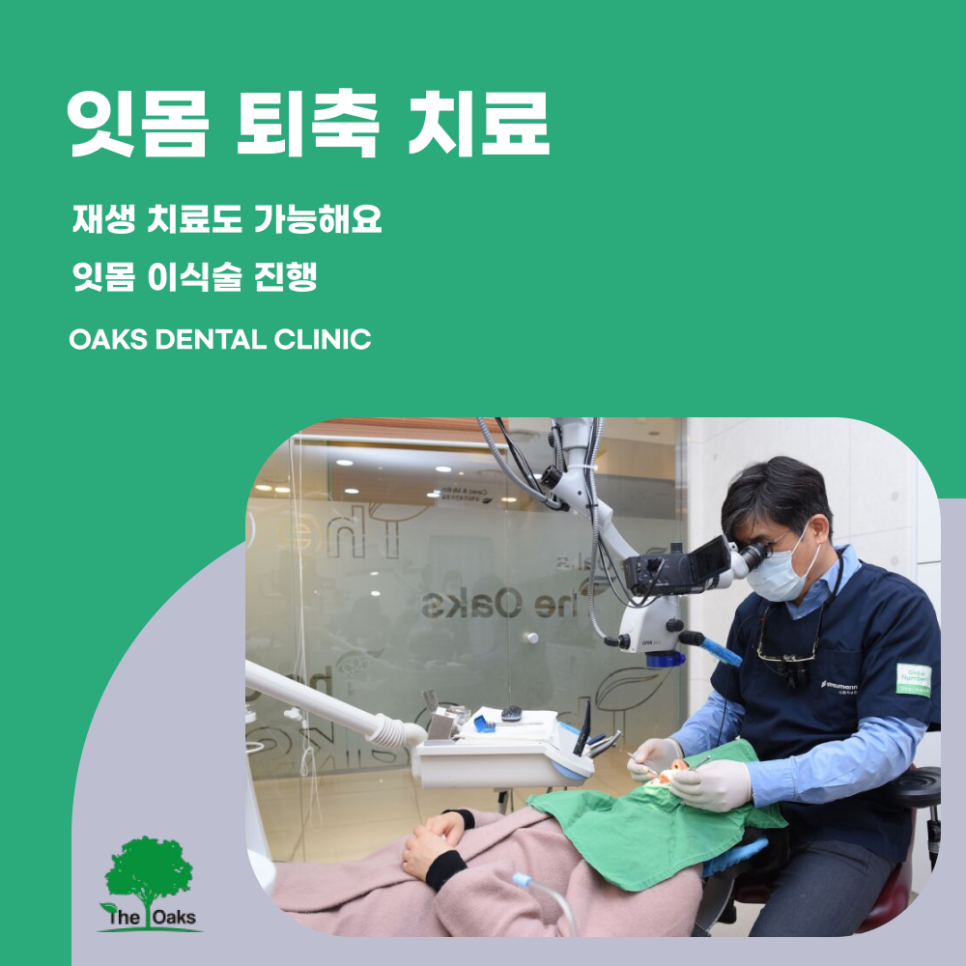
Treatment methods for gum recession
If gum recession is not severe, symptoms can be eased with lifestyle improvements and basic treatment alone, but if it has progressed, professional treatment is necessary.
▶ Early treatment methods
● Proper brushing habits
Use a soft toothbrush and avoid brushing too hard.
● Use dental floss and interdental brushes
Manage oral hygiene thoroughly to reduce the buildup of plaque and tartar.
● Regular scaling
Get scaling at the dentist every 6 months to remove plaque and tartar.
▶ Moderate treatment methods
● Root planing (curettage)
This is a treatment that removes bacteria and tartar from beneath the gums.
● Antibiotic treatment
If inflammation is severe, antibiotics may be used to reduce bacterial infection.
▶ Treatment methods for severe gum recession
● Gum grafting
This treatment grafts gum tissue from another area to reinforce the recessed gum area.
● Gum regeneration treatment
Regenerative treatment may be performed to restore damaged alveolar bone and gum tissue.
How to prevent gum recession
To prevent gum recession and maintain healthy gums, the following care is necessary.
▶ Use a soft toothbrush
Use a soft toothbrush to protect the gums and practice proper brushing.
▶ Use dental floss and mouthwash
Effectively remove food particles and bacteria between the teeth.
▶ Regular dental checkups
Visit the dentist every 6 months for scaling and regular checkups.
▶ Maintain a balanced diet
Eat foods rich in vitamin C and calcium to maintain gum health.
▶ Reduce smoking and drinking
Smoking and excessive drinking are harmful to gum health, so it is best to avoid them.
▶ Manage stress
Stress can weaken immunity and worsen gum health, so proper rest and exercise are needed.
Gum recession is a condition that can be sufficiently prevented and treated if managed early.
It is important to practice proper oral hygiene habits and visit the dentist regularly for professional care.