Let’s learn about inlays at Cheongdam-dong Dental Clinic.
Hello.
This is Oks Dental Clinic.

When you visit the dentist for a checkup, you are sometimes diagnosed with cavities and told that treatment is needed.
And to address this, you are guided through several treatment options.
Today, we will look at inlays, one of the treatments for cavities.
What Is an Inlay?
An inlay is a custom-made prosthetic used to restore a damaged tooth after cavity treatment.
Unlike methods that use simple filling materials such as resin or amalgam, it is made by taking a precise impression of the tooth, and it has the advantage of restoring the tooth’s shape and function as naturally as possible.
Types of Inlays
▶ Gold Inlay
A gold inlay is a prosthetic with high durability and biocompatibility, and it can withstand strong chewing force, making it long-lasting.
However, because its gold color differs somewhat from natural teeth, it may not be suitable for areas where aesthetics are important.
▶ Ceramic Inlay
A ceramic inlay has a color similar to natural teeth, so it offers excellent aesthetics.
It is often used when a natural appearance is desired, especially for front teeth or molars that show when you smile.
However, it may be somewhat vulnerable to strong impact.
▶ Composite Resin Inlay
A composite resin inlay is relatively affordable and has the advantage of blending well with tooth color.
However, its durability is lower than that of gold or ceramic inlays, so it may wear down or discolor over time.
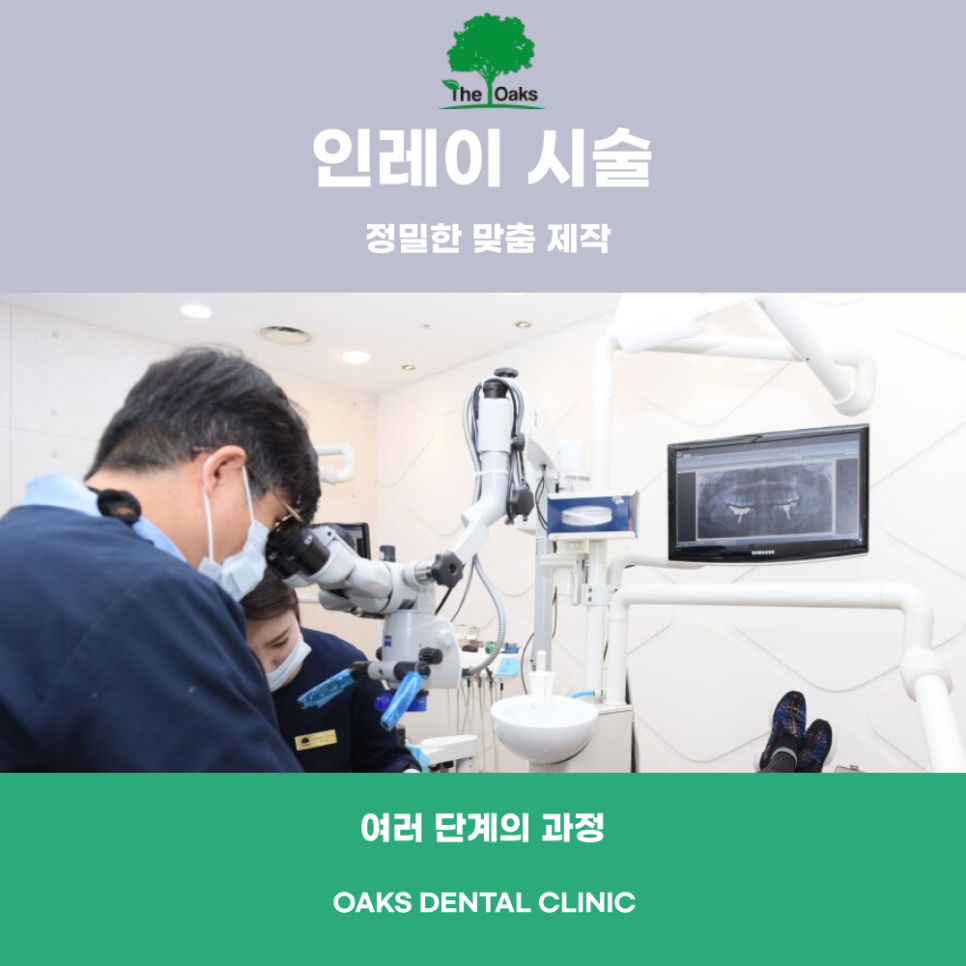
Inlay Procedure
Because inlay treatment requires precise custom fabrication, it involves a somewhat more complex process than standard filling treatment.
▶ Cavity Removal and Tooth Impression
After thoroughly removing the cavity from the damaged tooth, the space where the inlay will fit is precisely shaped.
▶ Impression Taking and Inlay Fabrication
An impression of the tooth is taken, and the inlay is fabricated at a specialized dental lab.
▶ Inlay Bonding
The fabricated inlay is bonded to the tooth to restore its natural shape and function.
▶ Bite Adjustment and Finishing
The bite with the opposing teeth is adjusted, and the surface is smoothed to finish.
Advantages and Disadvantages of Inlays
▶ Advantages
● Precise Custom Fabrication
Since inlays are made from a tooth impression, they fit the tooth very well.
● Durability
They are stronger than conventional filling materials and can be used for a long time.
● Aesthetics
Ceramic or composite resin inlays can reproduce a color similar to natural teeth.
▶ Disadvantages
● Cost Burden
Because they are custom-made, they may cost more than standard filling treatment.
● Treatment Time
At least two or more visits may be required to make the inlay.
● Vulnerable to Strong Impact
(in the case of ceramic inlays)
Ceramic inlays look natural, but they may crack if they receive a strong impact.
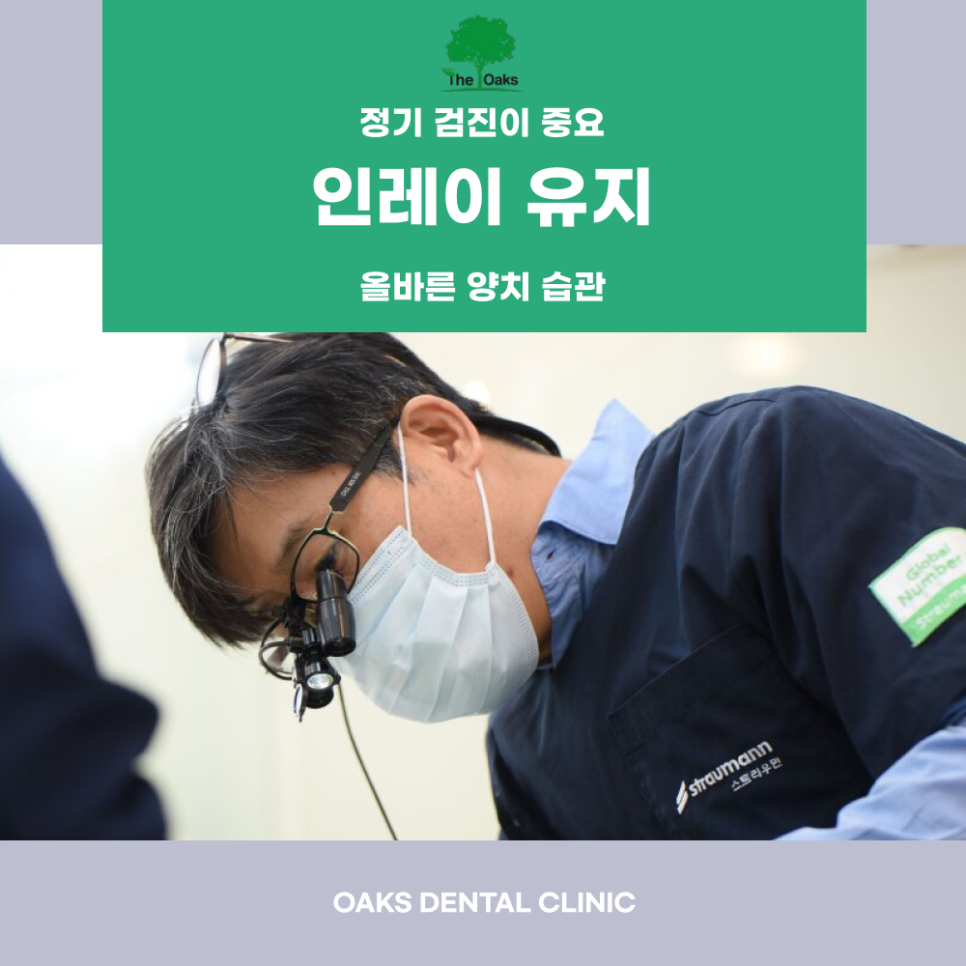
Maintenance and Care for Inlays
Proper care is still needed after inlay treatment.
▶ Proper Brushing Habits
You should use a soft toothbrush and toothpaste to keep your teeth and gums healthy.
▶ Regular Dental Checkups
You should have regular checkups every six months to inspect the condition of the inlay and consider replacement if necessary.
▶ Avoid Excessive Force
If you chew very hard foods or have a teeth-grinding habit, the inlay may be damaged, so caution is needed.
An inlay is an effective way to restore a damaged tooth, and it is a prosthetic treatment that considers both aesthetics and function.
It is important to choose the appropriate material according to the patient’s dental condition and needs, and with proper care, it can help maintain healthy teeth for a long time.
If you are considering inlay treatment, we recommend consulting a dental specialist to choose the best option.