Hello.
This is Ox Dental Clinic.
Dentures are an important prosthetic treatment option that helps restore quality of life in many ways—including chewing function, aesthetics, and pronunciation—by providing artificial teeth to patients who have lost teeth.
Also commonly called false teeth, dentures are one of the traditional prosthetic treatment methods and are used when all or some of the natural teeth have been lost.
Today, we will look at the types of dentures, their advantages and disadvantages, how to care for them, and what to consider when choosing them.
Types of Dentures
Dentures are broadly divided into complete dentures and partial dentures.
▶ Complete Dentures
These are made when all the teeth in the upper or lower jaw have been lost and are worn over the gums.
▶ Partial Dentures
When some teeth remain, these are made to be secured by attaching hooks, clips, or similar components to the remaining teeth.
They can also be classified according to their materials, such as resin dentures, metal-based dentures, and flexible dentures.
Recently, various new materials have been introduced to provide a more natural appearance and comfortable fit.
Advantages and Disadvantages of Dentures
The greatest advantage of dentures is their cost-effectiveness.
Compared with implants, they place less of a financial burden on patients and can restore function quickly through a relatively simple procedure.
They are particularly useful for older patients or those for whom surgery is difficult.
However, they also have disadvantages.
In particular, they may feel unfamiliar in the mouth during the initial period of wear, and chewing ability may be lower than with natural teeth or implants.
It is also important to consider discomfort caused by dentures moving or coming out during use, food becoming trapped, and reduced aesthetics.
Because the dentures may no longer fit properly over time as the jawbone is resorbed, periodic adjustments or replacement may be necessary.
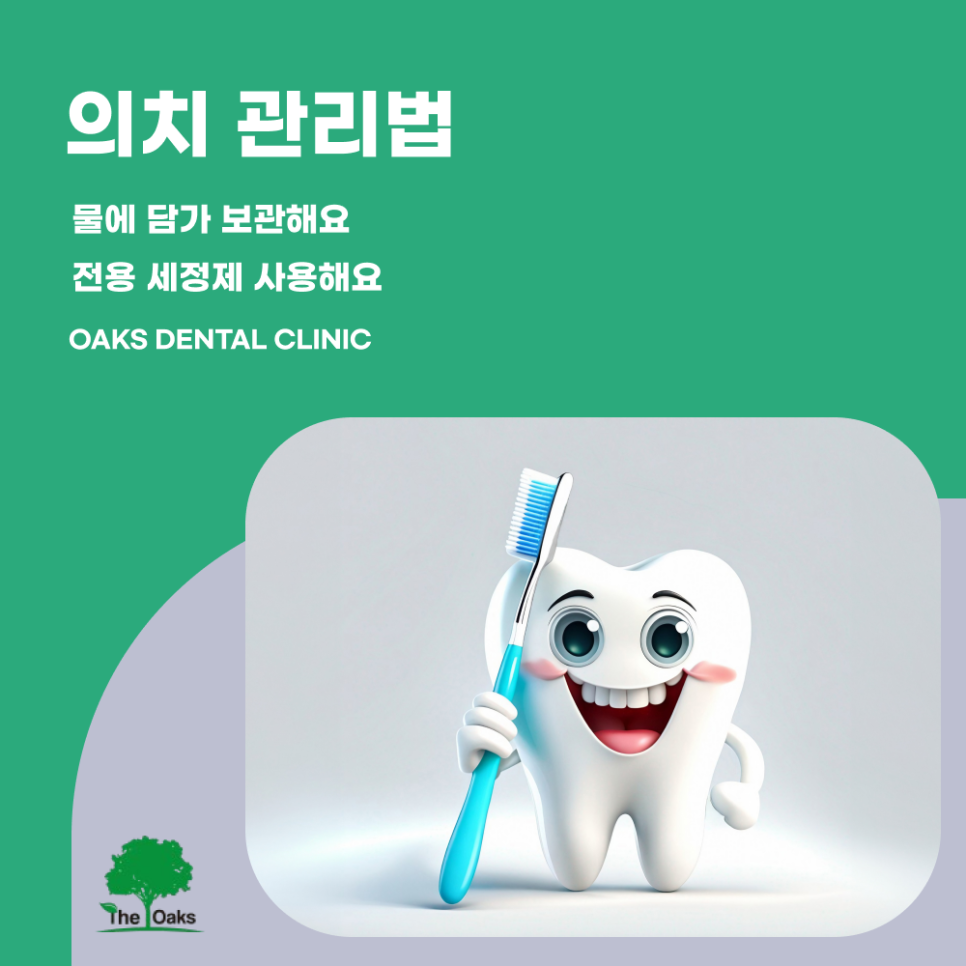
How to Care for Dentures
Thorough care is essential for using dentures safely and comfortably for a long time.
They should be cleaned at least once a day with a dedicated cleanser and denture brush. It is best not to use regular toothpaste, as it may damage the surface.
When not being worn, they should be stored in water or a dedicated solution. Leaving them dry may cause them to become misshapen.
Even while wearing dentures, maintaining the hygiene of the gums and any remaining teeth is very important. It is also advisable to have their condition checked through regular dental examinations.
Dentures and Quality of Life
Dentures play an important role beyond simply helping a person chew food, helping restore psychological stability and social confidence.
Especially when the front teeth are included, dentures can improve appearance and pronunciation, reducing stress in personal interactions.
They may also improve nutritional intake, which can have a positive effect on overall health.
What to Consider When Choosing Dentures
When choosing dentures, the condition of the teeth, gum health, and financial circumstances should all be considered together.
If retention and stability are priorities, hybrid prostheses such as implant-supported dentures may also be considered.
If aesthetics and comfort are important, dentures made from flexible, nonmetallic materials may be chosen.
Most importantly, the most suitable option should be selected through diagnosis and consultation with a professional dentist.
Dentures are not simply prosthetic devices; they are tools that help restore part of the life that has been lost.
With the right choice and consistent care, dentures can also become a reliable companion to a healthy oral lifestyle.