A Thorough Look at the Dental Implant Process from Start to Finish at Gaepo-dong Dental Clinic.
Hello.
This is Oks Dental Clinic.
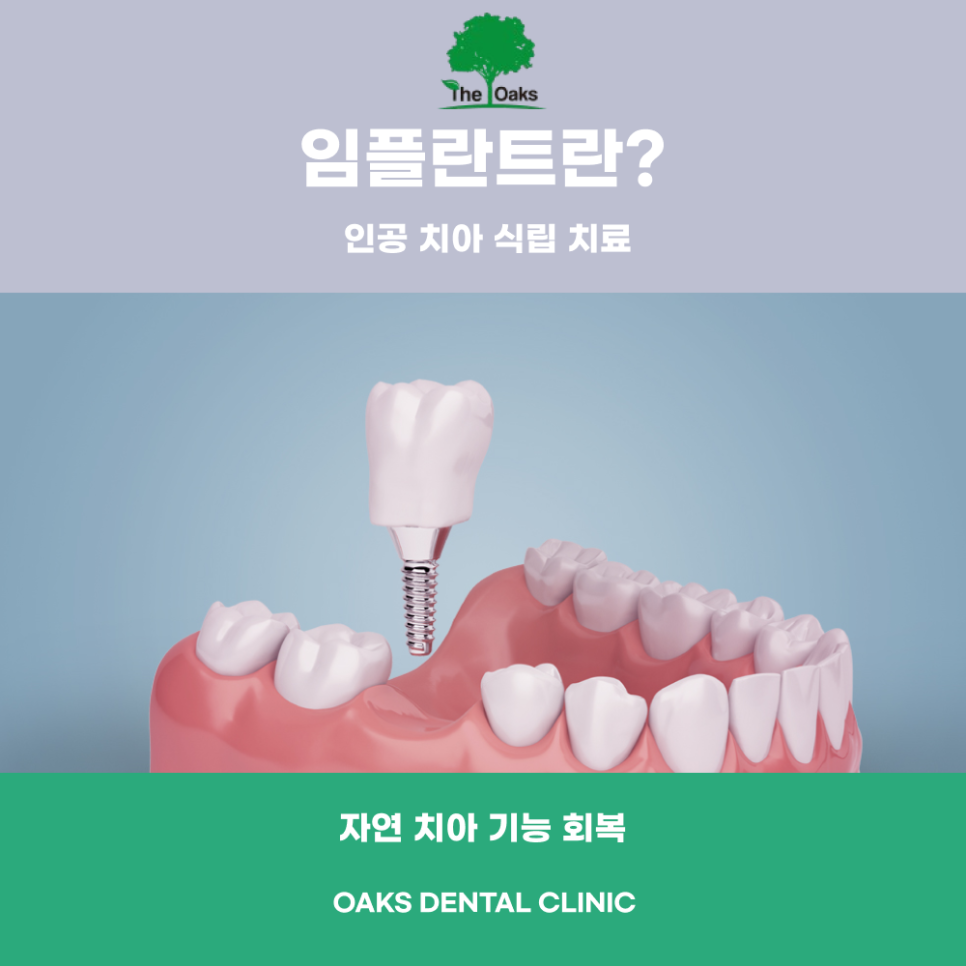
Today, I will explain the implant process in detail.
What is an implant?
An implant is a treatment method in which an artificial root (made of titanium) is placed in the area where a tooth has been lost, and a tooth-shaped prosthesis is attached on top of it.
It provides function and aesthetics similar to natural teeth, and its advantages are that it is more durable than conventional dentures or bridges and does not affect surrounding teeth.
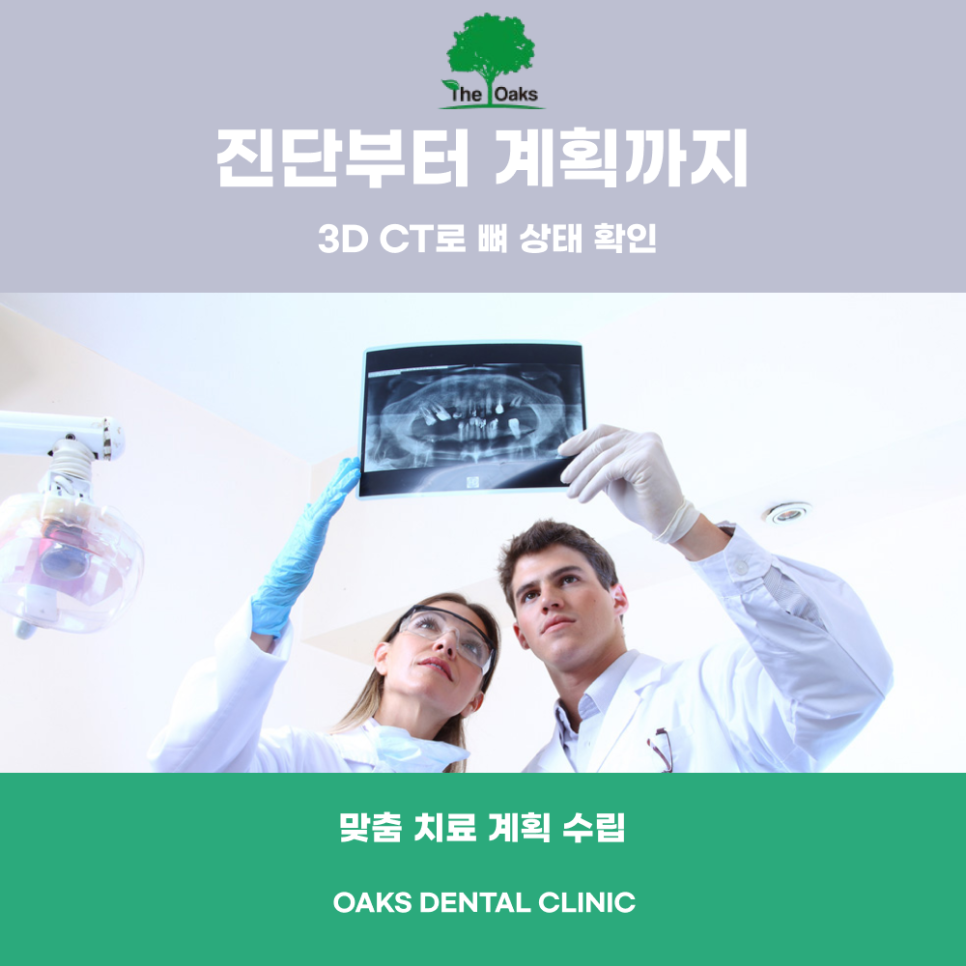
Implant procedure
▶ Precise diagnosis and treatment plan establishment
Before the procedure, the condition of the jawbone is checked through 3D CT imaging and an oral examination, and a customized treatment plan is established according to the patient’s oral condition.
At this stage, you can receive detailed guidance on the necessity and feasibility of the implant, the expected treatment period, and the cost.
▶ First surgery – Implant placement
After local anesthesia, the gum is incised and the artificial root (implant) is placed into the jawbone.
After placement, a period of osseointegration is needed for the implant and bone to firmly bond, which generally takes about 2 to 6 months.
▶ Second surgery – Abutment connection
Once osseointegration is complete, an abutment used to attach the prosthesis is connected on top of the artificial root.
After that, you wait about 1 to 2 weeks until the gum recovers.
▶ Prosthesis fabrication and placement
The prosthesis is made in consideration of the patient’s tooth shape and color, and then attached to the abutment.
This allows the recovery of function and aesthetics similar to natural teeth.
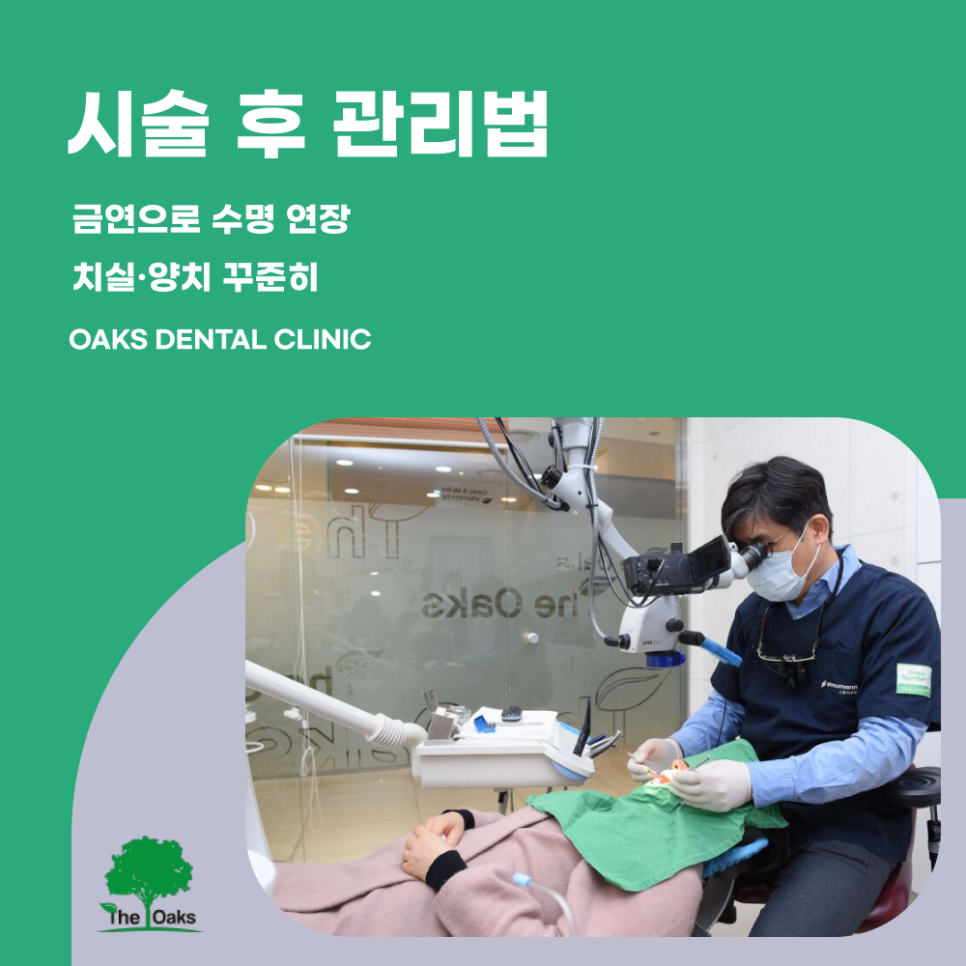
Post-implant care
After implant treatment, regular checkups and thorough oral care are important.
Maintaining healthy gums around the implant through proper brushing habits and flossing, and avoiding hard or chewy foods is recommended.
Also, avoiding smoking and excessive drinking can help extend the lifespan of the implant.
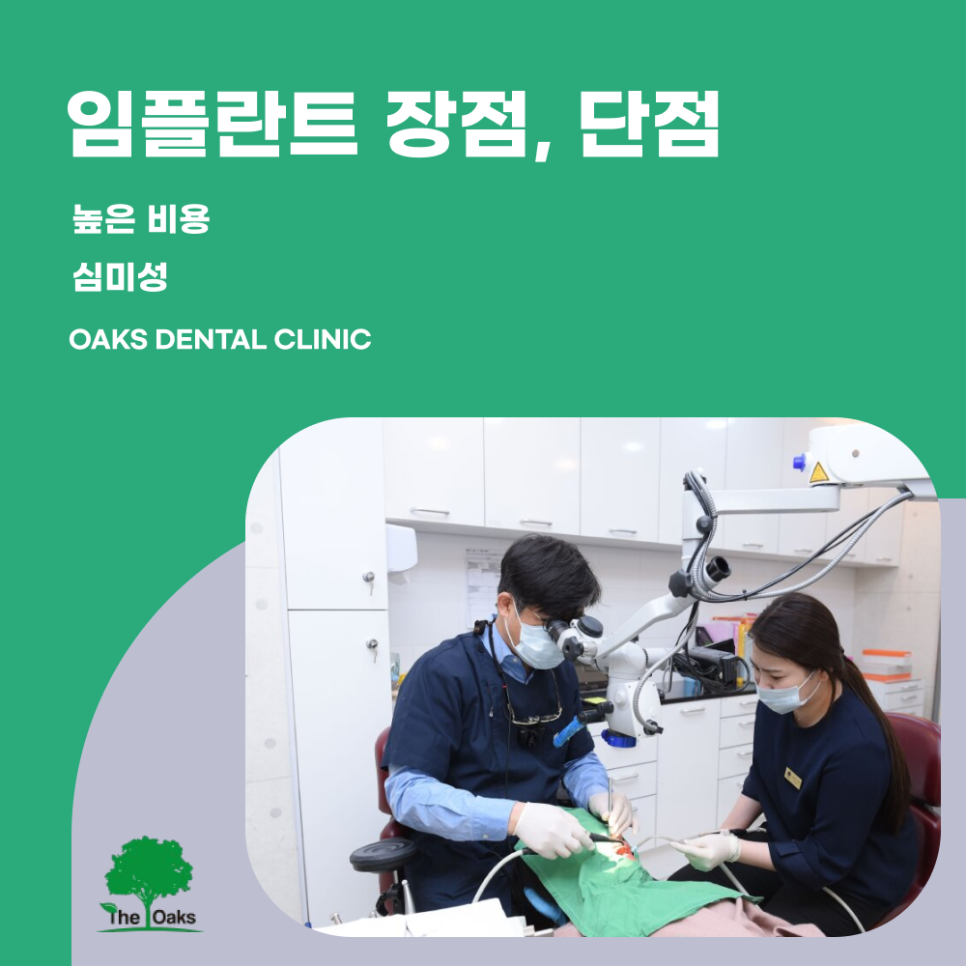
Advantages and disadvantages of implants
▶ Advantages
● Function and aesthetics similar to natural teeth
● Long lifespan: can be used for 10 to 20 years or more with proper care
● Protects surrounding teeth: does not shave down adjacent teeth
● Aesthetic effect: natural appearance
● Prevents bone loss: helps maintain the alveolar bone
▶ Disadvantages
● The cost is relatively high
● Recovery time is needed after surgery
● May be limited if bone density is low or gum health is poor
Considerations when receiving implant treatment
▶ Sufficient quantity and quality of gum bone
▶ General health condition
▶ Oral hygiene status
▶ Whether you smoke
▶ Possibility of post-procedure care
In closing…
An implant is not simply about placing a tooth; it is an important treatment that restores a healthy oral structure and improves quality of life.
If you are considering implants, it is important to establish a treatment plan that suits you through sufficient consultation and an accurate diagnosis.
Choosing a dental clinic you can trust from start to finish is the beginning of a successful implant.