Seogok-dong Dental Clinic: What Is Tooth-Preserving Treatment? A Choice to Save Your Natural Teeth!
Hello.
This is Oks Dental Clinic.
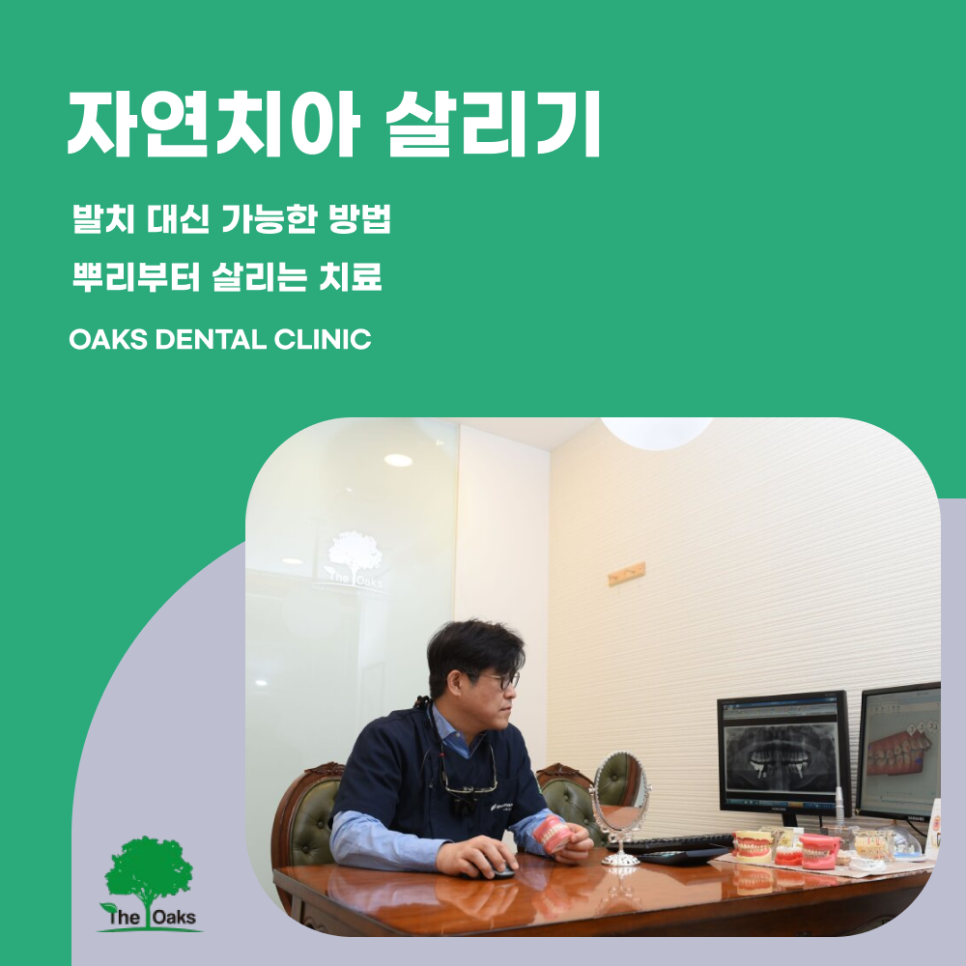
Teeth are valuable tissues that cannot be returned to their natural state once they are lost.
However, when there is pain, severe cavities, or inflammation, many people think, “Should I just pull it out quickly and get an implant?”
But not every tooth must be removed unconditionally, and treatment that preserves the natural tooth as much as possible, from the root to the inside, should be considered first. That is tooth-preserving treatment.
Today, I will explain step by step what tooth-preserving treatment is, when it is needed, and what treatment methods are available.
What Is Tooth-Preserving Treatment?
Tooth-preserving treatment, as the name suggests, refers to treatment that aims to maintain natural teeth as much as possible.
Simply put, it means various treatment methods that protect a tooth’s function and vitality without extracting it.
Because a tooth is composed of multiple interconnected structures such as the root, nerves, alveolar bone, and gums, losing even one tooth can affect the surrounding teeth and the overall alignment of the dentition.
Therefore, conservative treatment plays a key role in saving natural teeth and maintaining overall oral health.
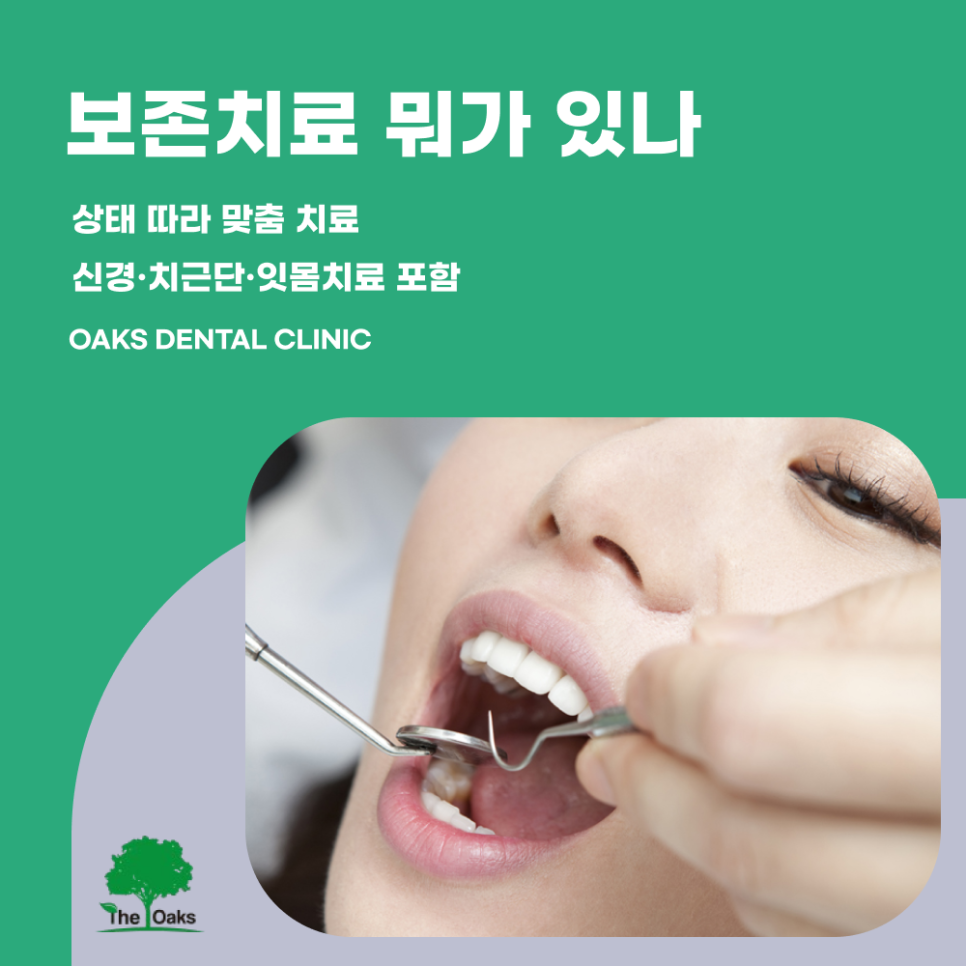
Main Types of Tooth-Preserving Treatment
▶ Root Canal Treatment (Endodontic Treatment)
One of the most 대표적인 conservative treatments is root canal treatment, commonly called “nerve treatment.”
When the tooth’s internal nerve (pulp) is damaged due to cavities or trauma, the nerve is removed, the inside is thoroughly disinfected, and then the tooth is sealed again for use.
● If the pain is severe
● If the tooth has decayed and developed a hole
● If it has been broken due to trauma
● If root canal treatment is performed quickly, the tooth can often be used for a long time without extraction.
▶ Apicoectomy
If inflammation does not disappear with root canal treatment alone, or if a lesion remains at the tip of the root, a procedure called apicoectomy is used.
This is a surgery in which the gum is opened, the inflamed area at the tip of the tooth root is removed, and if necessary, the root tip is cut and sealed to prevent the inflammation from recurring.
It can be the last hope for preserving a natural tooth even when inflammation cannot be resolved through root canal treatment.
▶ Periodontal Conservative Treatment
This treatment helps preserve teeth when the gums and alveolar bone (the bone supporting the tooth) surrounding the tooth have weakened and the tooth has become loose.
It includes treatments such as scaling, root planing, and gum surgery, which remove inflammation deep within the gums and help regenerate the gums and bone.
Even if periodontal disease is severe, the chances of using the tooth for a long time can be improved through appropriate treatment without extraction.
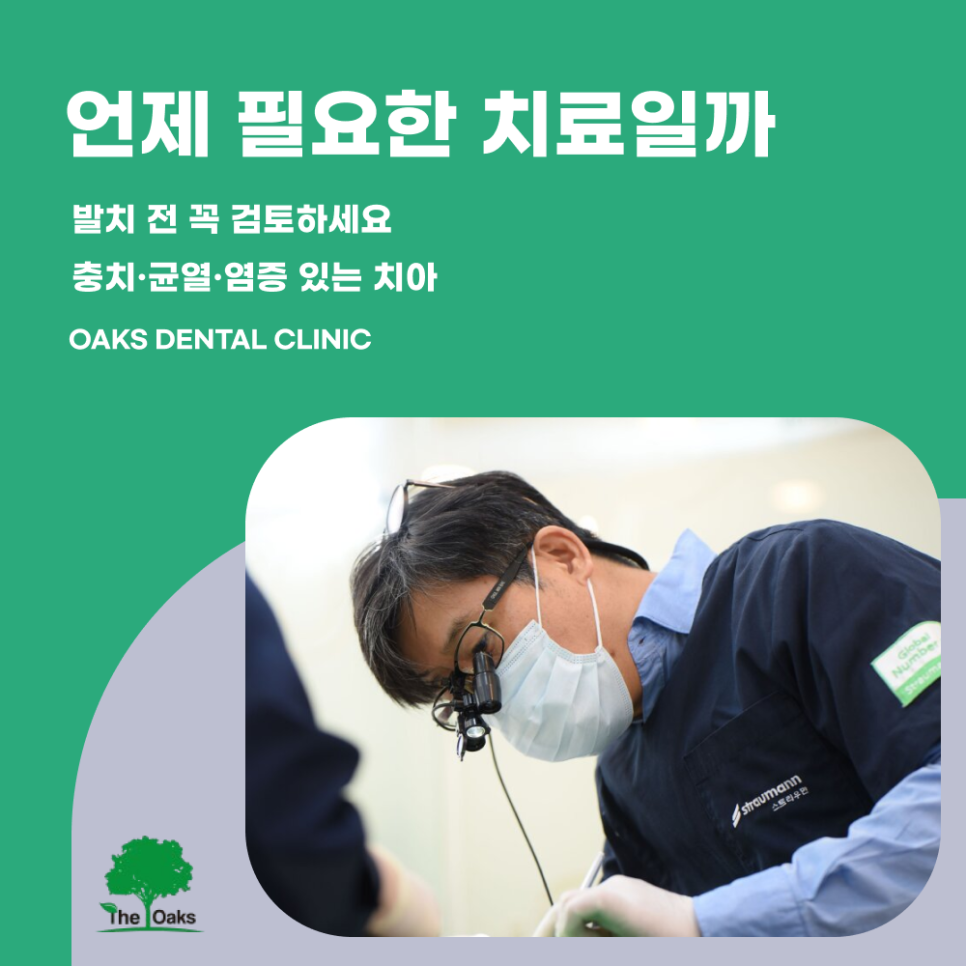
When Is Tooth-Preserving Treatment Needed?
Tooth-preserving treatment should definitely be considered in the following situations.
▶ When the cavity is deep but the root is healthy
▶ When the tooth is broken but part of the structure remains
▶ When inflammation recurs after root canal treatment
▶ When gum disease is severe but bone still remains
In many cases, before deciding on extraction, there are many situations that can also be managed with conservative treatment.
Rather than removing the tooth unconditionally, it is important to first review methods that can preserve as much of the remaining tooth structure as possible.
Advantages of Tooth-Preserving Treatment
▶ Preserves chewing ability and sensation by maintaining natural teeth
▶ Can be used longer than artificial teeth (implants)
▶ Can reduce the burden of cost and time
▶ Prevents damage to or movement of surrounding teeth
▶ Above all, it allows for psychological stability and the maintenance of a natural smile.
In Closing...
Teeth are assets that cannot be naturally restored once they are lost.
Implants are also a good treatment, but if possible, saving your own tooth is best.
If you currently have a problem with a tooth or are considering extraction, we recommend first receiving a diagnosis to see whether tooth-preserving treatment is possible.