Hello.
This is Oks Dental Clinic.
Teeth are a very precious part of our lives, directly connected to our quality of life.
From chewing food to speaking and even smiling, teeth play an important role in every moment of our daily lives.
However, when teeth are lost due to an unexpected accident, cavities, or gum disease, the treatment method that many people consider first is implants.
Implants are a very effective way to restore the function of lost teeth to a level close to that of natural teeth, but not all implants are performed in the same way.
Depending on the condition of the patient's gum bone and overall health, there are various types, and the appropriate treatment must be selected accordingly.
Today, for those who are considering implants, I would like to explain in detail the types of implants, their respective characteristics, and who they are suitable for.
Types of Implants and Their Features
✅ The most commonly used basic type - “root-type implant”
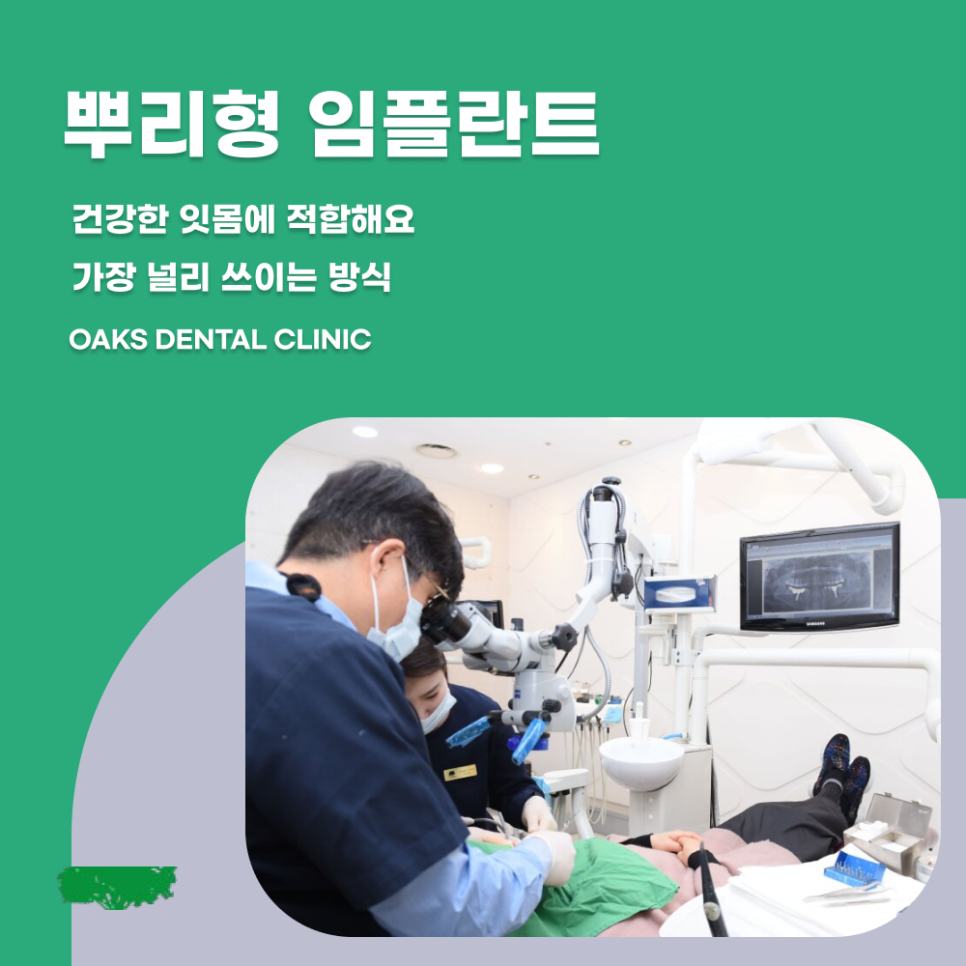
Currently, the most widely used implant method in dental clinics is the root-type implant.
In this method, an artificial tooth root (implant screw) is placed into the jawbone, and an abutment and prosthetic tooth are placed on top of it.
If the height and width of the gum bone are sufficient, the root-type implant is considered first.
▶ Advantages
It is strong like a natural tooth, has a long lifespan, and offers excellent function.
▶ Suitable for
People with healthy gums, and cases where bone grafting is not necessary
If this is your first implant treatment, most people will receive treatment using this method.
✅ An alternative for those with insufficient bone - “plate-type implant”
Some people have gum bone that is too thin or insufficient to attempt a root-type implant.
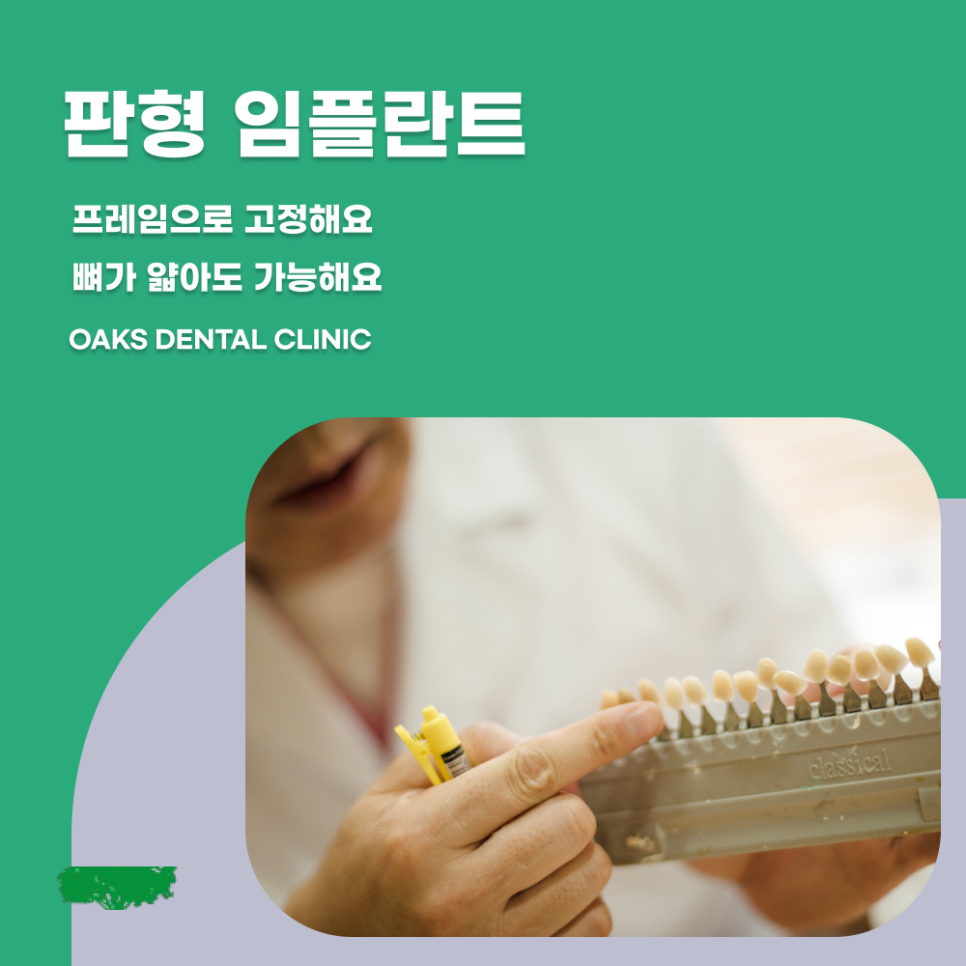
In the past, dentures were the only alternative in such cases, but recently, plate-type implants can be an option.
This method involves placing a metal frame on the jawbone and securing the prosthetic tooth on top of it, allowing a certain degree of fixation even when the gum bone is insufficient.
▶ Advantages
Implants are possible without bone grafting
▶ Disadvantages
The fixation strength is lower than that of root-type implants, and long-term stability may be reduced
Recently, by incorporating 3D digital technology, it has become possible to design them individually for each patient, making procedures much more precise and stable than before.
✅ For those who want rapid placement - “immediate implant placement”
Normally, after a tooth is extracted, several months of waiting are needed before an implant can be placed.
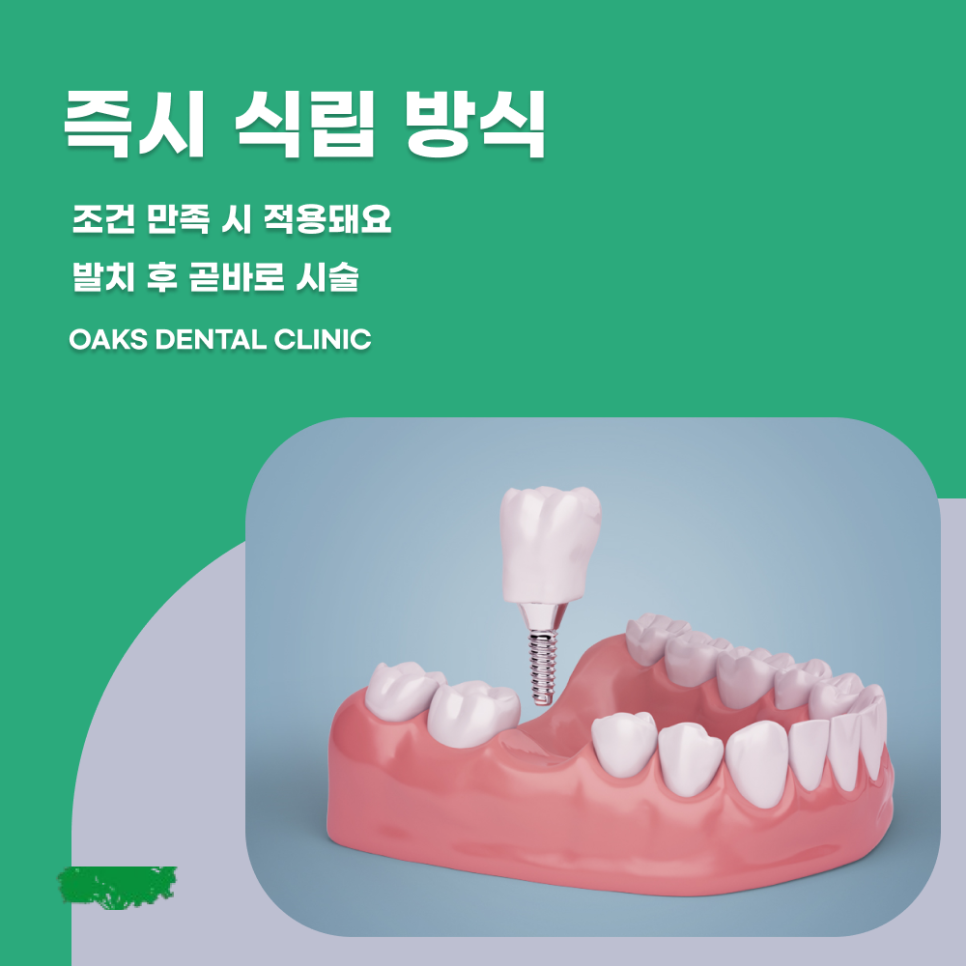
However, recently, the “immediate placement” method of placing an implant at the same time as extraction has been introduced.
However, this method cannot be applied to everyone.
It is only possible for those without infection and with good gum and bone conditions.
▶ Advantages
Treatment time can be shortened, allowing for faster recovery
▶ Suitable for
People with healthy gums and alveolar bone conditions
It may be considered for those with important upcoming schedules or those who want a faster recovery.
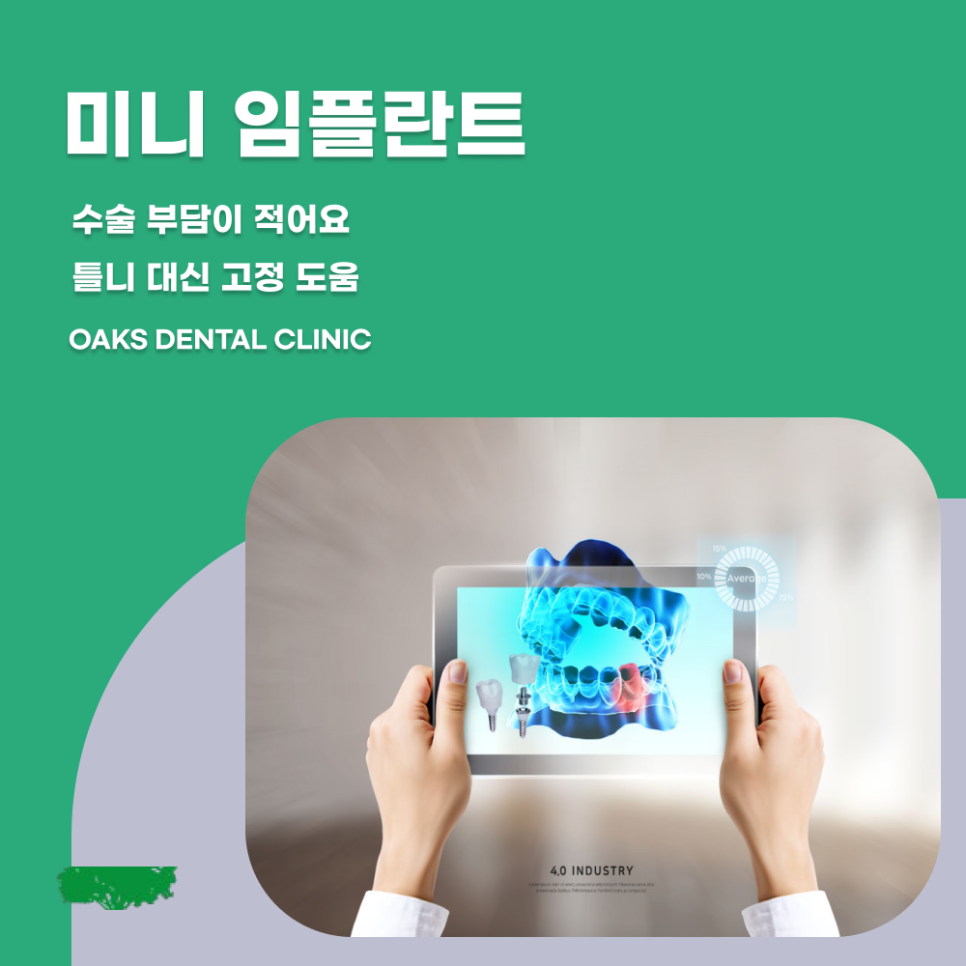
✅ For those who find dentures uncomfortable - “mini implant”
If you use dentures and they keep lifting or feel uncomfortable, small and thin mini implants can improve fixation.
Because their diameter is smaller than that of regular implants, the surgical burden is lower, and they are also effective at improving retention.
▶ Advantages
Less surgical burden and faster procedure
▶ Suitable for
Full denture users, older adults, and people with thin gum bone
However, because their chewing force is lower than that of regular implants, they are used in limited situations.
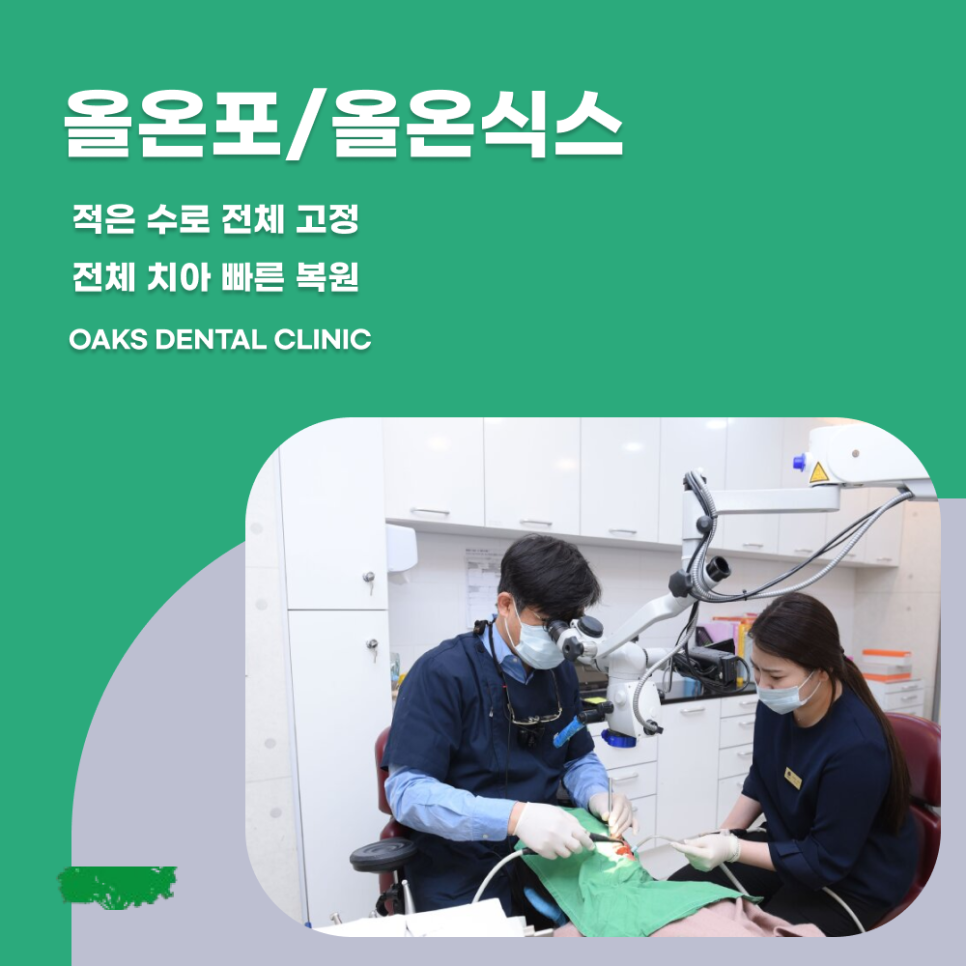
✅ Replacing all teeth at once - “All-on-4 / All-on-6”
If multiple teeth have been lost or all teeth are missing, there is a method that can secure a full prosthesis with only 4 to 6 implants instead of placing one implant for each tooth.
This is All-on-4 / All-on-6.
It can reduce time and cost, and because it also offers excellent aesthetics, it is popular among older adults and those looking to replace dentures.
▶ Advantages
Fast procedure, excellent fixation, and full restoration of teeth possible
▶ Suitable for
People who have lost all teeth, and those who want to replace dentures
However, precise CT diagnosis and planning are essential.
Which implant is right for me?
So far, we have looked at the various types of implants together.
Whichever method is chosen, it may vary depending on the patient's gum condition, overall health, and desired outcome.
You should visit a dental clinic with a specialist and undergo 3D CT imaging and digital oral scanning to analyze your bone condition, nerve location, and even the direction of chewing force, and then proceed with accurate and safe customized implant treatment.
In closing...
Implants are not simply a procedure to fill in missing teeth.
The right method for you, an accurate diagnosis, and careful treatment by a trustworthy dental clinic are more important than anything else.
Please visit and consult with a clinic that helps each patient with customized implant treatment tailored to their needs through extensive clinical experience and advanced equipment.