Gyodae Station Dental Clinic: Don’t Neglect Gum Disease.
Hello.
This is Oaks Dental Clinic.
Have you ever noticed your gums bleeding while brushing, or felt that your teeth look longer than before?
If so, you should now suspect “gum disease.”
Many people know a lot about cavities, but gum disease progresses more quietly, yet more severely, than cavities.
Today, let’s take a look at gum disease, something we must all understand and manage.

What is gum disease?
Gum disease is an inflammatory disease that affects the gums and surrounding tissues.
In the early stages, it begins as “gingivitis,” which simply causes bleeding gums, but if it is not properly managed, it can progress to “periodontitis,” which can destroy the alveolar bone (the bone that supports the teeth).
When periodontitis becomes severe, even healthy teeth can lose their supporting structures and fall out, so early detection and treatment are very important.
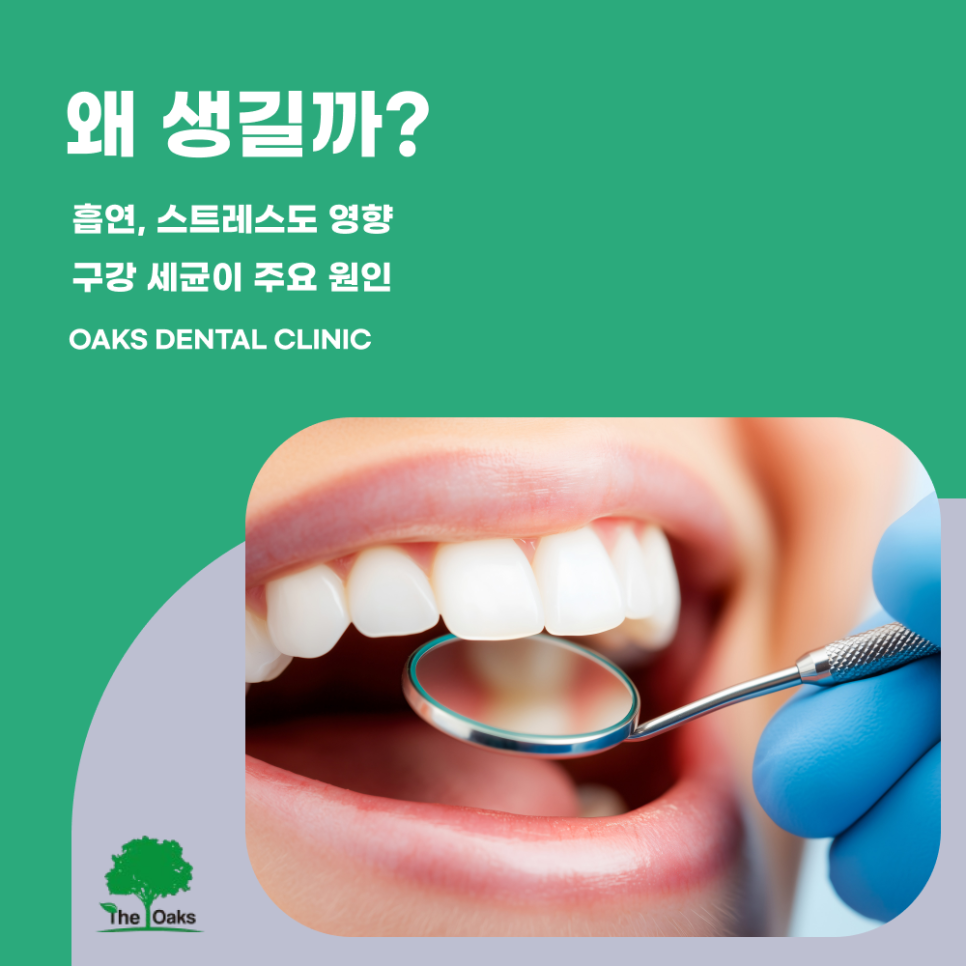
Main causes of gum disease
The main cause of gum disease is bacteria in the mouth.
Plaque, which forms when food debris combines with saliva, hardens over time into tartar, and this tartar causes inflammation in the gums.
In addition, the following factors can also cause gum disease.
▶ Poor brushing habits
▶ Smoking and drinking
▶ Stress
▶ Diabetes, hormonal changes
▶ Genetic influence
Therefore, it is not something that can be prevented simply by brushing diligently; regular scaling and checkups are necessary.
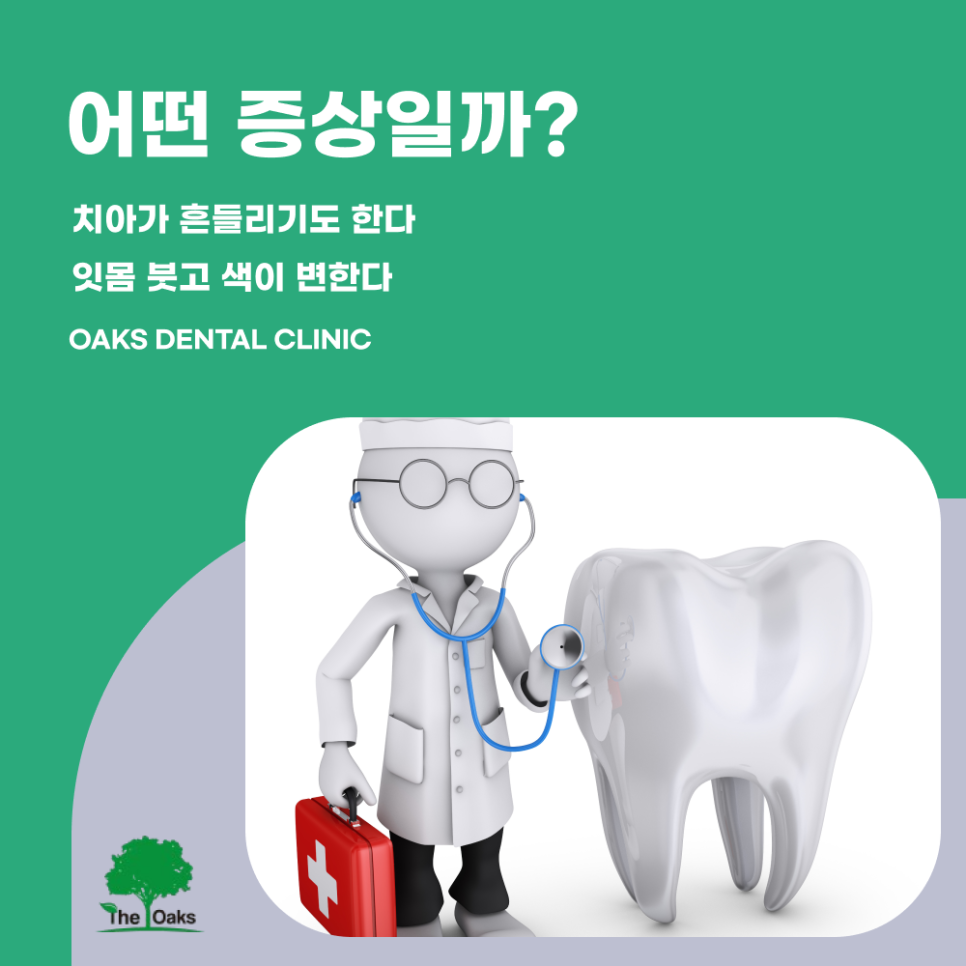
Main symptoms of gum disease
Gum disease is easy to neglect because it has few noticeable symptoms in the early stages.
If you have any of the following symptoms, gum disease may already have begun.
▶ Your gums bleed when you brush.
▶ You have severe bad breath that does not go away easily.
▶ Your gums are swollen and dark red or purple in color.
▶ Gaps appear between your teeth, and food frequently gets stuck.
▶ Your teeth feel loose, or actually move.
If any one of these symptoms applies to you, we recommend visiting a dental clinic as soon as possible.
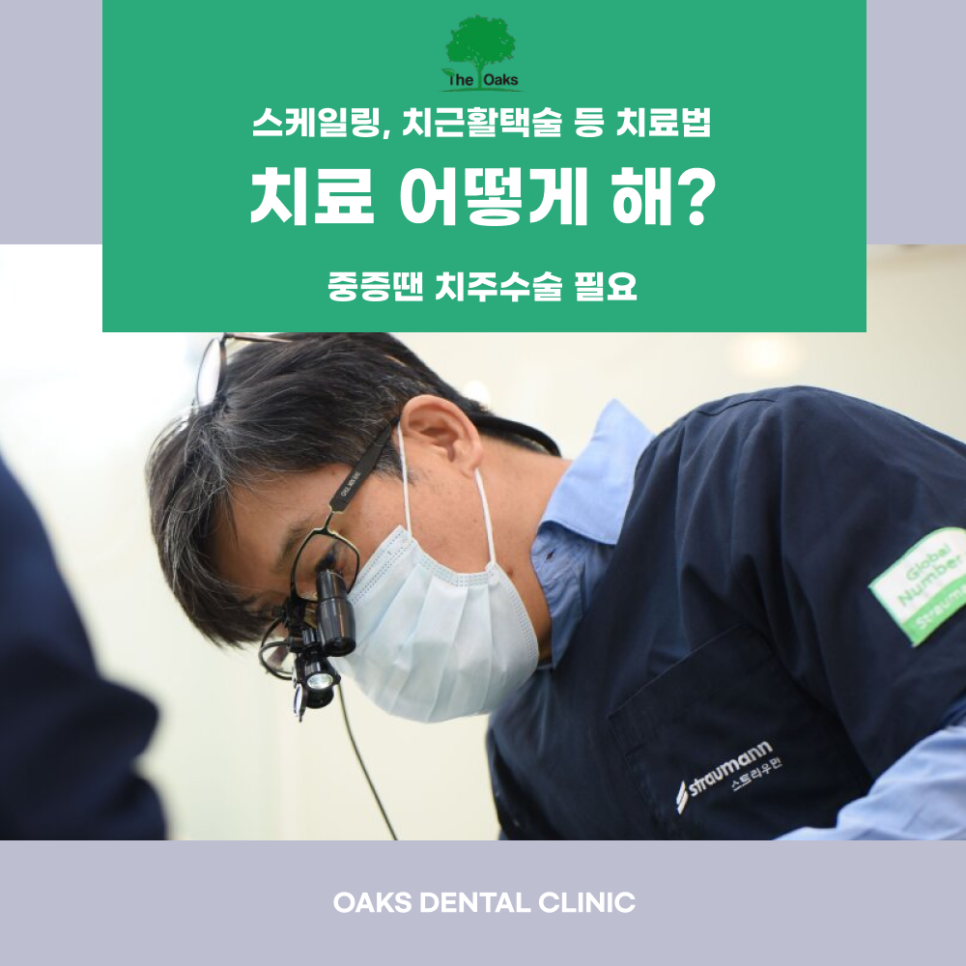
Treatment methods for gum disease
Treatment for gum disease differs depending on the stage of progression.
1️⃣ Scaling (early gingivitis)
Plaque and tartar are removed to reduce inflammation.
If it is caught early, most cases can improve with scaling alone.
2️⃣ Root planing (moderate periodontitis)
The root surface of the tooth is gently smoothed to remove the source of inflammation.
Because bacteria can be removed from deep within the gums, it is effective in helping prevent recurrence.
3️⃣ Periodontal surgery (severe periodontitis)
If inflammation has spread deep into the gums, or if there is significant alveolar bone damage, surgery may be necessary.
The gums are opened to directly remove the inflamed area, and in severe cases, artificial bone may be grafted for reconstruction.

For gum disease, prevention is more important than anything else.
Gum disease can be prevented and treated sufficiently if detected and managed early.
Try maintaining the following lifestyle habits.
▶ Proper brushing at least twice a day
▶ Use dental floss, interdental brushes, and a water flosser
▶ Regular scaling (once every 6 months to 1 year)
▶ Quit smoking and avoid excessive drinking
▶ Manage chronic conditions such as diabetes
In particular, managing tartar through regular checkups and detecting early inflammation is the most reliable way to protect your natural teeth.
In closing...
The gums are the foundation that supports the teeth and the starting point of oral health.
Without healthy gums, even the best treatment is difficult to maintain for long.
If your gums are swollen or bleeding, get examined right away.
Care that starts a little earlier can be the wisest choice for protecting your natural teeth.