Gangnam Station Dental Clinic: Do tooth root infections need treatment?
Hello.
This is Oks Dental Clinic.

Recently, a patient who visited the clinic said this:
“My tooth feels sensitive, but there’s no cavity and it looks fine on the outside. But it keeps hurting.”
In cases like this, there may be no visible problem on the outside, but inside, a ‘tooth root infection (apical periodontitis)’ may be quietly progressing.
Today, I’ll explain tooth root inflammation, which patients often overlook, also known as ‘apical periodontitis.’
What is a tooth root infection?
A tooth root infection is a condition called apical periodontitis, and as the name suggests, it means inflammation occurs at the tip of the tooth root (apex).
It usually develops when bacteria from deep cavities, trauma, or infection after root canal treatment travels along the nerve inside the tooth and spreads to the root tip.
In the early stages, there may be no noticeable symptoms, but one day it can suddenly appear as pain, swelling in the gum around the root, or tooth sensitivity.
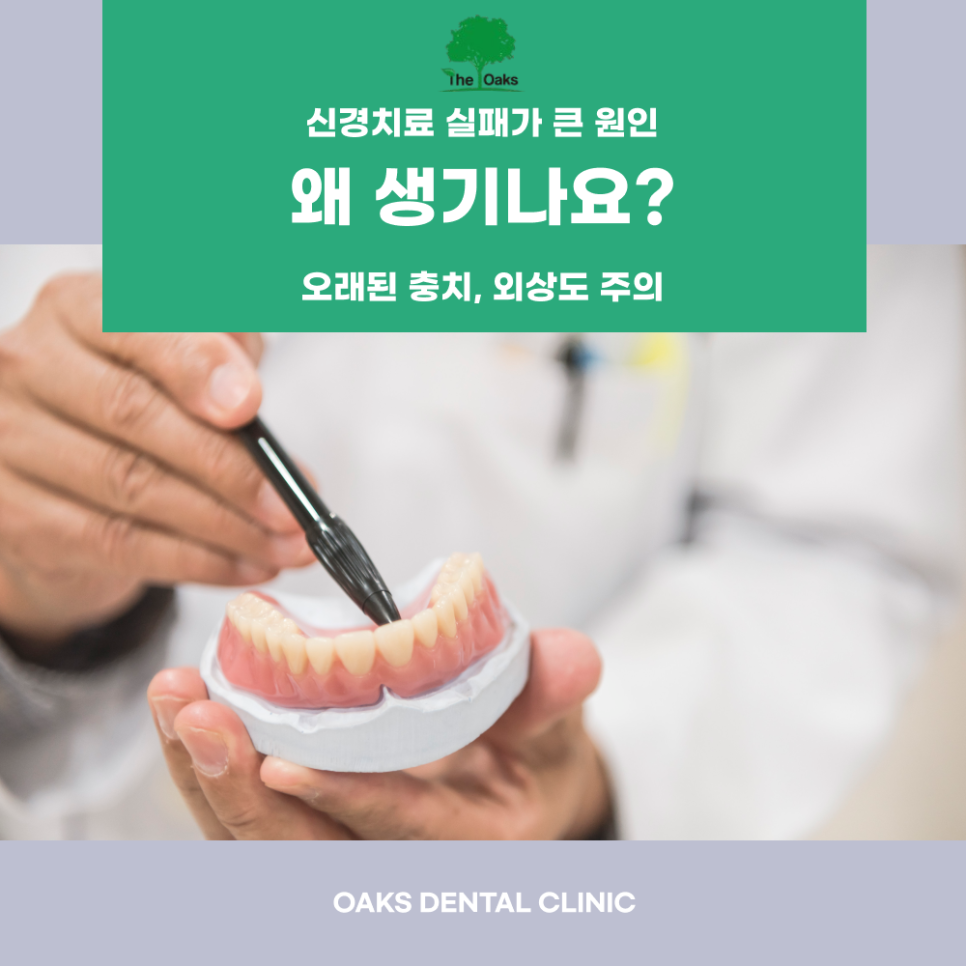
Why does it happen?
A tooth root infection can occur for the following reasons.
✔️ When a cavity becomes deep and infects the pulp (nerve)
✔️ When a previous root canal treatment was not done properly
✔️ When a microcrack forms in the tooth root due to trauma
✔️ When excessive biting force is concentrated on the root and puts strain on it
In particular, problems often occur in teeth that received root canal treatment a long time ago.
Even if the tooth looks fine on the outside, inflammation may be progressing inside.
If you have these symptoms, be suspicious.
A tooth root infection often has no clear symptoms in the early stages, so it is easy to leave it untreated.
However, if you have any of the following symptoms, be sure to get examined.
▶ The root area feels sensitive or throbs when chewing.
▶ The gum is swollen and painful when pressed.
▶ You are sensitive to heat and even cold feels uncomfortable.
▶ Pus comes out of the gum, or you have severe bad breath.
▶ Pain has returned in a tooth that previously had root canal treatment.
In severe cases, the jaw or face may also swell, and an abscess may form.
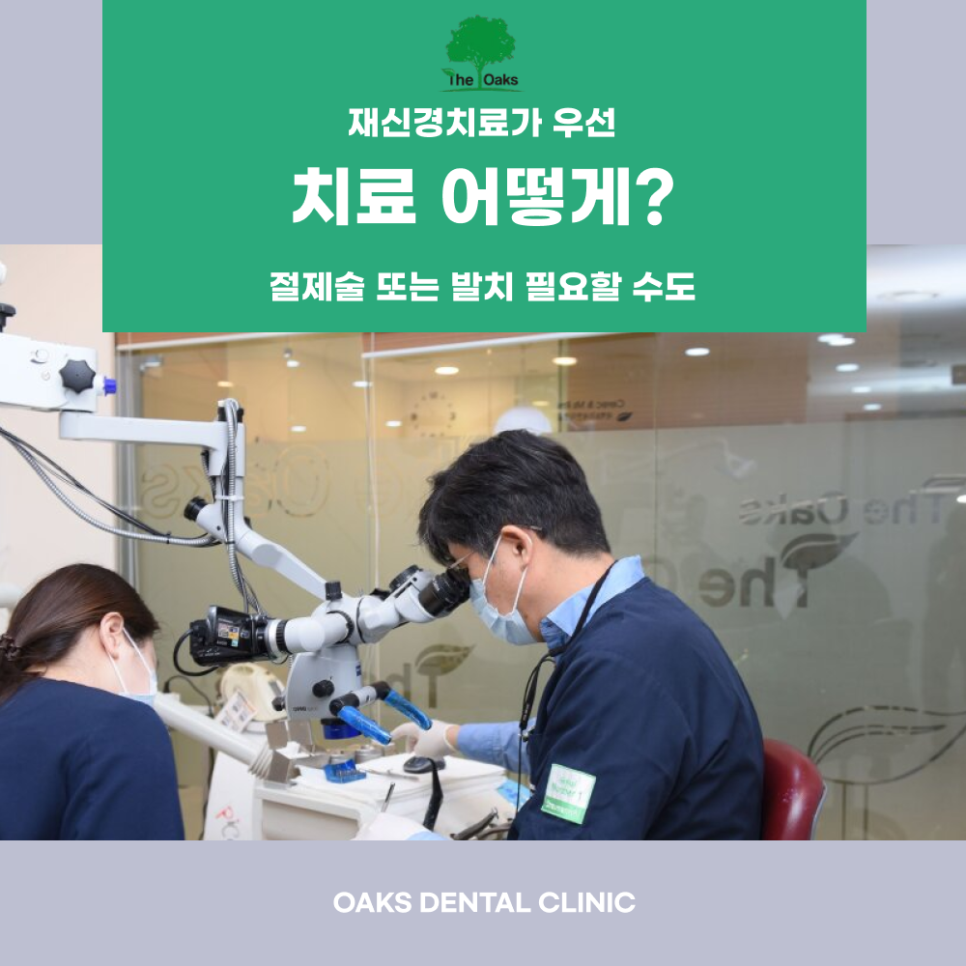
How is it treated?
Treatment for a tooth root infection depends on the extent of the inflammation and whether there has been prior treatment.
1️⃣ Retreatment of the root canal
If the tooth has previously had root canal treatment, the existing treatment must be removed and the infected area carefully disinfected again through retreatment.
This process requires very delicate and precise technique, so treatment by an experienced specialist is important.
2️⃣ Apicoectomy
If the condition does not improve even with retreatment, an apicoectomy may be performed to remove the inflamed root tip.
The root tip is cut off, the infected tissue is removed, and the area is finished with medication.
3️⃣ Extraction
If the inflammation is too widespread or the root is severely damaged, the tooth may have to be extracted.
However, preserving the natural tooth is always prioritized as much as possible, and afterward, alternative treatments such as implants or bridges are considered.
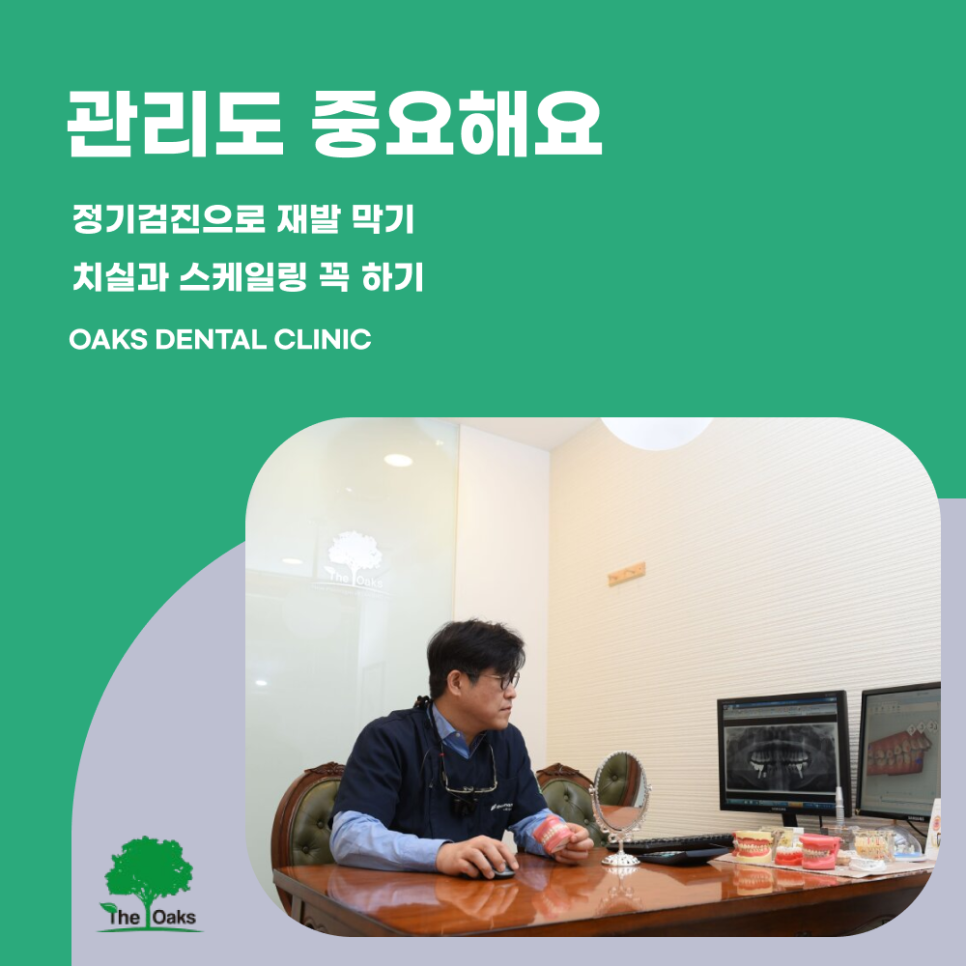
Precautions after treatment
Treatment is not the end!
Regular care and habit changes are needed to prevent recurrence.
▶ Use floss or interdental brushes after brushing
▶ Get scaling and regular checkups every 6 months
▶ Reduce irritating foods and sugary foods
▶ Avoid habits that put excessive force on the molars
▶ Do not leave a treated tooth neglected for too long
In closing...
A tooth root infection is easy to overlook because it is not very visible, but if left untreated, it can be a dangerous condition that may lead to tooth loss.
In particular, if a tooth that previously received root canal treatment feels sensitive or hurts without any obvious reason, we recommend visiting the dentist right away for an accurate diagnosis.
Natural teeth cannot be restored once they are lost.
If you have even the slightest suspicion, checking early is the best prevention.