Hello.
This is Oks Dental Clinic.
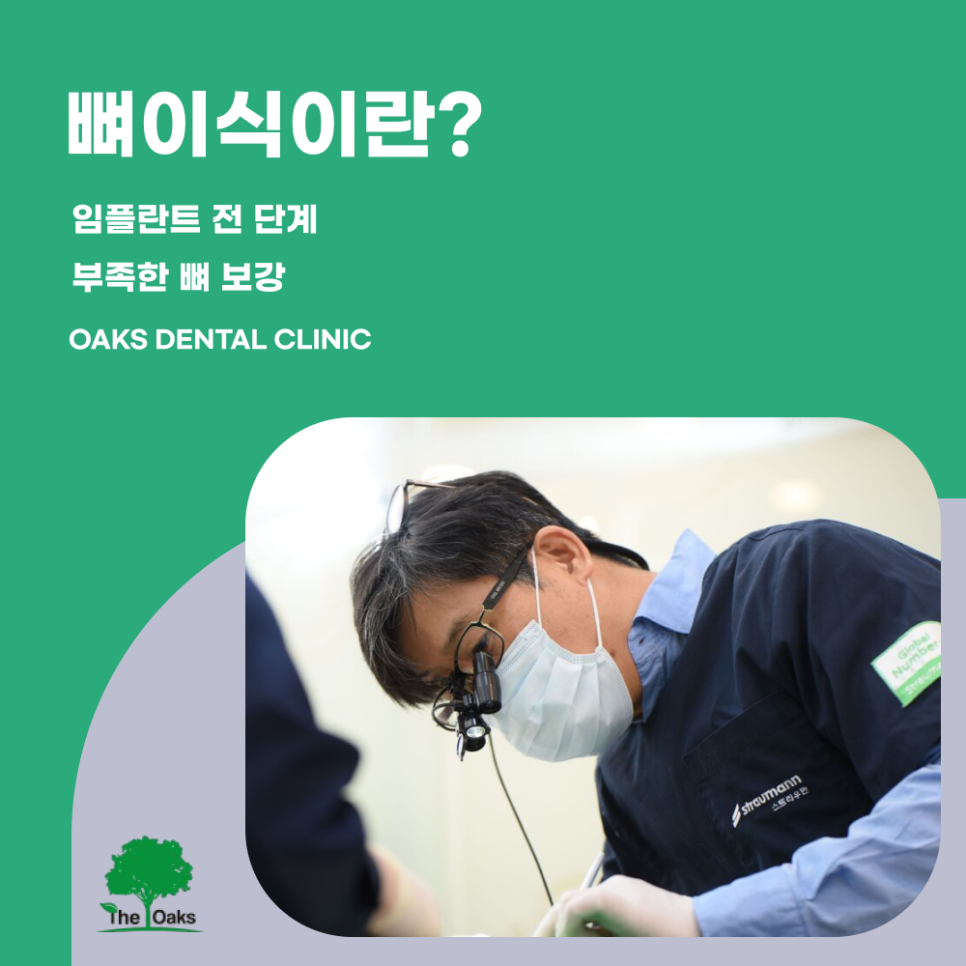
Implants are a treatment that replaces missing teeth, but they are not always as simple as they may seem.
Especially for people with insufficient jawbone, it’s natural to wonder at least once, “Can I not get an implant?”
In cases like that, the treatment needed is a bone graft implant.
Today, Samsung-dong Dental Clinic will explain why bone grafting is necessary, how the process is carried out, and also the recovery, pain, and precautions that many people are concerned about.
What Is a Bone Graft Implant?
An implant is a procedure in which an artificial root is placed into the jawbone.
However, if a tooth has been missing for a long time, if you have had severe periodontal disease, or if the bone was damaged in an accident, the jawbone is often significantly reduced.
In that case, there is not enough bone to firmly anchor the artificial root, making it difficult to place an implant.
That is exactly when bone grafting is needed.
It is a treatment that first reinforces the jawbone so the artificial root can settle in properly.

When Bone Grafting Is Needed
It varies from patient to patient, but typical cases that require bone grafting are as follows.
▶ When the jawbone has been resorbed because a tooth was extracted a long time ago
▶ When bone has been lost due to an accident or inflammation
▶ When the bone has deteriorated due to severe periodontal disease
▶ When the maxillary sinus has expanded, making it difficult to place an implant in the upper jaw
At the dental clinic, a CT scan is used to accurately analyze the height, thickness, and density of the bone before determining whether bone grafting is necessary.
What Materials Are Used for Bone Grafting?
There are various types of bone used for bone grafting.
The representative materials used are as follows.
▶ Autograft: A method that uses your own bone (usually part of the jawbone, etc.)
▶ Allograft: A material made by refining bone from another person
▶ Xenograft: A safe material obtained from the bones of cows or pigs
▶ Synthetic graft: Artificially made synthetic bone
It is important to select a material that suits the patient’s condition and perform the procedure safely.
How Is a Bone Graft Implant Performed?
▶ Step 1: Diagnosis and treatment planning
A CT scan is used to check the condition of the bone, and a decision is made about where and with what material the bone graft will be performed.
▶ Step 2: Bone grafting procedure
The gums are incised, and the graft material is placed in the deficient area.
If needed, sinus lift surgery may also be performed at the same time.
▶ Step 3: Implant placement
Once the bone has settled to some extent, the artificial root is placed.
In simple cases, the bone graft and implant placement can sometimes be done at the same time.
▶ Step 4: Completion of the prosthetic tooth
Once the implant has stabilized, a prosthetic tooth is placed on top to complete the treatment.

How Long Does Recovery and Pain Take?
A bone graft implant may require a slightly longer recovery period than a regular implant.
In general, it takes about 3 to 6 months for the bone to settle, and after implant placement, another 2 to 3 months may be needed.
Pain is usually well controlled with anesthesia and pain relievers, so there is no need to worry too much.
There may be some swelling or soreness after surgery, but this is part of the normal recovery process.
Precautions After Bone Grafting
▶ For a few days after surgery, avoid strenuous exercise, saunas, and similar activities.
▶ Be sure to take the prescribed medication on time.
▶ Be careful not to chew on the affected area, and avoid very hard or hot foods.
▶ When brushing your teeth, use a soft toothbrush and also use a mouth rinse.
▶ Regular follow-up visits and progress checks are essential.
In Closing...
There are many people who worry, “I was told implants are difficult because I don’t have enough bone.”
However, with the development of treatment techniques such as bone grafting, procedures have become much safer and more predictable than before.
If you are currently considering an implant, we recommend getting an accurate examination and consultation before it gets too late.