Nonhyeon-dong Dental Clinic, start cavity treatment before it hurts, not when it does.
Hello.
This is Oaks Dental Clinic.
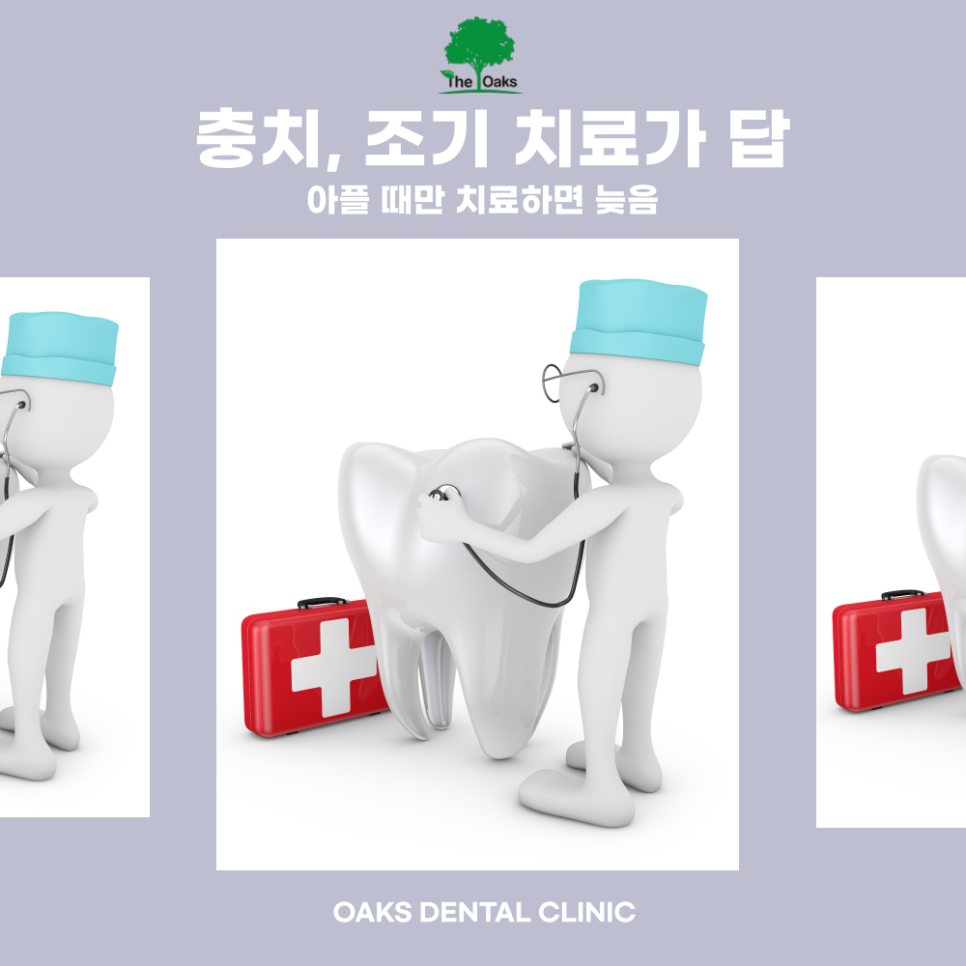
“Cavities? It’s still fine for now...?”
Even among people who say this, many already have cavities that have progressed quite far when they actually come in for treatment.
Because cavities have almost no symptoms in the early stages, they are easy to ignore. But if you miss the right time for treatment, they keep getting deeper, can lead to root canal treatment, and in the end, you may even lose the tooth.
So today, I’ll explain why cavities develop, what treatment is needed, and how you can prevent them.
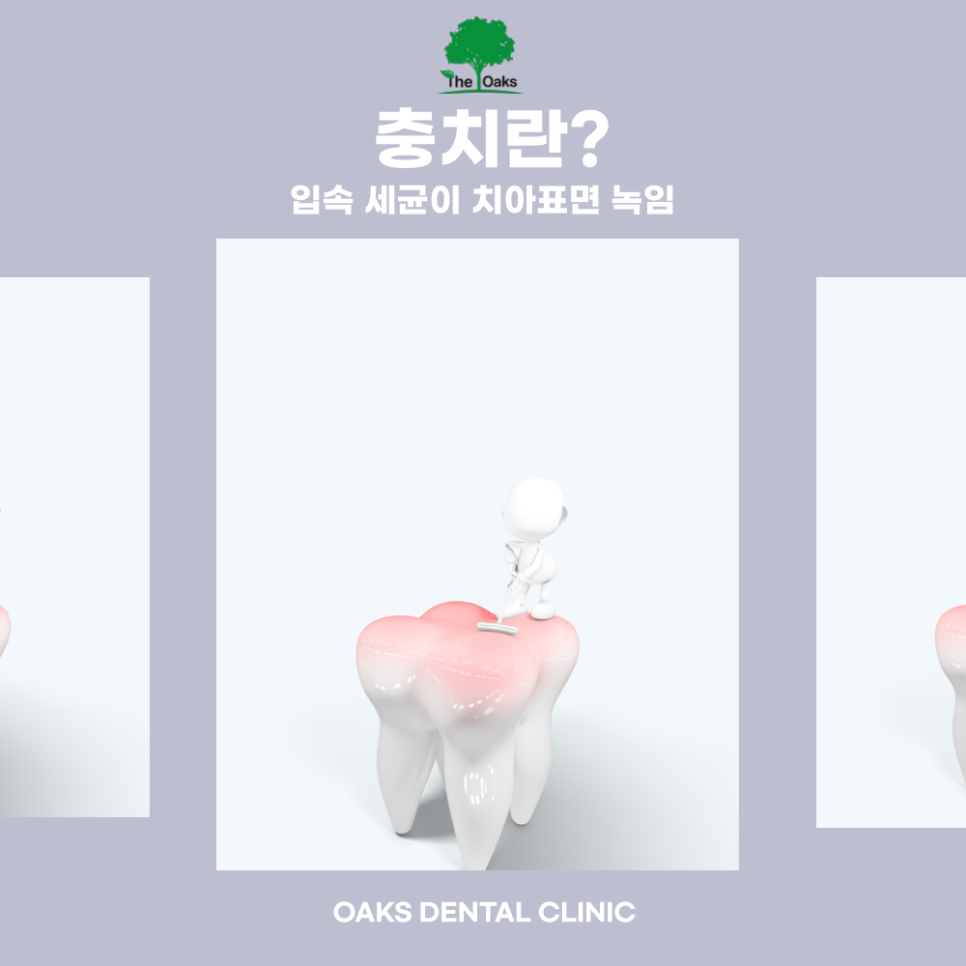
What exactly is a cavity?
A cavity is a disease in which teeth decay.
More precisely, bacteria in the mouth feed on the sugars in food debris and create acids that gradually dissolve the surface of the tooth.
These acids corrode the tooth’s hardest outer layer, the “enamel,” and gradually dig inward until they eventually reach the nerve.
Because the symptoms and treatment methods differ by stage, early detection is extremely important.
What causes cavities?
The biggest cause of cavities is “plaque” in the mouth.
Plaque is a sticky film formed when food debris and bacteria combine. If you do not brush properly, it sticks between the teeth and gums and causes cavities.
Other factors that increase the risk of cavities include the following.
▶ A diet high in sugar
▶ Irregular meals and late-night eating
▶ Improper brushing habits
▶ Dry mouth (reduced role of saliva)
▶ Family history or genetic influence
Cavities differ by stage.
Treatment methods differ depending on how far the cavity has progressed.
🔹 Stage 1 – Enamel cavity
Damage has occurred only on the surface of the tooth. There is almost no pain, but progression can be prevented with scaling or preventive treatment.
🔹 Stage 2 – Dentin cavity
When the tissue beneath the enamel has been damaged, sensitivity appears and sometimes there is also pain.
At this stage, the tooth must be drilled and filled with resin or an inlay.
🔹 Stage 3 – Cavity that has reached the nerve
At this point, bacteria have already invaded the nerve, causing severe pain and requiring root canal treatment.
🔹 Stage 4 – Infection has reached the tooth root
In severe cases, the tooth may need to be extracted, and replacement treatments such as implants or bridges may need to be considered.
How is cavity treatment performed?
Cavity treatment varies depending on the depth of the decay.
✅ Resin treatment
After removing the cavity, the area is filled with a tooth-colored composite resin.
It is simple, quick, and relatively inexpensive. However, if the area is large, durability may be reduced.
✅ Inlay/Onlay treatment
When the cavity is extensive, this treatment involves taking a mold of the tooth and making an artificial restoration to fit into place.
Materials commonly used include gold, ceramic, and zirconia.
✅ Root canal treatment
If the cavity has become deep enough to reach the nerve, the nerve must be removed, the roots disinfected, and the space filled with medication.
After that, a crown (prosthetic restoration) is placed to protect the tooth.
Does cavity treatment hurt?
In the past, many people believed that “the dentist is always a painful place,” but these days anesthesia techniques have improved, so most cavity treatments are performed without much pain.
Even in the case of root canal treatment, enough anesthesia is given before treatment to minimize discomfort.
However, if the cavity becomes deeper, the number of treatment sessions may increase and recovery may take longer, so early treatment is best.
How should you care for your teeth after treatment?
Even after cavity treatment, management is important to prevent recurrence.
▶ Brush properly 2 to 3 times a day
▶ Use dental floss and interdental brushes together
▶ Avoid eating sweets frequently
▶ Get regular checkups every 6 months
▶ Be sure to have scaling once or twice a year
In particular, the treated area is more likely to develop cavities again, so it is better to manage it more carefully.
To finish...
Cavities do not heal on their own over time.
Instead, if left alone, they worsen little by little but steadily, eventually requiring major treatment.
The earlier the treatment, the simpler it is and the less it costs.
If, while reading this, you thought, “I’ve felt sensitivity when brushing too,” or “I think one of my back teeth hurt when I drank cold water,” then now is the time to get a checkup.