Hello.
This is Oaks Dental Clinic.
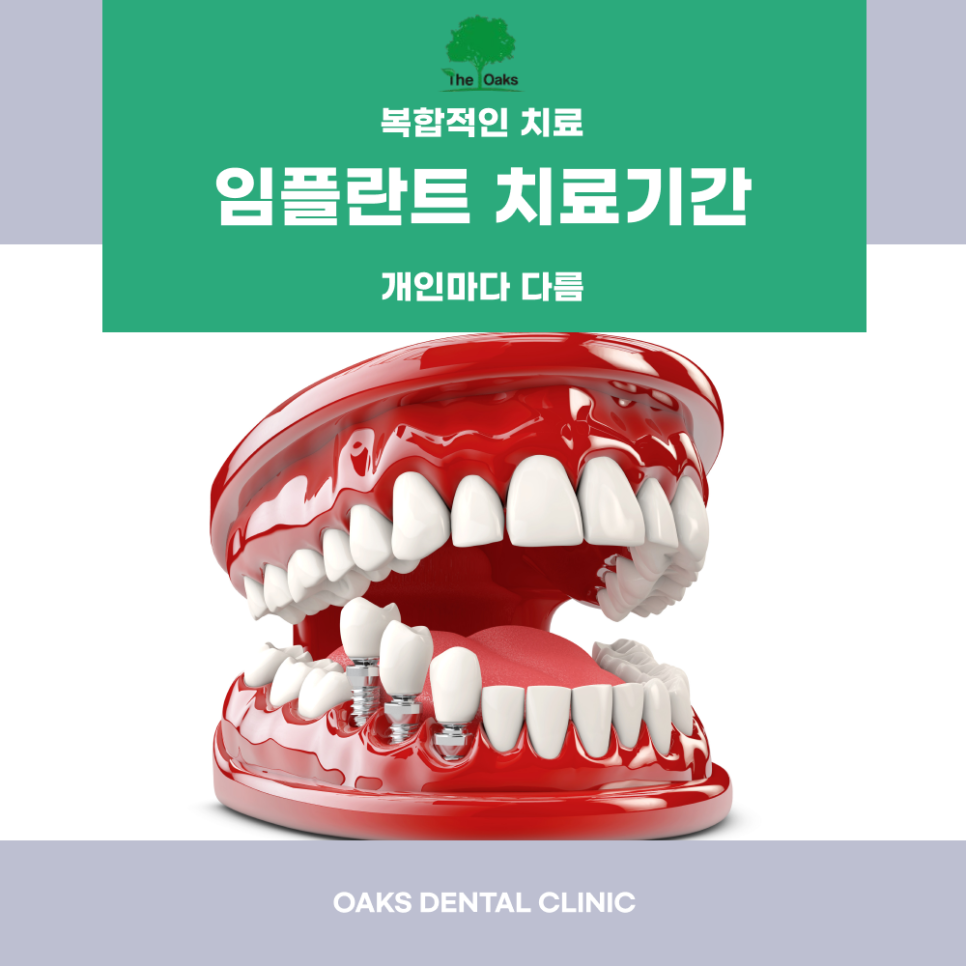
One of the most common questions people considering implant treatment ask is:
“How long does the treatment take?”
An implant is not a simple procedure, but a complex treatment carried out through multiple stages, so the total treatment time can vary from person to person.
Today, we will explain why implant treatment takes time, how each stage is structured, and whether there are ways to shorten the period.
Why Does Implant Treatment Take So Long?
An implant is not simply about placing an artificial tooth.
For successful treatment, the artificial root (titanium) placed in the jawbone must firmly integrate with the alveolar bone.
This process is called “osteointegration,” and it can take at least 2 months and up to 6 months or more for the bone and implant to bond stably.
Because the recovery speed and treatment method vary depending on factors such as the condition of the jawbone, age, overall health, smoking status, and the presence of periodontitis, implant treatment should be customized to each individual’s condition.

Implant Treatment Process by Stage and Required Time
The expected time required for each stage is as follows.
- Detailed Examination and Consultation (1 day)
The first step in treatment is an accurate diagnosis.
After checking the alveolar bone condition, nerve position, and whether there is any inflammation through 3D CT imaging and a detailed oral examination, a treatment plan is established.
Required time: about 30 minutes to 1 hour
Details: CT imaging, diagnosis, personalized consultation
- Implant Placement Surgery (1 day)
After anesthesia, the titanium implant is placed into the jawbone.
The procedure itself is almost painless and takes about 1 to 2 hours.
There may be some swelling or discomfort immediately after surgery, but most people recover quickly.
Required time: about 1 to 2 hours
Daily activities possible on the same day
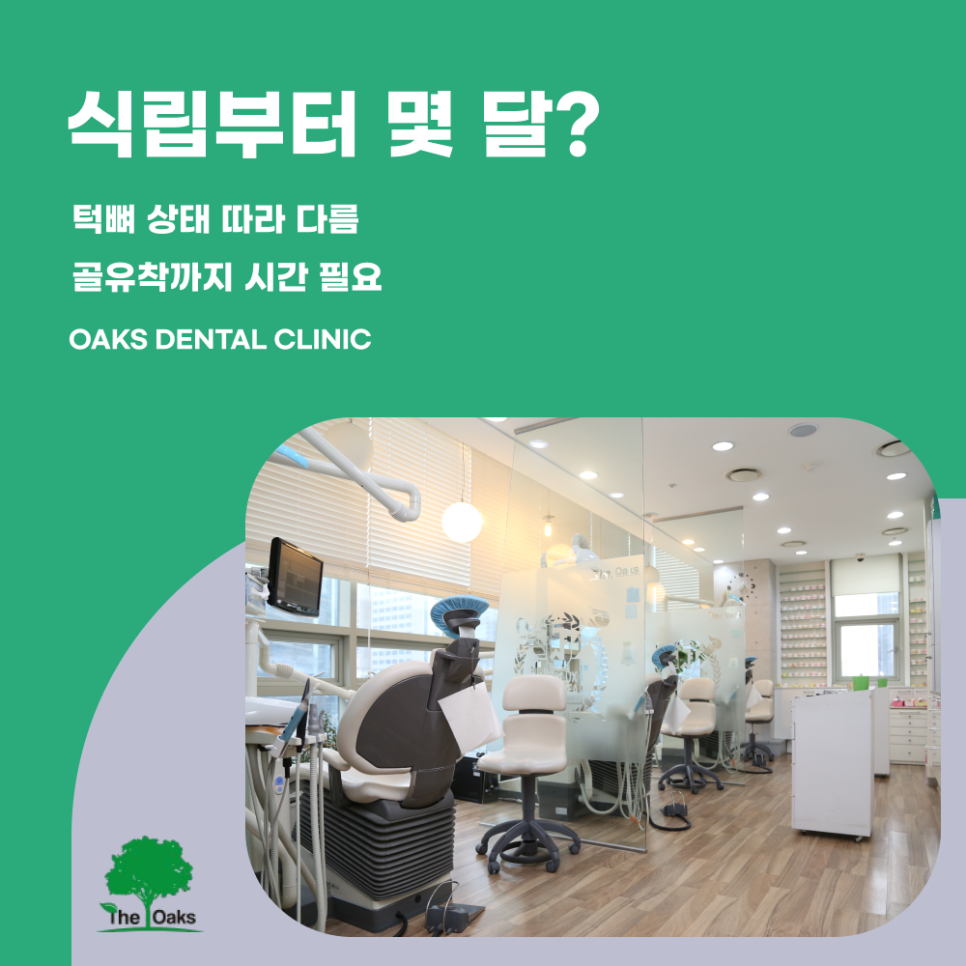
- Osteointegration Period (2 to 6 months)
This is the waiting period for the implant and the artificial root to firmly bond after placement.
This is a very important stage because the stability of the implant is determined during this period.
Lower jaw: 2 to 3 months
Upper jaw: 3 to 6 months
When bone grafting is also performed: it may take up to 6 to 8 months
- Abutment Connection and Impression Taking (1 to 2 weeks)
Once osteointegration is complete, the abutment is connected above the gum line and impressions are taken to make the prosthesis.
Because the tooth color, shape, and size are matched during fabrication, a natural appearance is possible.
Required time: 1 to 2 weeks
Number of visits: 2 to 3 times
- Prosthesis Placement and Final Completion (1 to 2 weeks)
The custom-made artificial tooth (crown) is placed on the abutment.
After that, normal eating, speaking, and daily life are possible, and implant treatment is complete.
Required time: 1 to 2 weeks
Function and appearance similar to natural teeth
When the Implant Period Can Be Shortened
Recently, with the advancement of cutting-edge technologies such as immediate implants and navigation implants, treatment time can be shortened when certain conditions are met.
However, this method is only possible when the gum bone condition is very good, there is no inflammation or infection, and overall health is good, so eligibility must be determined through a detailed examination.
To Conclude...
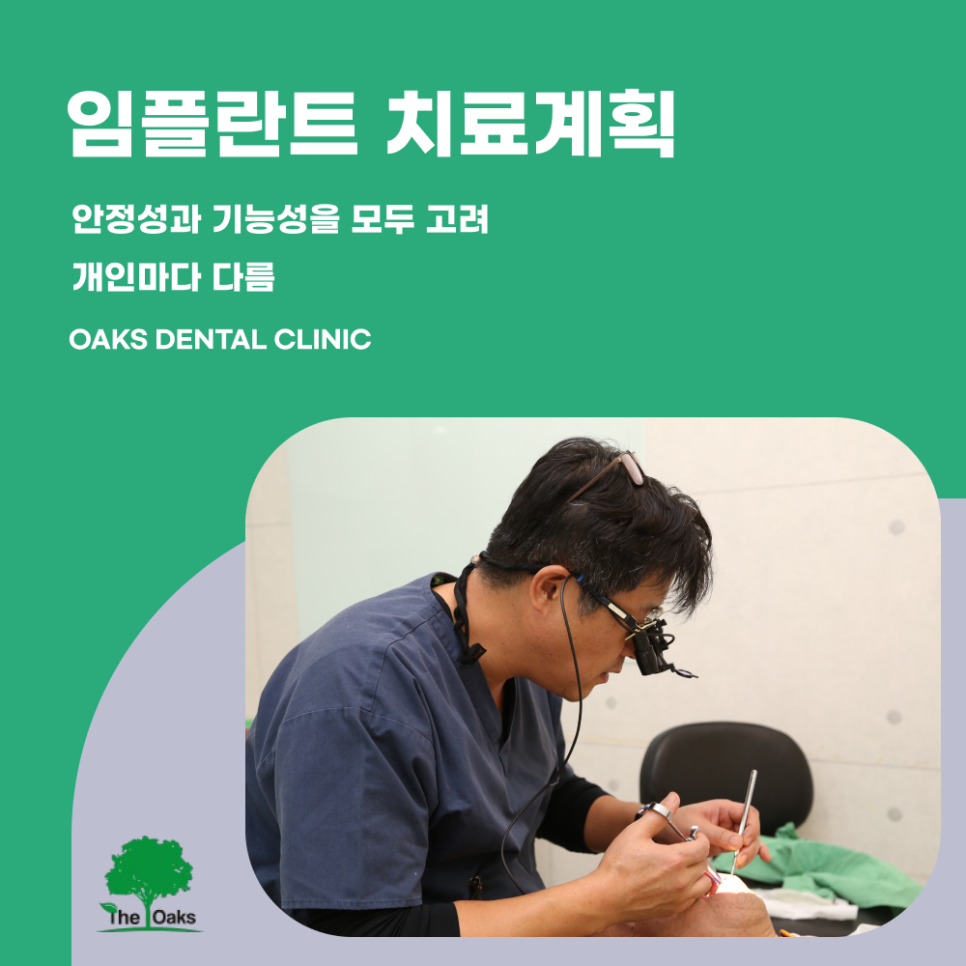
From implant placement to the completion of the prosthesis, treatment must be carried out precisely without even the slightest error.
Implants are a treatment that can be used strongly for a long time only when they are done carefully over time.
Because every person is different, a treatment plan that considers both stability and functionality is important.