Gangnam-gu Dental Clinic Molar Implants: Why They Are Essential and the Procedure
Hello.
This is Oks Dental Clinic.
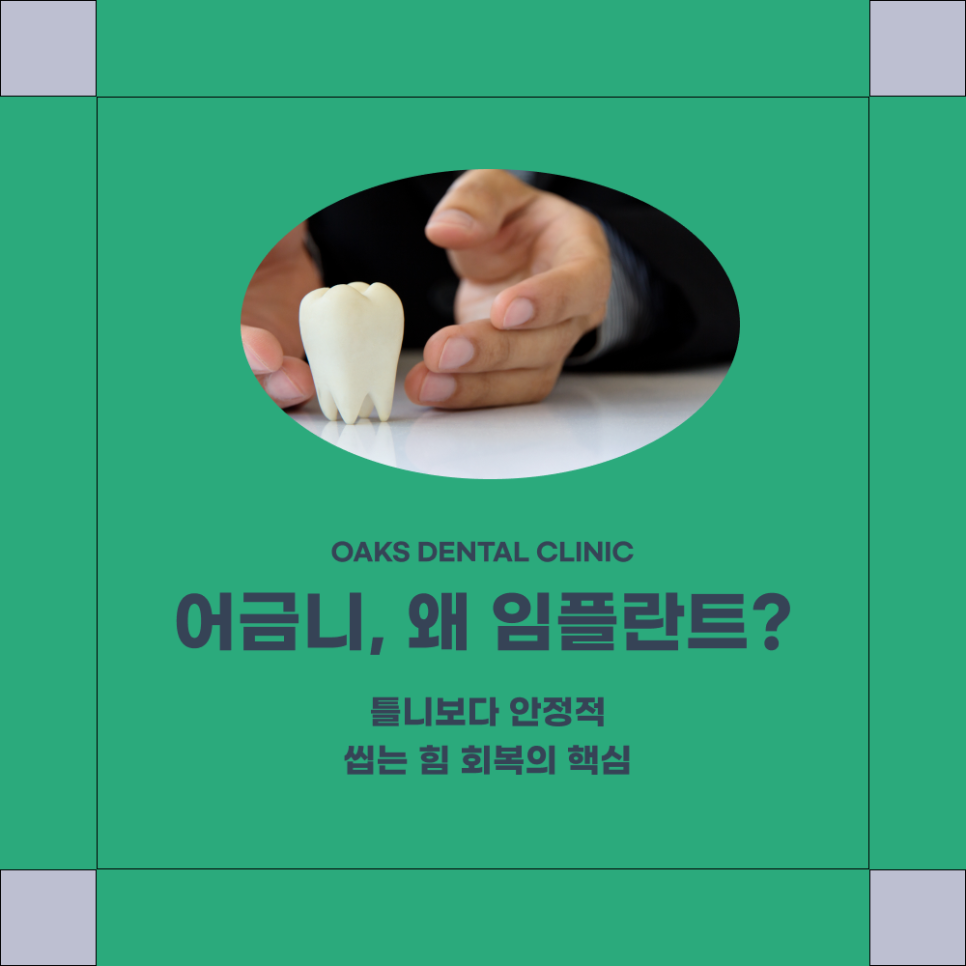
"I didn't have a molar for so long
that chewing food was really uncomfortable."
"Dentures are inconvenient because you have to take them out,
and a fixed type would definitely be better, but..."
Molars are the main players in chewing.
If the front teeth are responsible for the first impression of food,
molars play a direct role in
chewing and digestion.
That is why even losing one molar
can cause quite a lot of inconvenience
in daily life.
Today, when a molar has been lost,
we will explain the reasons and procedure
for why a molar implant is needed.
Why an implant is needed in a missing tooth area
Just as missing front teeth are important, molars are important too,
but molars have a direct impact on
muscles and bone tissue.
When dentures are used,
they may not fit well, causing food to shift while chewing,
or the dentures may wobble easily,
and this can strain the temporomandibular joint, leading to teeth grinding,
pain, and headaches.
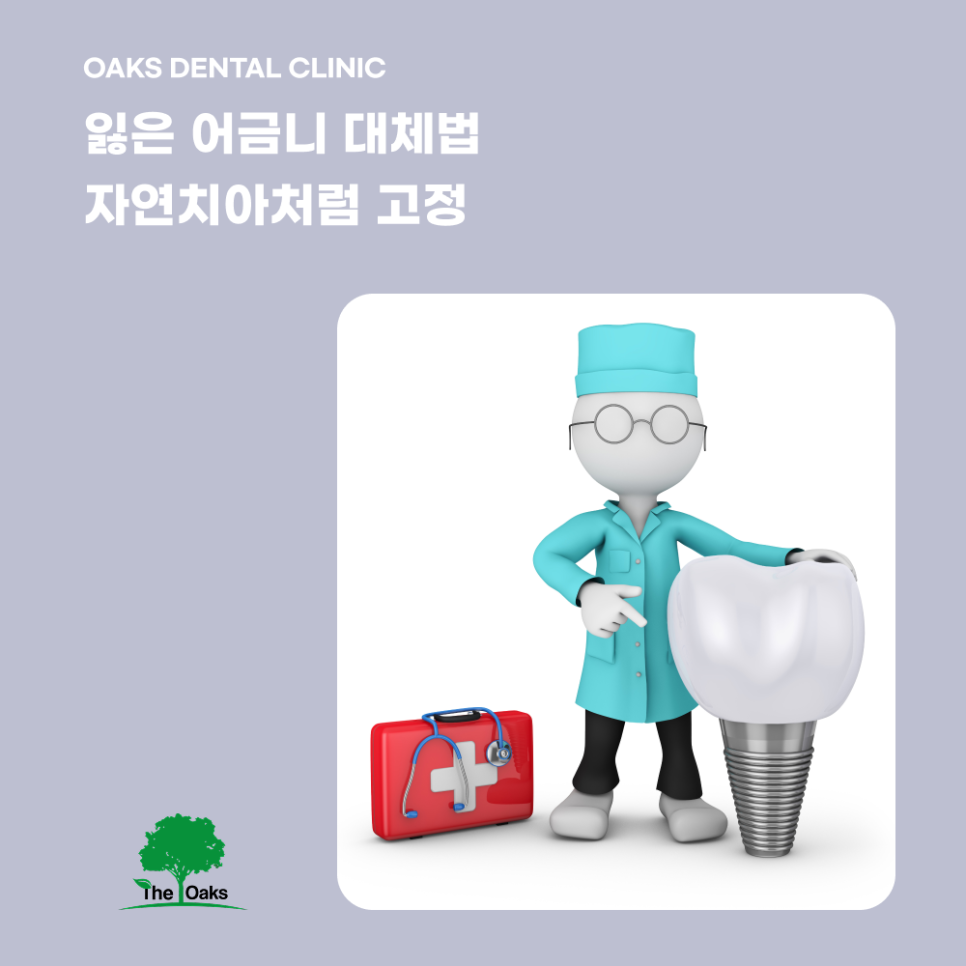
In such cases, implants can be recommended as
the best option in terms of both stability
and functionality.
Because they are fixed directly into the bone like natural teeth,
you can chew food longer and
regain stability in the overall jaw structure.

Molar implants: what process do they go through?
Step 1. Precise diagnosis
Through CT imaging and an oral examination,
the width, height, and density of the jawbone are checked.
The distance from nerves and blood vessels,
as well as the positional relationship with the maxillary sinus,
is also carefully evaluated.
Step 2. Accurate surgical planning
The implant position, depth, angle, and more are
carefully designed.
Molars are areas that receive a lot of force,
so a customized plan for fixation is essential.
Step 3. Bone grafting (if needed)
If there is not enough jawbone,
bone grafting is performed to secure a condition
that allows placement.
A sinus lift may also be needed
in some cases.
Step 4. Implant placement surgery
Under anesthesia, the artificial root (titanium)
is inserted.
Molars differ in anatomical characteristics depending on whether they are in the lower or upper jaw,
so a precise procedure is even more important.
Step 5. Osseointegration period
This is the time during which the placed artificial root
firmly bonds with the bone.
Step 6. Prosthetic attachment
Once osseointegration is confirmed, the abutment is connected,
and a crown (artificial tooth) is made
to complete the treatment.
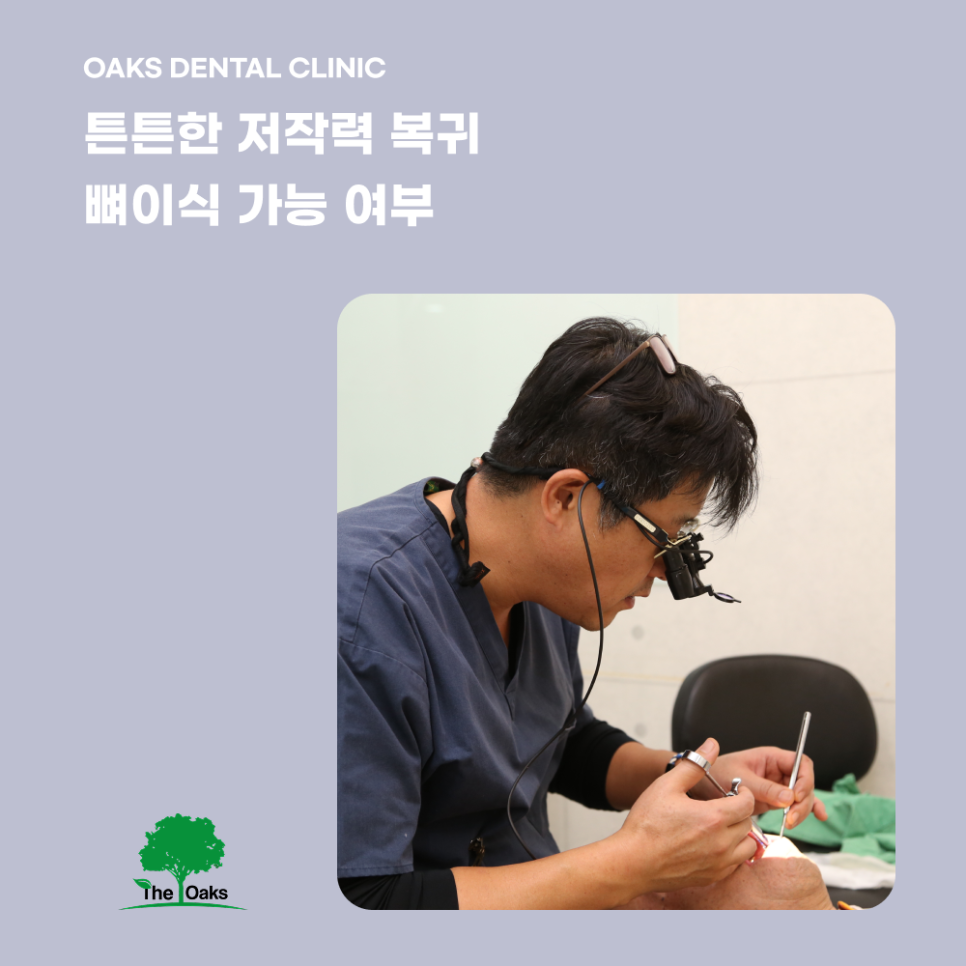
Molar implant benefits: important points to know
▶ Strong chewing force
Restores chewing power close to that of natural teeth
▶ Subtle aesthetics
Molars are not visible, but naturalness is maintained with an occlusion-matched design
▶ Helps maintain gum health
Implants can reduce the stress caused by
the movement of adjacent teeth or wearing molar dentures
▶ Protects the temporomandibular joint
Helps reduce worsening imbalance caused by dentures
Molar implants: maintenance is also important
Even after implant treatment, hygiene management is essential
for long-term use.
Brush twice a day, and use dental floss/interdental brushes
Get scaling and checkups every 6 months
Avoid hard or chewy foods
Refrain from smoking and excessive alcohol consumption
Visit the clinic immediately if your gums swell or if anything seems unusual
To wrap up...
Molars are among the teeth
with the highest functional importance,
so losing one can be very inconvenient.
An implant is not just a simple treatment;
it is a treatment that helps restore
quality of life, eating habits, and psychological comfort as well.
If you are worried because you have lost a molar,
please feel free to consult
Gangnam-gu Dental Clinic.