Apgujeong-dong Dental Clinic periodontitis symptoms: the quiet warning signs of gum disease!
Hello.
This is Oaks Dental Clinic.
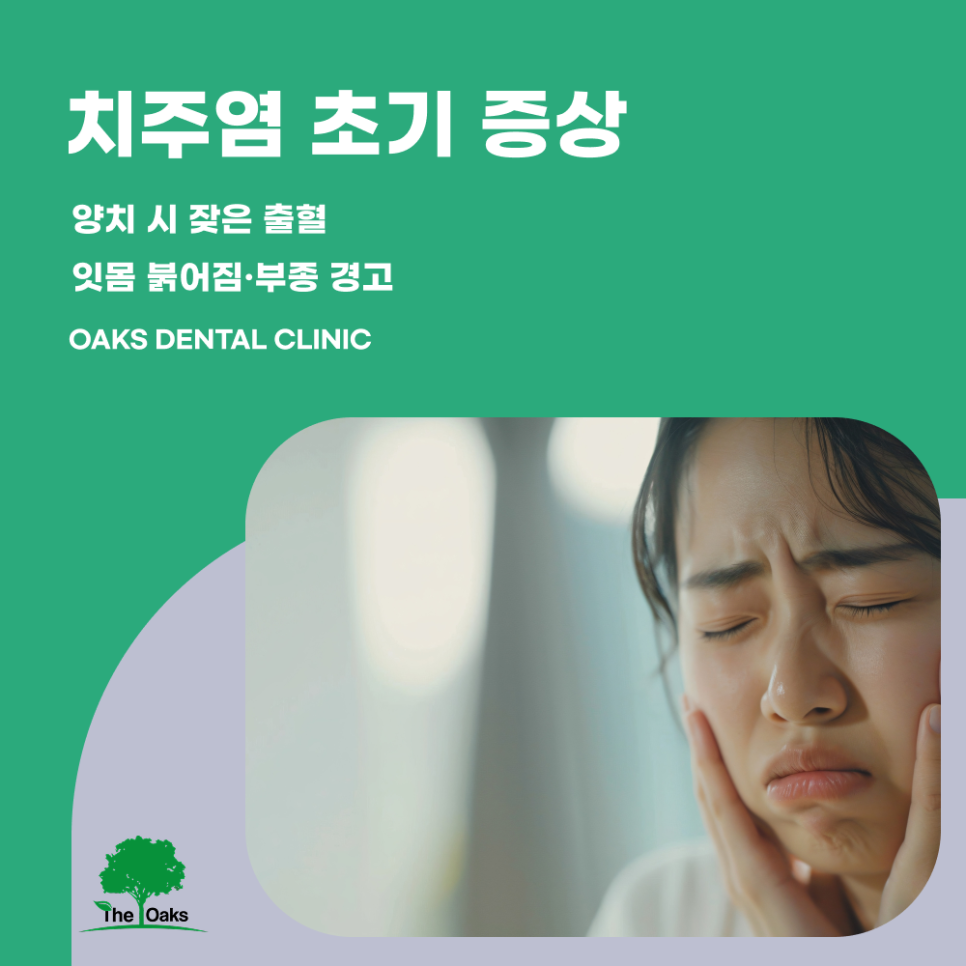
“My gums bleed when I brush my teeth.”
“My gums keep swelling,
and they feel uncomfortable.”
“When I open my mouth, my teeth
feel like they’re shaking,
and sweet foods are very sensitive.”
Many people experience these symptoms, right?
Have you perhaps been brushing them off as just a “simple gum inflammation”?
Periodontitis (periodontal disease)
often starts off mildly,
but if left untreated, it can destroy the jawbone around the gums
and even lead to tooth loss.
Today, Apgujeong-dong Dental Clinic
will explain the warning signs
of periodontitis, in other words, its symptoms.
If you notice it early,
the treatment becomes much simpler.
Early symptoms of periodontitis
There is not much pain yet,
but something feels off.
In the early stages of periodontitis,
the pain is not severe,
so it is difficult to notice on your own.
However, the following changes
start to appear in the gums.
▶ The gums become red and feel swollen
▶ The gums feel slightly lifted or loose
▶ Blood appears frequently
when brushing, flossing, or using interdental brushes
▶ An itchy or tingling feeling
around the gum line
This stage is also called gingivitis,
and with treatment, the chance of recovery
is very high and the burden is low.
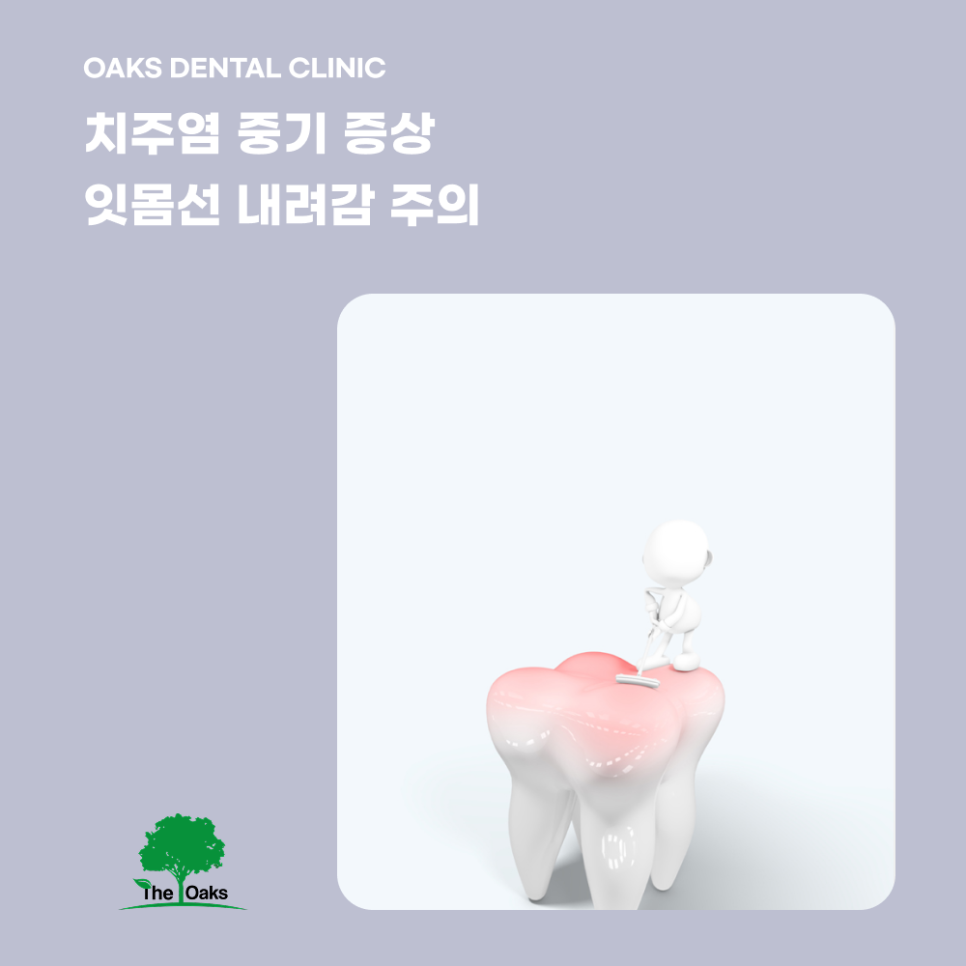
Symptoms of moderate periodontitis
Changes in the gums and function appear.
As time passes, the inflammation does not remain
in the gums alone but begins to affect
the surrounding tissues as well.
▶ The gums recede, and as the gum line drops,
the spaces between the teeth widen or the teeth appear longer
▶ A constant feeling of food getting stuck between the teeth,
and food does not come out easily
▶ Pain or discomfort in the gums
when opening the mouth or chewing
▶ Persistent or worsening bad breath
From this stage onward, recovery may be difficult
with self-care alone,
and professional treatment is needed.
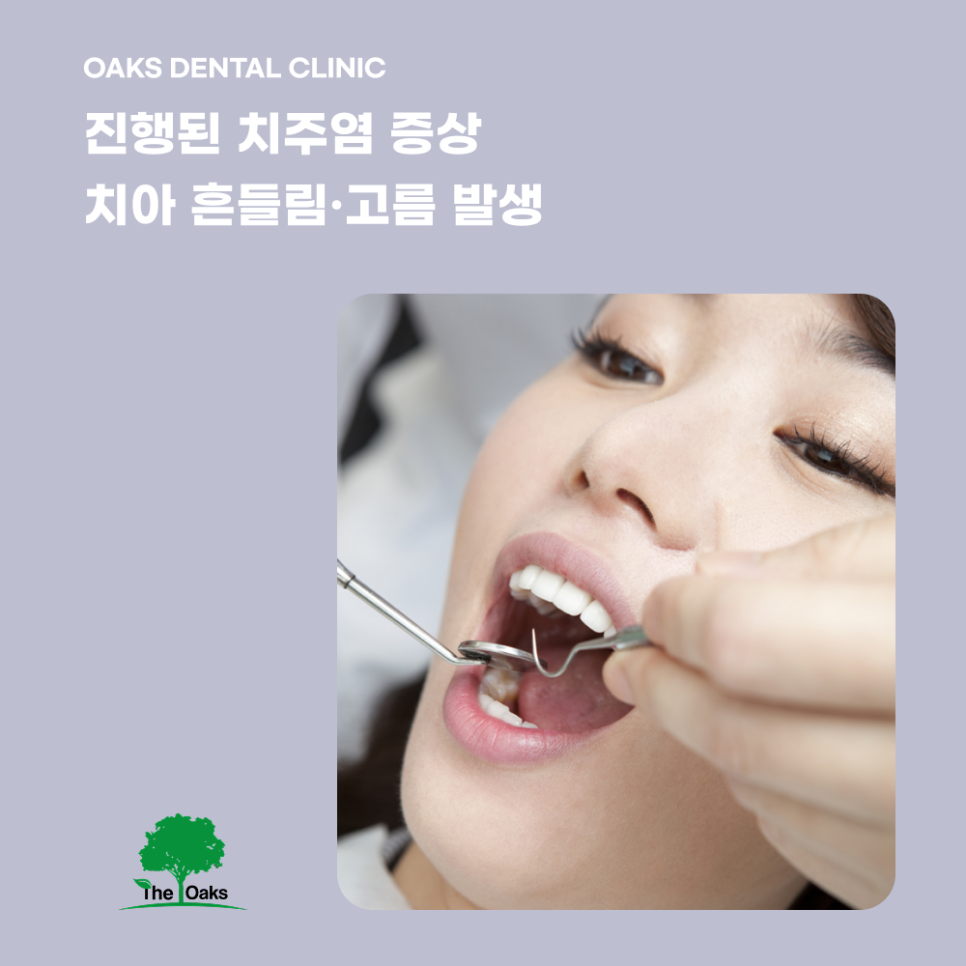
Advanced periodontitis symptoms
Warning lights are on.
If inflammation damages the supporting tissues,
such as the jawbone (alveolar bone)
and periodontal ligament,
these serious symptoms may appear.
▶ A feeling that the teeth are loose,
or actual looseness is observed
▶ Teeth begin to shift position
or appear crooked
▶ Gum pus (pus formation) or
a dark, foul-smelling discharge from the gums
▶ Swollen gums, pain when pressed,
and ongoing pain
▶ Teeth become sensitive,
and sensitivity to cold or hot foods increases
▶ Chewing becomes difficult,
and opening the mouth feels restricted
▶ In severe cases, some teeth
may fall out on their own
If you have these symptoms,
it is very important not to miss the timing for treatment.
This is because once the supporting tissues are damaged,
they are difficult to fully restore.
Why are the symptoms hard to notice?
Periodontitis often progresses quietly from within,
so patients often do not feel discomfort.
In the early stages, even if there is gum swelling or slight bleeding,
many people dismiss it as fatigue or stress,
and because the pain is not severe,
they delay treatment thinking,
“I’ll get better if I just endure it.”
Sometimes people only realize it after someone else points out
bad breath or the feeling that the gums are loose.
That is why regular checkups
and scaling are so important.
It often progresses quietly,
and then suddenly becomes a serious problem.
What to do to improve the symptoms
If you suspect symptoms,
try doing the following.
▶ After brushing, use floss or interdental brushes
to thoroughly clean between the teeth
so that no plaque remains
▶ Brush twice a day using lukewarm water
and a soft toothbrush
▶ Minimize irritation to the gum line when brushing
▶ If bleeding or swelling keeps happening frequently,
visit a dental clinic for professional scaling and periodontal examination
▶ If you smoke, consider quitting
(smoking has a major effect on worsening inflammation
and delaying recovery)
▶ If you have a chronic disease (such as diabetes or high blood pressure),
manage it well and inform the dental clinic
In closing...
Each small signal from the gums may be a warning message.
“My gums bleed.”
“My gums swell.”
“My teeth feel loose.”
These symptoms should never be ignored.
If caught early, periodontitis causes less trouble
and costs less.
If you have even one symptom such as gum swelling, bleeding, bad breath,
or loose teeth,
don’t put it off
and come to Apgujeong-dong Dental Clinic for a consultation.